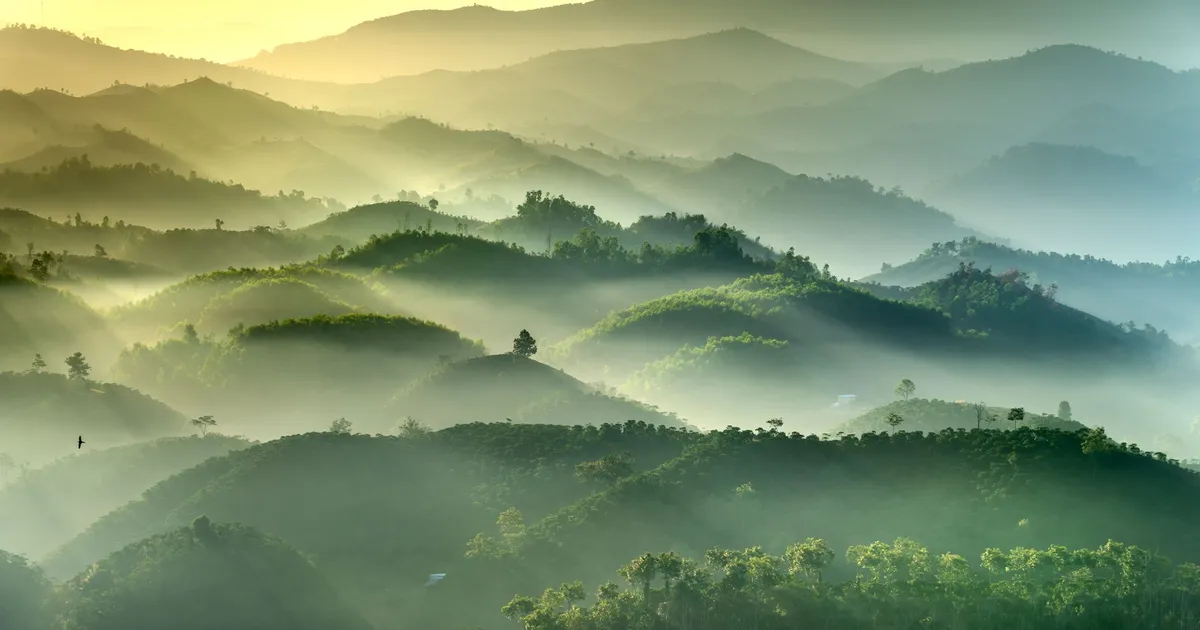


For thirty years, travel in Laos has been organised around three things: a UNESCO town, a river, and a set of ruins. Luang Prabang, the Mekong, Wat Phou. In July 2025 a fourth pillar quietly appeared, and almost nobody outside the conservation world noticed. Hin Nam No, a block of limestone forest in Khammouane province that most Lao travellers have never heard of, became the country's first natural World Heritage site. It is a small administrative fact with large implications for how this country will be travelled over the next decade.
The inscription that changed the map
On 13 July 2025, at the 47th session of the World Heritage Committee in Paris, Hin Nam No National Park was inscribed on the World Heritage List. It joined Luang Prabang, Vat Phou and the Plain of Jars as Laos's fourth site, but it is the first inscribed for natural rather than cultural value.
The detail that matters most is the word transboundary. Hin Nam No was inscribed as an extension of Vietnam's Phong Nha-Ke Bang National Park, creating a single World Heritage property spanning the border. Together the two parks protect what is widely described as the largest contiguous limestone karst landscape on earth, an unbroken sea of tower karst, sinkholes and river caves running across the Annamite range.
That framing is not just geological poetry. It commits two governments to a shared management regime in a border zone that has historically been managed by nobody in particular. For a country that has spent two decades approving hydropower and mining concessions inside protected areas, an internationally binding conservation commitment is a genuine shift.
One request. Up to five tailored proposals.
Skip contacting agencies one by one — share your trip once and let up to five trusted Laos agencies come to you. Free, with no obligation.
Get my free quotesWhat Hin Nam No actually is
The Lao side covers roughly 94,000 hectares in Boualapha district, Khammouane province, in the country's narrow central waist. It is not a park in the sense of gates, shuttle buses and interpretive centres. It is a wall of forested karst cut by underground rivers, most of it functionally inaccessible.
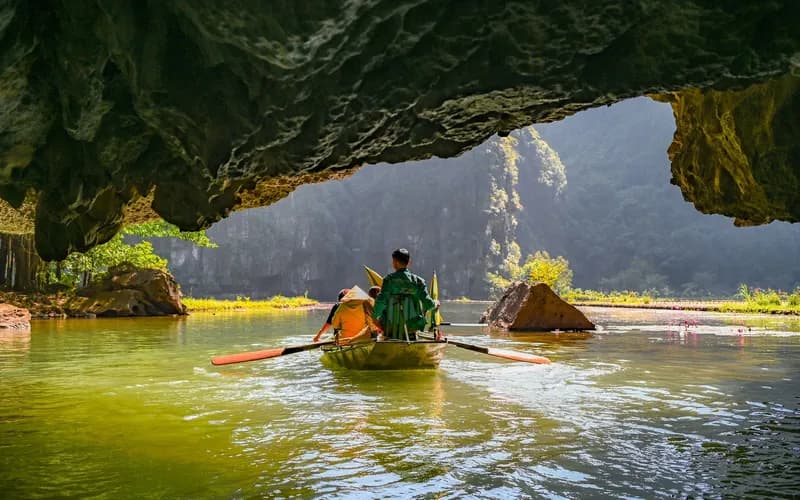
Its signature feature is the Xe Bang Fai cave, one of the largest active river cave passages in the world. The Xe Bang Fai river disappears into the mountain and reappears kilometres later, having carved a corridor with chambers tens of metres high and wide enough to paddle a boat through in comfortable silence. Visiting means a longtail boat from a riverside village, then a guided passage through the dark on water.
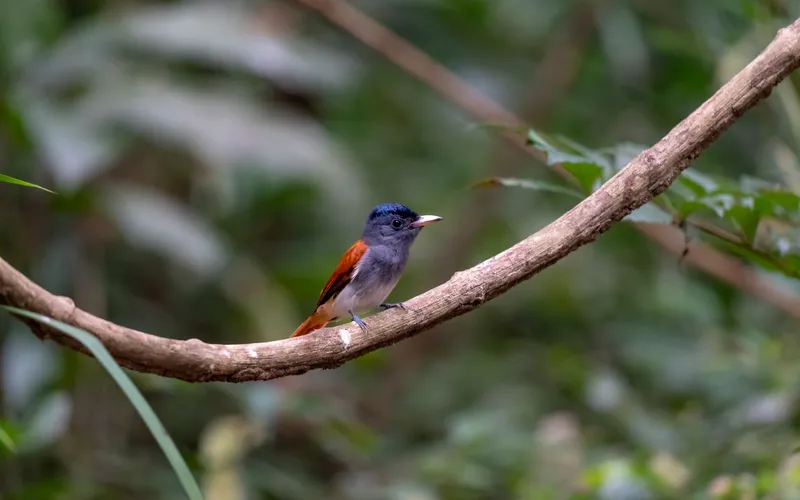
The forest above holds red-shanked douc langurs, several hornbill species, and a long list of karst-specialist creatures such as endemic bats, geckos and cave-dwelling fish that exist here and nowhere else. Several ethnic minority communities, including Makong villages, live in and around the park and hold customary use rights that the inscription explicitly recognises.
Why this is happening now
The inscription did not arrive out of nowhere. It is the visible tip of a policy turn that has been building since 2019, when Laos began converting selected national protected areas into formally gazetted national parks with stronger legal status and dedicated management. Nakai-Nam Theun came first, followed by Nam Et-Phou Louey and then Hin Nam No.
Tourism arithmetic is pushing in the same direction. Laos received 4.58 million international visitors in 2025, an increase of about 11 percent on the previous year, and 2.59 million in the first half of 2026, up nearly 10 percent again. Thailand, China and Vietnam supply the bulk of those arrivals. The problem is that the money has concentrated in a very small number of places: Luang Prabang, Vang Vieng, Vientiane and the railway corridor that links them.
Government and donor agencies have been explicit that nature-based tourism in protected areas is the intended answer, with frameworks now in place, including work with the World Bank, to help small Lao enterprises build eco-tourism operations inside parks and forest reserves. In other words, the state is trying to spread visitors outward, and protected areas are the chosen instrument. For travellers, that shift is already visible in where the interesting itineraries lie, and our guide to the hidden corners of Laos worth the detour reflects it.
Get matched with up to 5 trusted Laos agencies
- Free
- No obligation
- Up to 5 agencies
The network behind the headline
Hin Nam No gets the attention, but it sits inside a wider set of places that have been doing this work for years, sometimes better.
- Nam Et-Phou Louey in the northeast runs the Nam Nern Night Safari, a boat-based wildlife tour launched in 2009 with the Wildlife Conservation Society, which ties villager income directly to wildlife sightings and won international responsible tourism awards in 2013 and 2014.
- Nam Ha in the northwest, an ASEAN Heritage Park, built the community trekking model that most of the country copied. Our profile of Luang Namtha and the Nam Ha forest sets out how it works on the ground.
- Nakai-Nam Theun, Laos's first national park, is funded in part by a hydropower revenue stream, an arrangement that is both pragmatic and a reminder of the trade-offs involved.
Taken together, these are not a tourism product. They are a patchwork of donor projects, provincial offices and village committees of varying capacity, held together by a small number of committed people. That is the honest state of nature travel in Laos in 2026.
What nature tourism can and cannot pay for
It is tempting to conclude that World Heritage status will fund conservation. It will not, at least not directly, and the numbers explain why.
Community ecotourism in Laos moves modest sums. A village fund that receives a share of trek fees might take in a few thousand dollars a year, which is meaningful for a settlement of thirty households and irrelevant against the economics of a hydropower dam, a rubber concession or the illegal wildlife trade. The Annamite forests are in the middle of a snaring crisis that has emptied large areas of ground-dwelling mammals; the saola has not been reliably recorded in years. No amount of kayaking through a cave fixes that.
What tourism does buy is different and still valuable. It creates a constituency. It gives provincial authorities a revenue reason to keep a forest standing, gives villagers an alternative to a snare line, and gives conservationists an argument that is legible to finance ministries. Where it has worked in Laos, it has worked as leverage rather than as a budget.
The risk of getting it wrong
Laos has a recent case study in what happens when a heritage listing meets unmanaged demand, and it is called Luang Prabang. The town's inscription in 1995 protected its architecture and, over three decades, hollowed out much of its residential life as houses became guesthouses. The listing preserved the shell.
The Hin Nam No equivalent would be a road. Access is currently the park's best protection, and improving it is the single most requested infrastructure item in the region. Better roads would bring day-trip volume from the railway corridor, tour buses to the cave mouth, and the familiar cycle of village-level displacement that follows. The transboundary management plan is meant to prevent that. Whether it does will depend on provincial decisions taken well outside public view.
There is also a subtler risk. Nature travel sells best when it is packaged as wilderness, and Hin Nam No is not wilderness. It is an inhabited landscape with people who farm, hunt and gather in it under negotiated rules. Marketing that erases them makes it easier, later, to move them. Our slow travel charter sets out the standard we hold operators to on exactly this point.
What this means for a slow traveller in 2026
At a glance
- Location
- Boualapha district, Khammouane province
- Getting there
- via Thakhek
- Guides
- village-based, arranged locally
- Best season
- November to March (dry season)
- Highlight
- Xe Bang Fai river cave, reached by boat
Practically: not much yet, and that is the point. Hin Nam No is reached from Khammouane province, most sensibly from Thakhek, and access is seasonal, physically demanding and thin on infrastructure. The dry months from November to March are the realistic window; the cave trip depends on river levels and does not run reliably outside it. Guides are village-based, English is limited, and there is no booking platform that will make this simple for you.
If you are drawn to this part of the country, the established route through Khammouane is a better first step, and our account of the Thakhek loop and Konglor cave covers a landscape of the same geological family with functioning logistics. More broadly, the parts of the country that reward an extra day are increasingly the ones without a listing of their own.
The larger conclusion is about direction of travel. For a decade, the story of Lao tourism has been the railway, the border, the transit corridor. The next decade will be argued over forests. Travellers who care about that argument will get more out of Laos by going where their money lands in a village fund than by adding another night in a heritage town that already has too many.
What to Do Next
- If Hin Nam No interests you for a 2026 or 2027 trip, plan around the November to March dry season and treat river levels as the deciding factor for any cave itinerary.
- Route through Khammouane rather than trying to reach the park directly. Thakhek is the practical base for information, transport and guides in the province.
- Ask any operator selling a protected-area trip three questions: who employs the guide, what the village receives, and what the group size cap is. Vague answers mean the money is not landing where you think.
- Consider Nam Et-Phou Louey or Nam Ha instead if you want a wildlife or forest experience this year. Both have functioning community systems and can be booked without improvisation.
- Budget realistically. Protected-area trips cost more per day than beach or town travel because the ratio of guides to visitors is high; our guide to what a Laos trip actually costs puts the numbers in context.
- Treat anything sold as an eco-experience with scepticism until the operator can answer those questions in writing.
Frequently Asked Questions
When did Hin Nam No become a World Heritage site?
It was inscribed on 13 July 2025 at the 47th session of the World Heritage Committee in Paris. It is Laos's fourth World Heritage site and its first inscribed for natural value, after Luang Prabang, Vat Phou and the Plain of Jars.
Can I visit Hin Nam No now?
Yes, but not casually. The park is in Boualapha district in Khammouane province, access is via village-based guides and boats, and the practical season runs from about November to March. There is very little tourism infrastructure, and independent entry is not the norm.
What is the Xe Bang Fai cave?
It is one of the world's largest active river cave passages, formed where the Xe Bang Fai river cuts through the karst massif. Visits are made by boat from a riverside village, passing through chambers tens of metres high. It is the park's headline attraction and the reason most visitors come.
Why does the transboundary listing with Vietnam matter?
Because the karst does not stop at the border. Linking Hin Nam No with Phong Nha-Ke Bang creates a single protected landscape of a scale that actually matches the ecosystem, and it obliges both governments to coordinate management rather than each treating their side as an edge.
Will UNESCO status protect the forest?
Partly. It raises the political cost of destructive projects and unlocks technical funding and attention. It does not stop snaring, logging pressure or infrastructure decisions taken at provincial level, and it brings its own risk of visitor pressure. Listing is leverage, not a guarantee.
Is community ecotourism in Laos genuinely beneficial?
At its best, yes, when guides are local, fees reach a village fund and group sizes are capped. The sums involved are small compared with extractive industries, so the honest claim is that it creates local incentives and alternatives rather than that it funds conservation outright.
Where should I go if I want nature travel in Laos this year?
Nam Ha in the northwest for community trekking, Nam Et-Phou Louey in the northeast for wildlife-focused itineraries, and Khammouane for karst and caves. All three are bookable now, unlike Hin Nam No, which still asks for patience and flexibility.