Staying Safe from UXO in Laos: A Traveller's Guide
Laos carries a difficult distinction: it is the most heavily bombed country per capita in history. During the Secret War of the 1960s and 70s, an enormous quantity of ordnance was dropped on the country, a significant portion of which failed to explode and still lies in the soil today. For travellers, this is not a reason to stay away, and the practical risk to visitors who follow sensible rules is low. But it is a reality worth understanding, both to keep yourself safe and to travel through these landscapes with the awareness and respect they deserve. This is a calm, practical guide to unexploded ordnance, or UXO, in Laos.
The most bombed country on earth
The scale is hard to grasp. Over roughly a decade of conflict, millions of tons of ordnance were dropped on Laos, much of it in the form of cluster munitions that scattered small bomblets across the land. A large share of these never detonated, leaving the country contaminated with unexploded devices, particularly across the east and southeast along the old supply routes, and in provinces such as Xieng Khouang, home to the Plain of Jars. Decades later, clearance is still ongoing, and UXO remains a hazard for rural communities, most tragically for farmers and children. This history is inseparable from places like Phonsavan and the Plain of Jars, where the craters are still visible in the fields.
One request. Up to five tailored proposals.
Skip contacting agencies one by one — share your trip once and let up to five trusted Laos agencies come to you. Free, with no obligation.
Get my free quotesWhat UXO actually is
UXO stands for unexploded ordnance: bombs, shells and especially the small cluster bomblets, often called "bombies", that failed to go off on impact and remain live. The bomblets are the particular danger because they are small, numerous, widely scattered and easily disturbed. Many are the size of a tennis ball or smaller, can be hidden in undergrowth or just under the surface, and can detonate if handled, struck or moved. Understanding what you are being warned about helps you take the warnings seriously rather than treating them as abstract.
Where the risk is highest
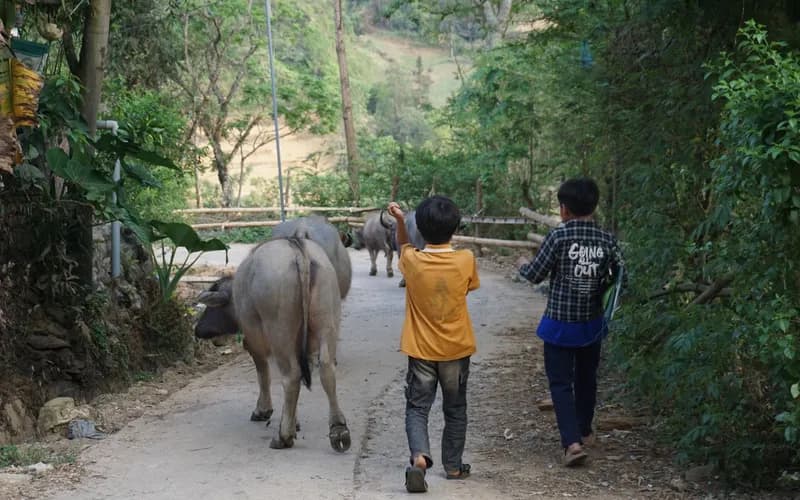
Contamination is not evenly spread. The most heavily affected areas are in eastern and southeastern Laos, along the routes that were bombed most intensively, and in the northeast around Xieng Khouang. Provinces such as Savannakhet, Salavan, Sekong and Attapeu in the south, and Houaphanh and Xieng Khouang in the north and east, carry more risk than the well-trodden central corridor. This matters most if your travels take you into rural areas, onto farmland, or off established trails in these regions, including parts of the south around the Bolaven Plateau. In towns and on developed tourist sites, the ground you walk has generally been cleared.
Get matched with up to 5 trusted Laos agencies
- Free
- No obligation
- Up to 5 agencies
The real risk to travellers is low, but not zero
It is important to keep proportion. The overwhelming majority of travellers to Laos never encounter UXO, because tourist sites, towns, roads and established paths are cleared or well-used. The people most at risk are rural Lao residents who live and work on contaminated land, not visitors on marked trails. That said, the risk to travellers is not zero, and it rises the moment you leave established routes into rural or forested land in affected provinces. The message is not fear but respect: follow a few clear rules and your practical risk stays very low.
The golden rules
A handful of simple rules cover almost every situation. Stay on marked paths and well-trodden trails, especially at sites like the Plain of Jars where clearance teams have marked safe routes; never step beyond the markers. Do not walk into fields, forest or scrub off established tracks in affected regions. Do not touch, pick up, kick or move any metal object, no matter how harmless it looks. Do not dig, and be cautious about lighting fires on unknown ground. And when in doubt, ask locals, who know their land intimately and will steer you away from danger. These rules are undemanding, and they are close to a complete defence.
Trekking and off-path activities
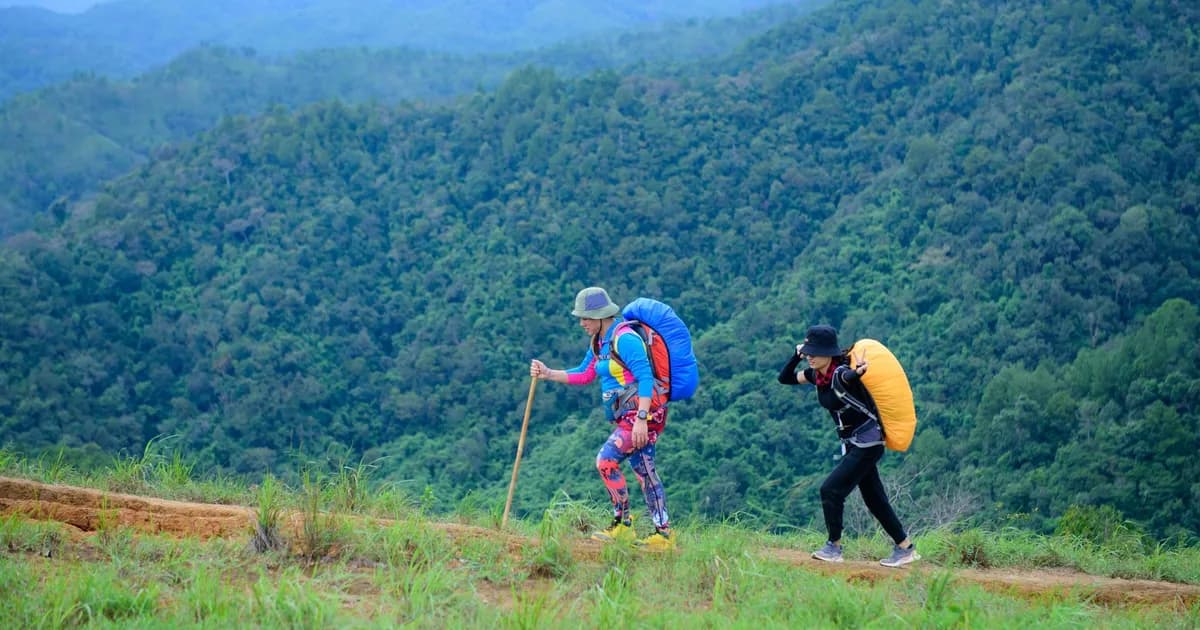
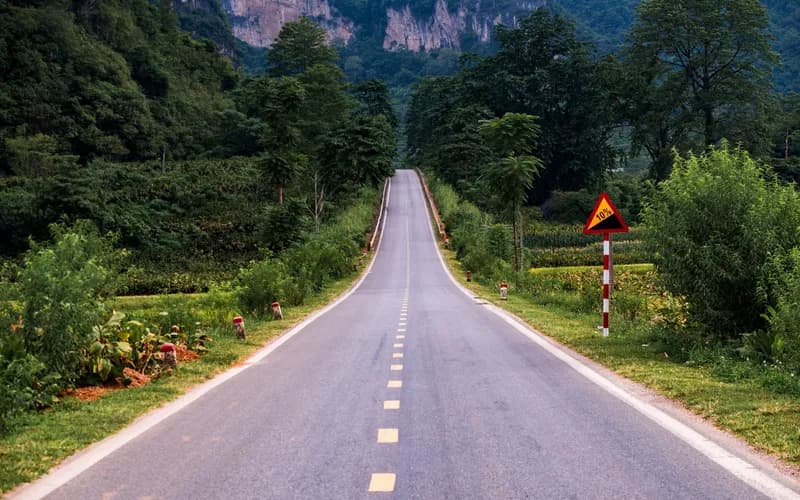
Trekking, cycling and village visits are among the great pleasures of Laos, and they remain perfectly enjoyable with sensible precautions. The key is to go with reputable local guides and established operators who know exactly which routes are safe, rather than striking out alone across unknown ground. On an organised trek your guide keeps you on cleared, used paths; the danger comes from improvising off-route. If you camp, build fires or forage, do so only where a local guide confirms it is safe. Booking through people with deep local knowledge is not just better for the experience, it is a genuine safety measure, and it echoes the respectful approach we describe in our Laos etiquette guide.
Don't touch, and don't collect
This deserves its own emphasis because it is where curiosity turns dangerous. You may see war scrap repurposed as planters, fences or souvenirs, and defused casings sold in markets, and it can be tempting to treat any metal object as a harmless relic. Do not. Never pick up or collect ordnance or fragments you find in the ground, never buy items whose safety you cannot verify, and never attempt to take military scrap home, which is both dangerous and illegal to carry. The safe assumption with any unfamiliar metal object in the Lao countryside is that it could be live, and that assumption costs you nothing.
Learning the history: COPE and the information centres
Understanding the human cost turns abstract caution into real respect. In Vientiane, the COPE Visitor Centre tells the story of UXO survivors and the prosthetics and rehabilitation work that supports them, and it is one of the most moving and worthwhile stops in the capital. In Phonsavan, information centres run by clearance organisations explain both the Plain of Jars and the ongoing work to make the land safe. Visiting these is not grim tourism; it is a way to grasp what the warnings mean and to honour the communities living with this legacy every day.
Supporting the clearance effort
Travellers can do more than stay safe; they can help. The clearance organisations working across Laos, removing ordnance metre by metre and educating rural communities, depend heavily on support, and visitor donations at centres like COPE go directly toward prosthetics, survivor support and clearance. Spending your money with local guides, buying from community enterprises, and giving where you can are small acts that put something back into the places you pass through. This is the practical, values-driven travel our wider approach is built on: leaving a place a little better for your having been there.
If you ever find something
In the very unlikely event that you come across a suspected UXO, the rules are simple and absolute. Do not touch it, do not move it, and do not attempt to make it safe. Note the location as precisely as you can, move away carefully by the route you came, and report it to local authorities, your guide or your accommodation, who can alert the clearance services. Warn others nearby to keep clear. Treating any suspected device with total non-interference is the one response that is always correct.
Talking to children and families about UXO
If you are travelling with children, a little extra care and a simple conversation go a long way. The rules that keep adults safe, stay on the path and never touch metal objects, are exactly the ones curious children most need to hear, since youngsters are among those most often harmed by UXO precisely because a small, ball-shaped object looks like something to pick up. Explain clearly and calmly, without frightening them, that in Laos you never touch anything you find on the ground, and keep young children within reach when walking near fields or off the main paths. Framed as a firm, ordinary rule rather than a source of dread, it is easily understood and easily followed.
Keeping it in perspective
It is worth ending where we began: with proportion. UXO is a real and serious legacy, and it deserves your respect and your caution, but it should not dominate your trip or deter you from visiting a country that is among the most rewarding in the region. Millions of people travel Laos safely, walking its trails, cruising its rivers and exploring its towns, precisely because they stay on established routes and follow simple rules. Approached with awareness rather than anxiety, Laos is a gentle, beautiful and safe place to travel slowly. The awareness is the point; carried lightly, it protects you and deepens your understanding of the country at the same time.
What to do next
- Stay on marked paths and well-used trails at all times, and never step beyond clearance markers at sites like the Plain of Jars.
- Never touch, move or collect any metal object or suspected ordnance in the countryside.
- Trek, cycle and explore rural areas only with reputable local guides who know which routes are cleared.
- Visit the COPE centre in Vientiane or an information centre in Phonsavan to understand the history and support survivors.
- Plan your route with awareness of the more affected provinces, using our plan your journey page.
Frequently Asked Questions
Is it safe to travel in Laos with UXO still present?
Yes, for travellers who follow sensible rules. Tourist sites, towns, roads and established trails are cleared or well-used, and the overwhelming majority of visitors never encounter UXO. The real risk falls on rural residents working contaminated land. Stay on marked paths, never touch metal objects, and your practical risk stays very low.
What is UXO and why is it dangerous in Laos?
UXO is unexploded ordnance, the bombs and especially the small cluster bomblets that failed to detonate during the Secret War and remain live in the ground. Laos is the most heavily bombed country per capita, and these devices, often small and hidden, can still explode if disturbed, which is why they remain a hazard decades later.
Which parts of Laos are most affected by UXO?
Eastern and southeastern Laos along the most heavily bombed routes, and the northeast around Xieng Khouang and the Plain of Jars, carry the highest contamination. Provinces such as Savannakhet, Salavan, Sekong, Attapeu and Houaphanh are among the most affected. Towns and developed tourist sites have generally been cleared.
What should I do if I find a suspected bomb?
Do not touch or move it, and do not try to make it safe. Note the location, retrace your steps carefully to move away, and report it to your guide, accommodation or local authorities so clearance services can be alerted. Warn anyone nearby to keep clear. Total non-interference is always the correct response.
How can travellers help with the UXO problem?
Support the clearance and survivor organisations by visiting and donating at centres like COPE in Vientiane, spending with local guides and community enterprises, and travelling responsibly. These organisations clear land and support survivors, and visitor contributions make a real difference to communities still living with the legacy of the bombing.