

Malaysia is one of the easiest countries in Southeast Asia to travel without ever touching a steering wheel. The roads are good, but the network underneath them is better than most visitors expect: a decent railway on the west coast, an intercity bus system that reaches almost every town of any size, ferries to every inhabited island, ride-hailing in every city, and domestic flights cheap enough to be an afterthought. Put together properly, it produces a slower, less stressful trip than driving — and it costs a fraction of the price.
Why a Car Is Optional Here
Malaysia rewards car-free travel for a specific reason: its interesting places are strung along corridors rather than scattered across empty countryside. George Town, Ipoh, Kuala Lumpur and Melaka sit on a single north–south line. Kuching, Kota Kinabalu and Sandakan are connected by short flights. The islands are reached by scheduled ferries from fixed mainland ports.
Driving in Malaysia is not difficult — signage is clear and the expressways are excellent — but it changes the texture of a trip. You spend your attention on lanes and parking rather than on the country. You are tied to returning the vehicle. And in the two places where a car genuinely helps, Langkawi and the rural interior, you can rent locally for a day or two rather than for the whole journey.
The exception is worth stating up front. If your trip is built around Sabah's interior, the Kelabit Highlands, or remote kampung stays reached by unpaved roads, a vehicle or a driver becomes close to essential. For everything else, the network handles it.
One request. Up to five tailored proposals.
Skip contacting agencies one by one — share your trip once and let up to five trusted Malaysia agencies come to you. Free, with no obligation.
Get my free quotesThe Backbone: Trains and Intercity Buses
The west coast railway is the most comfortable way to move between the peninsula's main cities. KTM's ETS services link Padang Besar on the Thai border with Kuala Lumpur via Butterworth (for Penang), Taiping and Ipoh, and continue south to Gemas. Trains are punctual, air-conditioned and cheap, and the seats are reservable. We cover the routes, the classes and the slow Jungle Railway across the interior in our dedicated piece on travelling peninsular Malaysia by train.
Where the railway does not go, buses do. Malaysia's intercity coach network is extensive, comfortable and inexpensive, with operators including Transnasional, Plusliner and the more premium Aeroline. Kuala Lumpur's main hub is Terminal Bersepadu Selatan, usually called TBS, a large, well-organised terminal in the south of the city with security screening, printed boarding passes and a KTM Komuter station attached. It is a genuinely pleasant place to catch a bus, which is not something one says often.
Buses reach Melaka, Mersing, Kuala Besut, Cameron Highlands, Kota Bharu and dozens of towns without a station. They are the practical answer for the east coast, for the highlands and for anywhere the train skips. Seats are reserved, departures are frequent on trunk routes, and journeys of four to six hours are normal.
Domestic Flights: When They Are Worth It
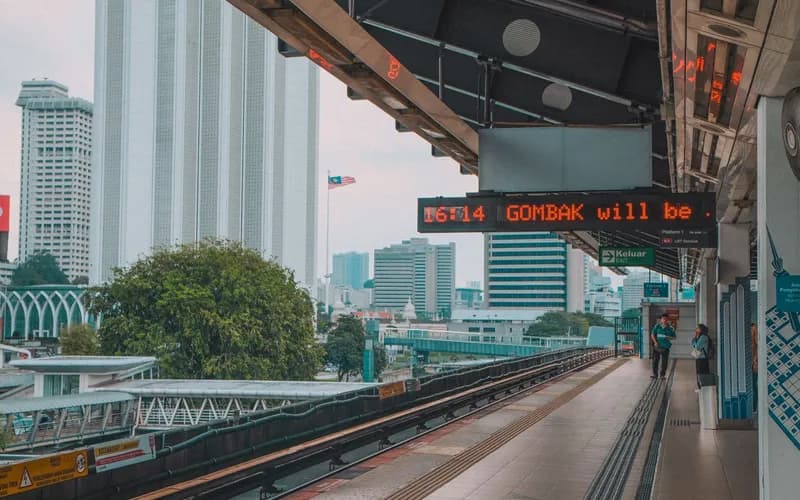
Malaysia's domestic air network is unusually good for a country of its size. AirAsia dominates the peninsula and the Borneo trunk routes; Malaysia Airlines adds thinner services to Miri, Sandakan, Tawau, Sibu and Bintulu. Booked two to four weeks in advance, a one-way fare commonly falls between RM50 and RM120. Left to the last minute, the same seat can cost RM200 to RM400.
Use flights for the crossings that would otherwise consume a day or more: the peninsula to Borneo, Kota Kinabalu to Kuching, Kuala Lumpur to Kota Bharu. Do not use them for hops the train covers well — the flight to Penang saves perhaps two hours door to door once you account for the airport, and it is a duller journey.
The route map itself has been shifting, with several new international services now landing directly at secondary airports rather than only at Kuala Lumpur, which we examine in our analysis of Malaysia's 2026 connectivity push. For car-free planning, the practical effect is that open-jaw itineraries are easier to build than they used to be.
Get matched with up to 5 trusted Malaysia agencies
- Free
- No obligation
- Up to 5 agencies
Ferries and the Island Timetable
Every Malaysian island of note is reached by scheduled ferry from a specific mainland port, and the ports are not interchangeable. Langkawi is served from Kuala Perlis, roughly an hour and fifteen minutes, and Kuala Kedah, closer to an hour and forty-five. Pangkor goes from Lumut. Tioman goes from Mersing or Tanjung Gemok. The Perhentians go from Kuala Besut. Redang goes from Merang or Kuala Terengganu.
Two rules govern island travel. First, buses connect to jetties, but not always tightly — arriving in Mersing at 2pm for a boat that left at 1pm is the classic mistake. Check the last sailing before you book the bus. Second, the east coast islands shut down. Tioman, the Perhentians and Redang effectively close from November to February when the northeast monsoon suspends ferry services and most accommodation closes. This is not a weather inconvenience; it is a hard stop.
Note also that the direct Penang to Langkawi ferry has been suspended indefinitely, despite still appearing in older guidebooks. From Penang you now travel overland to Kuala Perlis or fly.
Grab, Taxis and the Last Mile
Grab is the default for short journeys everywhere in urban Malaysia, including Kota Kinabalu and Kuching. It solves the two problems metered taxis create: price negotiation and route disputes. Fares are shown before you accept, and payment can be by card or wallet within the app.
Coverage thins outside towns. In rural Langkawi, the Cameron Highlands and much of Sabah, waiting times stretch and cars sometimes do not come at all. Plan for that: ask your guesthouse to arrange a car, or accept that the last few kilometres may involve a local taxi at a negotiated price.
Cash still matters at jetties, small bus counters and rural stalls, and a Touch n Go card makes urban transit and tolls painless. Our guide to paying in Malaysia sets out which of the local wallets are usable on a foreign phone number and which are not.
City Transport Worth Using
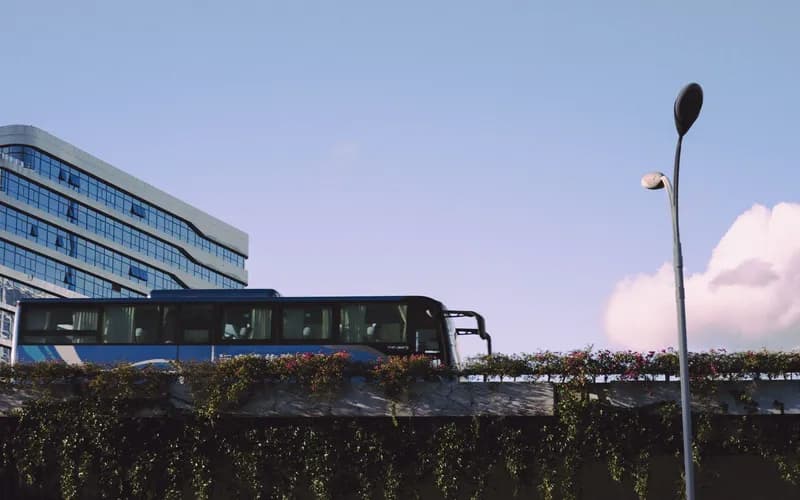
Kuala Lumpur has the region's most underrated urban rail network: two MRT lines, two LRT lines, a monorail and KTM Komuter services, all tapped with a Touch n Go card. The interchanges are occasionally awkward — some involve a walk between stations — but the coverage is broad enough that a visitor rarely needs a car. KLIA Ekspres runs from the main airport to KL Sentral in 28 minutes; the cheaper option is the airport bus to TBS or KL Sentral.
George Town runs on Rapid Penang buses, which cover the island cheaply and reach Batu Ferringhi, the Botanic Gardens and the ferry terminal. Within the UNESCO core, walking is faster than anything with wheels. Melaka's historic centre is similarly compact. Kuching is small enough to walk, with Grab for the museums and the airport, and boats crossing the river for a ringgit or two.
What It Actually Costs
Car-free travel in Malaysia is cheap by any standard. A budget traveller relying on trains, buses and occasional Grab rides should plan roughly RM500 to RM800 in total transport over two weeks, excluding international flights. Individual reference points: an ETS train between Kuala Lumpur and Ipoh is usually well under RM50, an intercity bus from Kuala Lumpur to Melaka is often in the RM12 to RM20 range, and a Grab across a city centre rarely exceeds RM15.
A rental car, by comparison, runs RM100 to RM150 a day for a small vehicle before fuel, tolls and parking. For two people over two weeks, the gap is substantial. Our Malaysia trip cost guide breaks the wider budget down by travel style.
Where the Car-Free Approach Breaks Down
Honesty helps here. There are situations where refusing a car costs you more than it saves.
Rural Langkawi is one: public transport is thin and the island is spread out, so a scooter or small car for the days you explore is the sensible answer. Sabah's interior is another; the roads to Kinabatangan, the Crocker Range and the Kelabit Highlands are long and served irregularly. The Cameron Highlands are walkable in Tanah Rata but not between the tea estates. And travelling with small children, heavy luggage or limited mobility makes a private transfer worth every ringgit.
The reasonable compromise is a hybrid: move between regions by train, bus, ferry and plane, then hire a car, scooter or driver locally for the two or three days where it genuinely helps.
Booking Habits That Save Time
Book long-distance buses and ETS trains a few days ahead through the operator or an aggregator, and much further ahead around Hari Raya, Chinese New Year and school holidays, when seats vanish. Screenshot every ticket; mobile signal at rural terminals is unreliable. Arrive at bus terminals 30 minutes early and at ferry jetties an hour early, particularly where a conservation charge is collected before boarding.
Above all, build slack into the plan. The single biggest advantage of car-free travel is that it forces you to accept the country's own tempo. If you are still sketching the shape of a trip, our plan your journey pages set out how to sequence regions without over-scheduling them.
What to Do Next
- Map your route as a corridor, not a loop. Trains and buses reward moving in one direction.
- Book the ETS legs first — they sell out fastest and anchor the rest of the itinerary.
- Check the last ferry of the day before booking the bus to any jetty, and avoid the east coast islands between November and February.
- Reserve domestic flights two to four weeks out for the long crossings, especially to and within Borneo.
- Get a Touch n Go card on arrival and keep some cash for jetties and rural counters.
- Identify the two or three days where a local car, scooter or driver genuinely helps, and hire only for those.
Frequently Asked Questions
Is it realistic to travel Malaysia entirely without a car?
For most itineraries, yes. The west coast corridor, Kuala Lumpur, Melaka, the main islands and both Borneo state capitals are all reachable by train, bus, ferry and Grab. The itineraries that genuinely need a vehicle are those built around rural Sabah, the Kelabit Highlands or dispersed rural stays.
Are Malaysian intercity buses safe and comfortable?
Generally yes. Coaches on trunk routes are modern, air-conditioned and often have wide reclining seats. Terminal Bersepadu Selatan in Kuala Lumpur is well organised, with ticketing, screening and boarding gates. The usual precautions apply: book with established operators, keep valuables with you rather than in the hold, and expect the air conditioning to be aggressive.
Should I take the train or the bus between Kuala Lumpur and Penang?
The train, if seats are available. The ETS to Butterworth is faster, more comfortable and more punctual than the coach, and the ferry or bridge crossing into George Town is straightforward. Buses win when the ETS is sold out or when you are travelling from a town the railway does not serve.
Does Grab work everywhere in Malaysia?
It works reliably in Kuala Lumpur, George Town, Johor Bahru, Melaka, Ipoh, Kota Kinabalu and Kuching. It works patchily in smaller towns and rural areas, where waiting times can be long or no driver appears. Have a backup: a local taxi number from your accommodation, or a pre-arranged transfer.
When do the east coast island ferries stop running?
Roughly November to February, during the northeast monsoon. Services to Tioman, the Perhentians and Redang are suspended and most island accommodation closes for the season. West coast islands such as Langkawi and Pangkor operate year-round, with September and October being their wettest months.
How far in advance should I book transport in Malaysia?
ETS train seats: a week or more, and much earlier for holiday periods. Intercity buses: a few days on trunk routes, longer around festivals. Domestic flights: two to four weeks for the best fares. Ferries: usually same-day for west coast routes, but book ahead for the Perhentians and Tioman in high season.
Can I use one payment card for all of this?
Mostly. Trains, flights and app-based bookings take foreign cards without difficulty. Small bus counters, jetty ticket windows and marine park charge points often want cash. Carrying a Touch n Go card for urban transit and a modest ringgit reserve for the rest covers nearly every situation you will meet.