How to See Orangutans Responsibly in Borneo: Sepilok, Semenggoh and Beyond
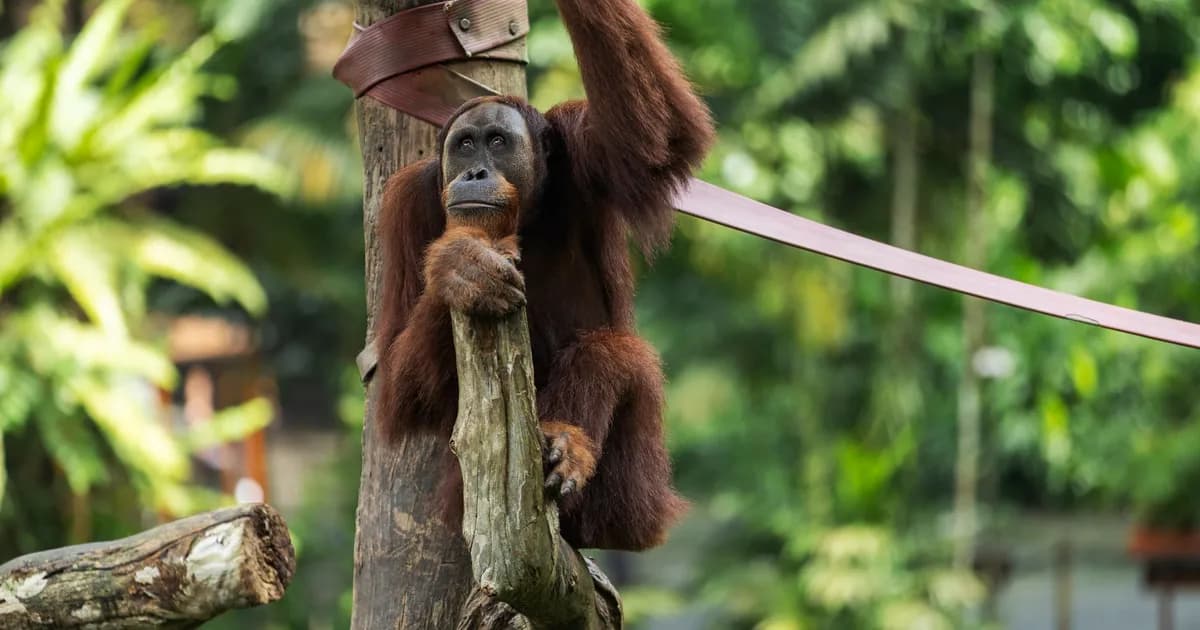
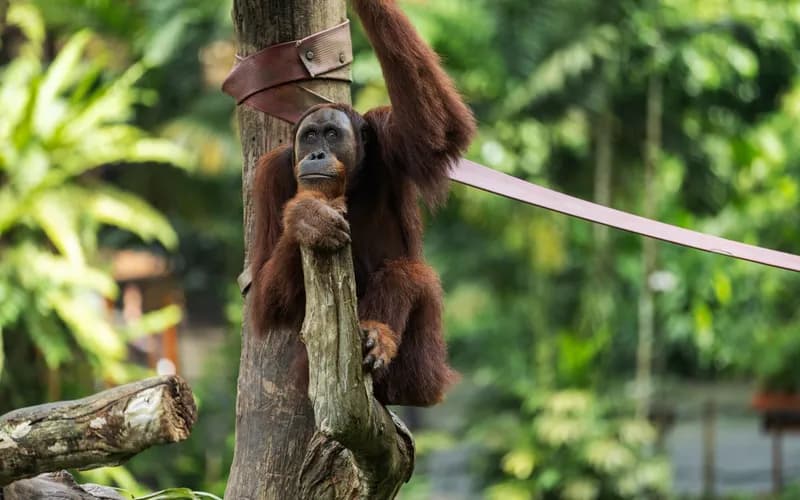
There are few experiences in Malaysia that stay with you like the moment an orangutan appears at the edge of the forest. A large, slow, russet-haired animal swings down from the canopy and settles, almost thoughtfully, onto a platform or a branch. It looks at you, or past you, and for a moment the distance between species seems smaller than it should be.
That moment is also the reason this subject needs care. Orangutans are endangered, their forests are under pressure, and a badly run visit can stress the animals, spread disease or reward the wrong businesses. A well-run one can fund conservation and give local people a stake in protecting the forest. The difference lies largely in the choices you make before you arrive. This guide explains how to make them.
Know what you are actually going to see
The first step is to understand that Malaysian Borneo offers several very different encounters, and that they are not equally wild.
At the semi-wild end are the rehabilitation and feeding centres. Sepilok in Sabah and Semenggoh in Sarawak look after orphaned or displaced orangutans, release them into surrounding forest and provide supplementary food at set times. The animals are free to come and go, which is why a sighting is never guaranteed. At the wild end are river and forest sites such as the Lower Kinabatangan and the Danum Valley, where orangutans live independently and you must find them, often with luck and a good guide.
Neither is better in every respect. Centres give a reliable, educational and relatively low-impact introduction, especially for first-timers and families. Wild encounters are more moving and more uncertain, and they require much more care to avoid disturbance. Many thoughtful travellers do one of each.
One request. Up to five tailored proposals.
Skip contacting agencies one by one — share your trip once and let up to five trusted Malaysia agencies come to you. Free, with no obligation.
Get my free quotesSepilok, Sabah: the original rehabilitation centre
The Sepilok Orangutan Rehabilitation Centre was founded in 1964 to return orphaned, injured or displaced orangutans to the wild. It sits at Batu 14, Jalan Labuk, about 25 km from Sandakan, within the 4,300-hectare Kabili-Sepilok Forest Reserve, and is run by the Sabah Wildlife Department. Reports describe up to around 75 to 80 orangutans in the reserve, along with nurseries for infants.
Visitors watch from walkways and viewing platforms, and may not handle the animals. Feeding takes place at 10:00 and 15:00, and the animals decide whether to come, so treat any promise of a guaranteed sighting with scepticism. Published fees at the time of writing were RM30 for foreign adults, RM15 for children and a RM10 camera fee, but these change, so confirm the current rates before you go. Opening hours and the schedule for the exhibition hall also vary, with a Friday closure of the hall noted on some listings.
Getting there is simple. Fly to Sandakan, then take a taxi, which takes around 25 to 30 minutes, or a local bus. For the wider region, including river days on the Kinabatangan, see our regional piece on Sandakan and the Kinabatangan.
Semenggoh, Sarawak: semi-wild, near Kuching
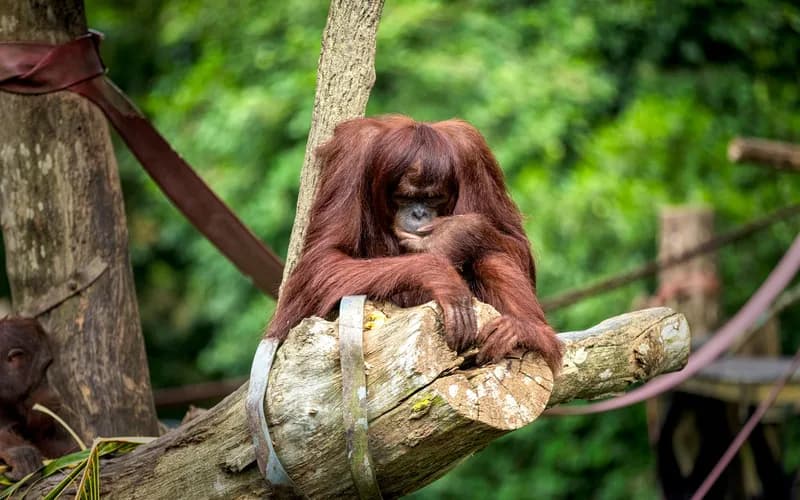
Semenggoh Wildlife Centre is about 35 minutes from the Kuching riverfront, at KM 20 on Borneo Highland Road, and sits in a 653-hectare reserve. The orangutans here are described as semi-wild: they roam the forest freely but often return at feeding times, and they are fed because the reserve cannot supply enough natural food for all of them. One source counts around 31 orangutans living at the centre.
Feeding sessions run roughly from 9:00 to 10:00 and from 15:00 to 16:00, within opening hours of about 8:00 to 10:00 and 14:00 to 16:00. Arrive at least thirty minutes early, because the animals can appear ahead of schedule. Visitors receive a briefing and are asked to keep about five metres from the orangutans and avoid loud noises. Fees quoted in one guide were RM10 for foreign adults and RM5 for foreign children, though you should check current prices.
One practical point matters for timing. When the forest is fruiting, wild food is plentiful and the orangutans are less likely to come to the platforms. Fruiting seasons vary, so ask your guesthouse in Kuching before you commit to a particular morning. A taxi or ride-hailing car costs roughly RM30 each way, and it is wise to arrange for the driver to wait. If you are basing yourself in the city, our piece on Kuching and the Sarawak River will help you plan the rest of your days.
Get matched with up to 5 trusted Malaysia agencies
- Free
- No obligation
- Up to 5 agencies
The Lower Kinabatangan: wild orangutans by boat
For a wilder encounter, the Lower Kinabatangan River in eastern Sabah is one of the most rewarding places in Borneo. Around 1,100 orangutans are reported to live along the lower river, together with proboscis monkeys and pygmy elephants, and the area was designated a wildlife sanctuary in 2005. WWF-supported replanting and patrols work to restore forest and deter poaching.
Wild sightings here are a matter of patience. A morning or evening boat trip with a local guide who knows the river gives the best chance, but a nest high in a fig tree may be all you see. Responsible operators keep their boats at a distance, switch off engines when animals are close and never chase an animal along the bank. If a guide proposes to get closer than the animal seems comfortable with, say no. A sighting that costs the animal its feeding time is not a good one.
Danum Valley: the deep forest
The Danum Valley Conservation Area covers about 438 square kilometres of lowland dipterocarp forest in Sabah and was established in 1980. It is managed by Yayasan Sabah for conservation, research and education. Access is through lodges and guided walks, the nearest town, Lahad Datu, is about 82 km away, and the drive of roughly two hours is mostly on logging roads.
Orangutan sightings are less likely here than at the centres or on the Kinabatangan, and some visitors see none. What you get instead is rainforest at a scale that is hard to find elsewhere, with clouded leopards, sun bears, gibbons and more than 270 bird species in the record. Go for the forest, and treat any orangutan as a bonus. The number of visitors is limited, which is part of why the place remains in good shape.
Batang Ai and the Sarawak interior
Sarawak has a wild option too. Around 1,600 orangutans are estimated to live between Batang Ai National Park and the neighbouring Lanjak Entimau Wildlife Sanctuary. Visiting means multi-day boat and foot tours, usually with a local longhouse community, and the effort is the point. It is a slower and more demanding trip than Semenggoh, with less certainty and a stronger sense of having earned the sighting. Arrange it through an operator that works with the community rather than around it.
The rules that actually protect the animals
Whatever site you choose, the basic etiquette is the same, and it exists for good reasons.
- Keep your distance. Centres set limits such as about five metres at Semenggoh, and you should treat that as a minimum, not a target.
- Never touch, feed or call to an orangutan, and never accept an operator who offers a photograph with one.
- Keep your voice low and your movements slow, and do not use flash.
- If you are unwell, with a cold or any respiratory illness, stay away. Great apes are susceptible to human infections, and a mask is a sensible precaution if you are close.
- Stay on the marked walkways and paths, and take your litter with you.
- Do not use drones near wildlife.
These rules are not in every brochure, which is exactly why a good guide will explain them before you arrive.
Choosing an operator and a lodge
The strongest lever you have as a visitor is where your money goes. Look for operators who employ local guides, keep groups small, explain the rules clearly and are happy to answer direct questions about how animals are approached. Ask how many boats go out at the same time, whether engines are switched off near wildlife, and what the company does if an animal shows signs of stress. Lodges that contribute to forest protection, restoration or community projects are worth the extra cost.
Be wary of anything that sells certainty. A sighting guarantee, an orangutan photo with a handler, or a tour that promises close contact is a sign that the animals are being managed for the visitor rather than the other way round. For a fuller picture of how conservation and tourism fit together in the country, read our piece on Malaysia’s ecotourism awakening.
Timing, weather and how long to stay
Think in terms of days, not hours. A single morning at a centre can be moving, but two or three nights on a river give you the dawn and dusk windows when animals are most active. In Sabah, a sensible shape is a night or two near Sepilok, then two or three nights on the Kinabatangan. In Sarawak, a half-day at Semenggoh fits easily into a few days in Kuching.
Weather affects both access and animals. Heavy rain can make boat trips uncomfortable and rivers rise, and fruiting seasons can empty the feeding platforms. Build flexibility into your plan and avoid booking tight connections on the day you hope to see wildlife.
If you are flying between Peninsular Malaysia and Borneo, remember that Sabah and Sarawak run their own immigration controls. Our explainer on flying to Sabah and Sarawak covers what to expect at the border desks.
What to pack and how to prepare
Forest days in Borneo are hot, humid and often wet. Pack light, quick-drying clothes in neutral colours, a rain jacket, sturdy shoes with grip, insect repellent and a refillable bottle. Binoculars make a bigger difference than a long lens, and they let you keep your distance. If you plan to walk in the forest beyond the centres, our guide to hiking in Malaysia explains permits, guides and leeches.
Take cash for entrance fees and small purchases, because card acceptance in remote areas is patchy. Bring a small amount of patience too. The best sightings often come after an hour in which nothing seems to happen.
A realistic way to put it together
If you have a week in Sabah, spend one night near Sepilok for the centre, then two or three on the Kinabatangan for wild encounters, and add Danum Valley only if you are happy to go for the forest as much as the animals. If you have a week in Sarawak, base yourself in Kuching, visit Semenggoh early on a morning outside peak fruiting, and keep the rest of your days for the city, the river and the cultural villages nearby. If you can do both, the contrast between a semi-wild and a wild encounter is one of the most instructive things a visitor can see in Borneo.
What to Do Next
- Decide whether you want a semi-wild centre, a wild river trip, or both, and match it to your region: Sabah for Sepilok and the Kinabatangan, Sarawak for Semenggoh and Batang Ai.
- Check current fees, feeding times and opening hours with the centre or your accommodation before you go, because published figures change.
- Book a small-group operator with local guides, and ask direct questions about distance, engines and group size.
- Allow at least two nights on a river for a real chance of wild sightings, and avoid tight same-day connections.
- Pack binoculars, rain gear and cash, and stay home from the forest if you are ill.
- Use our Malaysia journey planner to fit Borneo into a wider route, or ask a local travel agency to arrange guides and lodges.
Frequently Asked Questions
Where is the best place to see orangutans in Malaysia?
It depends on what you want. Sepilok and Semenggoh offer reliable, low-effort viewing of semi-wild animals, while the Lower Kinabatangan and Batang Ai offer wild encounters with less certainty. Danum Valley is better for the forest than for orangutans.
Is it guaranteed that I will see an orangutan at Sepilok or Semenggoh?
No. The animals roam freely and choose whether to come to the feeding platforms. During fruiting seasons, when there is plenty of food in the forest, fewer appear.
How close can I get to an orangutan?
Follow the site rules and your guide. Semenggoh asks visitors to keep about five metres away and avoid loud noises. At Sepilok you watch from walkways and may not handle the animals. In the wild, stay as far back as you can and never approach.
Is it safe for orangutans if I have a cold?
It is best to avoid close contact with any wild or semi-wild great ape if you are unwell, because they can catch human respiratory infections. If you are close to the animals, a mask is a sensible precaution.
How much does it cost to see orangutans?
Entrance fees at the centres are modest. A published figure for Sepilok was RM30 for foreign adults plus a RM10 camera fee, and for Semenggoh RM10 for foreign adults, but both change. River trips and lodges on the Kinabatangan and in Danum Valley cost considerably more.
Should I avoid places that offer photos with orangutans?
Yes. Any operator that lets you touch, hold or pose with an orangutan is putting entertainment ahead of the animal. Choose places where the animals are watched from a distance.
How many days do I need?
One morning is enough for a centre, but two or three nights on the Kinabatangan give a far better chance of wild sightings. Allow a few extra days in Danum Valley if you want the deeper forest.