
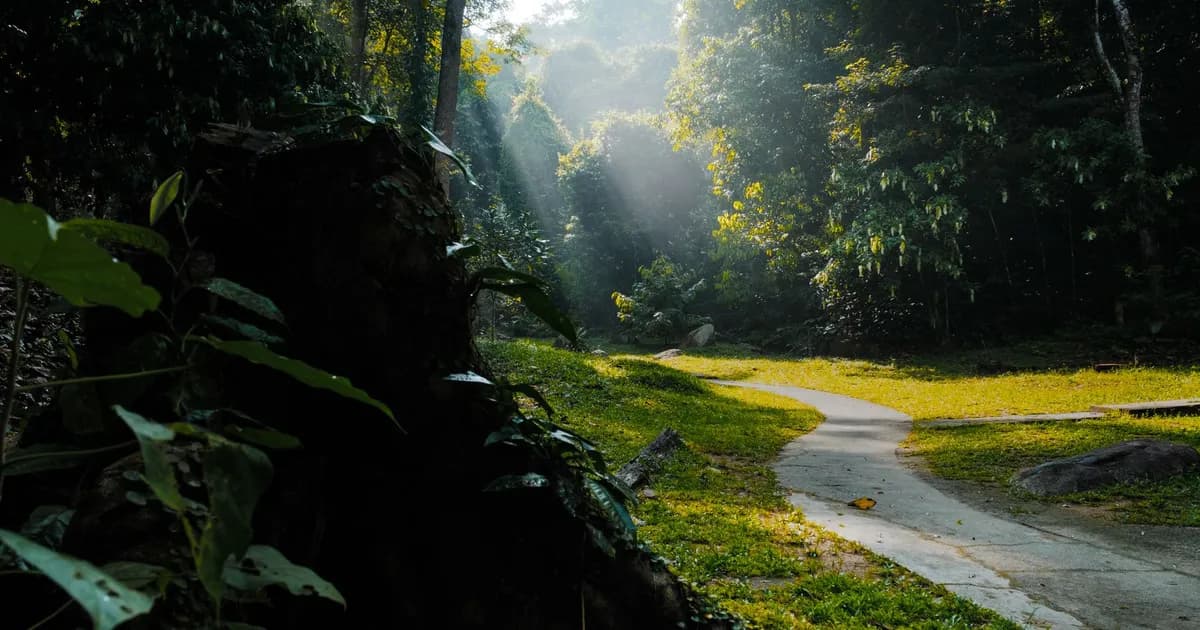
How to Hike in Malaysia: Permits, Guides, Leeches and Trail Sense
Malaysia is one of the finest hiking countries in Asia, and one of the least understood. Within an hour of Kuala Lumpur's towers, trails climb into some of the oldest rainforest on Earth; in Borneo, paths lead through peat swamp, limestone and cloud forest where new species are still described. Yet many visitors arrive expecting the free-for-all of an open hillside and are surprised by permits, compulsory guides and rules that tightened again in 2026. This is a practical guide to hiking well in Malaysia: who manages which trails, what the paperwork involves, how to cope with heat, rain and leeches, and how to walk in a way that respects both the forest and the people who look after it.
Understand Who Manages the Trail
The first thing to grasp is that Malaysian trails do not sit under a single system. Before you plan a hike, work out which of three broad categories it falls into, because the rules differ.
- Permanent forest reserves, managed by state forestry departments. Many of the popular hills and mountains near Kuala Lumpur and across the peninsula fall into this group, and they require a permit and sometimes a licensed guide.
- National and state parks, such as Taman Negara, Penang National Park, Bako or Gunung Mulu, each managed by its own park authority with its own fees, registration and guiding rules.
- Urban and recreational trails, such as municipal parks and some hill trails close to towns, where you can usually just turn up, although registration books at trailheads are common.
The state matters too. Forestry in Malaysia is largely a state responsibility, so Selangor, Perak, Pahang and the Borneo states can and do set different rules. When in doubt, a local operator or park office will know the current position far better than an old blog post.
One request. Up to five tailored proposals.
Skip contacting agencies one by one — share your trip once and let up to five trusted Malaysia agencies come to you. Free, with no obligation.
Get my free quotesForest Reserve Permits: The Rule Most Visitors Miss
Under the National Forestry Act 1984, entering a permanent reserved forest without a permit can lead to a fine of up to RM30,000, imprisonment of up to five years, or both. Enforcement against casual visitors is rare, but rangers do check permits at busy trailheads, and the rules exist for a reason: when hikers get lost, rescuers need to know who is in the forest.
Selangor, the state that surrounds Kuala Lumpur, offers a clear example of how the system now works. Since April 2025, every hike in its forest reserves requires a permit applied for online through the state's SeForest portal. The fee is RM5 per person, applications open up to a month ahead and must be made at least 48 working hours before the hike, and each hiker needs their own permit along with identification on the day. The register covers more than fifty hiking areas, from easy hills such as Bukit Broga to serious peaks such as Gunung Nuang.
The online system is designed primarily around Malaysian residents, so visitors usually find it simplest to have a licensed guide or local operator arrange the permit as part of the hike. Other states run their own systems, some online and some through district forestry offices, and requirements change, so always check before you go.
Licensed Mountain Guides and the 600-Metre Line
Many forest reserve hikes also require a licensed forestry mountain guide, known in Malay as a Malim Gunung Perhutanan. These guides are trained and certified by the Forestry Department and are responsible for safety, compliance and emergency response on the trail. The Forestry Department of Peninsular Malaysia has made their services mandatory at 189 high-risk hiking locations nationwide.
In Selangor, the rule of thumb is simple: a licensed guide is mandatory for any hiking area at 600 metres elevation and above, and one guide may lead a maximum of seven hikers. Below that line, guides are optional but recommended. Fees are agreed directly with the guide; as a rough reference, published rates for day hikes in Selangor range from around RM250 to RM400 per group depending on the mountain.
For slow travellers, a guide is rarely a burden. A good one reads the forest for you: the hornbill calling overhead, the pitcher plants by the path, the stream that will rise after an afternoon storm. You walk more safely, learn more, and your money supports a local livelihood.
Get matched with up to 5 trusted Malaysia agencies
- Free
- No obligation
- Up to 5 agencies
What Changed in 2026: Traverse and Compressed Hikes
This year brought a further tightening, prompted by a run of incidents involving missing hikers and costly search-and-rescue operations. The federal Ministry of Natural Resources and Environmental Sustainability said in July that it was restricting so-called compressed hikes, in which routes normally done over several days are squeezed into one, in high-risk mountain areas.
Two states moved first. From 1 July 2026, Selangor temporarily suspended applications for traverse hikes, which cross several mountains or state boundaries, and for compressed hikes, while stressing that regular recreational hiking was unaffected. Perak imposed an immediate ban on day hikes and compressed hikes on several demanding routes, including the Gunung Korbu to Gunung Gayong route and several long trans-mountain traverses, setting minimum durations of three to five days, and temporarily suspended hiking at Gunung Batu Putih.
For most visitors, little changes: popular day trails remain open. But if you are an experienced hiker eyeing one of the peninsula's big multi-day routes, expect longer minimum itineraries, mandatory guides and a more formal process, and treat any operator offering a one-day blitz of a multi-day route with suspicion.
National Parks Work Differently
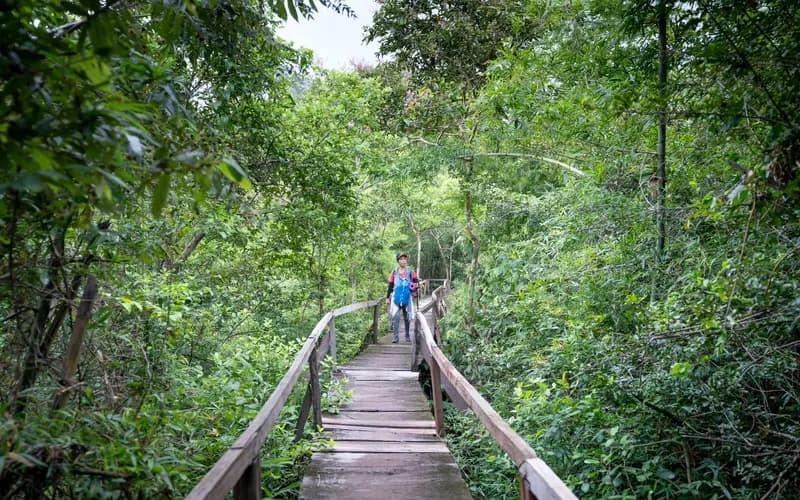
Parks follow their own rules, and they are generally easier for visitors to navigate.
At Taman Negara, the country's oldest protected rainforest, you register and buy permits at the park headquarters in Kuala Tahan; short trails and the canopy walkway can be done independently, while longer treks, including the multi-day climb of Gunung Tahan, require a licensed guide. Our portrait of Taman Negara at a slow pace covers how to spend a week there.
Penang National Park, on the island's north-west tip, asks visitors to register at the entrance before walking the coastal trails to its beaches. In Sarawak, Bako National Park charges foreign adults RM20 for entry and is reached only by a short boat ride from Kampung Bako; its colour-coded trails can be walked without a guide, although a guide will spot far more wildlife. At Gunung Mulu, most cave routes and the famous Pinnacles climb can only be done with park guides.
Mount Kinabalu: A System of Its Own
Mount Kinabalu in Sabah sits in a category of its own, with daily climber quotas, compulsory guides and permits that must be booked well ahead; our guide to climbing Mount Kinabalu explains the current system.
Heat, Rain and Daylight: Planning Your Hiking Day
Malaysia's climate shapes every hike. Temperatures in the lowlands sit in the low thirties with high humidity, and even short climbs are sweaty work. Start early. On the peninsula the sun rises a little after 7:00 and sets around 19:15, while in Sabah, further east but on the same clock, it rises and sets roughly an hour earlier. Aim to be walking at first light and off exposed ridges by early afternoon.
Afternoon thunderstorms are common for much of the year, particularly during the inter-monsoon periods. Lightning on open summits is a genuine hazard, and stream crossings that are ankle-deep in the morning can become dangerous within an hour of heavy rain upstream. Never cross fast-rising water. Regional weather also varies by coast; our guide to where to go and when explains how the monsoons affect each region.
In 2026 there is an extra factor: haze. When the Air Pollutant Index rises above 100, the unhealthy range, strenuous outdoor exercise is best postponed. Check the Department of Environment's official readings or its MyJAS EQMS app before any long hike.
Carry more water than you think you need, at least two to three litres for a half-day hike, plus electrolytes, and learn the signs of heat exhaustion: headache, dizziness, nausea and heavy sweating that suddenly stops.
Leeches, Wildlife and Other Small Worries
Leeches are the creature most first-time hikers fear and the one that matters least. They are common in lowland and hill forest, especially after rain, and they are harmless, if unpleasant. Leech socks, tightly woven over-socks pulled up over your trousers, are sold cheaply in outdoor shops and are the single most effective defence. Tucking trousers into socks and applying repellent to shoes helps too. If one attaches, slide a fingernail under the sucker to detach it rather than pulling; the bite may bleed for a while because of the anticoagulant, which is normal.
Macaques are a more practical nuisance: they are bold, fast and very interested in anything that looks like food. Keep snacks sealed in your bag, never feed them, and do not carry plastic bags in your hand near them. In Bako, bearded pigs wander the park headquarters. Snakes are present but rarely seen, and bites are uncommon for hikers who stay on the trail and watch where they put their hands. In an emergency, dial 999, or 112 from a mobile phone.
What to Pack for a Malaysian Trail
Keep it light, quick-drying and practical.
- Trail shoes with good grip; mud and roots make smooth soles treacherous.
- Leech socks and lightweight long trousers.
- A breathable long-sleeved shirt for sun and insects.
- A compact rain jacket or poncho, and a dry bag for your phone and passport copy.
- Two to three litres of water, electrolytes and salty snacks.
- A headlamp, even on day hikes, in case you are slower than planned.
- Insect repellent, sunscreen and a small first-aid kit.
- A printed or digital copy of your permit and identification.
Leave cotton at home: it stays wet for hours in the humidity.
Good Trail Manners
Malaysian hiking culture is sociable and early-rising, and a few habits will make you welcome. Greet people on the trail; a nod and a smile go a long way. Stay on marked paths, because shortcuts accelerate erosion on steep, rain-soaked slopes. Carry out all your rubbish, including fruit peel and tissues. Keep noise low near summits and waterfalls that locals visit for quiet. And dress modestly when passing through villages at the start or end of a trail, especially in more conservative states on the east coast.
Most importantly, respect closures. Trails are closed for real reasons, from landslides to wildlife activity to haze, and walking around a barrier puts rescuers at risk as well as you.
Easy Wins: Trails That Suit a Slow Trip
You do not need to tackle a big mountain to enjoy walking in Malaysia. Some of the most rewarding hiking fits easily into a slow itinerary.
In Penang, the coastal trails of Penang National Park lead to quiet beaches, and the forest paths up Penang Hill offer a cooler alternative to the funicular. Around Kuala Lumpur, the short, permitted climb of Bukit Broga at dawn is a local ritual, best done midweek. In the highlands, the trails around the tea estates and mossy forests of the Cameron Highlands suit gentle days on foot; our portrait of the Cameron Highlands at a slow pace covers where to base yourself. In Sarawak, a night or two at Bako rewards you with proboscis monkeys, sea stacks and quiet evening walks.
Choose one or two walks per region, go early, and leave the afternoons free. That is the slow way to hike Malaysia, and the most enjoyable.
What to Do Next
- Identify whether your chosen trail sits in a forest reserve, a national or state park, or an urban park, and check the current rules for that state.
- For forest reserve hikes, arrange the permit well ahead, ideally through a licensed guide or local operator.
- Book a licensed mountain guide for any peak above 600 metres, and for any trail where one is mandatory.
- Plan to start at first light, and check the weather and air-quality readings the evening before.
- Buy leech socks, pack a rain layer and carry at least two to three litres of water.
- Save the emergency numbers 999 and 112, and tell your accommodation where you are going.
- If you want a guided walking itinerary, contact one of our recommended travel agencies in Malaysia.
Frequently Asked Questions
Do I need a permit to hike in Malaysia?
For trails inside permanent forest reserves, yes. States such as Selangor now require an online permit for every hike in their reserves. National parks have their own entry and registration systems, and some urban trails need no permit at all.
Can foreigners hike without a guide in Malaysia?
On many lower trails and in parks such as Bako or Penang National Park, yes. But licensed guides are mandatory at 189 high-risk locations across the peninsula, for any Selangor hiking area above 600 metres, for most routes at Gunung Mulu and for Mount Kinabalu.
What changed for hikers in 2026?
Selangor temporarily suspended traverse and compressed hikes from 1 July 2026, and Perak banned day and compressed hikes on several high-risk routes, setting minimum durations of three to five days. Ordinary recreational day hikes remain open.
Are leeches dangerous?
No. They are unpleasant but harmless, and are most active after rain in lowland and hill forest. Leech socks are the best protection; if one attaches, slide a fingernail under it rather than pulling it off.
What is the best time of day to hike in Malaysia?
Early morning, starting at first light. It is cooler, wildlife is more active, and you avoid the afternoon thunderstorms that are common for much of the year.
Should I hike during the haze?
Postpone strenuous hikes when the Air Pollutant Index is above 100, which is classed as unhealthy. Check official readings before setting out, and choose short, shaded walks if conditions are borderline.