

Malaysia runs one of the oldest and largest community homestay programmes in Asia, and almost no independent foreign traveller uses it. By March 2026 more than 250 registered homestay clusters were operating across nearly 600 villages, supported by over 3,500 licensed operators. Most of that capacity is filled by domestic visitors, school groups and Malaysian families. The programme is open to anyone, costs very little, and offers something no hotel in the country can: a few days inside an ordinary household in an ordinary village. The obstacle is not price or availability. It is that the booking system is invisible if you do not know where to look.
What a Malaysian Homestay Actually Is, and What It Is Not
The word homestay has been thoroughly hijacked in Malaysia. Search any booking platform and you will find thousands of listings labelled homestay that are simply private apartments, condominium units or self-contained holiday houses rented whole, with no host present and no village involved. They are often perfectly good accommodation. They are not what this article is about.
The Malaysian Homestay Experience Programme, known locally as Program Pengalaman Homestay Malaysia or PPHM, is a community-based tourism scheme run by the Ministry of Tourism, Arts and Culture. Under its definition, a homestay is accommodation where the guest stays together with the host family in their own home. Villages apply as clusters rather than as individual houses, they must meet ministry guidelines on safety, hygiene and facilities, and the coordinator distributes bookings across participating households so income spreads through the community rather than concentrating on whoever markets best.
That structure is the whole point. The money goes into the village. The experience is not curated for you. And the exchange is genuinely reciprocal in a way that most cultural tourism is not, which is why it sits so comfortably alongside the principles in our charter for slow travel.
One request. Up to five tailored proposals.
Skip contacting agencies one by one — share your trip once and let up to five trusted Malaysia agencies come to you. Free, with no obligation.
Get my free quotesHomestay Versus Kampungstay: The Distinction That Matters
The ministry now runs two related products, and knowing the difference will save you a disappointing booking.
- Homestay under PPHM means staying in the family home, sharing meals and daily life with your hosts. Privacy is limited, the room is usually a spare bedroom, and the household schedule is the schedule.
- Kampungstay is the newer, larger-scale variant. You stay in a village-standard unit that may be a separate structure on the family's land, with more privacy and often a private bathroom, while still being embedded in the village and its programme of activities.
Neither is better. Kampungstay suits travellers who need a door that closes, families with young children, and anyone staying more than two or three nights. Homestay proper is the deeper experience and the one to choose if you want the evening on the veranda more than you want an en suite.
How to Find a Registered Homestay
There is no single polished national booking engine, which is the main reason foreign visitors miss the programme entirely. Work through these channels in order.
Start with the ministry. MOTAC publishes the official PPHM guidelines and cluster listings, and state tourism boards maintain their own directories. Sarawak's tourism ministry, for example, publishes a homestay cluster brochure with contact details for each village.
Then go direct. Nearly every cluster has a coordinator whose phone number is published, and in practice most bookings happen by WhatsApp. This feels unfamiliar if you are used to instant confirmation, but a message in simple English, two or three days ahead, stating your dates, your group size, whether you eat meat, and whether you want the activity programme, is usually all it takes. Coordinators are used to it.
Aggregators exist and can help. Platforms such as Go2Homestay collect village stays across the country in a more familiar interface, and some state agencies list packages. Just verify that what you are booking is a registered cluster and not a private rental using the same word.
Finally, a good local operator will arrange the whole thing, which is worth paying for if you are heading somewhere remote, travelling with limited time, or want an interpreter for the first night. Several of the specialists on our list of Malaysia travel agencies work directly with village clusters rather than resellers.
Get matched with up to 5 trusted Malaysia agencies
- Free
- No obligation
- Up to 5 agencies
What It Costs and What Is Included
Homestay pricing is refreshingly unlike hotel pricing. Most clusters quote per person per night, and the figure usually bundles accommodation, two or three home-cooked meals, and a share of the village activity programme. Expect somewhere between RM 80 and RM 180 per person per night for a full-board package in the peninsula, with simple bed-and-breakfast arrangements starting lower, around RM 50, and Borneo longhouse stays sitting at the upper end because of transport and guiding costs.
Two things about the money are worth knowing. First, payment is often in cash on arrival, or by local bank transfer; do not assume a card terminal. Second, the price is already low and the margin already thin, so haggling is inappropriate here in a way it might not be at a market stall. If you want to give more, buy things in the village, pay for extra activities, or tip the household directly at the end. For how homestay rates compare with the rest of your accommodation budget, see our Malaysia trip cost breakdown.
What a Day in a Kampung Looks Like
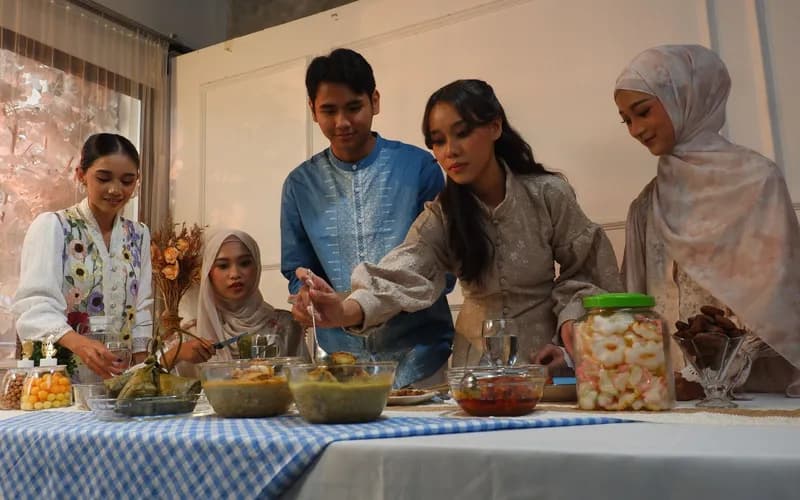
Village days are early and unhurried. You will probably be woken by the dawn call to prayer, or by roosters, or both. Breakfast is likely nasi lemak, a rice porridge, or leftovers from the night before, eaten whenever people appear rather than at a fixed hour.
The activity programme varies by cluster and season, and the good ones are simply the household's actual work opened up to a guest: tapping rubber, harvesting paddy, checking fish traps, collecting palm fruit, making kuih for a family event, weaving pandan mats, riding a motorbike out to an orchard. Some clusters run set demonstrations, batik printing or traditional games, which are enjoyable but more performed. Ask in advance what is happening naturally that week and ask to join that instead.
Afternoons are hot and generally empty, which surprises visitors who have paid for an experience. Sit them out. Evenings are the best part: dinner with the family, neighbours dropping in, children practising English, and long conversations that go nowhere in particular. That is the product.
Etiquette, Modesty and the Small Things
Most PPHM clusters are Malay Muslim villages, though the programme also includes Chinese, Indian, Iban, Bidayuh, Kadazan-Dusun and Orang Asli communities. In a Muslim household the basics matter: remove shoes at the door, dress modestly with shoulders and knees covered even in heat, use your right hand for eating and passing, do not bring alcohol into the house, and ask before photographing anyone, especially women and children.
Beyond religion, the general kampung courtesies apply. Greet the eldest person first. Accept food and drink when offered, even a token amount. Do not refuse hospitality outright, and do not overpraise an object unless you would be comfortable being given it. A small practical gift for the household, fruit, coffee, or something from your own country, lands far better than sweets handed to children. Our fuller guide to travelling Malaysia respectfully goes into the multicultural detail.
Where to Try It: Peninsular Malaysia and Borneo
Clusters exist in every state, but a few regions are consistently well organised for visitors who do not speak Malay.
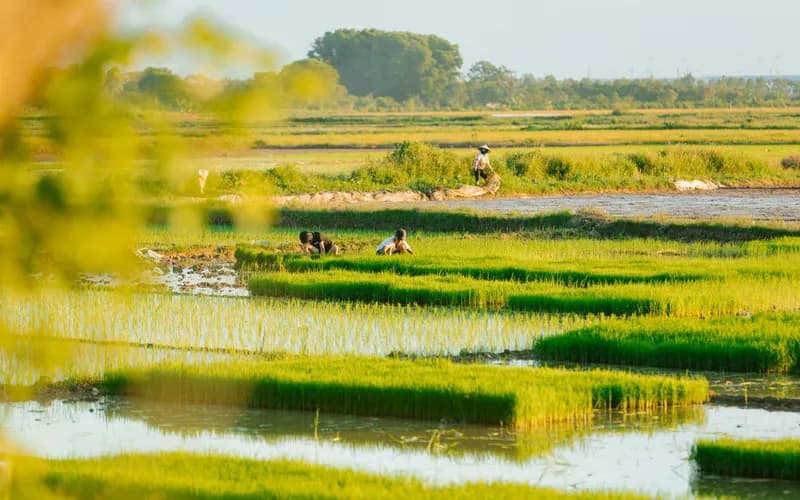
On the peninsula, look to the paddy country of Kedah and Perlis in the north-west, the fishing and craft villages of Terengganu and Kelantan on the east coast, the Malay river settlements along the Pahang and Perak rivers, and the Orang Asli and rural clusters within reach of the Cameron Highlands. Negeri Sembilan and Melaka's inland villages are the easiest first attempt from Kuala Lumpur, close enough for a two-night trial.
In Borneo, the model shades into longhouse hospitality. Sarawak's Bidayuh and Iban communities host visitors in and around longhouses, with Annah Rais near Kuching the most accessible entry point, and Sabah's clusters cluster around Kota Belud, the Crocker Range and the Kinabatangan. If Sarawak appeals, our profile of Kuching and its river-country hinterland explains how to fit a longhouse night into a wider trip.
Practical Preparation: What to Expect and What to Pack
Set your expectations honestly. Many homes have squat or bucket-flush bathrooms, mattresses on the floor rather than beds, fans rather than air conditioning, and intermittent hot water. Mobile coverage is usually fine, wifi often is not. Mosquitoes are a certainty.
Pack a sarong, which works as a towel, a blanket, a modesty layer and a bathroom wrap; a torch; strong repellent; any medication you rely on; and a plug adapter. Bring cash in small notes. Learn perhaps ten words of Malay, starting with terima kasih for thank you and sedap for delicious, both of which will be used constantly. And build in more time than you think: a single night in a village is mostly logistics, while two or three nights is when the household stops treating you as a guest and starts treating you as a temporary member of the house.
What to Do Next
- Decide between homestay and kampungstay based on how much privacy you actually need, then filter your search accordingly.
- Identify two or three clusters in one region rather than scattering them across the country, and check the state tourism board directory for current contact details.
- Message the cluster coordinator on WhatsApp at least three days ahead with dates, group size, dietary needs and whether you want the activity programme.
- Book a minimum of two nights, and schedule the stay in the middle of your trip rather than the first night, once you have found your feet.
- Withdraw enough cash in small denominations before you leave the nearest town, and confirm how payment is expected.
- Use plan your journey to fit the village days into a route that does not require a five-hour transfer either side.
Frequently Asked Questions
Do I need to speak Malay to stay in a homestay?
No, but a few words help enormously. Cluster coordinators generally speak functional English, and in most households at least one younger family member will too. Communication in the evenings is often part gesture, part phone translation and part shared food, which is not a problem so much as the point.
Are Malaysian homestays safe and regulated?
Registered PPHM clusters must meet Ministry of Tourism, Arts and Culture guidelines covering safety, hygiene and basic facilities, and coordinators are accountable to the ministry. The regulation applies to registered clusters only, which is another reason to verify that what you are booking is part of the programme rather than a private rental using the label.
How much does a village homestay cost per night?
Full-board packages including meals and activities commonly run between RM 80 and RM 180 per person per night on the peninsula. Simpler bed-and-breakfast arrangements can start around RM 50, and Borneo longhouse stays tend to cost more because of boat or road transfers and guiding.
Can I book a homestay for one night only?
You can, and many clusters will accept it, but it is rarely worth the travel. A single night is consumed by arrival, dinner and departure. Two nights lets you take part in a full village day, and three is when the relationship changes.
Is a homestay suitable for children or older travellers?
Village households are usually delighted to host children, and kampungstay units make it far more practical. For travellers with limited mobility, ask specific questions before booking: stairs to raised traditional houses, floor sleeping and squat bathrooms are common and are not always mentioned unless you ask.
What should I bring as a gift for my hosts?
Something useful and shareable: good coffee or tea, fruit bought locally on the way in, or a small item from your home country. Avoid alcohol in Muslim households, avoid giving money directly to children, and hand the gift to the head of the household rather than leaving it in the room.
Are homestays available during Ramadan and public holidays?
Many clusters continue to host during Ramadan and it can be an extraordinary time to visit, with the fast broken communally at sunset, but daytime rhythms change completely and some activities pause. Hari Raya, Chinese New Year and the school holidays are the busiest domestic periods, so book much further ahead or avoid them.