
Malaysia's Cruise Boom and What It Means for Slow Travellers
Somewhere between eight and ten in the morning, a street in George Town changes character. The kopitiam that was half-empty at seven has a queue. The trishaw riders who were dozing are suddenly negotiating in three languages. A clan jetty that belongs to a few dozen families becomes a walkway. Then, by five in the afternoon, it drains again. This is not a festival or a public holiday. It is a ship day, and in 2026 Malaysia is having a great many more of them.
What actually changed in 2026
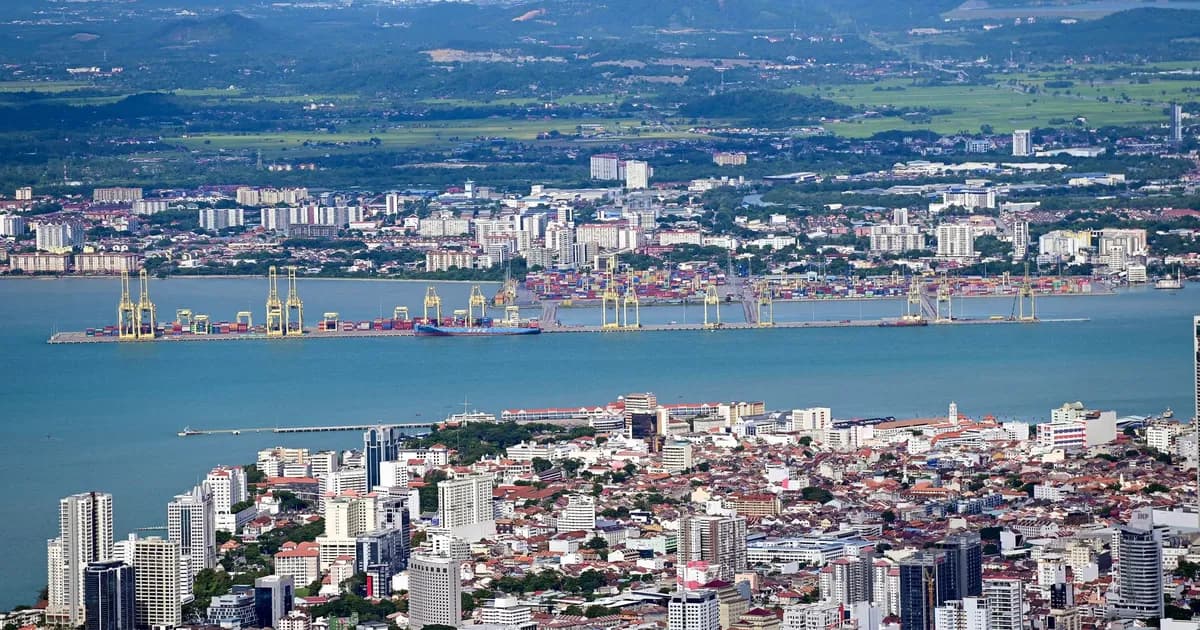
Malaysia has been a cruise destination for decades, but the shift under way now is structural rather than incremental. The Penang Port Commission set out a target of roughly 47 per cent growth in cruise passengers for 2026, on the back of a run of maiden calls in 2025 and a deliberate repositioning of Swettenham Pier from a port of call into a homeport.
The difference between those two words matters more than it sounds. A port of call is a stop: passengers come ashore for a fixed window and the ship sails. A homeport is where a voyage begins and ends, which means flights, hotel nights before and after, provisioning contracts and a permanent commercial footprint. The July 2025 agreement between Hwajing Travel and Tours and Astro Ocean Cruise to homeport the 1,760-passenger Piano Land in Malaysia was the visible marker of that change, with an inaugural departure from Penang calling at Port Klang Cruise Terminal on a short three-day itinerary.
Around it sits a broader regional push: route development linking Penang with Langkawi, Phuket and Aceh, Port Klang consolidating its position as the gateway port for Kuala Lumpur, and an industry conference, CruiseWorld Malaysia, held in Kuala Lumpur on 15 July 2026. All of it lands in the same year as Visit Malaysia 2026, the national tourism campaign, which is not a coincidence.
One request. Up to five tailored proposals.
Skip contacting agencies one by one — share your trip once and let up to five trusted Malaysia agencies come to you. Free, with no obligation.
Get my free quotesThe eight-hour window, and how a ship day works
Understanding cruise pressure requires understanding the clock. A typical port call gives passengers a minimum window of about eight hours ashore. That window is the entire economic and physical event.
Ships berth early. Shore excursions leave in coaches within the first hour, because the operators know the return deadline is absolute. Independent passengers follow on foot or by taxi. By late morning the historic core of whichever city is hosting has absorbed anywhere from several hundred to several thousand extra people, concentrated into perhaps two square kilometres of the most photogenic streets. By mid-afternoon the flow reverses, and by early evening the place returns to itself.
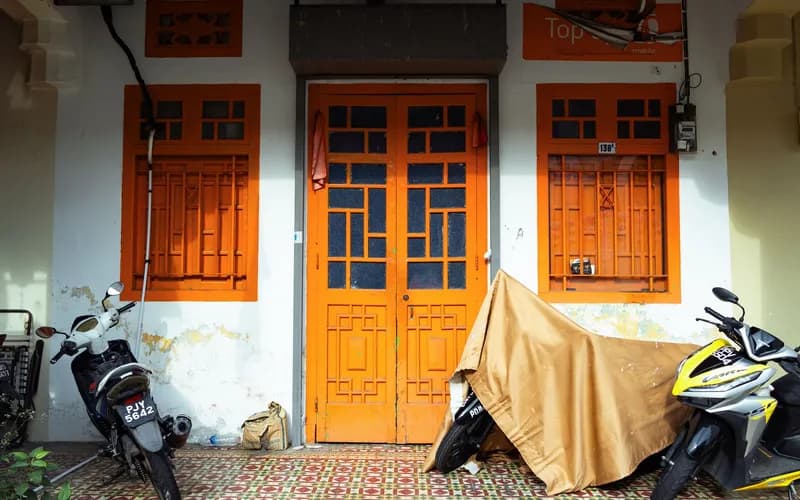
The effect is therefore not "more tourists" in any general sense. It is a sharp, predictable, time-boxed surge into a small number of blocks, repeated on specific dates. That predictability is the single most useful thing a slow traveller can know, because a pattern you can read is a pattern you can plan around. Melaka, which experiences something similar through a mix of cruise calls and day-trip coaches from Kuala Lumpur and Singapore, is the clearest case study on the peninsula, and we looked at how the city behaves across a full day in our piece on Melaka as a Straits heritage city.
George Town on a two-ship morning
George Town is the sharp end of this. The UNESCO-listed core is compact, walkable and beautiful, which is exactly why it is on every itinerary, and its carrying capacity is limited by the width of colonial-era streets rather than by any management plan.
On a single-ship day, the city absorbs the surge easily. Armenian Street gets busier, the mural queues lengthen, Chulia Street's cafés fill. On a two-ship day, particularly when a large vessel coincides with a smaller one, the character genuinely changes: the clan jetties become congested, the hawker centres run out of seats at lunch, and the trishaw fare doubles.
None of this ruins George Town. It does mean that a traveller who arrived for the street food, the shophouse architecture and the layered Peranakan and Tamil and Hokkien history will have a very different experience depending on which morning they chose to walk east of Beach Street. Our longer look at George Town's heritage and food at a slow pace covers where the city keeps its quieter hours, which is mostly early, mostly north, and mostly not on a mural trail.
Get matched with up to 5 trusted Malaysia agencies
- Free
- No obligation
- Up to 5 agencies
Langkawi, Port Klang and Melaka: different pressures entirely
The pressures are not identical across ports, and it is worth being precise.
- Langkawi absorbs cruise calls into an island that already handles heavy domestic ferry traffic. The pinch points are the jetty area, the cable car and Cenang Beach, rather than the island as a whole.
- Port Klang functions mainly as a transit port for Kuala Lumpur. Passengers are bussed an hour inland, which spreads the impact across a city of nearly two million and concentrates it on the Petronas Towers, Batu Caves and Central Market.
- Melaka takes its cruise passengers straight into a historic centre that is already the busiest weekend destination in the country.
- Kota Kinabalu, increasingly on Borneo itineraries, feels the effect most at the waterfront and on island day trips to Tunku Abdul Rahman Park.
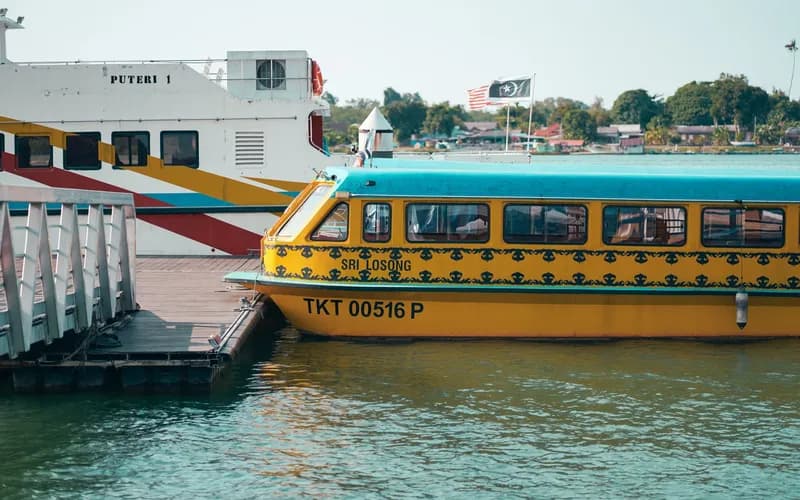
Langkawi is the most instructive of these for slow travellers, because the geography gives you an easy exit. Ten minutes inland from the jetty the island is largely unbothered, and the geopark's interior, mangroves and eastern coast operate on a completely different timetable. We set that out in detail in our article on Langkawi beyond the beach.
Who actually benefits, and who pays
The honest answer is: it depends who you ask, and the standard arguments on both sides are each partly true.
In favour: cruise calls deliver guaranteed volume to port cities on fixed dates, which supports employment at terminals, in coach operations and in guiding. Homeporting is materially better than a day call, because passengers arrive a night or two early and leave a night or two late, filling hotel rooms and restaurants that a day-tripper never touches. For a state like Penang, positioning itself as a regional hub also attracts investment that has nothing to do with tourism.
Against: per-passenger onshore spending is low compared with an overnight visitor, because meals and accommodation are already paid for on the ship. The businesses that gain most are the ones built for volume, and the ones that gain least are the small, slow, owner-run places that make a heritage city worth visiting in the first place. Pressure on water, waste and heritage fabric is borne locally and year-round; the revenue arrives in eight-hour bursts.
There is also a quieter concern about what gets built in response. When a city knows that several thousand people will arrive with four free hours, the commercial logic pushes towards fast, legible, photographable experiences, and away from the ones that take a morning to understand. That is a slow-travel problem, not an economic one, and it is why we hold to the principles set out in the UNRUSH slow travel charter.
What this means for slow travellers
Nothing here argues for avoiding Penang, Langkawi or Melaka. It argues for choosing your hours, and for accepting that the busy version of a place is also a real version of it.
Three practical adjustments cover most of the impact. Move your sightseeing to the first two hours after sunrise, when the historic cores are genuinely empty and the light is better anyway. Eat lunch late, after two, when the shore excursions have started their return. And build your stay around the days rather than the hours, which is really just an argument for staying longer: a four-night stay in George Town makes any single ship day irrelevant, while a one-night stay makes it decisive.
There is also a case for shifting a night or two out of the port cities entirely. The interior of the peninsula operates on an entirely different clock, and a few days in the rainforest is the strongest possible antidote; our guide to a slow week in Taman Negara sets out how to do it.
Reading the schedules before you book
Cruise schedules are public, and checking them takes about five minutes. Port authorities and terminal operators publish call calendars months in advance, listing vessel names, arrival and departure times and passenger capacity. Third-party cruise schedule sites aggregate the same data for Penang, Port Klang, Langkawi and Kota Kinabalu.
What to look for: the number of vessels on a given date, their combined capacity, and the arrival time. Two ships totalling 5,000 berths arriving at 07:00 is a very different day from one 1,200-berth vessel arriving at noon. Note that capacity is not the same as passengers ashore; occupancy is rarely 100 per cent and a proportion of passengers stay on board.
Use the schedule to place your arrival and departure days rather than to avoid ports altogether. A ship day is a perfectly good day to take a bus to a neighbouring town, do your laundry, sit in an air-conditioned museum in the middle of the afternoon, or simply start at six and be finished by ten.
What to Do Next
- Check the published cruise call calendar for Penang, Langkawi, Port Klang or Kota Kinabalu for the dates you are considering, before you book accommodation.
- Identify any date with two or more vessels arriving before 09:00, and treat those as poor choices for a first day in a heritage city.
- Extend your stay in any port city to at least three nights, so that a single ship day cannot define your visit.
- Plan your walking for the first two hours after sunrise and your lunch for after 14:00.
- Move one or two nights inland or to a quieter coast, so that your route is not made up entirely of ports.
- Ask any operator you book with whether their day tours are scheduled around cruise arrivals. Good local agencies track the calendar closely and will tell you plainly.
Frequently Asked Questions
How much is cruise traffic to Malaysia actually growing?
Penang, the country's most prominent cruise port, set out a target of around 47 per cent growth in cruise passengers for 2026, following a series of maiden calls in 2025 and a shift towards homeporting at Swettenham Pier. Other ports, including Port Klang and Kota Kinabalu, are also adding calls. Targets are ambitions rather than outcomes, so treat published figures as direction of travel rather than settled fact.
Which Malaysian destinations feel cruise pressure most?
George Town in Penang and Melaka feel it most sharply, because both have small, walkable historic cores. Langkawi's pressure concentrates at the jetty, the cable car and Cenang Beach. Port Klang's passengers are mostly bussed to Kuala Lumpur, where the impact spreads across a large city. Kota Kinabalu feels it at the waterfront and on island trips.
What is the difference between a port of call and a homeport?
A port of call is a stop of roughly eight hours during a longer voyage. A homeport is where itineraries start and finish, which brings flights, pre- and post-cruise hotel nights and provisioning contracts. Homeporting tends to deliver more local economic benefit per passenger, because people sleep and eat ashore.
Can I find out whether a ship will be in port on a given day?
Yes. Port authorities and terminal operators publish call schedules, and independent cruise schedule websites aggregate arrival dates, ship names and capacities for the main Malaysian ports. Check both the number of ships and their arrival times, since two early arrivals produce a very different day from one midday call.
Is it worth avoiding the port cities altogether?
No. George Town, Melaka and Langkawi are worth visiting on their own merits, and the surge is time-boxed rather than constant. The better response is to stay longer, walk early, eat late and keep at least some of your nights inland or on quieter coasts.
Does cruise growth conflict with slow travel?
Not inherently, but the incentives pull in different directions. Cruise economics reward fast, legible, high-throughput experiences, while slow travel depends on the small owner-run places that need time and repeat custom. The practical response is to spend deliberately with those businesses and to visit outside the eight-hour window.
Are cruise passengers to blame for crowding?
Largely no. They are working within a schedule they do not control, and in most Malaysian ports coach tours and domestic weekend traffic contribute at least as much congestion. The useful framing is not blame but timing: know when the surge happens and arrange your own hours around it.