Malaysia's Ambience Tourism: Why Travellers Now Choose a Feeling Over a Place
For decades, Malaysian tourism sold places: the Petronas Towers, the beaches of Langkawi, the orangutans of Sabah. In 2026, a quieter idea is gaining ground in industry conversations and in the Malaysian press: ambience tourism. The pitch is that travellers increasingly choose how a trip will feel, not just where it goes. Tranquillity, nostalgia, a sense of belonging in somebody else's home.
For slow travellers, this should sound familiar. It is, in effect, the commercial world catching up with a way of travelling that has always existed on the margins. But a trend that arrives with a marketing slogan deserves scrutiny. This article looks at what the idea means, what the numbers actually say, where it works, where it risks hollowing out the thing it sells, and how a careful traveller can use it well.
What "ambience tourism" actually means
The phrase, as it appears in Malaysian reporting this year, shifts the question from where visitors go to how they feel while they are there. It centres on tranquillity, nostalgia and authentic connection, and most often takes the form of community-based homestays in which guests join the daily rhythms of a host family. The slogan used by some industry voices is "selling emotions, not destinations".
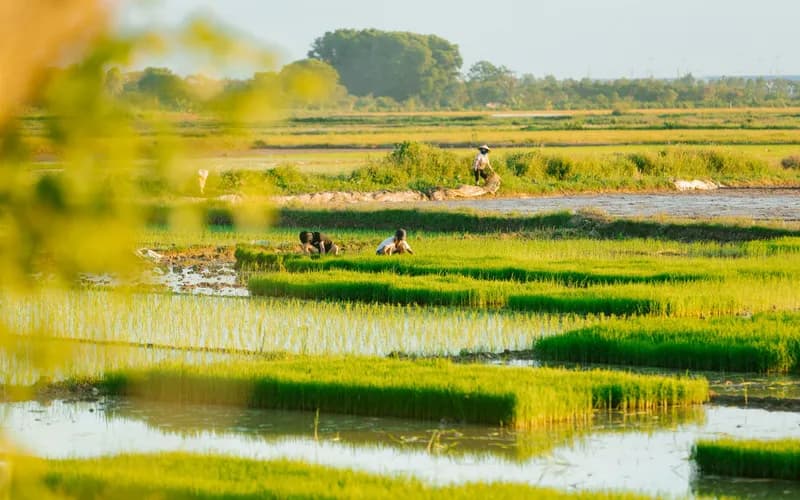
In practice, this describes things many Malaysians already do. A weekend in a grandparent's village house. Fishing by hand in a rice paddy. Cooking over a wood fire, cycling between kampung lanes at dusk, playing traditional games. What is new is not the activity but the recognition that international and domestic visitors will pay for it, and that it can be packaged as a product.
One request. Up to five tailored proposals.
Skip contacting agencies one by one — share your trip once and let up to five trusted Malaysia agencies come to you. Free, with no obligation.
Get my free quotesThe numbers behind the idea
The most useful data point comes from the Department of Statistics Malaysia: the share of domestic tourists choosing homestays rose from 3.4 percent in 2022 to 8.6 percent in 2024. That is a rapid shift from a very small base, and it is domestic rather than international, which matters. It suggests that Malaysians themselves are driving demand for slower, more rooted stays.
The Ministry of Tourism, Arts and Culture, known as MOTAC, projects that the homestay industry could generate up to RM200 million during Visit Malaysia Year 2026. For context, tourism contributed RM291.9 billion, or 15.1 percent of GDP, in 2024, so homestays are a small slice of a large industry. Treat the RM200 million as a projection, not an outcome, and keep it in proportion. The wider picture of the year is covered in our piece on what Visit Malaysia 2026 means for travellers.
One more number is worth keeping in mind. A market research estimate puts the global rural tourism market at about US$126.88 billion in 2026, rising to roughly US$210.50 billion by 2033. These are commercial forecasts and should be read with caution, but they explain why governments and investors are paying attention.
Two houses in Sungai Besar
The clearest illustration in the recent coverage comes from Sungai Haji Dorani in Sungai Besar, Selangor, a rice-growing district on the west coast. Two homestays there show how different the same idea can look.
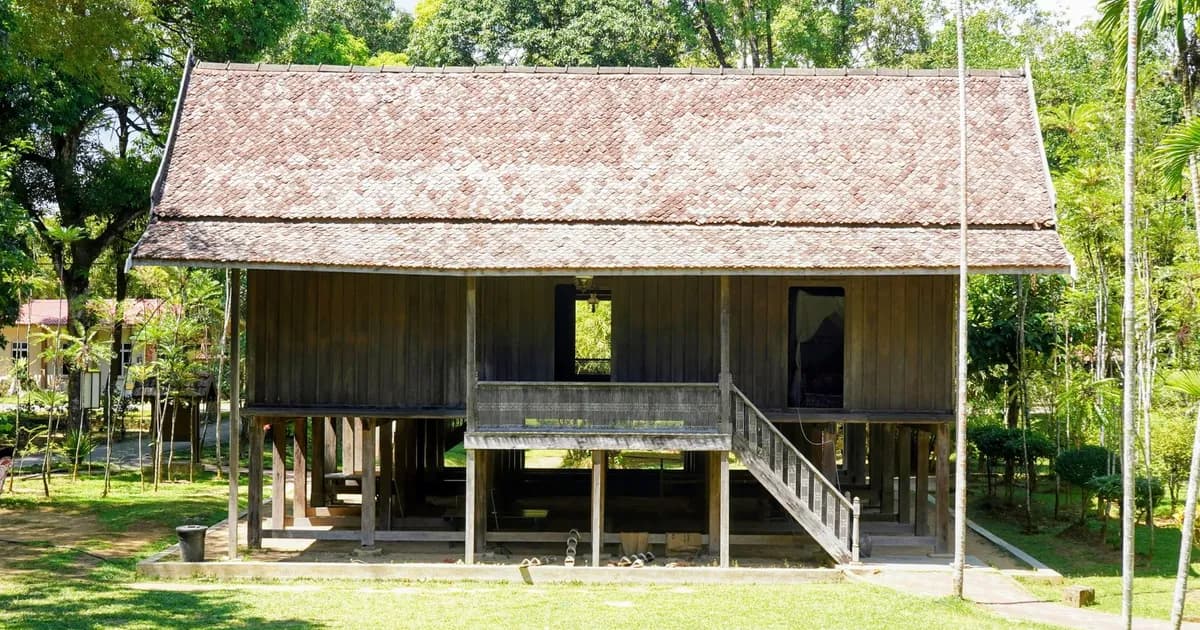
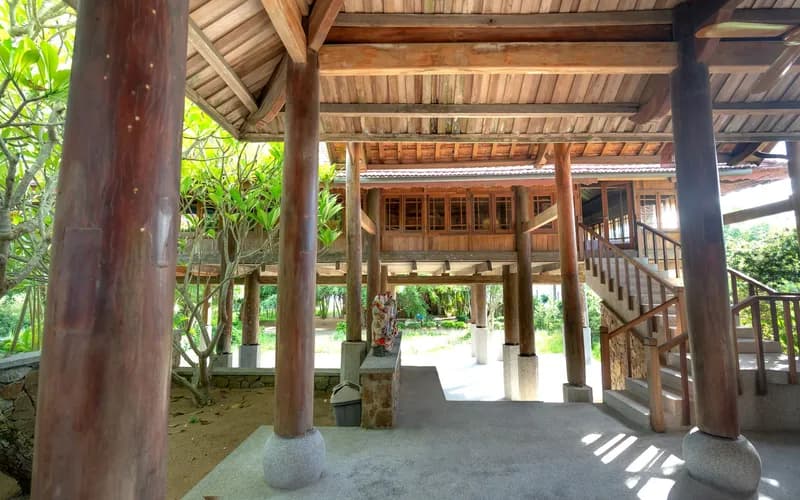
Laman Bendang Homestay is a timber Malay house of nearly sixty years, with antique furniture and traditional household objects. The activities are the point: catching fish by hand in the paddy fields, cycling, traditional games and kampung cooking. Firka Homestay, in the same village, is an ancestral home of roughly sixty-five years surrounded by rice fields. It deliberately offers unstructured time to relax rather than a programme of organised activities.
Both owners describe visitors returning to childhood memories, which is revealing. The product is not a bed and a breakfast. It is the feeling of a particular kind of Malaysia that many urban Malaysians have lost. For foreign guests, the appeal is similar, with a different emotional register: an unhurried, unguarded look at ordinary life.
Get matched with up to 5 trusted Malaysia agencies
- Free
- No obligation
- Up to 5 agencies
Who is actually buying
According to a tourism-industry founder quoted in the same reporting, the target markets for this kind of product are fairly specific.
- Europeans, seeking nature, local culture and rural lifestyles
- Singaporeans, looking for short, peaceful nature escapes
- Japanese and Koreans, who value tranquillity, authenticity and community interaction
- Millennials and Gen Z, who want personal, shareable experiences
This mix is interesting because it joins two very different motives. One is the quiet seeker, who wants fewer people and more meaning. The other is the traveller who wants a story to show. Both can coexist in a village, but not always comfortably.
The gap between the pitch and the product
The strongest criticism in the reporting comes from a lecturer in forestry and environment at Universiti Putra Malaysia, who argues that many tourism products still operate independently instead of being packaged into complete experiences. A visitor can find a lovely house, a good boat trip and a craft workshop, but nothing that links them into a journey that makes sense, or that can be booked in one place.
A second problem is registration. Many homestay operators are not registered with MOTAC, which limits their ability to be promoted internationally. For a visitor, that creates a practical dilemma. The most interesting houses are often the ones with the least visibility, and the ones with the clearest booking paths are not always the most authentic. Registered operators generally offer more predictable standards, while unregistered ones can offer more character and less recourse if something goes wrong.
The third problem is the risk that commercialisation erodes authenticity and threatens village landscapes. This is the central tension of the whole idea: the more a place is marketed as unspoiled, the more pressure it faces to change.
Where the idea works, and where it strains
Ambience tourism works best where the host is in control. A family that decides how many guests to take, what to cook, and how much of its daily life to share is selling something it can sustain. It strains where the product is designed by outsiders, scaled quickly, and photographed more than it is lived.
Look for these signs of the first kind.
- The family sets the number of guests and the pace, and the house does not feel like a hotel in disguise
- Meals are what the household actually eats, not a stage-managed menu
- The village benefits beyond the host, through shared guides, produce, transport or craft purchases
- You are given house rules in plain terms and are expected to follow them
- Nothing is promised that depends on the weather, the season or the mood of the host
What it means for the slow traveller
If you already travel slowly, ambience tourism offers real opportunities and a few traps. The opportunity is that more rural hosts are now thinking about visitors as guests rather than customers, and the state is paying attention to the sector. The trap is the temptation to treat a family home as a set. Your behaviour decides which side of that line the experience falls on.
Practical choices matter. Stay at least two nights, because the first night is for settling in and the second is when conversation begins. Ask before photographing people or the interior of the house. Eat what you are given, within your dietary limits, and say so early. Bring a small gift that is not money. Our full guide to staying in a Malaysian kampung homestay covers the etiquette in detail.
Beyond Selangor: where the logic travels
Selangor's paddy villages sit close to Kuala Lumpur and the main airport, which is why they feature so often in the coverage. The idea itself travels much further. Wherever a place has an intact village economy, a strong craft tradition or a landscape that has not been rebuilt for visitors, a version of it can exist. The ministry itself promoted authentic homestay experiences around Eid al-Adha in May 2026, a sign that the sector is now part of official messaging.
The east coast is a good test of how far the model can go. In Kelantan, markets, kite makers, silversmiths and village life are already the draw, and our regional piece on Kota Bharu and Kelantan shows how much of that can be experienced without any product designed for tourists. If you are looking for places where this kind of travel is still unpackaged, start there.
The risks nobody advertises
Three risks deserve a plain statement.
First, authenticity is fragile. A house that hosts ten guests a week behaves differently from one that hosts two. Second, the benefits are uneven. A strong online presence or a good photograph can concentrate bookings in a few homes while neighbours see nothing. Third, expectations rise faster than services. Visitors accustomed to hotel standards may complain about bathrooms, mosquitoes or the call to prayer, which says more about the guest than the host.
None of these are reasons to avoid the model. They are reasons to choose carefully, travel gently and recognise that you are a guest in someone's house, not a customer of an experience.
How to read the marketing
Because the phrase is new, expect it to appear on websites, brochures and social media captions before it means anything consistent. Some tips for reading it.
Authentic is a claim, not a standard. Ask what exactly is authentic: the house, the food, the activities, or the ownership by the host family? Community-based should mean that decisions and income stay with residents. If the booking goes through a platform, ask how much reaches the family. Immersive is often a polite word for a schedule filled with activities, which may be the opposite of ambience. The best homestays advertise less, not more.
Cross-check by asking simple questions before you book. Is the operator registered with the tourism ministry? How many guests does the house take? What does a typical day look like? A host who answers directly and without a script is usually a good sign. For quiet places that sit outside the main routes, our collection of hidden gems for slow travellers in Malaysia is a better starting point than any hashtag.
What the shift says about the market
Step back and the trend tells a story about the Malaysian tourism economy. Visit Malaysia Year 2026 has pushed arrivals and promotion, and the temptation in such years is volume. Ambience tourism pulls the other way. It trades volume for depth, which is exactly the argument slow travel has always made: fewer places, longer stays, more of the money reaching people who live there.
That is also why the idea belongs in the same conversation as nature-based travel. The logic of low-impact visits, local guides and small groups is the same in a rice village as in a rainforest, which we explore in our piece on ecotourism and low-impact travel in Malaysia.
Questions the industry still has to answer
An honest reading of the trend leaves several questions open. Who sets standards, and who enforces them in villages where nobody wants to be inspected? How are homestay incomes shared when a few houses attract most bookings? What happens to the paddy landscapes if demand grows faster than the villages can absorb? And will visitors who arrive for quiet stay for long enough to matter?
The answers will determine whether ambience tourism becomes a durable model or a passing label. For now, the sensible position is cautious interest. The numbers are small, the direction is encouraging, and the details are still being worked out by the people who live in these places.
A slow-travel reading of the trend
Our own principles are straightforward: stay longer, spend locally, travel with respect and leave places as you found them. Ambience tourism, at its best, fits that approach. At its worst, it is a new way of packaging the same hurry. The difference lies in what you do with the opportunity. The principles behind our approach are set out in the UNRUSH slow travel charter.
What to Do Next
- Decide whether you want a stay built around rest and conversation or around activities, and say so when you write to hosts.
- Shortlist two or three homestays, ask whether each is registered with the tourism ministry, and ask how many guests the house takes at one time.
- Plan at least two nights in each place, and keep the day after arrival free of other commitments.
- Pack for village life: modest clothing, insect repellent, a small gift and a flexible attitude to schedules.
- Pay your host directly where possible, and buy produce, crafts or guiding locally.
- Use our Malaysia journey planner to place a village stay within a wider route.
Frequently Asked Questions
What is ambience tourism?
It is an approach that sells how a trip feels, such as tranquillity, nostalgia and authentic connection, rather than a list of landmarks. In Malaysia it most often takes the form of community-based homestays.
Is homestay tourism growing in Malaysia?
Yes. Department of Statistics Malaysia data shows the share of domestic tourists choosing homestays rose from 3.4 percent in 2022 to 8.6 percent in 2024. The tourism ministry has projected that the sector could generate up to RM200 million during Visit Malaysia Year 2026.
Are all homestays in Malaysia registered?
No. Reporting this year notes that many operators are not registered with the tourism ministry, which limits international promotion. Registered homes tend to offer more predictable standards, while unregistered ones can offer more character and less recourse.
Who is ambience tourism aimed at?
Industry voices point to Europeans seeking nature and rural life, Singaporeans wanting short peaceful escapes, Japanese and Korean visitors who value tranquillity and community, and younger travellers who want personal, shareable experiences.
Does a homestay suit a first visit to Malaysia?
It can, if you pair it with a city stay. A village homestay is best for the second or third night of a trip, once you are used to the heat and the rhythm, and when you can give it at least two nights.
What is the main risk of the trend?
Commercialisation. If villages are marketed as unspoiled and then redesigned for visitors, the qualities that attracted people can disappear. Choosing hosts who control their own pace and numbers helps reduce that risk.
How should I behave as a guest?
Ask before taking photographs, dress modestly, follow house rules, eat what you are served and say early if you have dietary needs. Treat the house as a family home rather than a venue.