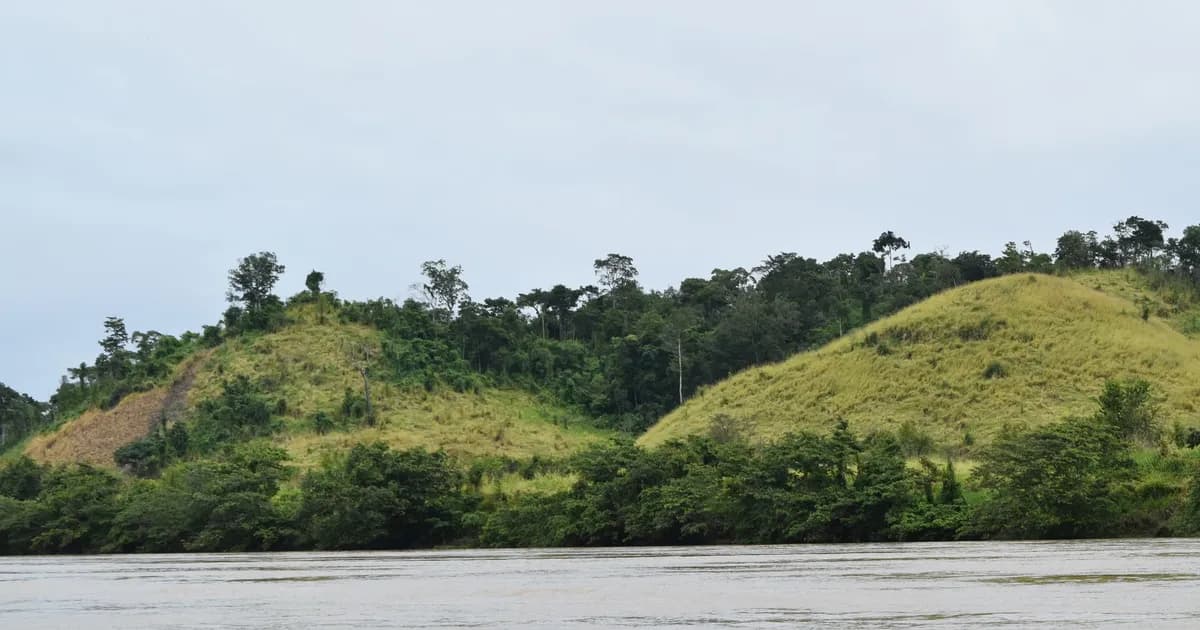


Langkawi arrives in most itineraries as a beach stop: three nights, a sunset cruise, one ride on the cable car, then a flight out. That version of the island is easy to book and easy to forget. The Langkawi that stays with people is slower — an archipelago of 99 islands whose limestone towers are older than almost anything else you will stand beside in Southeast Asia, threaded with mangrove channels, paddy fields and fishing villages most visitors never reach. It asks for a week rather than a weekend, and it gives that week back.
Why Langkawi Rewards a Longer Stay
Langkawi is bigger than it looks on a map. The main island runs roughly 25 kilometres across, and the drive from the resort strip at Pantai Cenang to the mangrove jetties in the north is a genuine 45 minutes. Travellers who compress the island into three nights spend much of that time in transit or in a queue, and they meet the version of Langkawi built for people in a hurry: jet skis, buffet dinners, a cable car line at eleven in the morning.
Stretch to seven nights and the arithmetic changes. You can give a full day to the north coast without feeling robbed of beach time. You can sit out a wet afternoon and take the boat the next morning, when the light is better and the tour groups have gone. You can eat at the same warung three times and be recognised on the third. Slow travel here is not an abstraction — it is the difference between seeing the island's marketed surface and seeing the island.
Timing matters too. Langkawi sits on the Andaman side of the peninsula, so it follows the west coast rhythm: clearest and driest from roughly December through February, hot and increasingly wet from April, wettest in September and October. If you are still weighing coasts, our note on choosing a Malaysian island around the monsoon lays out the trade-offs honestly.
One request. Up to five tailored proposals.
Skip contacting agencies one by one — share your trip once and let up to five trusted Malaysia agencies come to you. Free, with no obligation.
Get my free quotesA Geopark Long Before It Was a Beach Resort
Langkawi became Southeast Asia's first UNESCO Global Geopark in 2007, and the designation is not decoration. The Machinchang Cambrian Geoforest Park protects sandstone laid down more than 550 million years ago, among the oldest exposed rock in the region and the substrate for one of the planet's oldest rainforest systems. The Kilim Karst Geoforest Park is a maze of limestone stacks and tidal channels. Dayang Bunting Marble Geoforest Park holds a freshwater lake sitting improbably inside a marble basin, minutes from open sea. The Kubang Badak BioGeo Trail, added later, runs through mangrove, mudflat and the remains of old charcoal kilns.
Knowing this changes what you look at. The cable car up Gunung Machinchang stops being a photo opportunity and becomes a very fast ride through half a billion years of sediment. The stacks in Kilim stop being scenery and become drowned karst, the same limestone geology that shapes Krabi and Ha Long, seen from a smaller and quieter boat. Langkawi is one of the few places in Malaysia where the landscape explains itself if you give it an hour of attention.
The Quiet North: Kubang Badak and the Mangroves
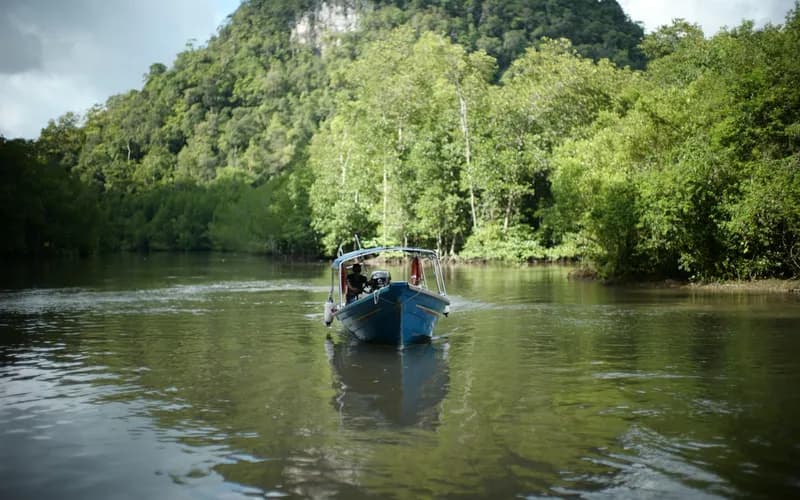
Kilim is the mangrove trip almost everyone books, and it is genuinely beautiful, but it has become a high-volume operation: large boats, fixed circuits, eagle feeding as a scheduled event. The feeding practice is contested by conservationists, and a traveller who cares about low-impact choices should ask an operator to skip it. Plenty will.
The alternative sits a short drive west. Kubang Badak is quieter, structured around walking and kayaking rather than a full-throttle boat loop, and interpreted as a learning trail rather than a spectacle. You move at the speed of a paddle. Kingfishers, mudskippers and macaques appear because you are slow enough to notice them, not because someone threw food into the air. Half a day there teaches more about a mangrove system than three hours of engine noise in Kilim.
If you want both, take Kilim early — the first boats leave around 9am and the channels are almost empty — and save Kubang Badak for a separate morning. Book direct with a small local operator where you can; the Malaysian agencies we have reviewed tend to work with guides who explain the geology rather than simply drive the boat.
Get matched with up to 5 trusted Malaysia agencies
- Free
- No obligation
- Up to 5 agencies
Kampung Life Between the Beaches
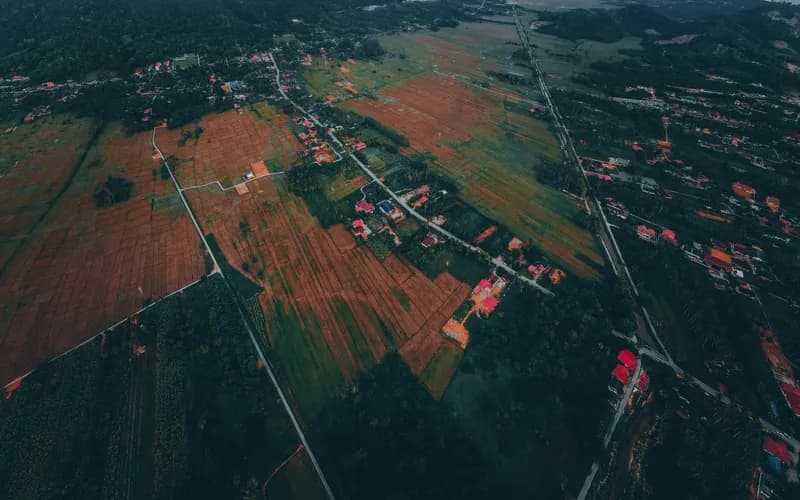
Away from Cenang and Tengah, Langkawi is still rural. Paddy fields fill the interior around Kampung Kilim and Kisap. Buffalo stand in irrigation ditches. Roadside stalls sell nasi lemak from six in the morning and are packed up by nine. The Sunday and midweek pasar malam rotate between villages, and they are the cheapest, best meals on the island by a wide margin.
This is where a slow week pays for itself. Rent a scooter or a small car, drive the inland loop, stop where there are motorbikes parked outside. Ask what is good rather than what is available. Langkawi's food is Kedah food — heavier on the Thai border influences than Penang's, with sour-hot gulai, laksa Kedah and generous use of budu and belacan. It is not the island's headline attraction, which is precisely why it stays honest.
Getting There, and Why the Ferry Is Worth It
Most people fly. Langkawi International Airport is well served from Kuala Lumpur, Penang, Subang and Singapore, and fares booked a few weeks out are usually modest. But the ferry is the better arrival if your schedule allows it.
Two mainland ports serve the island. Kuala Perlis is the faster crossing at around one hour fifteen minutes; Kuala Kedah takes closer to one hour forty-five. Fares were revised on 1 January 2026, with Malaysian adult tickets around RM24 from Kuala Perlis and RM30 from Kuala Kedah; foreign visitors pay a higher published rate, so check the fare shown at booking rather than assuming the local price. The direct Penang–Langkawi ferry has been suspended indefinitely, which surprises a lot of travellers still working from older guidebooks — from Penang you now go by road or air.
Coming in by sea gives you the archipelago in the right order: the mainland flattening behind you, then the outliers, then Kuah. For anyone assembling a car-free route through the peninsula, the ferry connects neatly with rail and bus links covered in our guide to getting around Malaysia without a car.
What Langkawi Costs in 2026
Langkawi is not the bargain it was, and it is worth saying so plainly. Accommodation on Cenang has drifted upward; mid-range guesthouses in the north and around Kuah remain good value. Scooter hire runs roughly RM40–60 a day, a small car RM100–150. The Langkawi SkyCab is priced in tiers, with international visitor tickets commonly quoted from around RM85 depending on gondola class and bundled attractions — Malaysian residents pay considerably less.
The island's duty-free status is a live political question. Langkawi was declared duty free on 1 January 1987, but duties on cigarettes and tobacco were reimposed from 1 January 2021, ending fully duty-free status. Through 2026 the federal government has been reviewing whether to restore it, with local industry groups pushing hard. Nothing has changed for visitors yet, and alcohol and chocolate remain cheaper here than on the mainland. Treat any promise of a broader restoration as a proposal, not a fact.
Arrivals give some context for the crowds: Langkawi passed three million visitors last year, up from just under 1.1 million in 2021, and Kedah has been targeting four million for 2026. The island is busy, and getting busier.
Where Langkawi Disappoints
Honesty is part of the point. Cenang at sunset is loud, and the beachfront has more parasailing than atmosphere. Development along the western shore has been permissive, and some of it is ugly. Reef health around the most visited snorkelling sites has declined; Pulau Payar, the marine park south of Langkawi, carries real pressure from day-trip volumes and now sits under the same conservation charges and rules as Malaysia's other marine parks — worth reading before you book a trip, in our summary of the 2026 marine park fees and rules.
Water supply on the island is periodically strained. Waste management is visibly imperfect on some beaches. None of this makes Langkawi a bad destination — it makes it a place where where you stay, who you book with and how long you linger genuinely matter.
A Slow Week on Langkawi
A workable rhythm: two nights near Kuah or Tanjung Rhu to start, unhurried, orienting yourself and eating at the night market. Then three nights in the north — one morning in Kilim before the boats fill, one morning kayaking Kubang Badak, one full day doing nothing but the inland paddy loop and an early dinner. Finish with two nights on the west coast for the sunsets, the cable car early in the day, and one boat out to Dayang Bunting.
That leaves room for weather. It leaves room for the afternoon you decide to read instead. It is roughly the pace our slow traveller's guide to Malaysia recommends for anywhere in the country: fewer places, longer stays, mornings for movement and afternoons for rest.
What to Do Next
- Decide your season first. December to February is the reliable window; September and October are genuinely wet on this coast.
- Book seven nights, split between two or three bases rather than one. The island is too spread out for a single base to work well.
- Choose your mangrove trip deliberately — Kubang Badak for depth and quiet, Kilim for scale, and ask any operator to skip eagle feeding.
- Check ferry fares and departure times directly with the operator on the day you book; the foreign visitor rate differs from the local rate.
- Budget for the SkyCab and any marine park trip separately, and confirm current conservation charges before you travel.
- If you want a guide who explains the geopark rather than driving you past it, work with a small local operator rather than a hotel desk.
Frequently Asked Questions
How many days do you need in Langkawi?
Three nights covers the headline sights badly. Five is workable. Seven lets you see the north coast, the interior and the west coast properly, absorb a rained-out afternoon without losing anything, and still spend real time on a beach. If you only have three nights, pick one half of the island and skip the rest rather than racing between them.
Is Langkawi still duty free?
Partly. Langkawi has been a duty-free island since 1987, but duties on cigarettes and tobacco were reimposed on 1 January 2021, so it is no longer fully duty free. Alcohol, chocolate and some cosmetics remain notably cheaper than on the mainland. The federal government has been reviewing a restoration of full duty-free status during 2026, but no change has been enacted.
Can you still take a ferry from Penang to Langkawi?
No. The direct Penang–Langkawi passenger ferry has been suspended indefinitely, despite still appearing in older guidebooks and blog posts. From Penang, travel by road to Kuala Perlis or Kuala Kedah and take the ferry from there, or fly the short hop.
Do you need to rent a vehicle in Langkawi?
Practically, yes, unless you plan to stay within one beach area. Public transport on the island is thin and taxis add up quickly across the distances involved. A scooter suits confident riders; a small car is safer in rain and cheap by regional standards. Grab operates but coverage in the rural north is unreliable.
Which mangrove tour is better, Kilim or Kubang Badak?
They serve different purposes. Kilim delivers dramatic karst scenery on a well-organised, high-volume boat circuit. Kubang Badak is quieter, slower and more educational, built around kayaking and walking rather than engine power. Travellers prioritising wildlife and interpretation generally prefer Kubang Badak; those with one morning and a camera often prefer Kilim.
Is Langkawi suitable for travellers who do not drink alcohol?
Yes. Kedah is a conservative state, and although Langkawi's duty-free status makes alcohol unusually cheap and visible in the resort strip, the rest of the island is quietly observant. Modest dress away from the beach is appreciated, especially in villages and around mosques, and non-alcoholic options are available everywhere.
When is the worst time to visit Langkawi?
September and October are the wettest months on this coast, with heavy afternoon storms and occasionally cancelled boat trips. It is not a write-off — rates fall, the island is green and the crowds thin — but if a specific boat trip or a beach week is the whole point of your journey, avoid those two months.