

For as long as anyone travelling in Malaysia can remember, the country has had two coasts and one transport system. The west coast — Kuala Lumpur, Ipoh, Penang, Melaka — is stitched together by electrified rail, a north-south expressway and constant flights. The east coast has had buses, a slow single-track line through the interior, and three regional airports. That asymmetry is why Kelantan, Terengganu and inland Pahang still feel like a different country to visitors who only know the Klang Valley. It is also about to change. The East Coast Rail Link, a 665-kilometre standard-gauge railway under construction since 2017, is scheduled to begin commercial passenger service between Kota Bharu and Gombak in January 2027. This is the single biggest change to the map of Malaysian travel in a generation, and it is worth understanding before it happens rather than after.
What the ECRL actually is
The ECRL is a new-build, dual-purpose railway carrying both freight and passengers, operated by Malaysia Rail Link. It is not an upgrade of an existing line. It runs on its own alignment, largely inland of the coastal road, linking the northeastern state of Kelantan to the Klang Valley and eventually to Port Klang on the Strait of Malacca.
The project is now in its final stage. As of the most recent official reporting, overall progress on the first phase stands at just over 95 per cent, and the line has moved from construction into systems integration, testing and commissioning. Power has been energised at all ten feeder stations along the Kota Bharu to Gombak alignment. Gombak station itself was reported at close to 99 per cent complete during 2026.
Phase 1, Kota Bharu to Gombak, is due to be finished in December 2026 and to enter commercial service in January 2027. Phase 2, extending the line west from Gombak to Port Klang, is scheduled for completion in December 2027 with service from January 2028.
The initial passenger fleet is ten trainsets, each carrying between roughly 300 and 425 passengers depending on configuration, giving an early capacity of around 10,000 passengers a day. Several trainsets had already been delivered to Malaysia by mid-2026.
One request. Up to five tailored proposals.
Skip contacting agencies one by one — share your trip once and let up to five trusted Malaysia agencies come to you. Free, with no obligation.
Get my free quotesThe route, station by station
Twenty stations are planned across four states, ten passenger-only and ten combined passenger and freight. Running from the northeast:
- Kelantan: Kota Bharu, Pasir Puteh
- Terengganu: Jerteh, Bandar Permaisuri, Kuala Terengganu, Dungun, Kemasik, Chukai
- Pahang: Cherating, Kuantan Port City, Kota SAS, Paya Besar, Maran, Temerloh, Bentong
- Selangor: ITT Gombak, Bandar Serendah, Puncak Alam, Kapar, Jalan Kastam for Port Klang
The Selangor stations west of Gombak belong to Phase 2. For travellers, the first phase is the one that matters: it puts Kota Bharu, Kuala Terengganu, Dungun, Cherating and Kuantan on a direct rail line to the edge of the Kuala Lumpur conurbation, where Gombak connects to the existing Klang Valley rail network.

Why this matters more than a normal railway
Malaysia already has trains on the east side of the peninsula, and this is where confusion sets in. The existing East Coast Line — the so-called jungle railway, running from Gemas through Gua Musang to Tumpat — is a metre-gauge, largely single-track line built for a different era. It is slow, atmospheric, unreliable in the best possible sense, and beloved by a particular kind of traveller. It also runs through the interior, nowhere near the coast, and it is not being replaced. Both lines will exist.
What the ECRL adds is speed and predictability on a corridor that has never had either. The practical consequence is that a journey from Kuala Lumpur to Kuala Terengganu that currently means either a flight or seven to nine hours on a bus becomes a single scheduled rail trip. Places that were a full travel day from the capital become a half day. That is the kind of change that reorganises where people go.
If the older, slower rail experience is what draws you, it is still there, and our guide to travelling peninsular Malaysia by train covers the ETS network and the jungle railway as they stand today.
Get matched with up to 5 trusted Malaysia agencies
- Free
- No obligation
- Up to 5 agencies
The east coast as it is today
To understand what will change, it helps to be clear about the present. The east coast of peninsular Malaysia is more conservative, more Malay-majority and considerably quieter than the west. Kota Bharu is a market town with one of the finest fresh markets in Southeast Asia and a strong craft tradition in batik, songket and silverwork. Kuala Terengganu has a restored waterfront, Chinatown and boatbuilding villages nearby. The coastline between them is a long ribbon of fishing kampungs, casuarina trees and beaches with almost nobody on them.
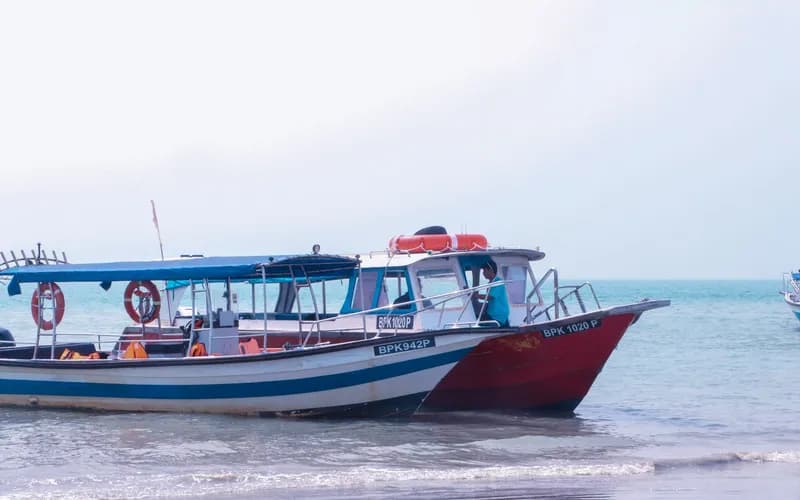
Offshore lie the islands that already draw visitors: the Perhentians, Redang, Lang Tengah, Kapas and Tenggol. Inland Terengganu holds Kenyir Lake. In Pahang, Cherating has turtles and a modest surf season, and Taman Negara — the oldest protected rainforest in the peninsula — is reached from Jerantut, not far from the future Temerloh station.
Almost all of this currently requires either a domestic flight or a long road journey. The dispersal that follows a fast railway is precisely what the region has never experienced.
What the monsoon does to the calendar
No discussion of the east coast makes sense without the northeast monsoon. From roughly November to February, heavy rain and rough seas close most island resorts and boat services. It is not a marketing inconvenience; ferries genuinely stop and some islands effectively shut.
A railway does not change the weather. What it may change is the shoulder season. If reaching Kuala Terengganu becomes a comfortable half-day rather than an ordeal, March and October become far more attractive to domestic travellers, and the season stretches at both ends. For visitors who prefer emptier beaches and are willing to accept some rain, that is good news now and slightly worse news in five years. If you are weighing coasts and months, our breakdown of how to choose your Malaysian island sets out which side of the peninsula works in which season.
Winners, pressure points and what to watch
Not every station will matter equally. Kuala Terengganu and Kota Bharu are established regional centres with accommodation, food and things to do; they will absorb visitors easily. Cherating already has a small tourism economy. Kuantan is a working port city that will gain business travel more than leisure.
The pressure points are the small places. Dungun, Kemasik, Chukai and Pasir Puteh are ordinary Malaysian towns with limited rooms and no experience of arrival volumes. The islands are the sharper case: the Perhentians and Redang are small, ecologically fragile, and already busy in high season. A railway does not add island capacity. It adds people trying to reach it.
This is the tension worth naming honestly. Better access is genuinely good for the east coast economically, and it is exactly the kind of low-carbon transport that a slower travel ethic should support. It also concentrates arrivals into the same July and August weeks on the same handful of beaches. The outcome depends on whether Terengganu and Kelantan use the next two years to build capacity inland as well as on the coast.
What it means for slow travel specifically
For anyone who prefers overland movement, the ECRL is straightforwardly good. It removes the strongest argument for taking a domestic flight to the east coast, and it makes a genuine loop possible: north up the west coast by ETS, across, and back down the east side by rail. Malaysia becomes one of the few countries in Southeast Asia where a two-week trip can be done end to end on trains and boats.
It also improves the case for staying longer in one place. When the journey home is a scheduled four or five hours rather than a bus gamble, the marginal cost of adding three days in a fishing village drops. That is the mechanism by which good transport supports slower travel rather than faster tourism.
The community-stay network is where this could land well. Kelantan and Terengganu have some of the country's most established village homestay programmes, and they sit in exactly the small towns the line will serve. Our guide to staying in a Malaysian kampung homestay explains how these work and what to expect.
The counter-argument: go now
There is a version of this article that says wait for the train. We would say the opposite. The two seasons before January 2027 are the last in which the east coast will be difficult to reach, and difficulty is a large part of why it is the way it is. Kota Bharu's market at six in the morning, an empty beach at Kemasik, a Perhentian jetty in late September — these are experiences shaped by the effort of getting there.
None of that disappears overnight. Railways change places gradually, and the first year of any new line is usually about learning the timetable. But the direction of travel is clear, and the current window is the quiet one. Malaysia's wider tourism push adds to the pressure; our analysis of what Visit Malaysia 2026 means for travellers sets out how the national campaign is already shifting visitor numbers.
How to travel the east coast before the line opens
Until January 2027 the practical options are unchanged. Firefly and other carriers fly from Subang and KLIA to Kota Bharu, Kuala Terengganu and Kuantan in under an hour. Express buses run overnight and by day from Kuala Lumpur's Terminal Bersepadu Selatan, taking seven to nine hours depending on destination and traffic. The jungle railway reaches Wakaf Bharu, a short taxi ride from Kota Bharu, from Gemas or from Johor Bahru, and remains the most interesting way to cross the interior.
Renting a car is the other honest answer. The coastal Route 3 between Kota Bharu and Kuantan is one of the more rewarding drives in the country, with long empty stretches, fishing villages and beach access that no railway will ever replicate.
What to Do Next
- Decide which side of the January 2027 line you want to be on. If you want the east coast quiet, plan for 2026 or the first half of 2027 before schedules settle and word spreads.
- Build your dates around the monsoon first and the railway second. March to October is the workable window for islands and boats; November to February is for markets, crafts and the interior.
- Pick two bases rather than five stops. Kota Bharu plus one Terengganu coastal town is a better two-week shape than a station-by-station crawl.
- Book island accommodation early for July and August, and consider late March or early October instead, when boats are running and beaches are far emptier.
- Check ECRL announcements from Malaysia Rail Link directly rather than relying on aggregator sites, since opening dates and stopping patterns will firm up during 2026.
- If you want the region interpreted rather than merely crossed, start with our Malaysia trip planning resources and build the route backwards from the places you actually want to spend time in.
Frequently Asked Questions
When will the ECRL open to passengers?
Phase 1, between Kota Bharu and Gombak, is scheduled for completion in December 2026 with commercial passenger service from January 2027. Phase 2, from Gombak to Port Klang, is planned for completion in December 2027 and service in January 2028. Dates on projects of this scale can move, so confirm before booking around them.
Will the ECRL replace the jungle railway?
No. The existing East Coast Line through Gua Musang to Tumpat is a separate metre-gauge route running through the interior, and it is not being closed. The ECRL is a new standard-gauge line on a different alignment nearer the coast. Travellers will have both options.
How long will the journey from Kuala Lumpur to Kota Bharu take?
Detailed timetables and journey times had not been published at the time of writing. What is known is that the line is designed for a substantially faster trip than the current seven-to-nine-hour bus, on a route with twenty planned stations. Treat any specific figure you see online before the official timetable as an estimate.
Should I wait for the railway before visiting the east coast?
Only if the current journey is a genuine obstacle for you. The east coast is reachable today by short domestic flight, express bus or car, and it is quieter now than it will be once the line opens. If you value emptiness, going sooner is the better call.
Which east coast towns are worth basing yourself in?
Kota Bharu for markets, crafts and food; Kuala Terengganu for the waterfront, Chinatown and access to Kenyir Lake and the islands; Cherating for a small, low-key beach base in Pahang. Each supports several days rather than an overnight stop.
Does the monsoon really close the islands?
Largely, yes. From about November to February the northeast monsoon brings heavy rain and rough seas, boat services are suspended and most island resorts close. The mainland remains open and is a good rainy-season destination for markets, museums and craft workshops, but do not plan island time in those months.
Will the ECRL make the east coast more expensive?
Probably, over time, and unevenly. Better access usually raises accommodation prices in the most visited spots first, while small towns off the station list change little. The most likely near-term effect is stronger domestic weekend demand around Kuala Terengganu and Cherating, which will show up in high-season room rates before anything else.