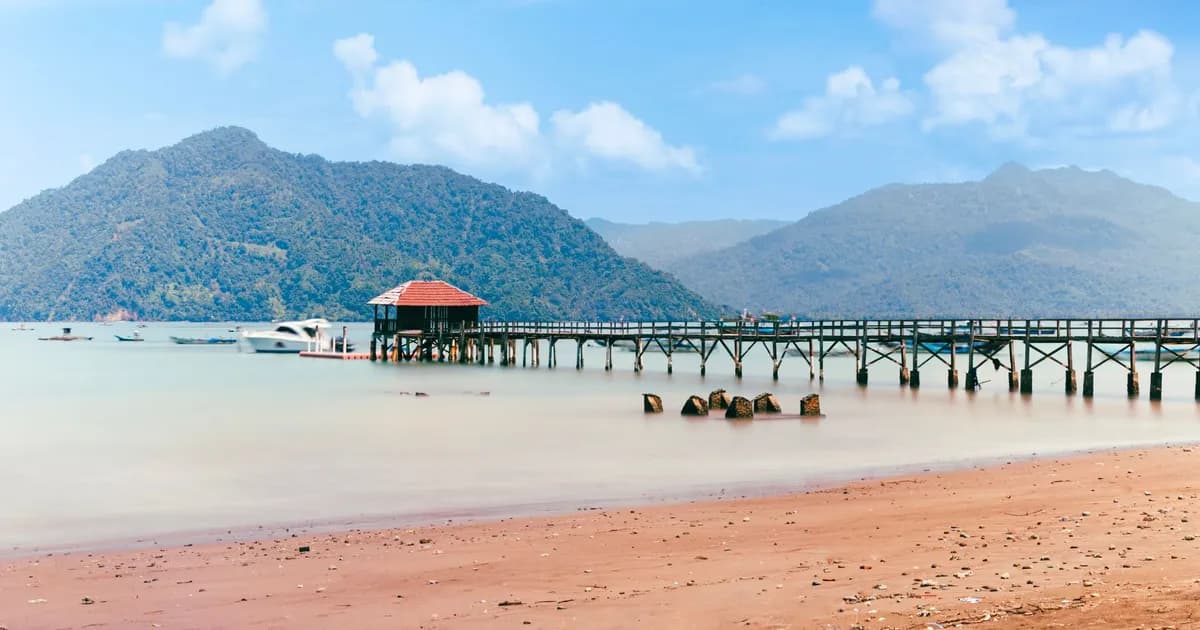


If your Malaysian itinerary includes Tioman, the Perhentians, Redang, Pulau Payar or any of the country's other protected islands, two things are worth knowing before you reach the jetty. You will pay a conservation charge that most booking sites do not include in their quoted price, and since 1 January 2026 you are required to carry your own rubbish back to the mainland when you leave. Neither is onerous. Both catch travellers out.
What Changed on 1 January 2026
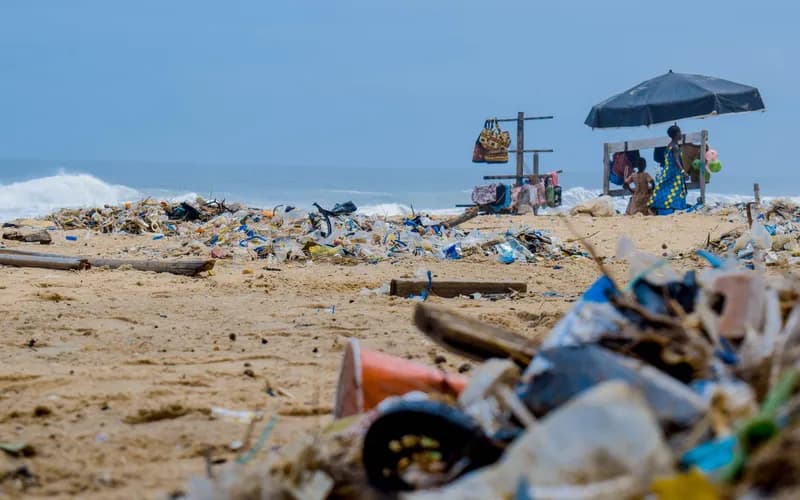
The Ministry of Agriculture and Food Security, acting through the National Advisory Council of Marine Parks and Marine Reserves, introduced a requirement that all visitors to Malaysia's marine parks take their waste back to land. The decision was backed by state governments and conservation organisations, and the reasoning is straightforward: plastic pollution has been identified as the single greatest threat to the country's marine ecosystems, and small islands cannot process the volume of waste their visitors generate.
In practice this means anything you carry onto a marine park island should leave with you. Snack wrappers, water bottles, sunscreen tubes, cigarette filters. Resorts and dive operators are being asked to support the system, but the obligation rests with the visitor.
The change is modest in itself. Its significance is what it signals — a shift from marine parks as a fee-collecting formality to marine parks as places with enforceable expectations of behaviour. Travellers who already pack out their waste will not notice a difference. Travellers who assumed a resort would deal with it will.
One request. Up to five tailored proposals.
Skip contacting agencies one by one — share your trip once and let up to five trusted Malaysia agencies come to you. Free, with no obligation.
Get my free quotesWhat the Conservation Charge Costs
The conservation charge is set by the Department of Fisheries Malaysia and applies across the peninsula's marine parks. The published rates are:
- Non-Malaysian adults: RM30
- Non-Malaysian children (under 12) and seniors (over 60): RM15
- Malaysian adults: RM5
- Malaysian children and seniors: RM2
Toddlers, holders of an OKU disability card and residents of islands inside the marine park zone are exempt. The charge is per visit, not per night, and it is separate from any accommodation, ferry or dive costs.
Thirty ringgit is a small sum, but it is one of several charges that stack up in Malaysia and are rarely quoted upfront. Alongside the tourism tax on accommodation and the various state-level levies, it forms part of a pattern we set out in our breakdown of what travellers actually pay in Malaysian tourism taxes and fees.
Where and How You Pay
This is where most travellers are caught out: the charge is collected in cash, at a dedicated counter, at the mainland ferry terminal, before you board. Not at the island. Not online. Not by card in most cases.
The counters sit at Kuala Besut for the Perhentians, at Merang and Kuala Terengganu for Redang, and at Mersing and Tanjung Gemok for Tioman. Pulau Payar day trips from Langkawi generally have the charge collected by the operator, but confirm this rather than assume it.
Two practical consequences follow. First, carry small ringgit notes. There is rarely an ATM at the counter and no card terminal you can rely on. Second, arrive at the jetty early — an hour before departure is sensible — because the queue for the conservation counter is separate from the ferry queue and both move slowly in high season. If you are planning your route to a jetty by bus, our guide to getting around Malaysia without a car covers the connections and the timing traps.
Keep the receipt. Rangers do occasionally check, particularly on organised snorkelling trips inside park boundaries.
Get matched with up to 5 trusted Malaysia agencies
- Free
- No obligation
- Up to 5 agencies
Which Islands Are Actually Marine Parks
Not every Malaysian island sits inside a marine park, and the distinction determines whether you pay.
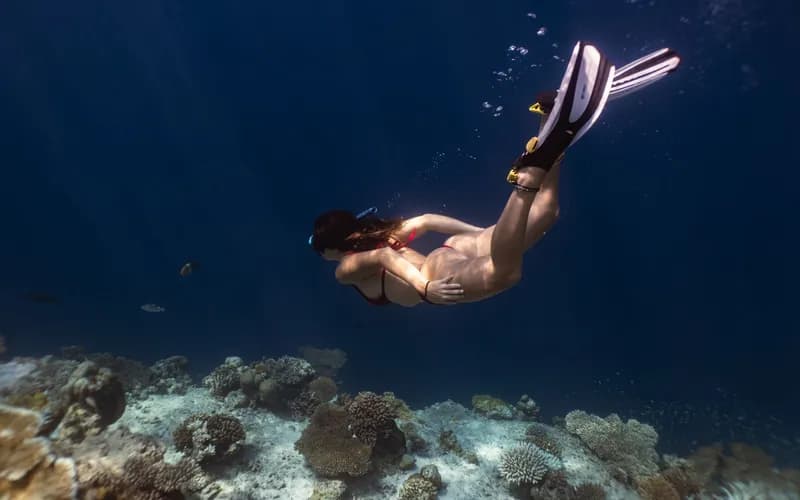
On the east coast, Pulau Tioman and its surrounding islands, the Pulau Redang archipelago and the Pulau Perhentian archipelago are all gazetted marine parks. So are Pulau Kapas and Pulau Tenggol, along with smaller clusters off Johor including Pulau Aur and Pulau Sibu. On the west coast, Pulau Payar Marine Park south of Langkawi is the principal one.
Langkawi itself is not a marine park, and neither is Penang or Pangkor. If you are basing a trip on Langkawi and considering the day trip out to Payar, factor the charge in; we discuss the island's wider conservation picture in our piece on Langkawi beyond the beach.
Sabah and Sarawak Run Separate Systems
This is the most common source of confusion. The Department of Fisheries conservation charge covers peninsular Malaysia. Sabah and Sarawak administer their own protected areas through Sabah Parks and Sarawak Forestry, with their own fee schedules, permits and rules.
Tunku Abdul Rahman Park off Kota Kinabalu, Sipadan, Mabul and the Tun Sakaran Marine Park all operate under Sabah's system. Sipadan in particular runs on a strictly limited daily permit quota allocated through licensed operators, and permits must be arranged well in advance through a resort or dive centre. Do not assume a peninsula receipt or a peninsula fee covers anything in Borneo. Budget and book separately.
What the Money Funds
Conservation charges are paid into the Marine Parks and Marine Reserves Trust Fund, ring-fenced for management, conservation, enforcement, research, monitoring and education inside Malaysia's marine protected areas. In concrete terms that means ranger patrols, mooring buoys that stop boats anchoring on coral, reef monitoring surveys and visitor education programmes.
Whether the sums collected are adequate to the pressure is a fair question. Reef health at the most heavily visited sites has declined, and enforcement capacity is thin relative to the number of boats operating. The charge is not a solution on its own. It is a contribution to a system that is, at least, structurally sound — and paying it without complaint is the minimum. The wider picture of how Malaysia is approaching conservation and low-impact travel is covered in our analysis of the country's ecotourism awakening.
Possible Increases Ahead
Officials have publicly floated raising the foreign visitor charge to somewhere in the RM35 to RM40 range. Nothing has been enacted at the time of writing, and no implementation date has been announced. Treat the current RM30 as the working figure and check at the counter rather than relying on a number printed in a guidebook or a blog post from a previous season.
Fee schedules in Malaysia are revised without much publicity, which is a good general reason to verify any quoted price on the day. The same caution applies to ferry fares, which were revised across several routes on 1 January 2026.
Seasonal Closures Still Apply
None of this matters between November and February on the east coast. The northeast monsoon suspends ferry services to Tioman, the Perhentians and Redang, and most island accommodation closes for the season. Marine park charges are collected when the boats run, which on that coast means roughly March to October.
The west coast keeps a different rhythm. Pulau Payar trips from Langkawi operate year-round, with September and October the wettest and roughest months, and December to February the most reliable.
What This Means in Practice
The honest summary is that Malaysia's marine parks are becoming slightly more expensive and slightly more demanding, and both changes are defensible. A slow traveller who stays a week on one island rather than day-tripping between three pays the charge once and generates less waste doing it. That is not a coincidence — the fee structure quietly rewards the pattern of travel we argue for in our charter for slow travel.
The practical asks are small: bring cash, arrive early, pack a dry bag for your rubbish, and choose operators who brief you on the rules rather than driving past them.
The Other Rules Worth Knowing
The rubbish requirement sits alongside a longer list of marine park regulations that predate 2026 and are enforced unevenly. Fishing of any kind is prohibited inside park boundaries. Collecting coral, shells, starfish or any marine organism, alive or dead, is prohibited. Anchoring on reef is prohibited, which is why mooring buoys exist and why a good operator will use them. Feeding fish, standing on coral and touching turtles are all prohibited, and all three still happen daily on crowded snorkelling trips.
Sunscreen deserves a mention. Malaysia has not banned oxybenzone-based products the way Palau and Hawaii have, but the chemistry is the same and the reefs are under the same stress. A mineral formulation, or simply a long-sleeved rash guard, costs you nothing and removes the question.
The most useful thing a visitor can do is choose the operator carefully. Boats that brief passengers before entering the water, use mooring buoys, and correct people who stand on coral are noticeably different from those that do not, and they rarely cost more.
What to Do Next
- Check whether your island is a gazetted marine park before you travel; the charge applies only inside park boundaries.
- Carry RM30 per adult in small notes for each marine park you enter, and expect the counter to be cash only.
- Arrive at the mainland jetty an hour before departure to clear the conservation counter and the ferry queue.
- Pack a dry bag or a sealable container for waste, and plan to carry everything back to the mainland.
- If your trip includes Sabah or Sarawak, budget and book those park fees and permits separately — Sipadan in particular requires advance allocation.
- Confirm the current rate at the counter; an increase to RM35 to RM40 has been discussed but not enacted.
Frequently Asked Questions
How much is Malaysia's marine park conservation charge in 2026?
RM30 for non-Malaysian adults, RM15 for non-Malaysian children under 12 and seniors over 60. Malaysian adults pay RM5 and Malaysian children and seniors pay RM2. Toddlers, OKU disability card holders and residents of islands within the park zone are exempt. The charge is per visit, not per night.
Is the marine park fee included in my ferry or resort booking?
Usually not. Most ferry tickets and accommodation packages exclude it, and it is collected separately at a counter at the mainland jetty before boarding. Some organised day trips and dive packages do include it, so check your booking confirmation rather than assuming either way.
Can I pay the conservation charge by card?
In most cases no. The counters operate in cash, and there is often no ATM nearby. Bring small ringgit notes. This is one of the situations in Malaysia where cash remains genuinely necessary despite widespread card and e-wallet acceptance elsewhere.
What is the new rubbish rule and how is it enforced?
Since 1 January 2026, all visitors to Malaysia's marine parks are required to take their waste back to the mainland. Enforcement is largely through operators, resorts and rangers rather than fines at the jetty, but the expectation is explicit and the reasoning — plastic pollution in reef systems — is well documented. Carry a bag for your own waste.
Do the same rules apply in Sabah and Sarawak?
No. Sabah Parks and Sarawak Forestry administer their own protected areas with separate fees, permits and regulations. Tunku Abdul Rahman Park, Sipadan and Tun Sakaran Marine Park all fall outside the peninsula's Department of Fisheries system. Sipadan additionally requires a permit from a strictly limited daily quota, arranged in advance through a licensed operator.
Will the fee increase during 2026?
It may. Officials have discussed raising the foreign visitor rate to around RM35 to RM40, but no change has been enacted and no date has been set. Budget for RM30 and be prepared for slightly more. Confirm the rate at the counter on the day rather than relying on published figures.
Which marine parks are worth the charge?
All of them, if you snorkel or dive. Redang and the Perhentians have the clearest water on the east coast; Tioman combines reef with a genuinely mountainous interior worth several days; Pulau Payar is a shorter, busier day-trip experience with more visible reef stress. If you have one week and want depth rather than coverage, pick one island and stay.