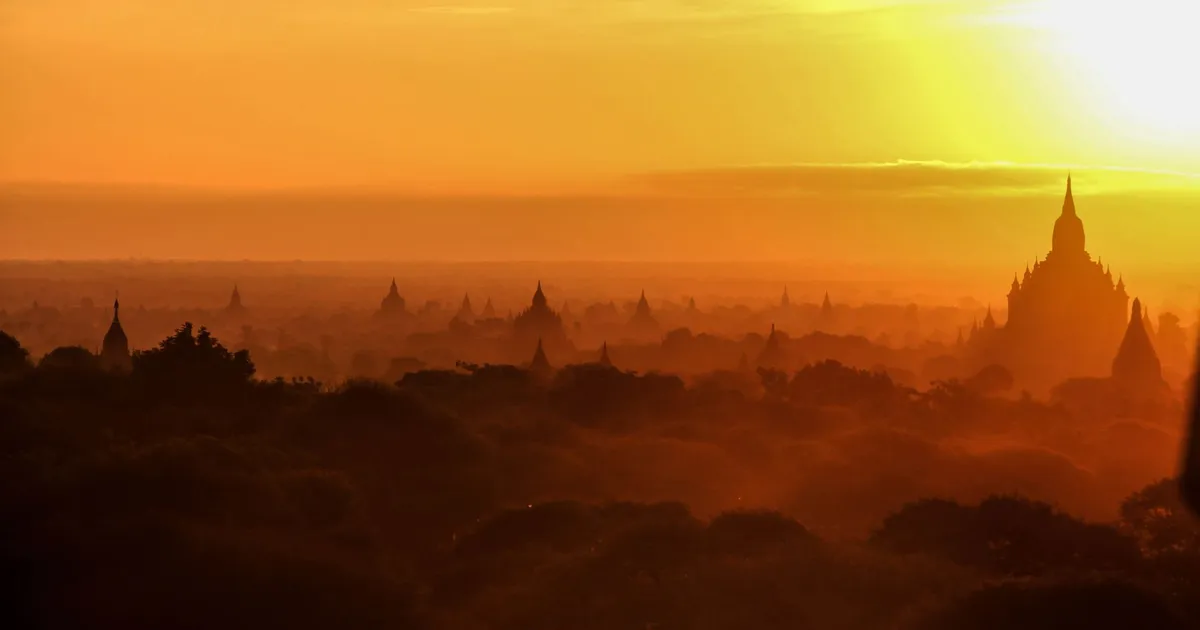


On 28 March 2025, a magnitude-7.7 earthquake struck central Myanmar, with its epicentre near Sagaing, roughly 20 kilometres from Mandalay and at a shallow depth of about 10 kilometres. It was one of the most powerful quakes the region has seen in a century, and the human toll was severe. Among the many places shaken that afternoon was Bagan, the vast plain of Buddhist temples and stupas that has drawn slow travelers for generations.
More than a year on, the question many thoughtful visitors ask is a quiet one rather than a sensational one: is Bagan still there, and can it be visited responsibly? The honest answer is yes, with nuance. The plain endures, restoration is underway, and several of its most memorable experiences continue. But the picture is neither a tragedy of total loss nor a return to business as usual. This is a measured look at where things stand, and how a slow traveler might approach Bagan with care.
What the earthquake did to Bagan
Bagan has lived through earthquakes before. A major one in 1975 and another in 2016 both damaged temples and prompted long restoration campaigns, so the 2025 quake landed on a landscape that was, in a sense, already familiar with recovery. That history matters, because it shaped both the vulnerabilities and the expertise that exist on the plain today.
The March 2025 earthquake caused significant damage across central Myanmar, and Bagan was among the affected areas. Early assessments pointed to hundreds of religious structures damaged in the wider region, with cracks, fallen finials, dislodged brickwork, and partial collapses reported at a number of pagodas and stupas. The Shwezigon Pagoda in Nyaung-U, one of Bagan's most revered sites, was reported to have sustained damage to some of its smaller surrounding structures. Across Myanmar as a whole, official and heritage-sector figures counted thousands of damaged buildings and a large number of affected pagodas.
It is worth being precise here rather than dramatic. Damage was real and, in places, serious, but Bagan as a whole was not levelled. Many temples remained standing, and much of the harm was concentrated in cracks, spires, and upper masonry rather than in the collapse of entire monuments. Because reporting from the region can be incomplete and conditions evolve, the most reliable picture comes from local operators and heritage authorities on the ground, and any traveler should treat single headline numbers with appropriate caution.
One request. Up to five tailored proposals.
Skip contacting agencies one by one — share your trip once and let up to five trusted Myanmar agencies come to you. Free, with no obligation.
Get my free quotesWhere restoration stands
Restoration in Bagan is a slow, painstaking discipline, and that is not a flaw. After the 2016 earthquake, the Department of Archaeology worked with UNESCO, the Association of Myanmar Architects, the Myanmar Engineering Society, seismologists, and university technicians to stabilise and repair damaged monuments, a campaign that ran for years. Some of that work was still ongoing when the 2025 quake arrived, which meant experienced teams and established methods were already in place.
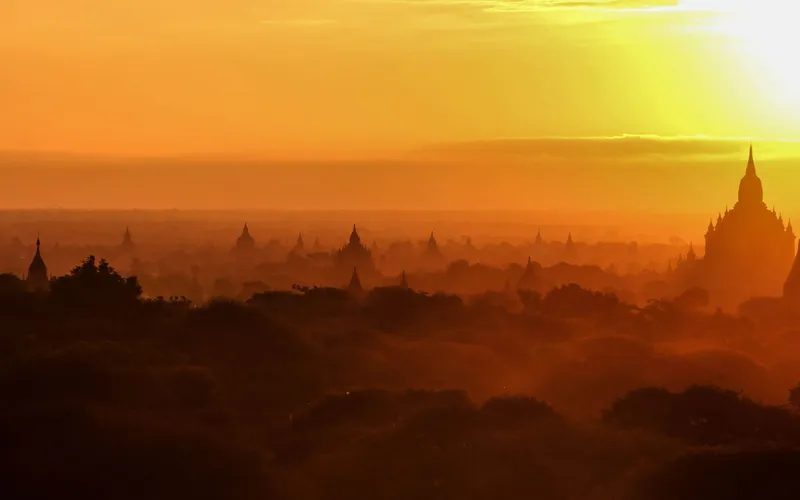
The approach favoured in Bagan today emphasises careful assessment before intervention: structural surveys, documentation, and consultation rather than rushed rebuilding. This is partly a response to criticism of earlier, hastier reconstructions that used modern materials and speculative designs, which drew concern from international heritage experts. The lesson learned, and now broadly applied, is that authenticity and structural honesty matter more than speed. For a visitor, this means you may see scaffolding, closed monuments, propped spires, and areas cordoned off for safety. That is a sign of responsible stewardship, not neglect. Repairs of this kind are measured in years, and it is reasonable to expect restoration work to continue across the plain for a long time yet. If you would like a broader sense of how Bagan fits into a wider itinerary, our guide on where to go and when in Myanmar offers helpful context.
What you can still experience on the plain
The heart of Bagan's appeal was never a single temple you had to climb or tick off. It is the scale and stillness of the plain itself: thousands of monuments spread across a dry, ochre landscape, best absorbed slowly. Much of that experience continues, and in some ways it is quieter and more contemplative now than it has been in years.
Cycling remains one of the finest ways to explore. An electric bike or a simple bicycle lets you move at the pace the plain rewards, pausing at whichever monument catches the light, lingering in the shade of a tamarind tree, and covering the flat dirt tracks between clusters of temples. Because visitor numbers are lower, the sense of having the plain largely to yourself is genuine rather than marketed. Walking short sections, visiting active temples where local worshippers still come to pray, and simply sitting with the landscape all remain deeply worthwhile.
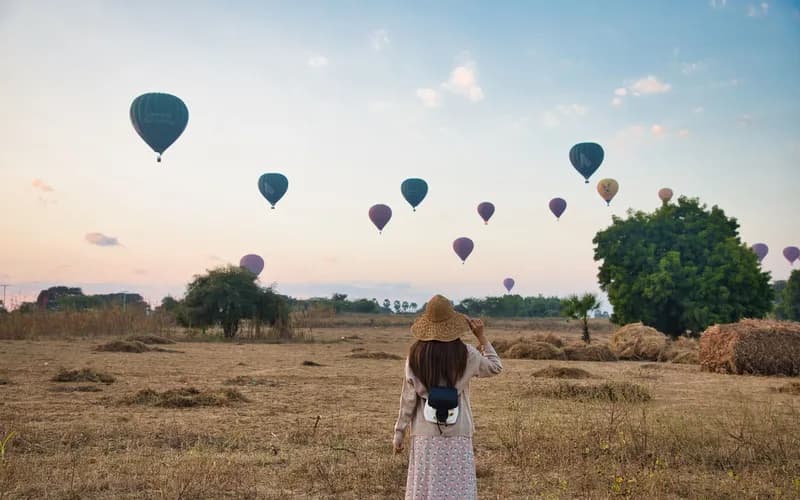
Hot-air ballooning over Bagan, long the plain's signature splurge, typically operates in the cooler, drier season from roughly November to February, when clear skies and calm mornings allow flights. It has usually been a premium experience, often starting around three hundred US dollars per person, and its availability depends on operators running that season and on current conditions. If a dawn flight is on your wish list, confirm directly with operators well ahead of time, as schedules can shift. For travelers drawn to the corners of Myanmar that see fewer people, our notes on the off-the-beaten-path side of the country pair naturally with a slow Bagan stay.
Get matched with up to 5 trusted Myanmar agencies
- Free
- No obligation
- Up to 5 agencies
The climbing ban and how you take in the view now
For years, the classic Bagan photograph showed travelers perched on a temple terrace at sunrise, silhouettes against a sea of stupas. That era has effectively ended, and it is important to understand why. Restrictions on climbing the monuments were introduced and progressively tightened well before the 2025 earthquake, driven by concerns for the fragile ancient masonry and by the erosion caused by thousands of feet on centuries-old brick. Following earlier quakes, safety concerns reinforced the case. Climbing temples is now prohibited at the great majority of monuments.
This is not a loss so much as a reorientation, and for a responsible traveler it is the right call. To take in the panorama, visitors now use designated viewing points, purpose-built viewing mounds, and elevated terraces created specifically to spread out the crowds and protect the temples. Some of the loveliest vantage points are simply open ground with a clear line of sight across the plain. Sunrise and sunset remain the magic hours, when mist and low light turn the monuments gold and violet, but the view is now enjoyed from the ground or from sanctioned platforms rather than from the temples themselves. A knowledgeable local guide is invaluable for finding the quieter spots away from any remaining coach traffic.
UNESCO World Heritage and why it shapes the response
Bagan was inscribed on the UNESCO World Heritage List in 2019, a recognition that arrived after decades of effort and some controversy over earlier restoration practices. That status is more than a badge. It brings a framework of international expectations for how the site is conserved, documented, and managed, and it invites scrutiny of how damage is repaired.
In practice, World Heritage status is one reason restoration in Bagan is now approached with such deliberation. Reconstruction that ignores original forms or materials risks the very qualities that earned the inscription, so the emphasis falls on stabilisation, reversible interventions, and careful documentation. For a slow traveler, this context is worth carrying in mind, because it reframes the scaffolding and the closures you may encounter. They are part of a long, internationally watched effort to keep Bagan authentically itself, rather than to make it merely photogenic again as quickly as possible. Understanding this makes a visit richer, and it is a good reason to build in time to learn the plain's history properly. Our plan your journey resources can help you shape a trip that leaves room for that depth.
Fewer visitors, and what the quieter plain asks of us
Tourism to Myanmar dropped sharply in recent years, and it has been recovering only gradually. Bagan has continued to welcome visitors through 2026, though in far smaller numbers than during the peak years of the previous decade. For the traveler who genuinely values slowness, this creates a rare and bittersweet situation: the plain is more peaceful and less crowded than it has been in a very long time.
That quiet comes with responsibility. Fewer visitors means less income for the guides, drivers, family-run guesthouses, restaurant cooks, lacquerware artisans, and horse-cart owners whose livelihoods depend on tourism. Spending thoughtfully and locally has real weight here. Choosing locally owned accommodation, hiring local guides, buying directly from artisans, and taking your time rather than rushing through in a single day all channel more of your money to the people of Bagan. Slow travel is not only gentler on the traveler; in a place like this, it is materially kinder to the community. If budgeting matters to your planning, our Myanmar trip cost and budget guide lays out realistic figures.
Traveling to Bagan honestly right now
There is no responsible way to write about visiting Myanmar today without acknowledging the wider context plainly and without taking sides. Several governments, including the United States, the United Kingdom, Australia, and Canada, maintain elevated travel advisories for Myanmar, and some advise against all or all-but-essential travel to parts or all of the country. These advisories exist for reasons that go well beyond earthquake damage, and they can change. Anyone considering a trip should read their own government's current advice, check their travel insurance carefully, and make an informed personal decision.
If you do decide to go, the case for doing it slowly and through knowledgeable local partners is strong. On-the-ground operators understand which routes and areas are currently practical, how conditions are evolving, and how to structure a visit that supports local people directly. Our directory of Myanmar travel agencies is a starting point for finding partners who work this way, and our slow-travel charter sets out the principles we ask travelers and operators to hold to: respect, patience, honesty, and care for the places we are lucky enough to visit. Bagan has stood for a thousand years and endured many upheavals. Visiting it now, thoughtfully and lightly, is a way of honouring that endurance rather than exploiting it.
What to Do Next
- Read your own government's current Myanmar travel advisory in full, and check that your travel insurance covers the situation and any activities you plan.
- Contact experienced local operators before you commit to dates, and ask directly about current conditions in Bagan, which monuments are open, and whether balloon flights are running in your travel window.
- Plan your visit for the cooler, drier months if you want the best chance of clear skies, calm mornings, and any ballooning, and build in more than a single day so you can move slowly.
- Choose locally owned guesthouses, local guides, and local drivers, and budget to buy directly from Bagan's artisans and family businesses.
- Approach the temples with respect for the restoration effort: stay outside cordoned areas, do not climb monuments, and use the designated viewing points for sunrise and sunset.
- Keep your expectations honest and flexible, since conditions, access, and services can change, and verify the current status with your operator close to departure.
Frequently Asked Questions
Is Bagan open to visitors after the 2025 earthquake?
Yes. Bagan has continued to receive visitors, and the core experience of exploring the temple plain remains available. That said, some individual monuments may be closed for safety or restoration, and you should confirm the current situation with a local operator before you travel, as access can change.
How badly was Bagan damaged by the earthquake?
The March 2025 quake caused real damage across central Myanmar, including cracks, fallen finials, and partial collapses at a number of pagodas and stupas in the wider Bagan region. However, Bagan was not destroyed. Many temples remained standing, and much of the damage was concentrated in upper masonry rather than in whole monuments. Because reporting can be incomplete, treat single figures with caution and rely on local assessments.
Can you still climb the temples for sunrise?
No. Climbing the monuments is prohibited at the great majority of temples, a restriction introduced and tightened before the earthquake to protect the fragile ancient structures. Instead, visitors take in sunrise and sunset from designated viewing points, purpose-built mounds, and sanctioned terraces around the plain.
Are hot-air balloon flights over Bagan operating?
Ballooning has traditionally run in the cooler, drier season from roughly November to February and is a premium experience, often starting around three hundred US dollars per person. Whether flights operate in any given season depends on the balloon companies and on current conditions, so confirm directly with operators well in advance.
What is the best way to explore Bagan slowly?
Cycling on an electric or standard bike is ideal, letting you move at an unhurried pace between temple clusters and pause wherever the light is good. Combine it with short walks, visits to active temples where people still worship, and unhurried time simply sitting with the landscape. Lower visitor numbers make this quieter than it has been for years.
Is it safe to travel to Myanmar right now?
Several governments maintain elevated travel advisories for Myanmar, and some advise against all or all-but-essential travel to parts or all of the country for reasons beyond the earthquake. These advisories can change. Read your own government's current guidance, check your insurance, consult experienced local operators, and make an informed personal decision.
How can I make sure my visit benefits local people?
Spend locally and directly. Choose locally owned guesthouses, hire local guides and drivers, buy handicrafts such as lacquerware straight from the artisans, and give yourself enough days to move slowly rather than rushing through. With visitor numbers still low, thoughtful spending has a meaningful effect on Bagan's community.