
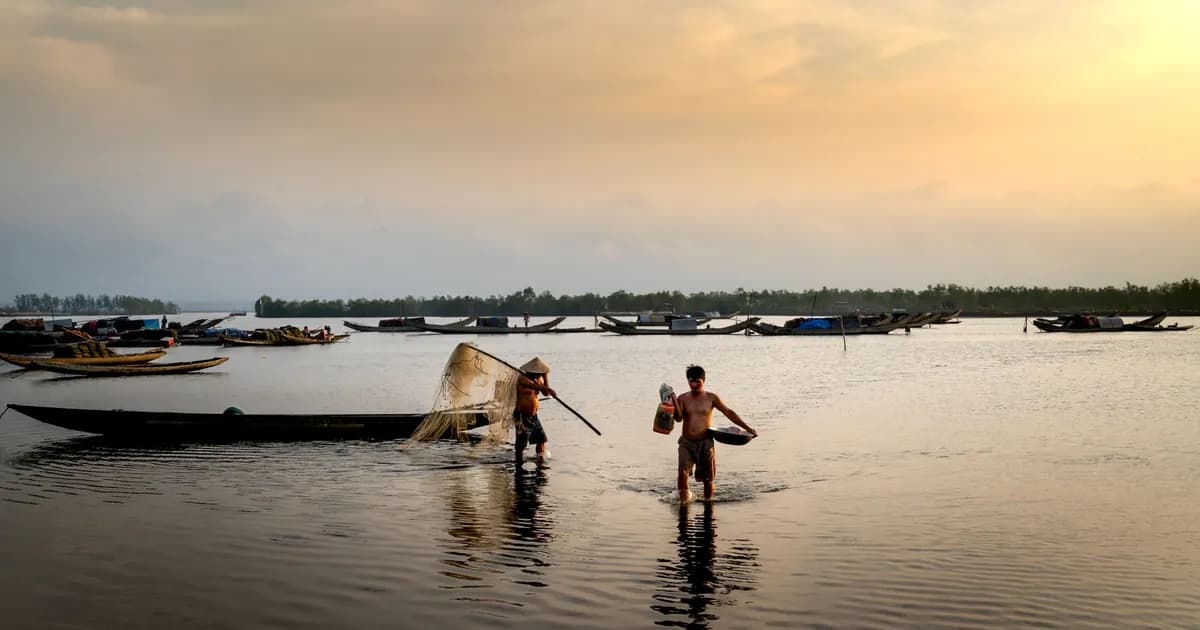
Why Responsible, Community-Based Travel Matters More Than Ever in Myanmar
Myanmar has slipped out of most travellers' plans over the past few years. The crowds that once filed through the temples of Bagan at dawn have thinned to a trickle, and the country rarely appears on the glossy "where to go next" lists any more. For anyone who cares about travelling well, that quiet raises a genuine question: is it right to go at all, and if you do go, how do you make sure your visit does more good than harm?
This article is not here to tell you what to decide. It is here to lay out, as honestly as we can, how the landscape has changed, the arguments people make on both sides, and what "slow, responsible travel" actually means in Myanmar today. The short version is that fewer visitors, more caution, and a growing focus on locally owned, community-based tourism have made the how of travelling here matter more than ever.
How the Travel Landscape Changed
For most of the 2010s, Myanmar was one of Southeast Asia's most talked-about openings. Visitor numbers climbed steadily, new guesthouses appeared around Inle Lake and Bagan, and a generation of local guides built careers on the back of a growing industry. Tourism became a meaningful part of the economy: in 2019 it generated in the region of 2.5 billion US dollars and accounted for close to four percent of national output, according to widely cited industry figures.
Then international arrivals collapsed. A combination of the pandemic and the turbulence that followed emptied the hotels almost overnight, and Western leisure travel in particular has been slow to return. The people who felt this most were not distant institutions but the households at the very bottom of the tourism chain: guides with two decades of experience suddenly without work, boatmen on Inle whose incomes vanished, and small guesthouse families watching their savings erode as inflation ran high year after year.
The picture in 2025 and into 2026 is more nuanced than "closed." Some recovery is under way, driven partly by regional and neighbouring-country visitors and by improving air links, though analysts caution that the rebound remains fragile and dependent on factors well outside tourism's control. What has genuinely changed is the composition of who comes and how. The casual, high-volume tourism of the last decade has largely gone. What remains is a smaller, more deliberate kind of travel, and the operators still standing are overwhelmingly the ones who have leaned into responsible, community-focused models.
One request. Up to five tailored proposals.
Skip contacting agencies one by one — share your trip once and let up to five trusted Myanmar agencies come to you. Free, with no obligation.
Get my free quotesThe Boycott Question, Presented Fairly
There is an honest, long-running debate about whether one should visit Myanmar at all, and it deserves to be presented without spin. This is not a new argument. Myanmar sat on some responsible-travel boycott lists for a decade in the 2000s, before those same organisations lifted their positions in 2011 following signals from within the country that visitors committed to the welfare of ordinary people were welcome. The question has resurfaced with force in recent years.
Those who favour staying away make a coherent case. They argue that tourism inevitably channels some money and legitimacy toward businesses and infrastructure connected to those in power, that visiting can be read as normalising a difficult situation, and that some communities themselves have at times asked outsiders to hold off. For these travellers, the cleanest way to avoid causing harm is simply not to go.
Those who favour responsible engagement make an equally coherent case. They point out that a blanket boycott lands hardest on precisely the people with the least power: the guides, drivers, cooks, artisans, and guesthouse owners whose livelihoods depend on visitors and who have no other safety net. They argue that a broad crisis is unlikely to be resolved by the absence of tourists, and that thoughtful, well-directed travel can keep income flowing to ordinary households and maintain human connections to the outside world. Many long-standing responsible-travel voices sit in this camp, while still stressing that engagement only makes sense if it is done carefully.
Both positions come from a place of concern rather than indifference, and reasonable, well-informed people land on different sides. The purpose here is not to settle it. It is to say that if you do choose to travel, the choice carries responsibility, and the way you travel is where that responsibility is exercised.
The Case for Responsible Engagement
If you decide to go, the guiding idea is straightforward: travel in a way that puts as much benefit as possible into local hands and as little as possible anywhere else. This is the logic behind our whole approach, set out in the UNRUSH charter for slow travel. Slow travel and responsible travel are close cousins. Moving slowly, staying longer in fewer places, and spending with small local businesses are not just pleasant ways to see a country; in a context like Myanmar's they are also the practical mechanics of doing less harm.
Responsible engagement is not a slogan; it is a set of concrete choices. It means favouring family-run guesthouses over anonymous chains, hiring independent local guides directly, eating where local families eat, and buying crafts from the people who make them. Each of these decisions routes money past intermediaries and toward the household level. None of it requires you to be an expert; it mostly requires you to slow down enough to notice where your money actually goes.
Get matched with up to 5 trusted Myanmar agencies
- Free
- No obligation
- Up to 5 agencies
What Community-Based Tourism Actually Looks Like
Community-based tourism, often shortened to CBT, is the model that has quietly grown into the heart of responsible travel in Myanmar. The idea is simple and powerful: a community collectively hosts visitors and shares the income, rather than having tourism done to it by outside operators. In practice that can mean staying in a village guesthouse run on a rota, learning traditional farming or weaving from the people who do it every day, sharing meals in family homes, and being guided by residents who know the land intimately.
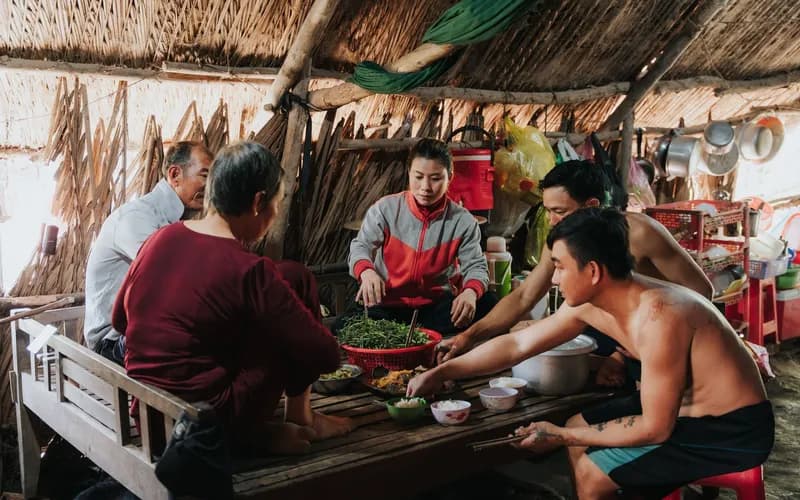
The strength of CBT is that it spreads benefit widely and keeps decisions local. Well-run community projects in areas such as the hills around Inle Lake and parts of Shan and Kayah States have used tourism to fund shared needs, revive crafts and customs that might otherwise fade, and create rare income opportunities for women and younger people in rural areas. Just as important, these encounters tend to be the most memorable part of a trip: unhurried, genuine, and built on exchange rather than performance. If you want a sense of where these experiences cluster, our guide to where to go and when in Myanmar is a good starting point, and the off-the-beaten-path guide points toward the quieter corners where community tourism often does the most good.
CBT is not a magic fix, and it works best when it is genuinely community-led rather than community-branded. The label alone guarantees nothing, which is exactly why knowing who organises an experience, and who is paid by it, matters so much.
How to Make Sure Your Money Reaches Local People
The single most useful habit a responsible traveller can build in Myanmar is to keep asking a plain question: where does this money end up? Cash spent directly with a guide, a market stall, a home kitchen, or a village guesthouse reaches ordinary people quickly and with little leakage. Money spent through large, impersonal channels is far harder to trace, and some of it may flow toward businesses linked to power structures you would rather not support.

A few practical patterns help. Carry cash and use it in small, locally owned places, since many of the businesses that most need your custom are not set up for cards. Choose independent guesthouses and family homestays over big anonymous properties. Hire local guides directly and pay them fairly rather than squeezing every last discount. Eat in local restaurants and buy handicrafts from the makers. Where a trip is arranged in advance, ask your operator to be specific about which suppliers they use and how local people are paid. Costs in Myanmar remain modest by regional standards, and our Myanmar trip cost and budget guide for 2026 can help you plan a budget that deliberately favours local spending rather than treating "cheap" as the only goal.
None of this is about guilt or perfection. No traveller can guarantee that every kyat lands ideally. The point is direction of travel: a series of small, deliberate choices that, taken together, tilt the balance strongly toward the people who host you.
The Role of a Knowledgeable Local Operator
This is where a good local operator earns their place. In a country where the situation varies from region to region and can change, having someone on the ground who understands local conditions is not a luxury; it is the difference between a trip that quietly supports communities and one that stumbles into avoidable harm. A knowledgeable operator knows which areas are appropriate to visit, which community projects are genuine and well governed, and how to structure a journey so that spending reaches local households.
The best operators are transparent. They can tell you who owns the guesthouses you will stay in, who your guides are and how they are paid, and why they route a journey the way they do. They will also be honest about what is not advisable, even when it costs them a booking. That candour is the clearest signal you are dealing with a partner who shares your values rather than one simply chasing a sale. The vetted Myanmar travel agencies in our network are chosen with exactly this in mind, and when you are ready to shape an itinerary, our plan your journey resources walk you through the practical steps.
What to Do Next
If you are weighing a slow, responsible trip to Myanmar, here is a measured way to move forward.
- Sit with the ethical question honestly. Read both the boycott and the responsible-engagement arguments, and make a decision you are genuinely comfortable with before booking anything.
- If you choose to go, commit to travelling slowly. Pick fewer places, stay longer, and build in time for community-based experiences rather than a rushed highlights loop.
- Prioritise locally owned everything: family guesthouses, independent guides, home kitchens, and craftspeople selling their own work.
- Carry cash and plan a budget that favours direct local spending, using a realistic cost guide rather than chasing the lowest possible price.
- Choose a transparent local operator who can name their suppliers and explain how local people benefit, and ask those questions directly.
- Keep learning as you travel. Let residents guide your route, and stay flexible enough to follow good local advice on the ground.
Frequently Asked Questions
Is it ethical to travel to Myanmar right now?
There is no single answer, and thoughtful people disagree. Some prefer to stay away to avoid channelling any benefit toward those in power; others argue that responsible, well-directed travel supports ordinary households who have no other income. Weigh both views honestly and decide what you are comfortable with before booking.
Does tourism money end up supporting the government?
Some of it can, particularly when it flows through large or state-linked businesses. The way to minimise this is to spend directly with small, locally owned enterprises: independent guesthouses, local guides, family restaurants, and craftspeople. A transparent operator can help you route your spending toward local hands.
What is community-based tourism?
It is a model in which a community collectively hosts visitors and shares the income, rather than having tourism run by outsiders. It typically involves village homestays, locally led guiding, shared meals, and hands-on cultural exchange, and it is designed to spread benefit widely and keep decisions in local hands.
How do I make sure my money reaches local people?
Carry cash and use it in small local businesses, choose family-run guesthouses and homestays, hire local guides directly, eat in local restaurants, and buy crafts from their makers. When booking in advance, ask your operator to be specific about which suppliers they use and how local people are paid.
Is Myanmar safe for slow travellers?
Conditions vary from region to region and can change, which is why up-to-date local knowledge matters so much. A knowledgeable operator will know which areas are appropriate, structure a journey accordingly, and be candid about what is not advisable. Always check current guidance before you commit to a route.
Is now a good time to visit, with so few tourists?
Fewer visitors means quieter sites and more genuine encounters, but it also means the households that depend on tourism are under real pressure. If you travel responsibly, a visit now can be both a deeply personal experience and a meaningful source of support for local communities.
How does slow travel help in a place like Myanmar?
Slow travel and responsible travel overlap almost completely here. Staying longer in fewer places, spending with small local businesses, and building in unhurried community experiences are exactly the habits that keep money in local hands and reduce unintended harm.


