

For decades, buying a ferry ticket in the Philippines meant standing at a pier window, hoping the sailing you wanted had seats, and occasionally discovering that a man outside had bought them all first. In 2026 that is formally changing. The Maritime Industry Authority, MARINA, has ordered every domestic inter-island passenger operator to move onto an online ticketing system, with electronic tickets, electronic passenger manifests and real-time capacity monitoring. For anyone planning a slow, sea-based route through the archipelago, this is the most consequential piece of transport regulation in years, and it is being rolled out through 2026 and beyond rather than switched on overnight.
What MARINA actually ordered
The instrument is Memorandum Circular DS-2026-01, signed on 18 March 2026, published a week later and effective fifteen days after publication. It requires all covered shipowners and operators to implement a Shipping Online Ticketing System, referred to as SOTS, either through the authority's own Ships E-ticketing Application System or through an equivalent platform of their own.
The functional requirements are specific. Passengers must be able to book or reserve a seat electronically, pay online, receive an electronic ticket, and have their details flow automatically into an electronic passenger manifest generated for every voyage. Operators must monitor capacity in real time so that a sailing cannot be sold beyond its certified limit. The system must automatically apply the statutory fare discounts owed to senior citizens, students and persons with disabilities, rather than leaving them to be argued over at a counter. Platforms are also expected to meet international web accessibility standards. Covered operators were given thirty days from the circular taking effect to file a readiness report with MARINA, supported by documentary or system evidence.
One request. Up to five tailored proposals.
Skip contacting agencies one by one — share your trip once and let up to five trusted Philippines agencies come to you. Free, with no obligation.
Get my free quotesWhy it exists
Two problems drove this. The first is commercial: scalping and overbooking at busy piers, particularly around Holy Week, Undas and Christmas, when tickets for popular crossings were bought in bulk and resold, and when passengers regularly arrived to find a sailing full despite having been told otherwise.
The second is safety, and it is the more important of the two. Philippine ferry disasters over the past forty years have repeatedly been compounded by inaccurate manifests: nobody could say with confidence how many people were aboard, or who they were. An automatically generated electronic manifest, tied to actual ticket sales and to a vessel's certified capacity, is the single most useful reform available for search and rescue. MARINA has framed the circular in exactly those terms, alongside transparency and fare integrity.
Which boats are covered, and which are not
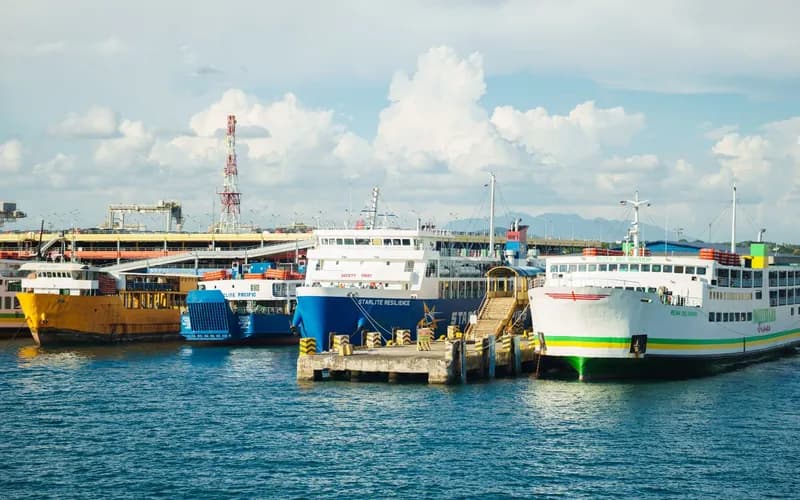
This is the detail that matters most for travellers, and it is easy to get wrong. The circular covers domestic inter-island passenger vessels: roll-on roll-off ships, the ropax vessels that carry vehicles and passengers on the long overnight routes, and the fast craft that connect major ports such as Cebu to Tagbilaran, Batangas to Calapan, or Iloilo to Bacolod.
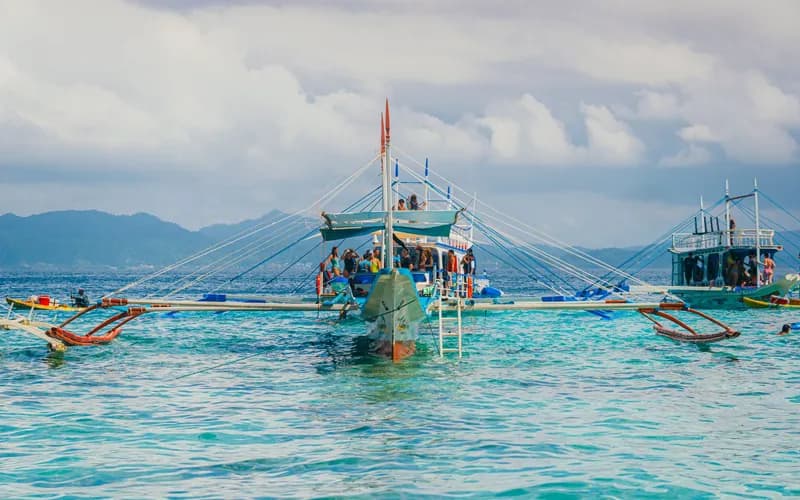
It does not cover motorbancas, the outrigger boats that operate most short island crossings, island-hopping trips and beach transfers, nor non-commercial vessels. In other words, the boat from El Nido to Coron, the banca to a snorkelling site, and the pumpboat to a small island off Bohol or Romblon are outside the scope. Those will continue to be booked in person, in cash, at a local office or on the beach, with the usual coast guard passenger list handwritten at the departure point. Understanding the split between the two systems is central to how a sea-based itinerary works, as we set out in our guide to island-hopping the Philippines slowly.
Get matched with up to 5 trusted Philippines agencies
- Free
- No obligation
- Up to 5 agencies
The timetable: pilots, 52 ports and four years
The rollout is phased, and 2026 is the transition year. Pilot testing ran at selected ports through the second quarter, roughly April to June. From the third quarter, July to September 2026, the system began coming into force at fifty-two ports nationwide: ten in Luzon, twenty-seven in the Visayas and fifteen in Mindanao. Full mandatory compliance at those ports follows within two years of the circular taking effect, and the requirement extends to all remaining ports within four years. MARINA has offered operators an incentive to move early, including a discount of up to one hundred percent on annual tonnage fees for those who implement ahead of schedule.
The practical consequence for a traveller in late 2026 is a patchwork. On major Visayan routes, online booking is already normal and reliable. On minor routes, in smaller ports and with smaller operators, it may not exist yet, or may exist as a booking form that still requires you to collect a paper ticket at the pier. Plan for both.
What changes for you at the pier
If you have an electronic ticket, arrive with it saved offline as well as on screen, since port wifi and mobile signal are both unreliable. Carry the passport or ID whose details you used to book: manifest accuracy is the entire point of the reform, and staff are increasingly checking that the name on the ticket matches the person presenting it. Name changes and transfers are harder than they used to be for exactly this reason.
Terminal fees remain separate on most routes and are usually paid in cash at the port, even when the fare itself was paid online. The same is true of any local environmental or wharfage charge. If you want the full picture of what you are likely to be asked to pay across a trip, our breakdown of Philippine travel fees in 2026 covers terminal, environmental and travel-tax charges together.
Paying, and the discount rules
Online payment in the Philippines means cards, bank transfer and above all the mobile wallets, GCash and Maya, which most operators and aggregators accept. If you plan to book ferries from abroad, check whether the operator's platform accepts foreign-issued cards before you rely on it; several accept only local payment instruments, which is one of several reasons to set up a local wallet on arrival, as explained in our guide to handling money in the Philippines.
One clarification worth making: the automatic discounts built into the new system are statutory Philippine entitlements for senior citizens, students and persons with disabilities, and they generally require Philippine identification. Foreign visitors should not expect to claim them. What foreign visitors do get is a transparent, published fare and a receipt, which is itself an improvement on the old pier economy.
Weather, cancellations and refunds
Nothing in the circular changes the fundamental fact of Philippine sea travel: the coast guard can and does suspend sailings when sea conditions deteriorate, and during the typhoon season that happens regularly and at short notice. Digital ticketing makes rebooking easier and refunds more traceable, but it does not make the sea calmer.
Read each operator's cancellation policy before you book, particularly the distinction between a cancellation by the operator, which normally entitles you to a full refund or rebooking, and a no-show, which normally does not. Never book a domestic ferry as the final connection before an international flight without a full day of margin, and treat any crossing between June and December as provisional. Our guide to travelling the Philippines around typhoon season explains how to build an itinerary that absorbs this rather than breaking on it.
What has not changed
Three things are worth stating plainly. Ferry schedules still shift with season and demand, and a timetable published online is not a guarantee. Small operators on secondary routes, such as the crossings from Bohol's eastern coast toward Camiguin, still run a few times a week and are still best confirmed by telephone or at the port office. And the coast guard's authority to hold vessels in port remains absolute.
The reform is real and it is welcome, but its immediate benefit is fewer sold-out surprises and better manifests, not a Philippines where every crossing can be booked from your sofa six weeks out. A route like the one described in our piece on Bohol beyond Panglao still asks for buffer days at the eastern end, where the boats are small and the schedule thin.
What to Do Next
- Identify which of your planned crossings are ropax or fast craft, and which are motorbanca trips. Only the first group falls under the new rules.
- For the covered routes, check the operator's official website or app first, then a reputable aggregator, and compare the fare against the published tariff.
- Book covered crossings ahead for any travel during Holy Week, Undas or the Christmas to New Year period, when sailings genuinely sell out.
- Save your electronic ticket offline, and travel with the ID you used to book.
- Budget cash for terminal and environmental fees, which are still collected at the pier.
- Leave a spare day around every sea leg between June and December, in line with the approach set out in our charter for slow travel.
Frequently Asked Questions
Do I now have to book Philippine ferries online?
Not universally, and not yet. The requirement falls on operators rather than passengers, and it is being phased in from the third quarter of 2026 across fifty-two ports, with full coverage of all ports over four years. On major routes online booking is already the practical norm; on smaller routes you can still buy at the pier.
Which ferries are exempt from the new rules?
Motorbancas, the outrigger boats used for island-hopping, short crossings and beach transfers, and non-commercial vessels. The circular covers ropax ships and fast craft on inter-island passenger routes.
Can foreign travellers use the online ticketing systems?
Generally yes, though payment can be the obstacle. Some operator platforms accept only Philippine-issued cards or local mobile wallets such as GCash and Maya. Check before you depend on it, and be prepared to buy at the pier or through an aggregator that accepts international cards.
Will the new system stop ferries from overbooking?
That is its explicit purpose. Real-time capacity monitoring is meant to prevent sales beyond a vessel's certified limit, and automated electronic manifests are meant to record exactly who is aboard. How completely this works in practice will depend on the pace of adoption at smaller ports.
Do I still pay a terminal fee at the port?
Yes, on most routes. Terminal fees, and any local environmental or wharfage charges, are generally collected separately in cash at the pier even when the ticket was paid for online. Carry small notes.
What happens if my ferry is cancelled because of weather?
The coast guard suspends sailings when conditions require it, and operators normally offer a rebooking or a refund when they cancel. Policies vary, so read the terms before booking, keep your electronic ticket, and never plan a sea crossing on the same day as an onward international flight.