The Michelin Guide's Second Year in the Philippines: What It Means for Slow Travellers
When the Michelin Guide arrived in the Philippines in October 2025, it did something that decades of tourism campaigns had struggled to do in a single evening: it made the world's food press talk about Filipino cooking as a serious cuisine. A second edition is due on 29 October 2026, and the questions it raises are less about who wins a star than about what a restaurant guide does to a country's food culture, its prices and the way visitors move around.
This is a trend piece, not a restaurant list. We look at what the first selection actually covered, what it did not, what the second year is likely to change, and how a slow traveller can use the guide without letting it run the itinerary. The short version: treat it as a useful signal about Manila and Cebu, a poor map of the rest of the country, and no substitute for eating where people actually eat.
What the first edition actually was
The inaugural guide, titled Manila and Environs & Cebu 2026, was unveiled on 30 October 2025 at the Manila Marriott Hotel, within Newport World Resorts. It named 108 establishments in total: one two-star restaurant, eight one-star restaurants, 25 Bib Gourmand listings and 74 further Michelin Selected restaurants.
The two-star went to Helm in Makati. The eight one-star restaurants were Asador Alfonso in Cavite, Celera, Hapag, Inatô, Kása Palma and Toyo Eatery in Makati, Gallery by Chele in Taguig and Linamnam in Parañaque. Gallery by Chele also received a Green Star for its sourcing, biodiversity work, waste reduction and community engagement, which tells you something about where inspectors are looking beyond the plate.
Notice the geography. Almost every starred restaurant sits in or near Makati. No restaurant in Cebu received a star, though the city did earn six Bib Gourmand listings and 12 Michelin Selected entries. In other words, the guide's first year was, to a large extent, a map of Metro Manila's dining scene with a Cebu supplement.
One request. Up to five tailored proposals.
Skip contacting agencies one by one — share your trip once and let up to five trusted Philippines agencies come to you. Free, with no obligation.
Get my free quotesThe Bib Gourmand: where the interesting part is
For slow travellers, the Bib Gourmand tier is more relevant than the stars. It recognises what Michelin describes as exceptional food at moderate prices. Of the 25 first-year Bib Gourmand listings, 19 were in Metro Manila and six in Cebu City. The Cebu listings were Abaseria Deli & Cafe, CUR8, Esmen, Lasa, Pares Batchoy Food House and The Pig & Palm, spanning Filipino, contemporary, street food, Asian and European cooking.
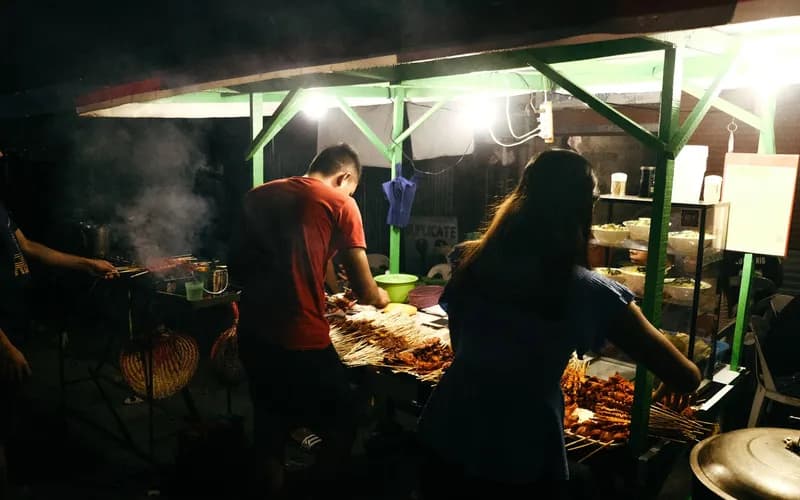
Two of those are worth noticing because they sit close to everyday eating. Esmen is classified as street food and Pares Batchoy Food House as Filipino, both at the lowest price tier in the listings. In Manila, the Bib list included Morning Sun Eatery in Project 4, a turo-turo (point-and-choose counter) serving Ilocano staples, which one local food site estimated at roughly ₱50 to ₱200 per person. That estimate comes from public menus rather than Michelin itself, so treat it as indicative.
This is the encouraging part of the story. A guide that is willing to put a point-and-choose canteen next to a tasting-menu room is acknowledging that Filipino food is, at its core, a food of the table and the counter. If you want to eat this way, our practical guide to eating at carinderias and turo-turo counters explains how.
Why the recognition mattered
Filipino food has long been described as the cuisine the world never quite noticed. It sits between Southeast Asian and Spanish-influenced traditions, shaped by trade, colonial history, Chinese and Malay kitchens, and the demands of an archipelago where every island has its own fish, vinegar and way of souring a broth. Dishes such as adobo, sinigang and kinilaw are familiar at home, yet were rarely discussed abroad in the vocabulary of fine dining.
A major international guide changes that vocabulary. For young chefs, it offers permission to cook regional dishes without apology. For diners, it offers a reason to look at a familiar plate more closely. For travellers, it provides a map, however incomplete, to places they might not have found.
There is also a quieter effect. When restaurants begin to name their farmers, fishers and salt makers, as the Green Star criteria encourage, supply chains become visible. That is good for the cooks, good for producers and, in the long run, good for visitors who care where their meals come from.
Get matched with up to 5 trusted Philippines agencies
- Free
- No obligation
- Up to 5 agencies
What the second edition is expected to cover
Michelin has confirmed a second Philippine selection. The 2027 edition will be revealed on 29 October 2026 at the same venue, the Manila Marriott Hotel at Newport World Resorts, with an invitation-only ceremony that will be livestreamed on the Michelin Guide Asia channel. Reporting on the announcement says the selection will again cover Manila and Environs and Cebu. We found no confirmation of new regions, so any talk of Bohol, Davao, Ilocos or Palawan appearing is speculation for now.
What can reasonably be expected is a second pass over established restaurants and the addition of newer ones, which is how guides typically grow in their second year. Whether that includes more restaurants outside the capital will be the real test of how far the guide intends to reach.
What a guide like this changes on the ground
A restaurant guide is also an economic event. Based on how Michelin has behaved elsewhere in Asia, travellers should expect a few knock-on effects, and it is worth separating what is observed from what is merely likely.
- Demand concentration. Listed restaurants tend to get more bookings, longer waits and more visitors who arrive because of the listing rather than the cooking. Bib Gourmand places, which are casual and often do not take reservations, are the most likely to see queues.
- Visibility for regional cooking. Chefs working with local producers, as Gallery by Chele's Green Star highlights, gain a platform. That can encourage cooks and suppliers to value regional ingredients.
- Price drift. Where demand rises, menus often follow. This is a likelihood, not a documented fact for the Philippines, so check current prices rather than trusting a figure in an article.
- A narrower picture. The risk is that visitors treat the guide as the full story. A country of more than 7,000 islands has a food culture far larger than 108 entries.
How a slow traveller should use it
Used well, the guide is a shortlist generator, not a rulebook. A sensible approach:
- Use it for the cities it covers. If you are in Manila or Cebu, scan the Bib Gourmand list for places that match your budget. Visit at off-peak hours.
- Pair it with local knowledge. Ask hotel staff, drivers and market vendors where they eat. The best answer is often a name that appears in no guide.
- Do not travel for a listing. Build your route around places and people, not reservations. A single meal is a poor reason to change an itinerary.
- Eat regionally. Each island has dishes that no inspector has yet tasted. Our slow traveller's guide to Filipino food is a better starting point for most regions.
- Mind your budget. Fine dining prices in Manila can equal several days of ordinary meals elsewhere. Decide in advance where you want to splurge.
Batchoy, Iloilo and the question of origin
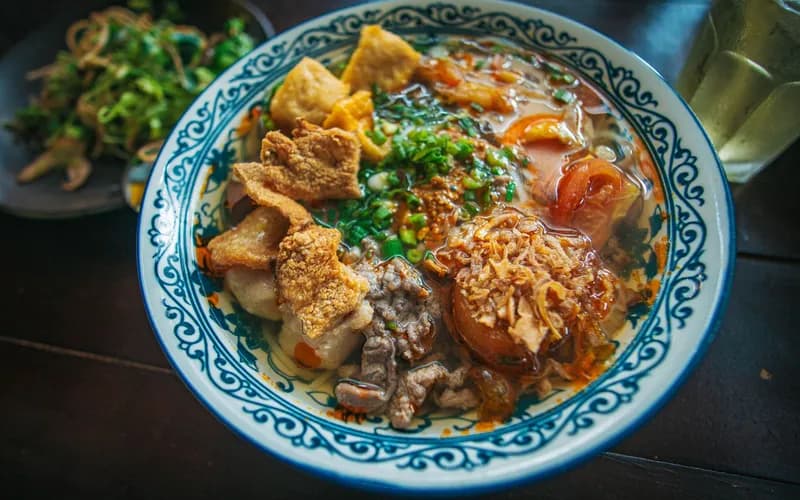
One detail in the Cebu list deserves a footnote. Batchoy, the noodle soup with pork, offal and crushed chicharron, is most closely associated with La Paz in Iloilo City, not Cebu. A Cebu restaurant earning a Bib Gourmand for it does not mean the dish belongs to Cebu; it means the cooking is good where it is. If you want the origin story, visit Iloilo and Guimaras, where the dish is part of daily life.
The same principle applies to the guide as a whole. It tells you where good cooking is recognised. It does not tell you where food is most meaningful, and in the Philippines those are often different places.
Practical notes for a visit around the announcement
If you plan to be in Manila or Cebu around the second selection, a few cautions help.
- Reservations. Starred and popular restaurants may book out quickly after announcements. If a particular table matters, book early and confirm by message.
- Dress and timing. Fine-dining rooms often have dress expectations and set seatings. Read the restaurant's own page.
- Cash and cards. Casual Bib Gourmand places may be cash-only. Our guide to handling money in the Philippines covers cards, cash and e-wallets.
- Cebu context. The guide arrives in a city that is still rebuilding in places, so check local conditions before you go.
The bigger question: who is this food for?
The most interesting question about Michelin in the Philippines is not whether Manila deserves stars. It does, by the evidence of the first edition. The question is whether the attention flows back to the people who make Filipino food what it is: farmers, fishers, market cooks and family carinderias. A guide can raise the profile of a cuisine without changing who gets paid for it.
That is partly in the traveller's hands. Eat at small places with your own money and your own curiosity. Buy from markets. Tip fairly. Ask where the ingredients come from. Slow travel is a way of voting with your appetite.
What to Do Next
- Look up the list when it is published on 29 October 2026 and note which entries sit on your route.
- Choose two or three places that match your budget, not twenty.
- Book where needed, and arrive off-peak where booking is not possible.
- Pair each listed meal with a local one: a market breakfast, a carinderia lunch, a night snack.
- Keep a record of what you spend so you can compare formats.
- Use our journey planner to place food stops inside a realistic route.
Frequently Asked Questions
When is the next Michelin Guide Philippines announcement?
The second selection is scheduled for 29 October 2026 in Manila, with a livestream on the Michelin Guide Asia channel.
Which parts of the Philippines does the guide cover?
The first edition covered Manila and Environs and Cebu. Reports on the 2027 edition indicate the same areas. We found no confirmed expansion.
How many restaurants were in the first selection?
There were 108: one two-star, eight one-star, 25 Bib Gourmand and 74 Michelin Selected.
What is a Bib Gourmand?
It is Michelin's label for exceptional food at moderate prices. For travellers on a budget, it is usually the most useful tier.
Do I need a reservation for a Bib Gourmand restaurant?
Not always. Many are casual and take walk-ins, but popular ones may queue after announcements. Check the restaurant's own channels.
Should I plan my trip around Michelin restaurants?
We would not. Use the guide as a shortlist where it applies, and let places and people shape the route.
Does Michelin recognition raise prices?
It can, though we found no Philippine data on this. Check current menus rather than relying on older figures.
Keep reading
More from the ground · Philippines