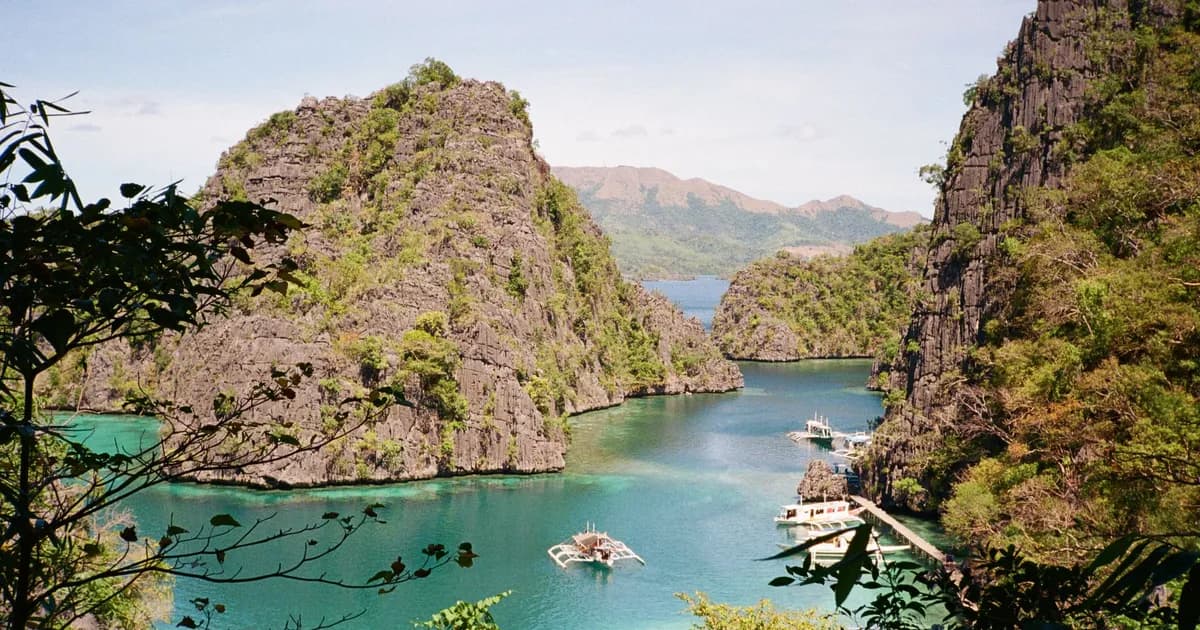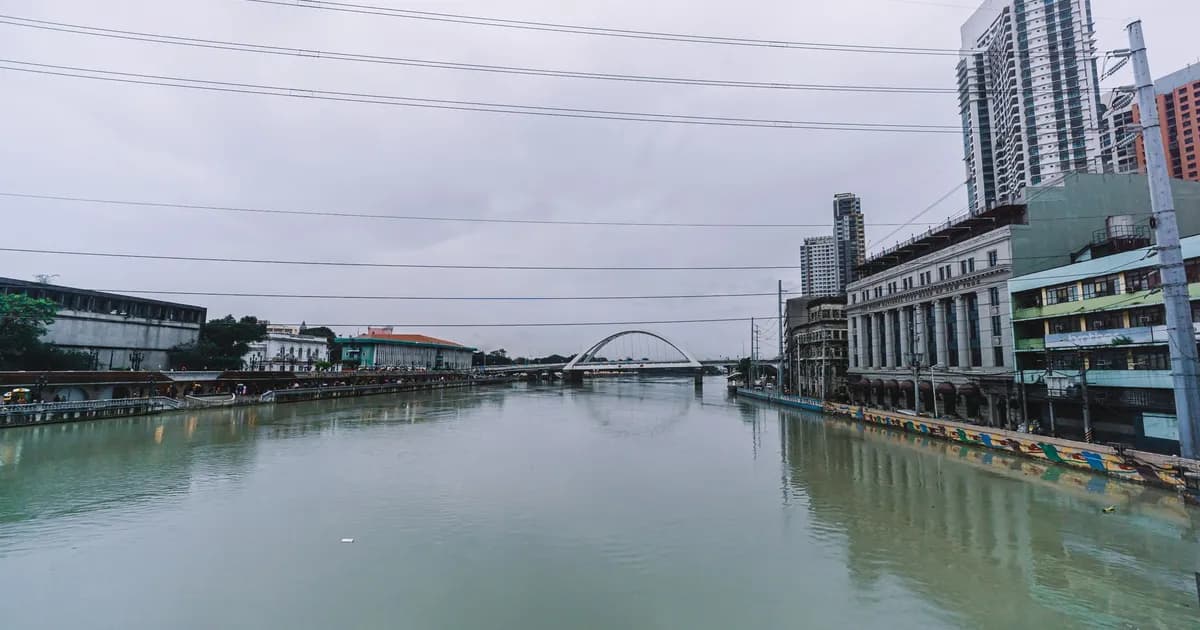


Romblon is the province most travellers cross without ever landing. Ferries from Batangas slide past its coasts every night on their way to Caticlan, and the planes to Boracay pass overhead. The province itself, three main islands and a scatter of smaller ones in the Sibuyan Sea, stays quiet. There are no resort strips, no terminal built for arrivals in the hundreds of thousands, and no obligation to see everything. Romblon is one of the few places left in the Philippines where the ferry timetable, not your itinerary, decides how long you stay. Treated as a detour, that is frustrating. Treated as a destination, it is one of the better slow-travel propositions in the country.
Where Romblon Actually Is
Romblon is an archipelago province of roughly twenty islands sitting almost exactly in the middle of the Philippine map, wedged between Mindoro to the west, Panay to the south and the Bicol mainland to the east. It belongs to the MIMAROPA region, an administrative grouping that tells you something about how scattered this part of the country is: the province has no land border with anything.
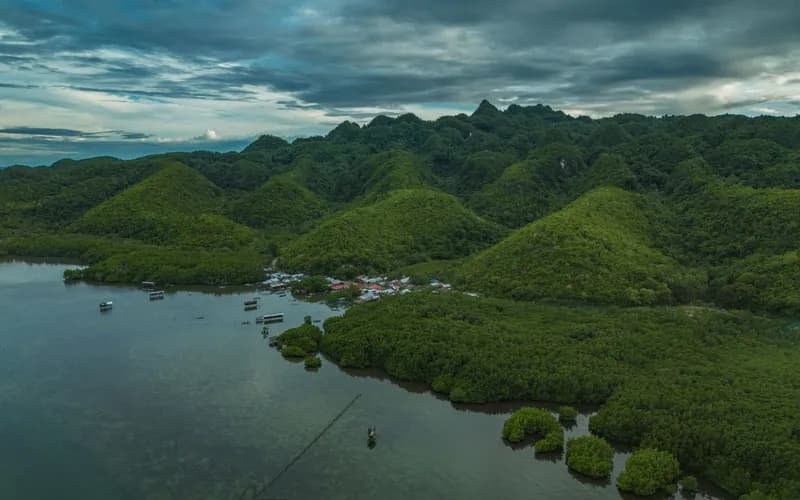
Three islands carry nearly all of the population and all of the useful ferry traffic. Tablas is the largest, a long ridge of an island with the province's only airport and three working ports. Romblon Island is the small round one in the middle, home to the provincial capital, also called Romblon, and to the marble industry the province is known for. Sibuyan, to the east, is the wild one: a single mountain rising straight out of deep water, wrapped in forest that was never fully logged.
The distances between them look trivial on a map and are not trivial in practice. Nothing is more than a couple of hours by boat, but the boats do not run all day, and when the wind turns they do not run at all. Build that into the plan and Romblon is easy. Fight it and you will spend your week in port waiting rooms.
One request. Up to five tailored proposals.
Skip contacting agencies one by one — share your trip once and let up to five trusted Philippines agencies come to you. Free, with no obligation.
Get my free quotesThree Islands, Three Temperaments
Most first-time visitors try to do all three in a week. A better shape for a first trip is two islands in ten days, or one island in a week.
- Romblon Island suits travellers who want a walkable harbour town, stone forts, marble workshops, two very good beaches and short day boats.
- Sibuyan suits walkers, birdwatchers and river swimmers, anyone who would rather have a mountain and a rainforest than a beach bar.
- Tablas suits arrivals by plane, cyclists and freedivers, and works better as a first or last stop than as the centrepiece.
If you are assembling a longer Philippine route out of quiet places rather than headline ones, Romblon slots naturally alongside the destinations in our guide to the country's lesser-travelled corners.
Romblon Island: Marble, Forts and Bonbon Beach
The provincial capital is a small port town you can walk end to end in twenty minutes, and it is the most immediately likeable place in the province. Marble is everywhere: in the kerbstones, in the church steps, in the dust outside the roadside workshops around Cajimos where cutters and carvers shape everything from mortars and pestles to gravestones. Buying a small finished piece directly from a workshop is one of the few genuinely useful things a visitor can do here, and it weighs less than you think.
Above the harbour sit two Spanish-era coral-stone forts, San Andres and Santiago, built in the seventeenth century against Moro raiders. San Andres has the better view and is the place to be at sunset. Down in town, St Joseph the Worker Cathedral is one of the oldest churches in the Philippines still in regular use, its thick walls a reminder that this was a strategic anchorage long before it was a tourist idea.
The island's beaches are close. Bonbon Beach, a fifteen-minute tricycle ride from town, is the one people photograph: a long pale sandbar that walks you out to the islet of Bang-og at low tide and disappears entirely at high. Tiamban Beach next door is quieter and better for swimming at any tide. A tricycle can circle the whole island in around ninety minutes of actual driving, which makes for an excellent unhurried day with stops.

Get matched with up to 5 trusted Philippines agencies
- Free
- No obligation
- Up to 5 agencies
Sibuyan: The Island That Never Joined the Mainland
Sibuyan is the reason biologists know Romblon. The island is separated from its neighbours by deep water and, unlike most of the Philippine islands, is thought never to have been connected to a larger landmass. The result is an unusually high level of endemism packed into a small area, which is why you will see it described as the Galapagos of Asia. That is marketing shorthand, but the underlying point stands: the forest here is genuinely different.
At the centre is Mount Guiting-Guiting, 2,058 metres of jagged ridge inside a protected natural park. Climbing it is a serious two- to three-day undertaking with a notorious knife-edge section near the summit, and it requires a permit and an accredited guide arranged through the park office in Magdiwang. Fitness is checked, not assumed, and the season that makes sense is March to May.
You do not have to climb it. Sibuyan rewards people who never leave the lowlands. Lambingan Falls and the Cantingas River are both short trips from Magdiwang, and the river water is startlingly clear. Coastal roads run through fishing barangays where almost nothing is arranged for visitors, which is the point. Offshore to the south, reached by boat from San Fernando, the sandbar islet of Cresta de Gallo is the province's most photographed spot: a curved spit of white sand with no shade, no shop and no facilities. Bring water, a hat and everything you plan to drink, and go early.
Tablas: The Long Island Most People Only Cross
Tablas is where most arrivals happen and where most departures are missed. Tugdan Airport, in the municipality of Alcantara, handles a small number of weekly flights from Manila; schedules have changed several times in recent years, so confirm directly with the airline rather than trusting a blog post. The three ports are Odiongan on the west coast, which is also the biggest town, San Agustin in the northeast, which is the jumping-off point for Romblon Island and Sibuyan, and Looc in the southwest.
The island itself deserves more than a transit day. Binucot Beach, in the municipality of Ferrol, is a long crescent of sand with a handful of small resorts and very little else, roughly half an hour by tricycle from Odiongan. Looc Bay has a community-run marine sanctuary with a floating guardhouse where you pay a modest fee, borrow a mask and snorkel over reef that has been protected by the local fishing community for decades. Freedivers come for the depth just offshore. If the underwater side is what draws you to the Philippines at all, it is worth reading how the country's reefs are being managed now in our piece on the recovery of Philippine dive sites.
Roads on Tablas loop around the coast and are paved in most places but slow everywhere. Jeepneys and vans run between the main towns on a schedule that thins out sharply in the afternoon.
Getting There, and Why the Ferries Set the Pace
From Manila, the standard approach is overland then overnight. Buses from PITX, Cubao or Alabang reach Batangas Pier in two to three hours, and roll-on roll-off ferries run from there to Odiongan, Romblon town and San Agustin. Montenegro Shipping Lines, Starlite Ferries and 2GO all serve parts of the route, and crossings take somewhere between eight and twelve hours depending on the destination and the number of stops. Most sail in the evening and arrive at dawn, which is the cheapest night's accommodation in the province.
Between the islands, the useful hops are Romblon town to Magdiwang on Sibuyan, roughly two hours for around PHP 350, and San Agustin on Tablas to Romblon town, about an hour. There are also seasonal small-boat connections between Tablas and Caticlan, near Boracay, which are cheap, weather-dependent and worth checking locally rather than online.
Two rules make Romblon work. Never plan to connect a ferry to a same-day international flight, and always keep a spare day at the end. The habit of building slack into island routes is the whole subject of our guide to island-hopping the Philippines without rushing, and nowhere in the country repays it more.
What It Costs, and What It Does Not Have
Romblon is inexpensive by Philippine standards because there is very little at the top end. A simple fan room runs from about PHP 800, a decent air-conditioned room in Odiongan or Romblon town from around PHP 1,500 to PHP 2,500, and a meal of grilled fish, rice and vegetables from PHP 120 to PHP 250. A private boat to Cresta de Gallo is typically PHP 3,000 to PHP 5,000 for the boat, which is reasonable split between four or five people.
What the province does not have matters more. ATMs are concentrated in Romblon town, Odiongan and one or two other municipal centres, they run out of cash at weekends, and card acceptance outside a handful of resorts is close to zero. Power interruptions are routine. Mobile data is fine in the towns and patchy in the Sibuyan interior. Medical care beyond a district hospital means a boat or a flight. Plan your cash before you leave a bigger island, using the approach we set out in our guide to managing money across the Philippines.
When to Go
March to May gives the calmest seas, the most reliable boats and the only sensible window for Mount Guiting-Guiting. December to February is cooler and often beautiful, but the northeast monsoon known as amihan pushes swell across the Sibuyan Sea and cancels smaller crossings without much warning. June to November is the wet half of the year, with genuine typhoon exposure; travel is still possible but only with flexible bookings and no tight connections.
One date is worth planning around. The Biniray Festival in Romblon town, held in the second week of January, re-enacts the arrival of the Santo Nino with a fleet of decorated boats circling the harbour. It is a community event rather than a spectacle staged for visitors, and rooms in town are genuinely scarce that week.
Travelling Here Without Wearing It Out
Romblon receives few enough visitors that individual behaviour still registers. Stay in fewer places for longer, which puts more money into each community and less into fuel. Hire boatmen and guides directly rather than through intermediaries, and agree the price before departure. Pay the sanctuary fees at Looc and elsewhere; they fund the patrols that keep the reef intact. Decline coral and shell souvenirs entirely, and buy marble instead, from the people who cut it.
Fresh water is limited on the smaller islands, so treat long showers as a cost borne by someone else. Carry your rubbish back to a town that can handle it. On Sibuyan, follow the park rules without negotiation, including the guide requirement, which exists because people have died on that ridge. None of this is onerous. It is simply what travelling well in a place with thin infrastructure looks like.
What to Do Next
- Decide on two islands, not three, and give yourself at least eight days including travel.
- Choose your entry point: Batangas by overnight ferry for the cheapest and most reliable option, or Tugdan Airport if you have confirmed a flight directly with the airline.
- Check current ferry schedules with the operators no more than a week before you travel, and again the day before you sail.
- Withdraw cash on Luzon or in Odiongan before heading to Sibuyan or the smaller islands.
- Book the first two nights only, then let the boats decide the rest.
- If you would rather have the logistics arranged by someone who knows the routes, compare the vetted operators listed on our Philippines travel agencies directory.
Frequently Asked Questions
How many days do you need in Romblon?
Eight to ten days is the realistic minimum for two islands, including the overnight ferry in each direction. A week gives you one island properly. Anything shorter turns into a transport exercise, because the inter-island boats generally run once a day and cancellations are normal.
Is Romblon worth visiting compared with Boracay or Palawan?
They are different products. Boracay and El Nido offer developed beaches, choice and organised activities. Romblon offers space, low prices and the sense of being somewhere that is not primarily arranged around visitors. If your ideal day involves a beach club, go elsewhere. If it involves an empty sandbar and a conversation with a boatman, come here.
Can you fly to Romblon?
There are flights from Manila to Tugdan Airport on Tablas, but the frequency is low and the schedule has changed repeatedly. Treat the flight as a bonus rather than a plan, and never build a tight onward connection around it. The overnight ferry from Batangas is slower and considerably more dependable.
Is there reliable internet in Romblon?
In Romblon town, Odiongan and Magdiwang, mobile data is generally workable for messaging and email. It is not reliable enough for video calls you cannot reschedule, and it degrades quickly in the interior of Sibuyan and along the less populated coasts. Power interruptions add a second layer of uncertainty.
Do you need a guide to climb Mount Guiting-Guiting?
Yes. The park requires a permit and an accredited guide, arranged through the protected area office in Magdiwang, and there is a fitness screening. The climb takes two to three days and includes exposed scrambling near the summit. It is not a walk-up peak and should not be attempted independently.
Is Romblon safe for solo travellers?
Petty crime is uncommon and locals are used to the occasional independent visitor. The genuine risks are maritime and medical: small boats in rough seas, limited hospital capacity and long evacuation times. Travel with insurance that covers boat transfers, avoid crossings when the sea is up, and do not let a boatman talk you into leaving in bad weather.
When is the best time to visit Romblon?
March to May, for calm water and dependable boats. January and February are pleasant on land but windy at sea. From June to November you should expect rain and the possibility of a typhoon closing the ports for several days at a time.