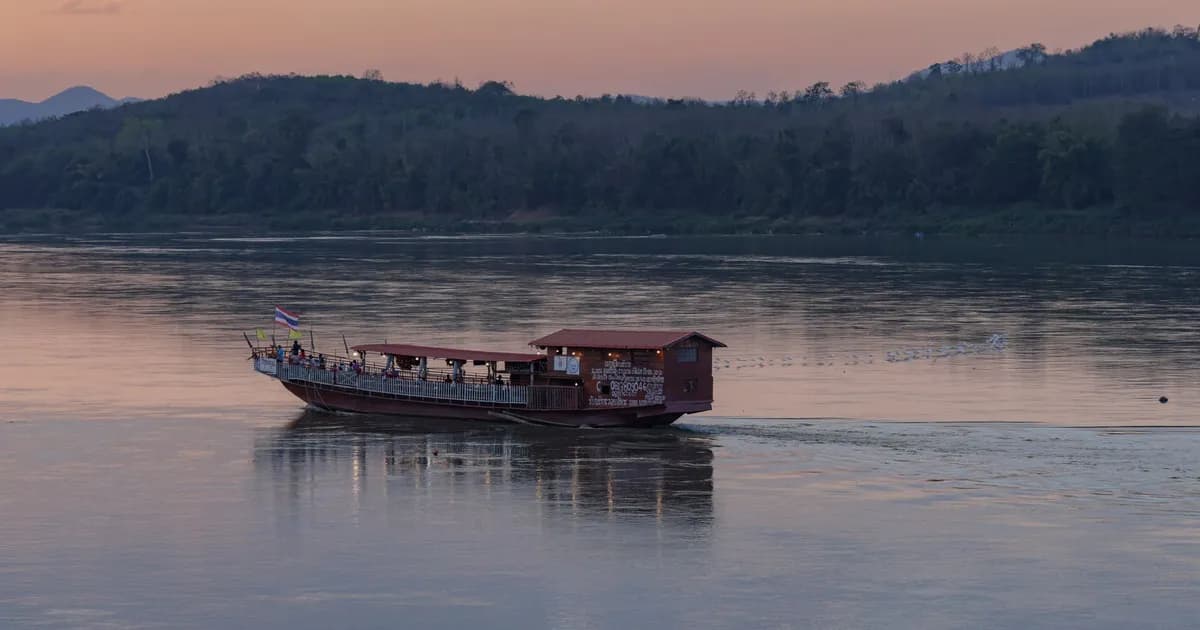

Loei sits in the far north of Isan, pressed against the Mekong and the Lao border, and it is one of the few provinces in Thailand where the pace still belongs to the people who live there rather than the buses that visit. There are no ruins on the scale of Sukhothai and no islands, which is exactly why it stays quiet. What Loei offers instead is a riverfront town made for walking, a range of cool green mountains, and mornings that ask nothing of you but to be awake for them. It is a place that rewards the traveller who is willing to do very little, slowly.
Where Loei Sits, and Why It Stays Quiet
Loei is a north-eastern province, but it does not feel like the rest of Isan. The land folds into hills and low mountains, the air turns genuinely cold between December and February, and the Mekong forms a long northern boundary with Laos. Because it is a full day's travel from Bangkok and off the main tourist rail and flight corridors, Loei has never developed a mass-market scene. Most of the visitors you meet are Thai, escaping the heat of the lowlands for a weekend by the river. That domestic focus keeps prices fair and the atmosphere unhurried, and it rewards travellers who are happy to slow down and stay a while. If you are still shaping the wider trip, our seasonal overview of where to go in Thailand and when puts Loei in context alongside the country's better-known regions.
One request. Up to five tailored proposals.
Skip contacting agencies one by one — share your trip once and let up to five trusted Thailand agencies come to you. Free, with no obligation.
Get my free quotesChiang Khan: A Riverfront Town Built for Walking
The heart of the province, for most travellers, is Chiang Khan, a small district town strung along the Mekong. Its centrepiece is the Walking Street, Thanon Chai Khong, a lane of more than 1,200 metres lined with restored century-old teakwood shophouses. By day it is sleepy and shuttered; from around four in the afternoon it wakes up, and the wooden fronts open into small cafés, craft shops, guesthouses and stalls selling grilled river fish and coconut sweets.
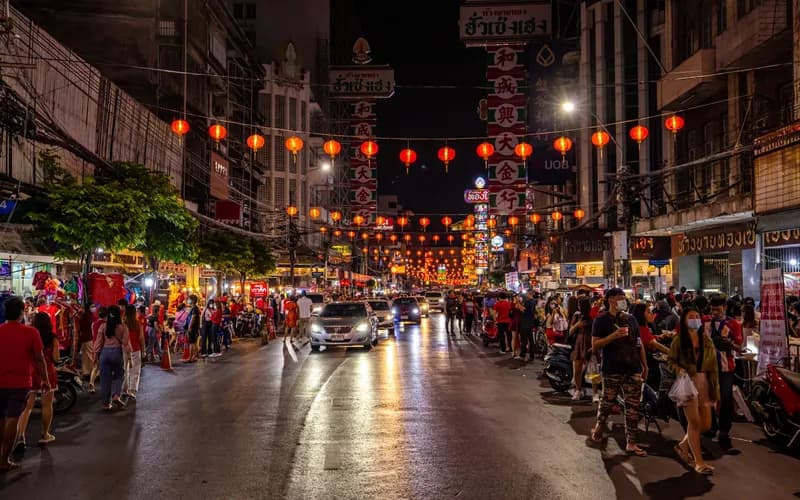
What makes Chiang Khan work as a slow-travel base is that the appeal is not any single sight but the town itself. You rent a bicycle, drift between the river lane and the temples set back from it, and let the day organise itself around light and meals. Stay two or three nights rather than one, and the town shifts from a photo stop into a place with a rhythm you can join. The old shophouses now hold a gentle mix of the traditional and the new: an indigo-dyeing workshop beside a third-wave coffee bar, a century-old temple a block from a guesthouse run by a family that has lived on the same lane for generations.
Mornings on the Mekong: Alms, Mist, and Phu Thok
The best hours in Chiang Khan are early. Not long after dawn, residents and visitors kneel along the quieter back lanes to offer sticky rice to a line of barefoot monks — a daily alms round, or tak bat, that here is unhurried and largely free of the staged quality it has taken on elsewhere. If you take part, do so quietly: buy your rice the evening before, remove your shoes, keep your head lower than the monks', and never point your feet toward them.
A little before that, many travellers drive or join a shared songthaew up to Phu Thok, a hill just outside town, to watch the sunrise break over a sea of mist that fills the Mekong valley in the cool months. It is one of the north-east's genuinely memorable views, and because you earn it with an early alarm rather than a queue, it still feels like a private one. Bring a warm layer: at that hour, in December or January, the air on the summit can be surprisingly cold for Thailand.
Get matched with up to 5 trusted Thailand agencies
- Free
- No obligation
- Up to 5 agencies
Kaeng Khut Khu and the River's Edge
A few kilometres downstream, the Mekong widens and shallows into Kaeng Khut Khu, a stretch of rapids and exposed rock that becomes a riverside park in the dry season. Local restaurants set out low tables and cushions on wooden decks over the water, and it is the classic spot for a long, lazy Isan lunch — som tam, grilled chicken, sticky rice and the small freshwater shrimp the rapids are known for. It is worth timing a visit for late afternoon, when the heat eases and the light on the far Lao bank turns gold. Vendors sell riverine snacks and cool drinks, and the whole scene runs at the pace of a Sunday, even midweek.
Into the Loei Highlands: Phu Ruea, Phu Kradueng and the Cool Season
Loei's second face is its mountains. Phu Ruea National Park, reachable as a day trip, is known for the coldest recorded temperatures in Thailand and for hillsides that in January can carry a genuine frost — a novelty that draws Thai families but leaves the walking trails calm on weekdays.
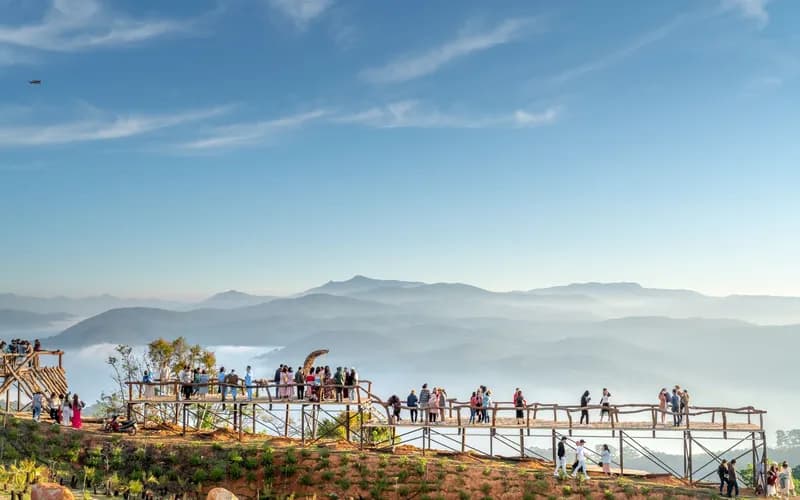
The province's headline trek is Phu Kradueng, a high tableland national park where the reward for a demanding climb of around five to six kilometres is a cool plateau of pine forest, meadows and cliff-edge viewpoints that you explore over one or two nights in simple park accommodation. Phu Kradueng typically opens for the cool, dry season and closes during the rains, so it suits a trip planned between roughly October and May. Porters can carry your pack up the mountain for a set fee, which turns a punishing climb into a manageable one. If you would rather not gamble on the weather at all, our guide to travelling Thailand in the green season without losing half your trip to rain explains how the wet months actually play out region by region.
Dan Sai and the Phi Ta Khon Country
West of the provincial capital lies Dan Sai, a small town famous once a year for Phi Ta Khon, the "ghost festival" in which villagers parade in towering hand-painted masks and patchwork costumes. In 2026 the festival falls around 20–22 June. Even outside the festival dates, Dan Sai is a quietly rewarding stop: the Phi Ta Khon Museum keeps the tradition alive year-round, and the surrounding hills and the revered Wat Phra That Si Song Rak make an unhurried afternoon. The road there from Loei town runs through farmland and low ridges that reward an unhurried drive with plenty of stops.
Eating in Loei: Isan Flavours with a Northern Accent
Loei's food is recognisably Isan — sticky rice, fiery larb, som tam, grilled meats — but the cooler climate and the Lao border give it a distinct edge. Look for local mushrooms and wild greens in season, Loei's well-known macadamia and cool-climate produce, and the coconut-milk sweets sold along the Chiang Khan waterfront. The province is also quietly known for its wines and fruit from the highland farms around Phu Ruea, an unexpected note in a region better known for chilli and lime. Morning markets are the best window on all of this: arrive early, eat what is in season, and let the vendors point you toward what they are proudest of.
Where to Stay and the Shape of a Slow Day
Accommodation in Chiang Khan skews small and characterful: converted teak shophouses on the Walking Street, riverfront guesthouses with balconies over the Mekong, and a handful of boutique stays a short ride from the centre. Booking a room facing the river is worth the small premium for the morning light alone. A good day here needs no itinerary: the sunrise and alms round at dawn, a slow breakfast, the hot midday hours spent reading or napping through the shuttered lull, then the Walking Street coming alive again as the sun drops. The rhythm is the attraction, and it only reveals itself if you give the town more than a single night.
How to Get Here and Move Around
Loei has a small airport with flights from Bangkok, and long-distance buses run overnight from the capital's Mo Chit terminal to Loei town and on to Chiang Khan. Many slow travellers instead pair Loei with the wider north-east, arriving overland from Udon Thani or Nong Khai. If you would rather let the journey be part of the trip, the overnight and regional trains that serve Isan are a comfortable way in; our slow rail guide to travelling Thailand by train covers the routes, classes and booking. Loei pairs naturally with the Mekong further downstream, and travellers heading that way often continue toward Ubon Ratchathani, where the Mun meets the Mekong.
Once in the province, a rented bicycle covers Chiang Khan itself, while a motorbike or a hired car with driver opens up the highlands and Dan Sai. Distances are modest but roads wind, so plan for slower going than the map suggests, and factor in stops for viewpoints and roadside noodle stalls.
What to Do Next
- Choose your season first: aim for the cool, dry window of roughly November to February for mist, comfortable walking and open highland parks.
- Base yourself in Chiang Khan for at least two nights and rent a bicycle rather than rushing the Walking Street in an evening.
- Set one early alarm for the Phu Thok sunrise and the morning alms round, then build the rest of the day slowly.
- Add a highland day: Phu Ruea for an easy drive, or Phu Kradueng if you want a two-day trek and the parks are open.
- If your dates are flexible, line them up with Phi Ta Khon in Dan Sai in June, and plan the logistics early using our plan-your-journey resources for Thailand.
Frequently Asked Questions
When is the best time to visit Chiang Khan and Loei?
The cool, dry season from November to February is ideal. Mornings bring mist over the Mekong, the highland parks are open, and daytime temperatures are pleasant. March to May is hot and hazy, and the June-to-October rains can close mountain trails, though the countryside is at its greenest.
How many days should I spend in Loei?
Give the province at least three to four days. Two nights in Chiang Khan let you settle into the town's rhythm, and a further day or two covers the highlands around Phu Ruea or a Phu Kradueng trek. Rushing Loei in a single night misses the point of coming.
How do I get to Chiang Khan from Bangkok?
You can fly to Loei's airport and continue by road, or take an overnight bus from Bangkok's Mo Chit terminal. Many slow travellers arrive overland from Udon Thani or Nong Khai, which pairs Loei with the wider Mekong north-east rather than treating it as a standalone trip.
Is Chiang Khan too touristy now?
It is popular with Thai weekenders, so the Walking Street can be busy on Friday and Saturday nights and during long holidays. Visit midweek, stay a couple of nights, and start your days early, and you will find the quiet, small-town character that made it popular in the first place.
Can I see the Phi Ta Khon festival outside June?
The parades themselves happen only during the festival, which falls around 20–22 June in 2026. Outside those dates, the Phi Ta Khon Museum in Dan Sai keeps the masks and traditions on display year-round, so you can still understand the custom on a quieter visit.
Do I need a car in Loei?
For Chiang Khan itself, a bicycle is enough. To reach the highlands, Dan Sai and Kaeng Khut Khu comfortably, a motorbike or a hired car with driver is far more practical, as public transport between the smaller sights is limited and infrequent.