
Twenty provinces. Roughly a third of Thailand's population. And, by most estimates, well under three percent of what foreign visitors spend in the country. That gap is the single most interesting fact about Isan, Thailand's northeastern plateau, and Ubon Ratchathani is the easiest place to stand inside it.
Ubon is not a hidden gem in the brochure sense. It is a large, working provincial capital full of ordinary Thai life — wet markets, university students, temple courtyards, evening traffic — that happens to sit where the Mun River empties into the Mekong. There is no beach, no headline ruin, no queue. What there is instead is time: river light, prehistoric cliff paintings, brass-casting villages, and one of the most extraordinary religious festivals in Southeast Asia, staged every July in front of almost no foreigners at all. For travellers who measure a journey by depth rather than distance, that is a far better proposition than it sounds.
Where Ubon Ratchathani sits, and why that matters
Ubon Ratchathani occupies Thailand's far eastern corner, pressed against Laos to the north and east and Cambodia to the south. The name means, roughly, royal lotus city. It is about 600 kilometres from Bangkok — an overnight train, a long bus, or a short domestic flight — and that distance is precisely what has kept it out of the standard two-week itinerary.
The province is where central Thailand ends and the Mekong basin takes over. The language you overhear in the markets is Isan, far closer to Lao than to Bangkok Thai. The food leans sour, salty and fiercely hot, built on sticky rice, fermented fish and grilled meat rather than coconut milk. The temples borrow from Lao and Khmer forms as much as from Siamese ones. None of this is presented to visitors as an attraction, because there are not enough visitors to present it to. You simply walk into it.
That absence of tourist infrastructure is the honest caveat as much as the appeal. English is patchy outside a handful of hotels. Signage at rural sites is often Thai-only. Public transport to the best places is unreliable. If your idea of a good trip involves everything being explained to you in your own language, Ubon will frustrate you. If you would rather work a little for the pleasure of being somewhere unperformed, it is one of the most rewarding provinces in the country. Travellers drawn to this kind of terrain often also enjoy the quiet valleys of Nan province in the far north, which offers a similar reward for a similar patience.
One request. Up to five tailored proposals.
Skip contacting agencies one by one — share your trip once and let up to five trusted Thailand agencies come to you. Free, with no obligation.
Get my free quotesThe city itself is slower than it looks
Ubon city is not beautiful in an obvious way. It is low-rise, hot, and organised around commerce rather than charm. Give it two days anyway, because its pleasures are cumulative rather than immediate.
Start with Wat Thung Si Mueang in the centre, whose wooden scripture library stands on stilts in the middle of a pond — a design meant to keep termites and ants away from palm-leaf manuscripts, and one of the finest surviving examples of the form in Thailand. The murals in the ordination hall show a provincial style that predates the standardisation of Thai temple art under Bangkok's influence. Wat Phra That Nong Bua, north of the centre, takes the opposite approach: a tall white stupa modelled on the great temple at Bodhgaya in India, unusual and slightly startling among the palms.
The Ubon Ratchathani National Museum, housed in a former royal residence, is small and old-fashioned, and it does the single most useful thing a museum can do for a traveller — it explains the Khmer, Lao and Thai layers of the region in one hour, so that everything you see for the rest of the week has context.
Then simply eat. The evening markets around Thung Si Mueang park and along the riverfront are where the province is most itself: grilled chicken, som tam pounded to order, sausages fermented for days, sticky rice in bamboo baskets. Prices are among the lowest of any Thai provincial capital.
The Mekong bend: Khong Chiam and Pha Taem
The reason to base yourself in Ubon is what lies about 80 to 100 kilometres east of it.
Khong Chiam is a small, sleepy town at the confluence of the Mun and the Mekong, where the two rivers meet at visibly different colours — the Mun running darker, the Mekong heavy with sediment. Locals call it the two-coloured river, and the effect is clearest in the dry months when flows are low. You can hire a longtail boat at the landing for an hour or two on the water. Do it early, before the heat, when the mist is still sitting on the Lao bank opposite.
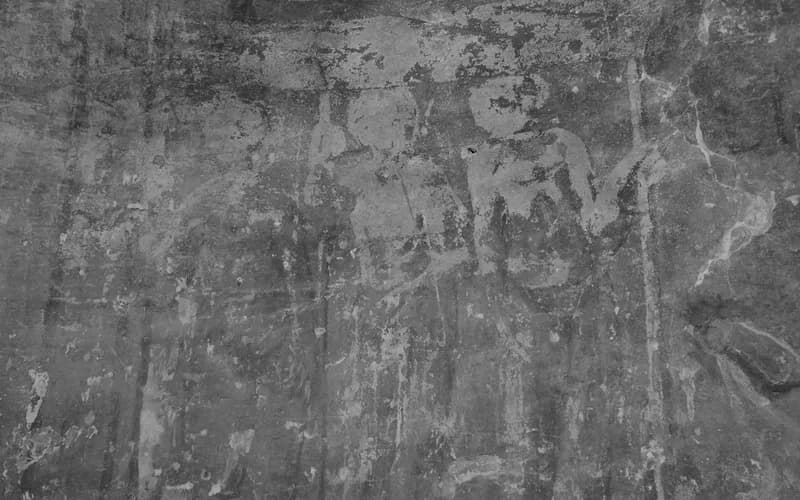
Pha Taem National Park, a short drive north of Khong Chiam, is the genuine headline. A sandstone cliff runs high above the Mekong, and along a walkway cut into its face are rock paintings estimated at three to four thousand years old: hand prints, geometric patterns, fish traps, elephants, and long rows of human figures. They are not fenced off or dramatised. You walk along the cliff at your own pace with the river below and Laos on the far side, and the paintings are simply there, at eye level, in ochre.
Come for sunrise if you can. Pha Taem's cliff faces east over the Mekong, and it is often cited as one of the first places in Thailand to catch the morning sun. The park charges a foreigner entrance fee, payable at the gate, and has basic facilities and a few simple places to stay nearby.
Get matched with up to 5 trusted Thailand agencies
- Free
- No obligation
- Up to 5 agencies
Sam Phan Bok, and the season that makes it
Downriver, the Mekong runs across a bed of soft sandstone that centuries of current have drilled into thousands of rounded hollows. The site is called Sam Phan Bok — three thousand holes — and it is frequently oversold as a Grand Canyon of the Mekong, which it is not. What it actually is, is stranger and quieter: a lunar field of pitted rock stretching out into a river channel, walkable, silent, and completely unlike anywhere else in Thailand.
The critical caveat is timing. Sam Phan Bok only exists as a place you can walk on when the Mekong is low, roughly from January through May. Outside that window the river covers it entirely and there is nothing to see. Any operator promising you Sam Phan Bok in August is selling you a boat ride past deep water. Plan the visit for the cool dry season or accept that you will miss it.
The Candle Festival and the rains retreat
If you can only come once, come in July. Ubon's Khao Phansa Candle Festival marks the start of the Buddhist rains retreat, the three months during which monks remain in their monasteries. Across Thailand this is observed quietly. In Ubon it is observed by carving enormous sculptures out of beeswax and paraffin.
Competing districts commission teams of artisans who work for weeks on floats several metres high, depicting scenes from the life of the Buddha, episodes of the Ramakien, and figures from Buddhist cosmology, all rendered in wax at a level of detail that is genuinely hard to believe until you stand next to one. In 2026 the festival runs from 28 to 30 July, centred on the Thung Si Mueang grounds in the middle of the city.
It is a religious observance first and a spectacle second, which is exactly why it is worth attending — and why it is worth knowing how to behave. Dress covered, do not climb on the floats, and follow the crowd's lead around monks and offerings. Our overview of how to conduct yourself in Thai temples and public life covers the basics. Book accommodation well in advance for those three nights; Ubon has limited rooms and Thai domestic visitors fill them.
Craft villages and the Isan table
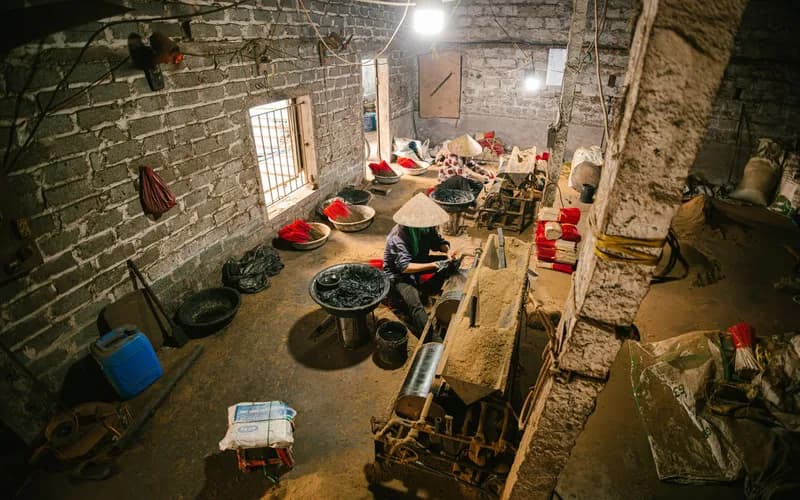
Ubon's craft tradition is worth a day. Ban Pa-Ao, a village west of the city, has cast bronze and brass by the lost-wax method for generations, and workshops there still produce bowls, bells and betel-nut containers by hand. It is not a staged demonstration; it is a working village that tolerates visitors, which means you should buy something if you spend an hour watching.
The province also has a long silk and cotton weaving tradition, with distinctive Isan patterns woven on household looms. Quality varies enormously and so does honesty about what is handwoven versus machine-made. Buy from village cooperatives rather than city souvenir shops if the provenance matters to you, and expect to pay accordingly.
On food, Isan cooking is the country's most exported regional cuisine and its least understood. The som tam sold in Bangkok is a milder cousin of what you will eat here. Ask for it Isan-style only if you mean it. Look also for gai yang (marinated grilled chicken), larb (a herb-and-lime minced meat salad), and the fermented fish condiment pla ra, which is the flavour that makes northeastern food northeastern and which many visitors need a few meals to meet halfway.
Getting there, and getting around
There are three sensible ways in. Domestic flights from Bangkok take about an hour and are frequently cheap. The overnight train on the northeastern line runs from Bangkok to Ubon Ratchathani and is one of the better sleeper journeys in the country, arriving in the morning with your accommodation budget for the night already spent on transport — a trick we cover in more depth in our guide to moving around Thailand by rail. Long-distance buses run frequently and cost less again.
Once there, the honest answer is that you need your own wheels or a driver. Motorbike rental in the city typically runs 200 to 300 baht a day; a car with driver for a day trip to Khong Chiam and Pha Taem costs considerably more but removes the risk of riding an unfamiliar bike 100 kilometres each way in the heat. Public transport reaches the district towns but not the viewpoints. Many small operators can arrange this; if you would rather book the whole province through someone accountable, our directory of vetted Thailand agencies is a starting point, and our broader guide to travelling Thailand away from the crowds sets Ubon in the context of the country's other quiet regions.
When to go
November to February is the cool dry season and the best all-round window: comfortable temperatures, low river levels, and Sam Phan Bok fully exposed. March to May is punishingly hot, often above 38C, and is also when agricultural burning can degrade air quality across the northeast. June to October brings the rains, which turn the plateau green and the rice paddies luminous, but also cover Sam Phan Bok and make rural roads harder. July is the exception worth making for the Candle Festival.
What to do next
- Pick your window first. Choose January to February if Sam Phan Bok and river scenery matter most, or late July if the Candle Festival is the priority. These two goals do not overlap.
- Book the sleeper train from Bangkok early. Second-class air-conditioned berths on the Ubon line sell out well ahead during Thai holidays and festival weeks.
- Reserve four nights minimum. Two in the city, two based near Khong Chiam or the Pha Taem area, is the shape that works.
- Arrange transport before arriving. Confirm a motorbike rental or a car and driver for at least one full day east to the Mekong sites.
- Learn ten words of Thai. Numbers, thank you, delicious, and not spicy will change your week here more than anywhere else in the country.
- Carry cash. ATMs exist in the district towns but card acceptance outside the city is limited, particularly at park gates and village workshops.
Frequently Asked Questions
Is Ubon Ratchathani worth visiting if I only have two weeks in Thailand?
Honestly, probably not as a first trip. Two weeks is enough for Bangkok, the north and one coast, and Ubon deserves four days minimum to justify the travel time. It makes far more sense on a second or third visit, or on a longer trip of a month or more where you are deliberately slowing down.
How many days do I need in Ubon Ratchathani?
Four is the practical minimum: two for the city and museums, one for the Khong Chiam and Pha Taem loop, and one held in reserve for weather, heat or a village day. Five or six lets you add Sam Phan Bok or Kaeng Tana without rushing.
Can I visit Laos from Ubon Ratchathani?
There is a land border crossing at Chong Mek, east of the city, which connects towards Pakse in southern Laos. Crossing requires the correct visa or visa exemption for Laos and a valid re-entry basis for Thailand, and both countries' rules have changed repeatedly in recent years. Check current requirements with official sources close to your travel date rather than relying on older blog accounts.
Is the Candle Festival crowded?
It is busy, but with Thai visitors rather than international ones. Hotel rooms in the city genuinely sell out for the festival nights, so book weeks ahead. The crowd density is nothing like Songkran in Chiang Mai or a full moon party, and the atmosphere is devotional rather than raucous.
Do I need to speak Thai?
You do not need to, but you will have a materially better trip with a few words and a translation app that works offline. English is limited outside hotels and the university area, and rural site staff often speak none. This is part of what keeps the province the way it is.
Is Isan food too spicy for most visitors?
It can be. Northeastern cooking is the hottest regional cuisine in Thailand and the default heat level in a local market is calibrated for locals. Say mai phet (not spicy) and expect it still to have some heat. Fermented fish sauce, pla ra, is the other acquired taste; try a dish that contains it before deciding you dislike it.
Is the province safe?
Ubon Ratchathani is a normal, safe Thai province with low levels of crime against visitors. The realistic risks are road-related — riding a motorbike long distances in heavy heat on unfamiliar rural roads — and heat exhaustion in the hot season. Both are managed by slowing down, which is rather the point.