
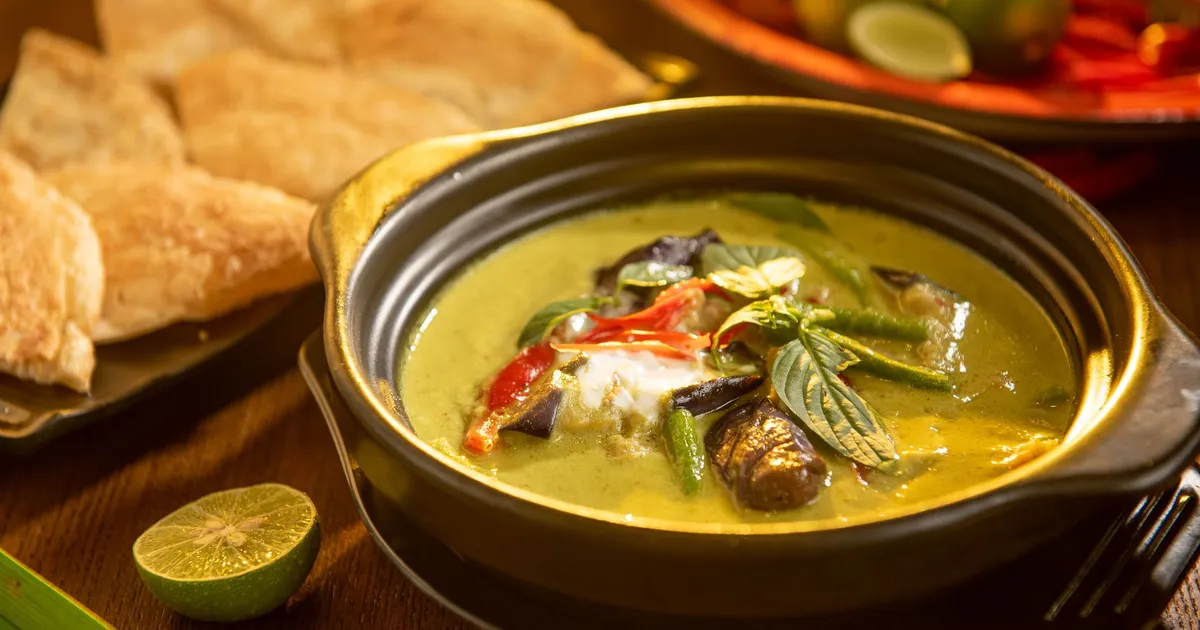
How to Eat Vegetarian and Vegan in Thailand: A Practical Guide
Thailand is one of the easiest countries in Asia to eat plant-based, and one of the easiest to get it wrong. The food is built on vegetables, tofu, rice and herbs, yet fish sauce, shrimp paste and oyster sauce hide in dishes that look entirely vegetarian. Get a handful of words and a few habits right and you can eat brilliantly for weeks without touching meat. Rely on appearances alone and you will unknowingly eat fish sauce at every meal. This is the practical version: what to say, what to watch for, and where the plant-based eating is genuinely effortless.
Is Thailand easy for vegetarians and vegans?
Broadly, yes, with an asterisk. Cities and traveller hubs like Bangkok, Chiang Mai, Pai and the main islands have dedicated vegetarian and vegan restaurants, and many ordinary kitchens will happily adapt a dish. Rural areas and small towns are harder, not because the food is unfriendly but because the concept of avoiding fish sauce is unfamiliar. The single biggest determinant of an easy trip is not the region but your ability to communicate clearly and specifically. Thai cooks are accommodating when they understand the request; the failures are almost always failures of translation.
If food is central to how you travel, it is worth reading our guide to Thai food alongside this one: knowing the dishes makes it far easier to spot which ones are naturally plant-based and which hide animal products.
One request. Up to five tailored proposals.
Skip contacting agencies one by one — share your trip once and let up to five trusted Thailand agencies come to you. Free, with no obligation.
Get my free quotesThe hidden fish sauce problem
This is the heart of the matter. Fish sauce, called nam pla, is the salt of Thai cooking. It is in most curries, most stir-fries, most soups and the dressing of the famous green papaya salad. Shrimp paste, kapi, forms the base of many curry pastes and the dip nam prik. Oyster sauce, nam man hoy, coats a great many vegetable stir-fries. Dried shrimp are scattered through salads and som tam. None of these are visible in the finished plate. A stir-fried morning glory or a "vegetable" fried rice will look vegan and very often is not.
The implication is simple: you cannot judge a Thai dish by its appearance, and you should assume animal-derived seasonings are present unless you have specifically asked for them to be left out. This is not pedantry. It is the difference between eating vegan and merely believing you are.
The words that actually work
A few Thai phrases carry you a long way. "Gin jay" (pronounced roughly "gin jay") signals strict vegan eating in the Buddhist sense: no meat, no seafood, no egg, no dairy, and traditionally no pungent vegetables like garlic. Say "phom gin jay" (men) or "chan gin jay" (women) and many cooks understand immediately. For ordinary vegetarian that still allows egg and dairy, "mangsawirat" is the word. The most useful specific instruction of all is "mai sai nam pla" (no fish sauce), and for the wider net, "mai ao nuea sat, mai ao ahan thalay" (no meat, no seafood).
Carrying these written in Thai on your phone is more reliable than pronunciation. Show the screen, smile, and confirm the key items one by one. The word "jay" is your strongest ally because it is a recognised religious category, not a foreign preference, and it comes with a whole culinary tradition behind it.
Get matched with up to 5 trusted Thailand agencies
- Free
- No obligation
- Up to 5 agencies
The jay tradition and its festival
"Jay" is not a Western import. It is a Thai-Chinese Buddhist practice of ritual vegan eating, marked most visibly by the annual Vegetarian Festival, Tesagan Gin Je, which usually falls in late September or October and is celebrated most intensely in Phuket and in Bangkok's Chinatown. During the festival, thousands of stalls fly a yellow flag printed with the red character for jay, and for those days plant-based eating in Thailand becomes almost absurdly easy.
That yellow flag is useful year-round. Many jay shops operate permanently, especially near temples and markets, serving a rotating buffet of vegetable dishes, mock meats and brown rice at very low prices. Point, pay by weight, and eat with total confidence. Timing a trip around the festival, or simply learning to spot the flag, is one of the best things a plant-based traveller can do. Our festival-timing guide can help you slot it into a wider itinerary.
Dishes that are usually safe (when you ask)
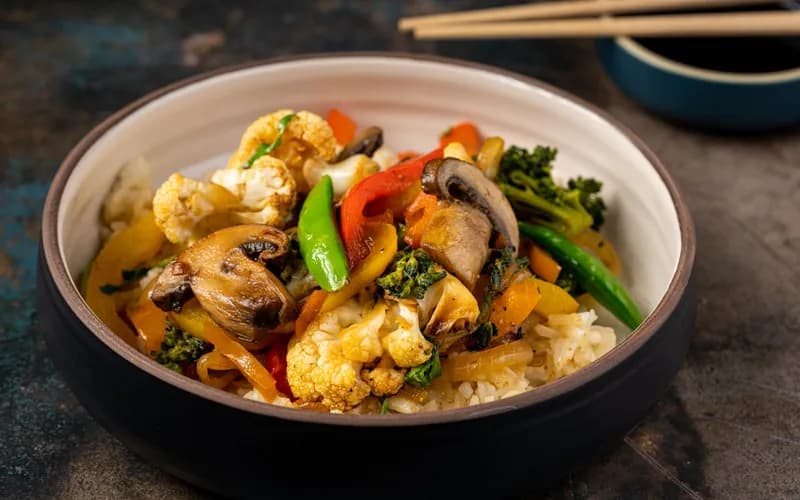
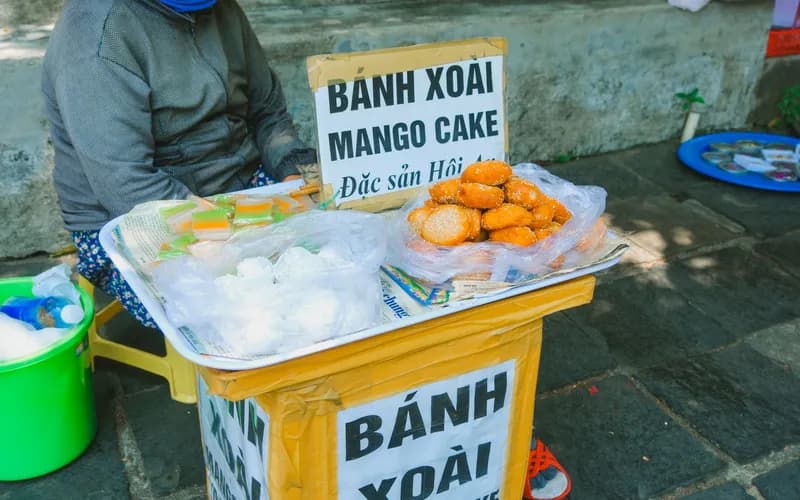
Some dishes are naturally close to plant-based and easy to make fully so. Pad pak, a simple stir-fry of mixed vegetables, is reliable if you ask for no oyster or fish sauce. Tofu features widely: pad tao hu, tofu in stir-fries and soups. Vegetable fried rice, khao pad pak, is easy once you specify no egg and no fish sauce. Fresh spring rolls, papaya salad ordered "som tam jay", and many noodle soups can be adapted. On the sweet side, sticky rice with mango is naturally vegan, as is much of the fresh tropical fruit that is one of the great pleasures of travelling here.
Curries are the trap. Green, red and massaman curries are delicious but their pastes usually contain shrimp paste and they are finished with fish sauce; only order them from a kitchen that confirms a plant-based version. The same caution applies to the beloved pad thai, which typically includes fish sauce, dried shrimp and egg.
Where the plant-based eating is effortless
Chiang Mai is arguably the best plant-based city in Thailand, with a deep bench of dedicated vegan cafes and jay restaurants. Bangkok is close behind, especially around Chinatown and the wellness-leaning neighbourhoods. Pai, for its size, is extraordinarily vegan-friendly. On the islands and in tourist towns, menus increasingly mark vegetarian and vegan options. Mapping apps and the HappyCow directory make finding these places trivial, though the quiet joy of Thailand is stumbling on a temple-side jay buffet you did not plan.
In smaller towns, anchor yourself near a market, learn the jay flag, and keep a written phrase card ready. You will eat well; you will simply work a little harder for it than in the cities.
Practical habits for a smooth trip
Beyond the words, a few habits make all the difference. Order and confirm before the wok is hot, because seasonings go in fast and cannot be removed. Be specific rather than general: "no meat" often still leaves fish sauce in the pan, so name it. Watch out for the reflex addition of egg to fried rice and noodles if you are vegan. Carry snacks for long bus and train days when options thin out. And keep some perspective: an occasional trace of fish sauce in a rural kitchen is a translation gap, not a moral failure, and travelling with warmth rather than suspicion will get you further than interrogation. A little of the cultural sensitivity we describe in our etiquette guide applies at the table too.
Staying connected helps more than you would think, since a translation app and an offline phrase card turn most ordering problems into a thirty-second exchange. Our money and connectivity guide covers getting a working SIM or eSIM on arrival.
Drinks, breakfast and sweets
Breakfast is where plant-based travellers sometimes stumble, because the default Thai morning options lean on egg and pork. Look instead for jok (rice porridge) ordered without meat and egg, steamed buns with taro or bean filling, fresh fruit, and the ubiquitous Thai iced tea, though note that cha yen is usually made with condensed and evaporated milk and is not vegan unless you ask for it black or with an alternative. Fresh coconut water, fruit shakes without milk or syrup, and strong Thai coffee taken black are all safe and everywhere. On the sweet side, beyond mango sticky rice there is a whole world of coconut-based Thai desserts, though a few use egg or milk, so a quick check still pays off.
Convenience stores deserve a mention too. The ubiquitous 7-Eleven is a reliable fallback on long travel days: soy milk, fresh fruit, roasted nuts, sticky-rice snacks and an increasing range of labelled vegetarian ready meals fill the gap when a kitchen cannot. It is not glamorous, but it removes the anxiety from a delayed bus or a late arrival, and it means you never have to compromise your diet simply because the timing went wrong. Between the jay shops, the adaptable street kitchens, the markets and the convenience stores, a plant-based traveller in Thailand is rarely more than a few minutes from a good meal once the initial learning curve is behind them.
What to do next
- Save the key phrases in Thai script on your phone: gin jay, mangsawirat, mai sai nam pla.
- Learn to recognise the yellow jay flag and seek out permanent jay shops near temples and markets.
- When ordering, name the specific seasonings to omit rather than saying only "vegetarian".
- Base yourself for a few days in Chiang Mai, Bangkok's Chinatown or Pai to eat effortlessly and recharge before quieter stretches.
- If you can, time part of your trip around the Vegetarian Festival in late September or October for the easiest plant-based eating of the year.
Frequently Asked Questions
Is it hard to be vegan in Thailand?
Not in cities and traveller hubs, where dedicated vegan and jay restaurants are plentiful. The challenge everywhere is hidden fish sauce, shrimp paste and oyster sauce, which appear in dishes that look vegetarian. With a few Thai phrases and the habit of naming these seasonings, most travellers eat vegan comfortably.
What does "jay" mean and why is it useful?
Jay is a Thai-Chinese Buddhist form of strict vegan eating that excludes meat, seafood, egg, dairy and pungent vegetables. Because it is a recognised religious category, saying "gin jay" is understood far more reliably than a foreign explanation, and jay shops flying a yellow flag serve guaranteed plant-based food.
How do I avoid fish sauce and shrimp paste?
Ask explicitly. Say "mai sai nam pla" for no fish sauce, and order before the dish is cooked, since seasonings go in early. Treat curries and papaya salad with particular caution, as their pastes and dressings usually contain shrimp paste, dried shrimp or fish sauce.
Which Thai dishes are naturally vegetarian or vegan?
Mixed vegetable stir-fries, tofu dishes, vegetable fried rice, fresh spring rolls and many noodle soups adapt easily, and sticky rice with mango and fresh fruit are naturally vegan. Always confirm no fish sauce, oyster sauce or egg, since these are added by default in many kitchens.
When is the Thai Vegetarian Festival?
Tesagan Gin Je usually falls in late September or October, following the lunar calendar, and is celebrated most intensely in Phuket and Bangkok's Chinatown. For its duration, plant-based food is available almost everywhere under the yellow jay flag, making it the easiest time of year to eat vegan in Thailand.
Keep reading
More from the ground · Thailand