

For most of the last thirty years, the northern Thai travel season was simple to explain: come between November and February, when the air is cool and dry and the mountains are clear. That sentence is quietly falling apart. The cool, dry months are still lovely, but the window has narrowed at one end and hardened into a wall at the other. Every February, a grey lid closes over Chiang Mai, Chiang Rai, Pai and Mae Hong Son, and it does not lift until the first serious rains arrive. In 2026 that lid was heavier than it has been in years, and the travel industry finally started planning around it rather than hoping it would go away.
What Actually Happens Between February and April
The smoke has three sources, and it helps to separate them.
The first is agricultural burning. After the rice, maize and sugarcane harvests, farmers across northern Thailand and the uplands of neighbouring countries clear their fields with fire because it is fast and free. Maize grown for animal feed on steep hillsides is a particular contributor, because the residue is bulky and the terrain makes anything mechanical impractical.
The second is forest fire. The northern dry season leaves deciduous forest floors covered in leaf litter, and fires, some accidental, some deliberately set to encourage the mushrooms and undergrowth that people forage, spread easily.
The third is transboundary. Smoke from Myanmar, Laos and beyond drifts across the border on prevailing winds, which is why even provinces with strict local enforcement can still record hazardous readings.
None of this is new. What has changed is the intensity, the length of the season, and the fact that international travellers now measure it. A phone with an air quality app makes the invisible visible, and once travellers can see a number, they act on it. Anyone planning a first trip should read our overview of where to go and when in Thailand alongside this piece, because the two calendars now interact.
One request. Up to five tailored proposals.
Skip contacting agencies one by one — share your trip once and let up to five trusted Thailand agencies come to you. Free, with no obligation.
Get my free quotesThe 2026 Season Was Not an Outlier
March 2026 was a bad month by any measure. Chiang Mai appeared repeatedly at or near the top of the global live air quality rankings, with a reading of AQI 263 and PM2.5 around 188 micrograms per cubic metre on 29 March, and readings in the low 200s through much of the surrounding week. For context, the World Health Organization's guideline for 24-hour PM2.5 exposure is 15 micrograms per cubic metre. Hospitals in Chiang Mai and Chiang Rai reported rising presentations for respiratory complaints.
It is tempting to treat any single bad March as a freak. The data does not support that reading. Severe smoke seasons have recurred in the north through the 2010s and 2020s with enough regularity that the local vocabulary has a name for it, and the trend line in the worst weeks has not bent downward. Planning on the assumption that next year will be the good year is not planning.
Why Chiang Mai Gets It Worst
Geography is the aggravating factor. Chiang Mai sits in a basin ringed by mountains, and in the late dry season the air above it stratifies: a warm layer aloft, cooler stagnant air below, and no wind to clear it. Smoke that would disperse over an open plain instead accumulates for days.
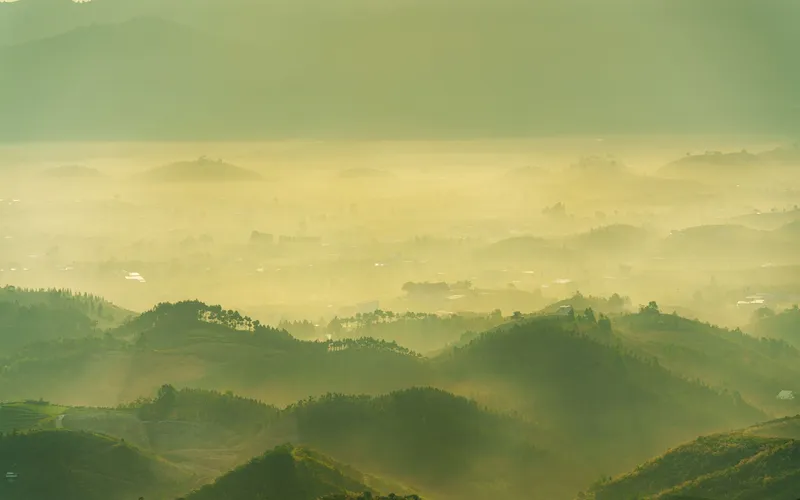
The same basin effect hits Chiang Rai, Mae Hong Son, Pai and Nan, and it tends to be worse in the narrow valleys than on the ridges. Travellers on the high sections of the mountain roads sometimes find themselves above the haze layer entirely, looking down at a grey sea filling the valleys. It is a striking sight and a useful mental model: altitude helps, enclosure hurts. Anyone planning the Mae Hong Son loop in March should understand that the viewpoints that justify the route may simply not have a view.
Get matched with up to 5 trusted Thailand agencies
- Free
- No obligation
- Up to 5 agencies
The Policy Picture: A Clean Air Act Still Waiting
Thailand has been trying to legislate its way out of this for years. A Clean Air Bill, which would create pollution control zones with locally tailored restrictions, formalise a ban on open burning without provincial approval, and give agencies clearer enforcement powers, passed the lower house comfortably in October 2025. It then stalled in the Senate, and the dissolution of parliament in December 2025 ahead of the February 2026 snap election left it in limbo.
In the absence of a statute, the response remains administrative and seasonal. The Pollution Control Department has ordered burn bans across seventeen northern provinces during peak periods, provincial governors issue their own restrictions, and enforcement varies enormously between districts. Some provinces have experimented with managed-burn scheduling, allocating specific windows to specific areas so that emissions are spread rather than concentrated.
The honest read for a traveller: the direction of policy is right and the pace is slow. Do not plan a 2027 or 2028 trip on the assumption that the problem will have been solved.
How Travellers Are Actually Responding
Three behaviours have become visible enough to count as a shift.
- Compression into the clean window. November through mid-February is absorbing demand that used to spread across five months. Rooms in Chiang Mai's old city and the Mae Rim valley now sell out earlier, and prices in December and January have firmed accordingly.
- Substitution southward. Travellers who cannot move their dates are moving their map instead, swapping a northern leg for the Gulf or Andaman coasts, where the haze effect is marginal.
- Longer stays, later starts. Long-stay visitors, including the growing cohort on long-duration visas, increasingly leave the north for six to eight weeks and return in May. The pattern is now common enough that some Chiang Mai landlords offer nine-month leases.
The net effect on the north is not fewer visitors so much as a shorter, denser season, which is its own problem. A destination that earns its year in fourteen weeks is a destination under pressure.
What This Does to the Northern Shoulder Seasons
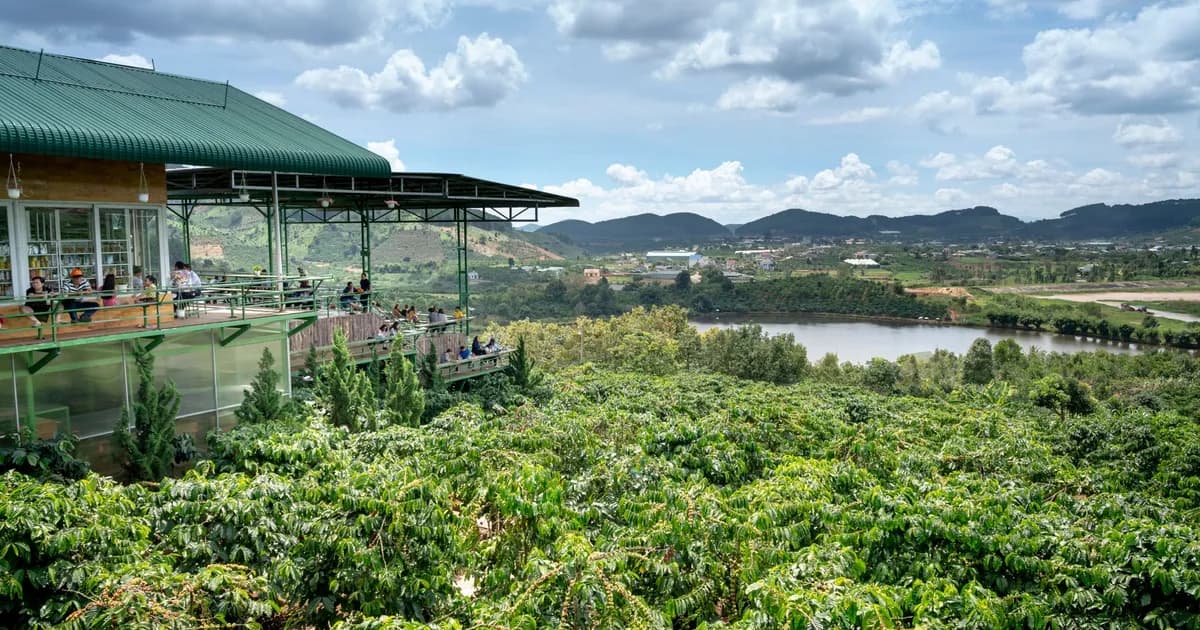
The most interesting consequence is a re-evaluation of the months nobody used to recommend. Late May through July in the north is now, quietly, one of the better bets: the rains have washed the air, the hills are green, the waterfalls run, and the crowds are elsewhere. Rain in northern Thailand at that time of year usually arrives as a heavy afternoon burst rather than an all-day grey, which is very compatible with a slow itinerary built around mornings.
October is the other underrated month. The rains are tailing off, the reservoirs and rivers are full, and the air is as clean as it gets all year. Our guide to travelling Thailand in the green season goes into the mechanics, but the headline is that the wet months have become the smart alternative rather than the compromise.
Where the Air Is Fine
This is a regional problem, not a national one, and it is worth being precise about that because blanket anxiety about Thailand in March is unwarranted.
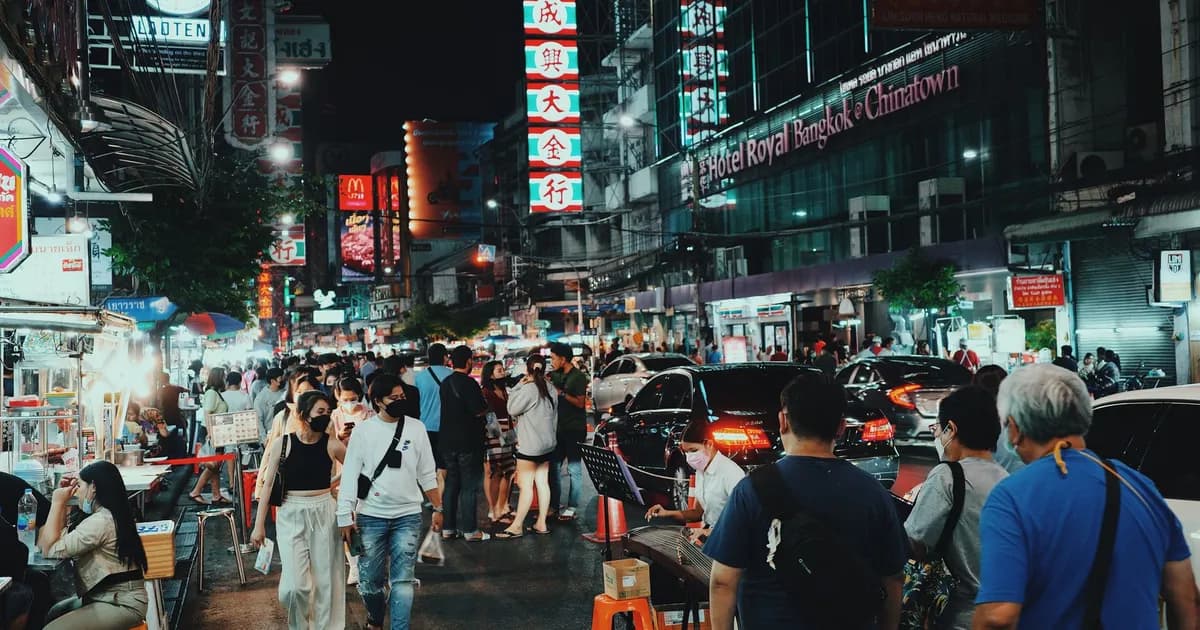
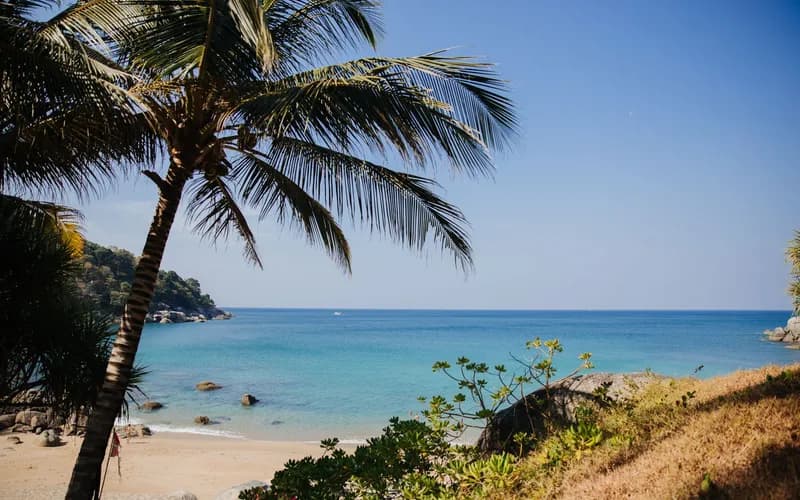
The Andaman and Gulf coasts are largely unaffected. Bangkok has its own PM2.5 problem, largely traffic and industry rather than biomass, which peaks in the cool months and is generally less severe than the northern spring. The northeast is variable, with sugarcane burning causing local spikes. The east, including the fruit provinces around Chanthaburi, tends to escape the worst of it, and our profile of Chanthaburi and the slow east describes a province that is perfectly pleasant in the exact weeks the north is not.
How to Read the Numbers Yourself
Do not rely on a single app or a single station. Air quality in the north is intensely local, and a reading taken beside a main road in the city centre can differ substantially from one taken in a valley twenty kilometres away.
- Check more than one source. Government monitoring stations and independent sensor networks often diverge, and looking at both gives you a range rather than false precision.
- Learn the two scales. Thailand's official AQI and the US AQI used by most international apps calculate differently, so the same air can produce different headline numbers.
- Look at PM2.5 in micrograms per cubic metre, not just the index colour. It is the raw figure and it travels between systems without translation.
- Watch the seven-day trend, not the hour. A single bad afternoon means little; five bad days in a row is a pattern.
- Remember that indoor air matters. A well-sealed room with a decent filter can be several times cleaner than the street outside.
What Operators and Hotels Are Doing
The commercial response is real but uneven. Better hotels in Chiang Mai now list air filtration as an amenity, and a handful publish indoor readings. Some tour operators have moved their northern trekking departures out of March entirely and rebuilt those weeks around the coast or the northeast. Others quietly sell March treks without mentioning the air at all, which is the behaviour to watch for.
When you are choosing who to travel with, ask a direct question: what is your policy if air quality exceeds a hazardous threshold on a scheduled trekking day? An operator who has thought about it will have an answer involving alternatives and refunds. One who has not will tell you it is usually fine. The plan-your-journey process is the right place to raise it, before deposits rather than after.
What to Do Next
- If your dates are flexible, put your northern days in November, December, January, late May, June or October, and treat February through April as unavailable.
- If your dates are fixed in the smoke window, move the map instead of the calendar: the south, the east and the coast are all viable.
- If you must be in the north in March, book accommodation with genuine filtration and confirm it in writing, not just from a listing tick-box.
- Pack properly fitted N95 or KN95 masks. Surgical masks and cloth do nothing against fine particulates.
- Check a seven-day air quality trend, from two independent sources, about ten days before you travel, and again on arrival.
- Ask any trekking or cycling operator for their written hazardous-air policy before you pay a deposit.
- If you have asthma, cardiovascular disease, or are travelling with young children or elderly relatives, treat the February-to-April north as genuinely inadvisable rather than merely unpleasant.
Frequently Asked Questions
Exactly when is Thailand's smoke season?
Broadly February to April in the north, with the worst weeks usually clustered from the last week of February through the end of March and sometimes running into mid-April. It ends when the pre-monsoon rains begin, which varies by a few weeks each year.
Is it dangerous or just unpleasant?
Both, depending on who you are and how long you stay. For a healthy adult spending a few days, the realistic outcome is sore eyes, a scratchy throat and a headache. For people with asthma or heart conditions, for young children and for the elderly, sustained exposure at the levels recorded in March 2026 carries real risk. Local hospitals see the consequences every year.
Does the haze affect the islands and beaches?
Very little. The Andaman coast around Krabi and Phuket and the Gulf islands are far from the burning areas and are not meaningfully affected. If you want to build a March trip around the coast instead, our guide to choosing your Thai island will get you to the right one.
Will an air purifier in my hotel room actually help?
Yes, substantially, provided the room is reasonably well sealed and the unit is sized for the space with a genuine HEPA filter. Indoor readings in a filtered room can run a fraction of outdoor levels. It does nothing for the time you spend outside, which is most of a travel day.
Is the north still worth visiting outside those months?
Absolutely, and arguably more than ever. November to January is superb, and the June-to-October green season is underrated, quiet and cheap. The region has not become a worse destination; it has become a more seasonal one.
Is the situation improving?
Slowly, and not yet in the numbers. Awareness, monitoring and provincial enforcement have all improved. The Clean Air Bill that would give that effort statutory teeth has not yet been enacted. Plan for the problem to persist for several more years.
Should I cancel a trip if the forecast looks bad?
Rescheduling beats cancelling. If your northern leg falls in a bad window and you can shift it to the coast or the east without losing money, do that. If you cannot, shorten the northern portion, spend the middle of the day indoors, and accept that this particular trip will be about markets, temples, food and conversation rather than mountain views.