
Ba Be is the largest natural lake in Vietnam, and one of the quietest places in a country that is rarely quiet anymore. Cradled by limestone peaks and jungle in the northern province of Bac Kan, it sits far enough from Hanoi to filter out the day-trippers and just close enough to reach in a long morning's drive. There is little to "do" here in the checklist sense, which is precisely the point. Ba Be is a place to stay put, paddle slowly, sleep in a stilt house on the water and let a few unhurried days do what a packed itinerary never can.
A Lake at the Heart of the Northern Mountains
Ba Be, whose name means "three bays", is really a chain of connected freshwater basins strung along a valley floor, hemmed in by forested karst that rises straight from the shore. The lake and the land around it form Ba Be National Park, a protected expanse of limestone forest, caves, rivers and waterfalls that shelters langurs, hornbills and a great tangle of biodiversity most visitors never fully see. What they do see is enough: still green water reflecting the peaks, mist lifting off the surface at dawn, and villages of the Tay people whose stilt houses have stood on these shores for generations. If you are drawn to the parts of Vietnam that the crowds have not found, our guide to the country's hidden gems for slow travellers puts Ba Be among its natural company.
One request. Up to five tailored proposals.
Skip contacting agencies one by one — share your trip once and let up to five trusted Vietnam agencies come to you. Free, with no obligation.
Get my free quotesGetting to Ba Be, and Why the Journey Filters the Crowds
Reaching Ba Be takes effort, and that effort is its quiet guardian. There is no airport and no train; the lake lies roughly six hours by road north of Hanoi, on winding mountain highways that discourage the casual visitor. Most travellers come on a private car or a small-group transfer, and a growing number fold Ba Be into a longer northern loop rather than treating it as a standalone dash.
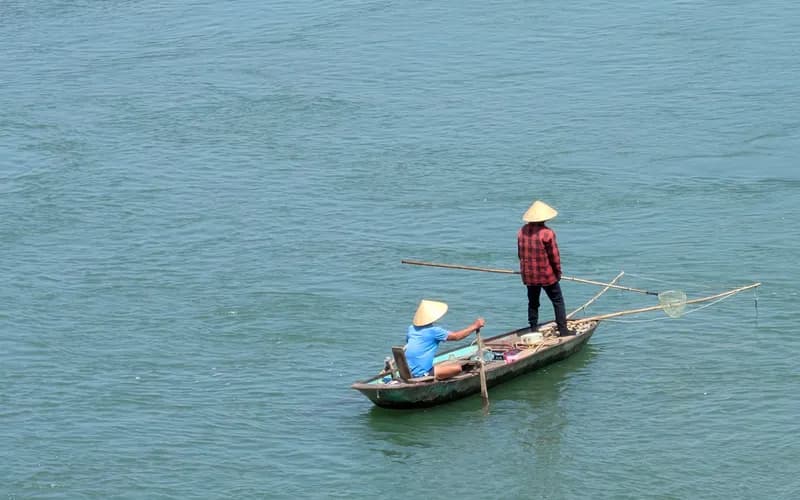
The drive itself is part of the reward: rice terraces give way to forest, the road climbs and falls through Tay and Dao villages, and the last stretch into the park drops you at the water's edge with the sense of having genuinely arrived somewhere. Because the journey is long, the people who make it tend to stay two or three nights, which keeps the whole valley calmer and slower than a place this beautiful has any right to be.
On the Water: Boats, Caves and the Fairy Pond
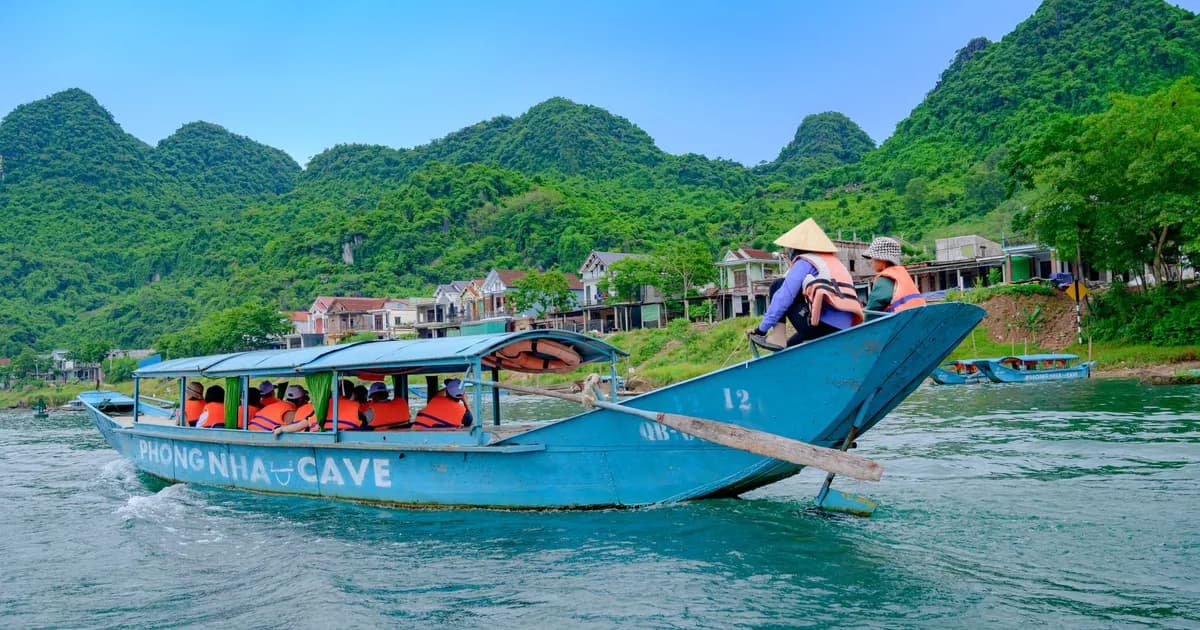
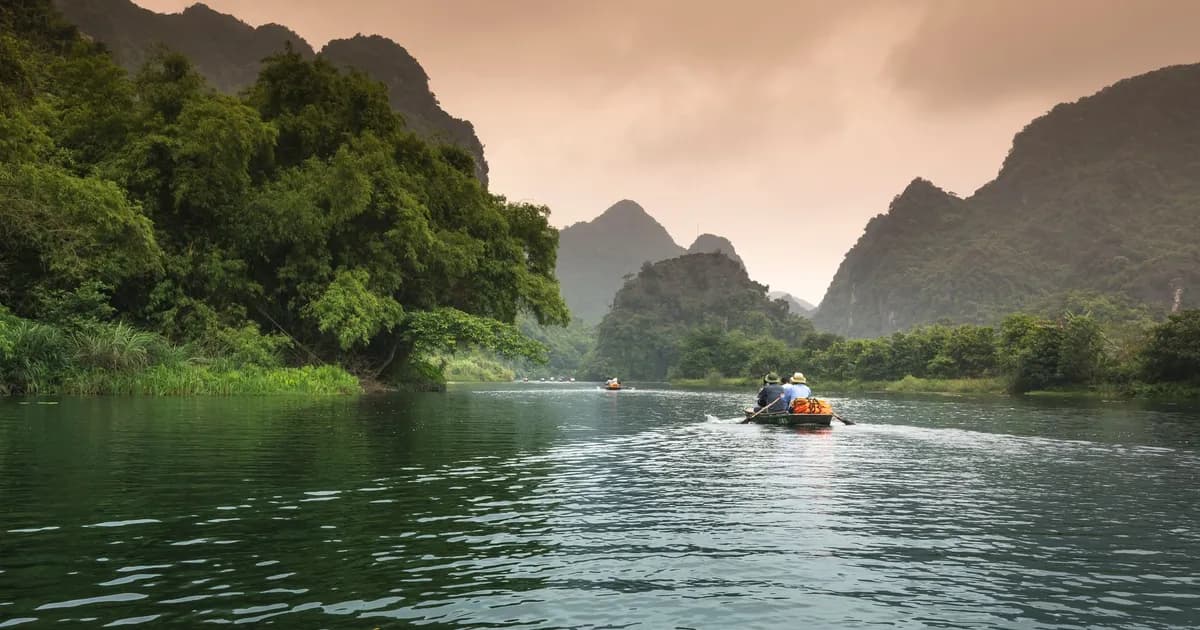
The lake is best understood from a boat. Long wooden skiffs, often driven by the families who host you, glide out across the three basins on trips that can fill a lazy half-day or a full one. The classic circuit takes in Puong Cave, a vast river tunnel where the Nang River carves clean through a mountain and thousands of bats roost in the dark, and the Fairy Pond, or Ao Tien, a small, improbably still emerald pool hidden in the hills above the lake. Between the sights, the pleasure is simply being on the water: the engine cut, the boat drifting, the peaks doubled in the reflection. It is the kind of morning that rewards leaving the camera down for a while.
Get matched with up to 5 trusted Vietnam agencies
- Free
- No obligation
- Up to 5 agencies
Staying in a Tay Homestay at Pac Ngoi
The heart of a Ba Be trip is a night, or better several, in a Tay stilt house. The village of Pac Ngoi, set on a slope above the lake, is the best-known base: a cluster of traditional wooden homes on stilts, many now welcoming guests, where you sleep on a mattress under a mosquito net, eat what the family cooks, and wake to the sounds of the water and the yard.
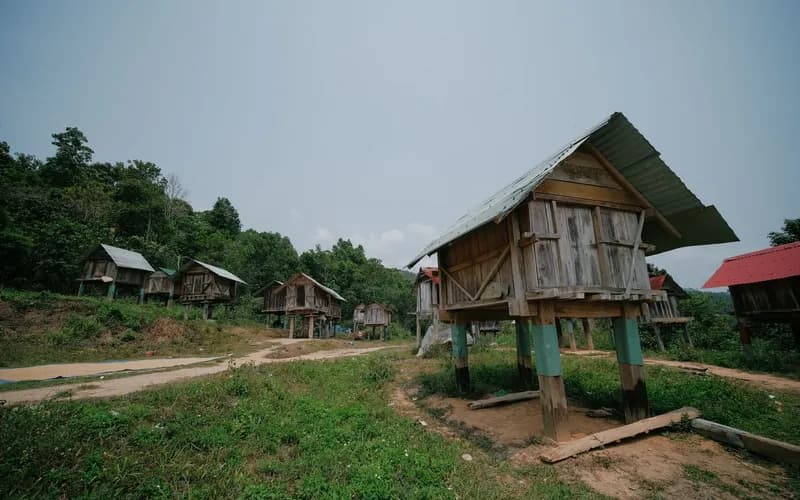
This is homestay travel at its most genuine, and it repays a little preparation and respect. Meals are shared and generous, usually built around lake fish, foraged greens, sticky rice and the local corn wine that appears whether or not you asked for it. Evenings are quiet. If you want to understand the etiquette before you arrive, the broader principles of staying well as a guest in rural Vietnam carry over directly here, and choosing a family-run house over a slicker operation keeps your money in the village where it belongs.
Walking, Kayaking and the Slow Pleasures of Staying Put
Ba Be rewards travellers who resist the urge to see everything. Kayaks and paddleboards can be hired at the lakeshore, and an hour spent nosing into quiet inlets away from the boat routes is often the memory people carry home. On foot, trails climb from the villages into the forest and to viewpoints over the water, and short guided walks reveal the medicinal plants and farming rhythms that the Tay have refined over centuries. There is swimming in the warmer months, cycling on the flat lanes near the shore, and, above all, the underrated art of doing very little in a very beautiful place. This is somewhere to read, nap, and let the days blur, rather than to tick off attractions.
The Waterfalls and the Wider Park
Beyond the lake, the national park unfolds. Dau Dang Waterfall, where the Nang River tumbles over a long staircase of boulders, is a popular boat-and-walk excursion from the lake and a fine picnic spot. Further afield, the park's forests hold caves, streams and hiking routes that see almost no foreign visitors, and a local guide is worth every dong for both the access and the stories. The park is a working landscape as much as a protected one, and part of its appeal is watching how closely the villages still live with the water, the fish and the forest around them.
Combining Ba Be with Cao Bang and the Northeast
Few travellers come to Bac Kan alone, and Ba Be pairs naturally with the wider north-east. The most rewarding loop links the lake with Cao Bang province, home to the thundering Ban Gioc Falls and a UNESCO geopark of karst and cave country; our guide to slow mountain travel around Cao Bang and Ban Gioc maps that leg in detail. Strung together, Ba Be and Cao Bang make a three-to-five-day northern circuit that trades the well-worn Sapa and Ha Giang trails for something genuinely quieter, without sacrificing scenery. Getting between these places is half the experience, and our guide to choosing between Vietnam's trains, flights, sleeper buses and cars helps you decide how to stitch the legs together.
When to Go
Ba Be is at its best in the dry, mild months from around October to April, when the lake is calm, the skies are clearer and the stilt houses are pleasant rather than sticky. The forest is greenest and the waterfalls fullest just after the summer rains, but the wet season from May to September brings heavier downpours and leeches on the trails. Spring, roughly March and April, is a sweet spot: warm enough to swim, dry enough to walk, and quiet on the water. Whenever you come, aim for weekdays over Vietnamese holidays, when domestic visitors can fill the more popular homestays.
Ba Be and the Case for Going Slow
Ba Be is a useful test of what kind of traveller you want to be. It offers almost nothing to the person collecting sights, and almost everything to the person willing to stay still. There are no grand temples, no famous viewpoints queued three-deep for a photograph, no nightlife to speak of. What there is instead is time: mornings that begin with mist on the water and end with corn wine on a wooden veranda, days shaped by the weather and the family you are staying with rather than by a schedule. For travellers used to moving fast, the first day can feel almost uncomfortable, as the momentum drains away. By the second, most people stop resisting. By the third, they are reluctant to leave. That arc, from restlessness to genuine rest, is the real reason to make the long drive north, and it is one that few of Vietnam's busier destinations can still deliver. The lake does not perform for its visitors; it simply carries on, and invites you to slow to its pace. Those who accept the invitation rarely regret the days they lose to it.
What to Do Next
- Give Ba Be at least two nights, and ideally three, so the long drive earns its keep and the lake has time to slow you down.
- Book a family-run Tay homestay in or near Pac Ngoi rather than a larger hotel, and eat what the family cooks.
- Split your days between a half-day boat circuit and unstructured time to kayak, walk and rest.
- Pair the lake with Cao Bang and Ban Gioc for a genuinely quiet north-eastern loop.
- Plan the route and timing with our Vietnam plan-your-journey resources before you lock in dates.
Frequently Asked Questions
How do I get to Ba Be Lake from Hanoi?
Ba Be is about six hours by road north of Hanoi, in Bac Kan province. There is no airport or train, so most travellers come by private car or a small-group transfer. Many combine the trip with Cao Bang and Ban Gioc Falls to make the long drive worthwhile rather than treating the lake as a day trip.
How many days should I spend at Ba Be?
Plan for at least two nights, and three if you can. The journey is long, and the pleasures of Ba Be — boat trips, kayaking, homestay meals and simply resting by the water — reveal themselves slowly. A single night leaves you spending more time driving than enjoying the lake.
Where should I stay at Ba Be Lake?
The Tay village of Pac Ngoi, on a slope above the lake, is the classic base, with many traditional stilt houses now offering homestays. Choosing a family-run house over a larger operation gives you a more genuine experience and keeps your spending in the local community.
Is Ba Be suitable for families or older travellers?
Yes, with realistic expectations. Homestays are simple, with shared bathrooms and basic bedding, but boat trips, gentle walks and the calm setting suit a wide range of travellers. The long, winding drive from Hanoi is the main consideration for anyone prone to car sickness.
What is there to do at Ba Be besides boating?
Plenty, if quietly. You can kayak the lake's inlets, walk forest trails to viewpoints, visit Dau Dang Waterfall and Puong Cave, cycle the flat lanes near the shore, and swim in the warmer months. Much of Ba Be's appeal, though, lies in doing little and letting the pace of the lake take over.
When is the best time to visit Ba Be Lake?
The dry, mild season from October to April is ideal, with calm water and clearer skies. Spring, around March and April, is especially pleasant. The May-to-September rains bring fuller waterfalls and lush forest but heavier downpours and leeches on the trails, so pack and plan accordingly.