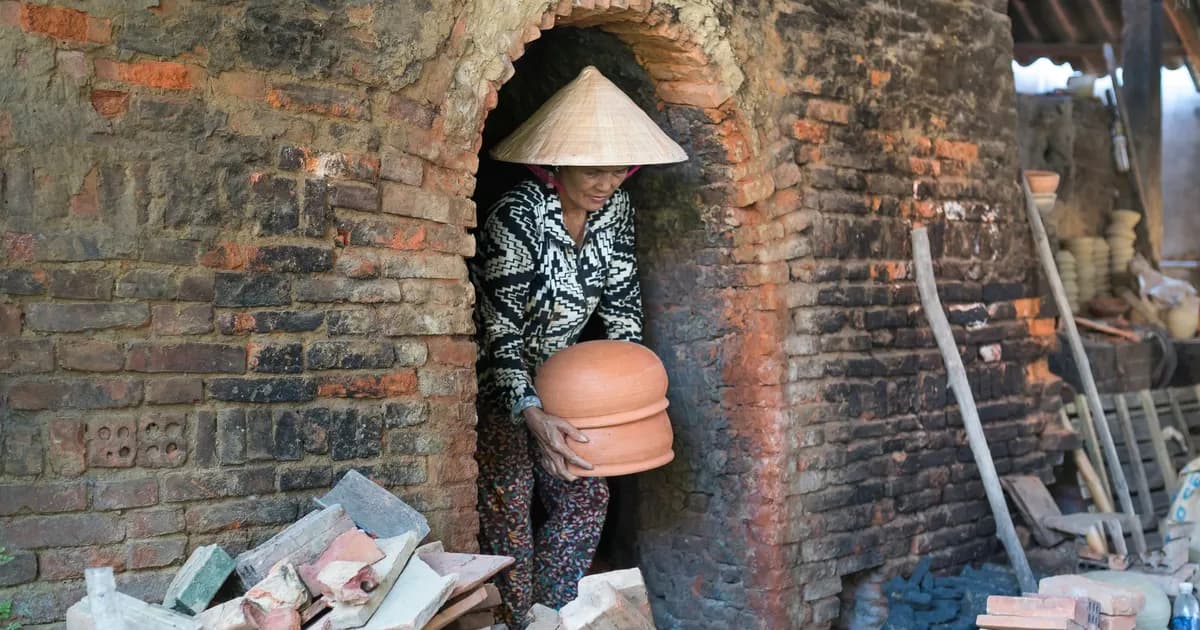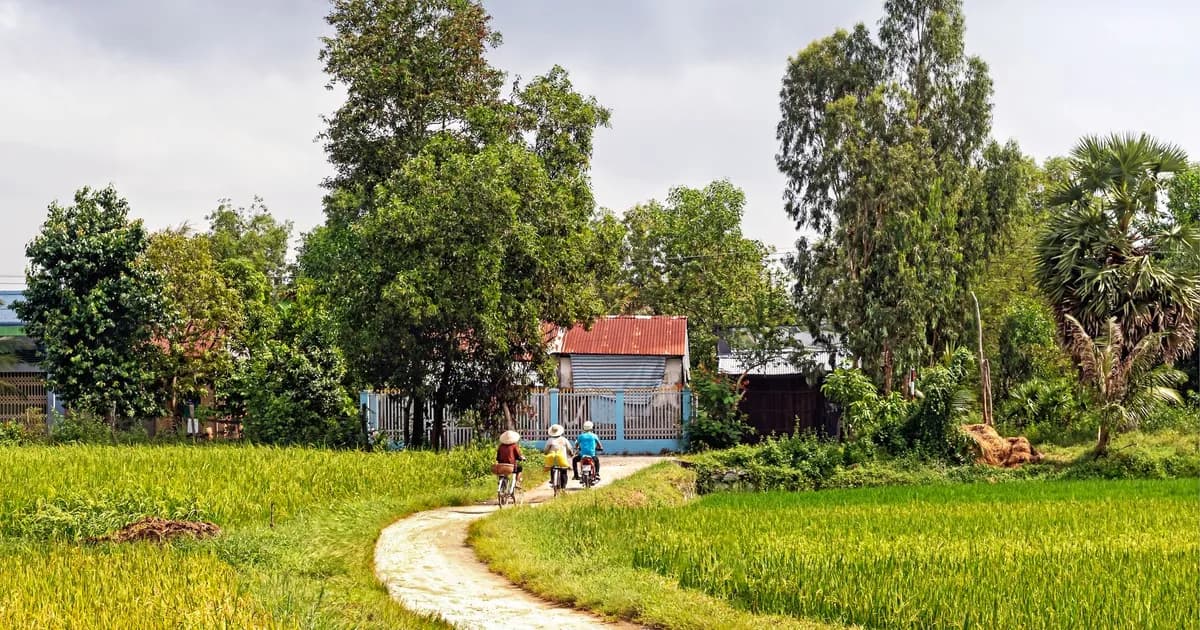
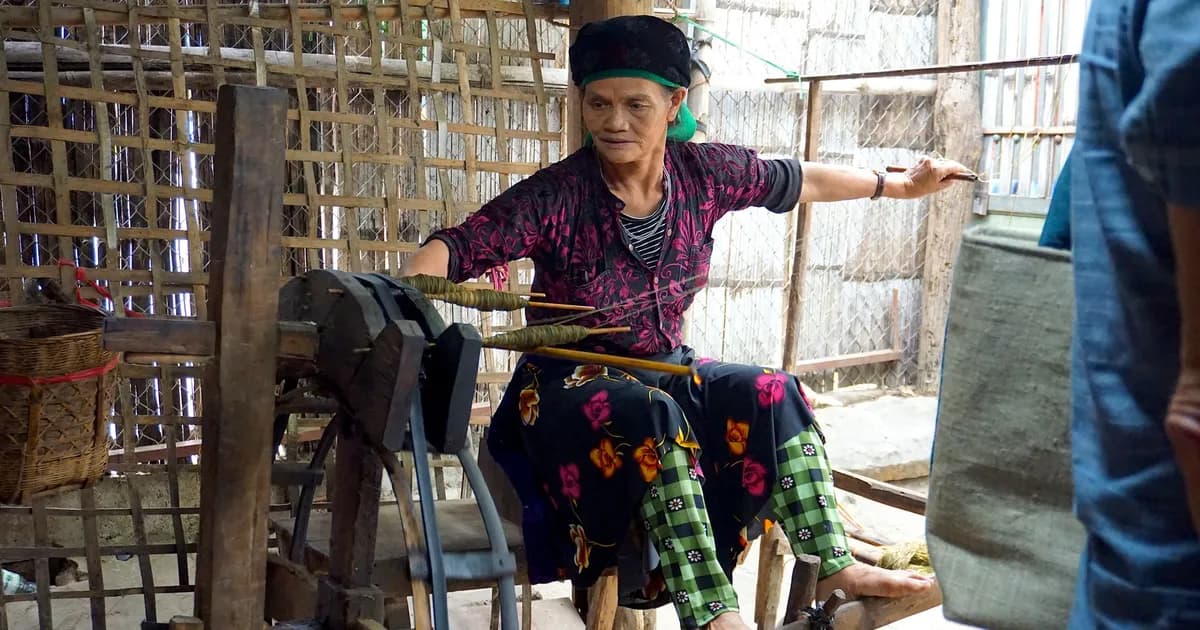

Something is shifting in how people choose to spend their time in Vietnam — and it is more than a marketing pivot. The country's tourism sector, long associated with a familiar circuit of cities, beaches, and famous landscapes, is reorienting around a different proposition: participation. Not observation. Not collection. Participation. Travelers are arriving with less interest in covering ground and more interest in understanding it. They want to press clay in Bát Tràng, stand in a flooded rice field at dawn, sit with a Hmong weaver and watch indigo-dyed thread become cloth. This is not a niche preference anymore. It is becoming the dominant demand signal — and Vietnam, with its extraordinary range of living craft traditions, agricultural landscapes, and ethnic cultures, may be better positioned to meet it than almost anywhere else in Asia.

The Checklist Era Is Ending
For most of the past two decades, Vietnam sold itself on density. Twelve days, seven cities, the full sweep from Hanoi to Ho Chi Minh City. The logic was defensible: the country is long, varied, and genuinely rich in things worth seeing. But the itinerary that results — a blur of temples, street food, and overnight buses — leaves many travelers with photographs and very little else.
The reaction against this model is now explicit. Vietnam's official tourism communications describe a measurable rise in what they call "anti-tourism" behavior: travelers actively avoiding overcrowded hotspots, choosing quieter destinations, and prioritizing what they frame as authentic daily life over landmark accumulation. Industry trend analysis for 2026 describes travelers who are "staying longer in fewer places, asking deeper questions," and seeking "genuine emotional connection — to the land, to local communities, and to the stories that shape each destination."
This is not sentiment. It is showing up in booking patterns. Cooking classes, village homestays, craft workshops, and farm experiences are moving from optional add-ons to the structural core of itineraries. The checklist tour still exists. But it is no longer the aspirational product.
One request. Up to five tailored proposals.
Skip contacting agencies one by one — share your trip once and let up to five trusted Vietnam agencies come to you. Free, with no obligation.
Get my free quotesWhat Participation Actually Looks Like
The range of hands-on experiences now available across Vietnam is wider than most travelers realize. In the Red River Delta, Bát Tràng — a pottery village east of Hanoi — has become a flagship for the experiential model. Half-day workshops run roughly US$15–40 per person, combining kiln visits, guided village walks, and time at the wheel. What was once a specialist detour is now integrated into mainstream Hanoi itineraries, recommended for first-time visitors as readily as the Old Quarter.
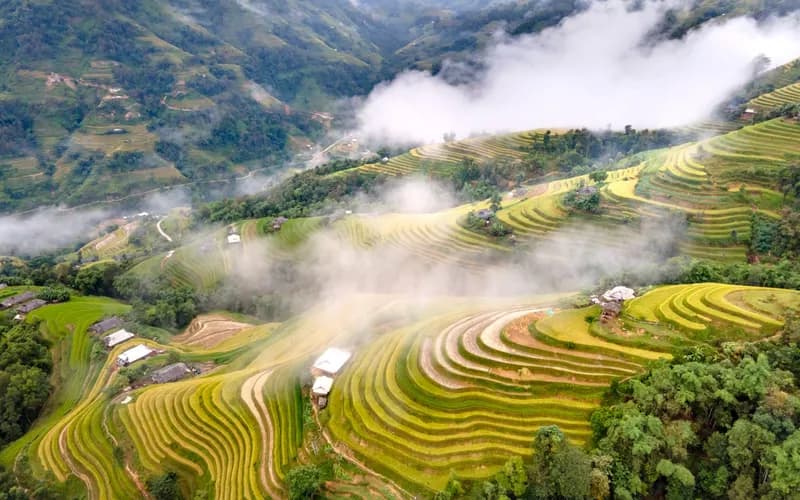
In the northern highlands, the offer is more immersive and more complex. Sa Pa and the surrounding Lào Cai valleys have long-established homestay circuits among Hmong, Dao, and Tay communities, where textile dyeing, embroidery, and shared cooking are woven into multi-day treks. Hà Giang, less developed and more demanding to reach, is increasingly cited by sustainable-travel operators as a frontier for community-based tourism — one where the relative difficulty of access is itself a form of quality control. Mai Châu and Pu Luong offer stilt-house stays, cycling through rice terraces, and weaving demonstrations by Thai communities, at a pace that rewards those willing to slow down.
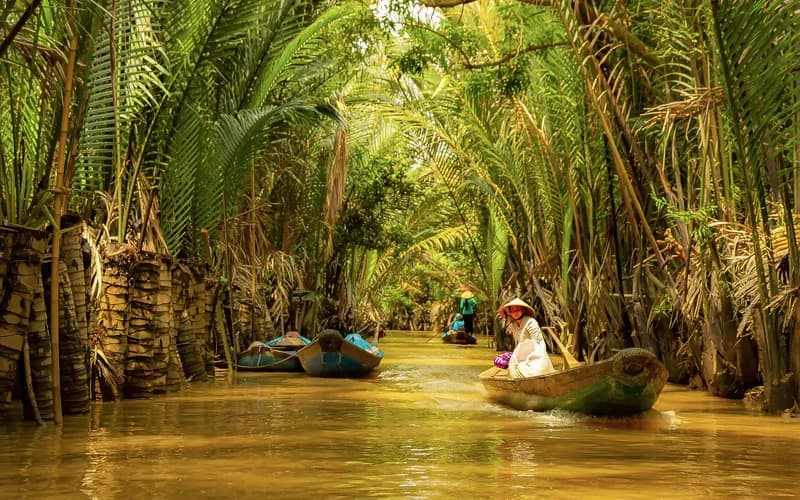
Further south, Hội An has built perhaps the densest ecosystem of participatory experiences in the country: cooking classes, organic farm visits at Trà Quế, basket-boat fishing with local families, market-to-table sessions. The Central Highlands — particularly around Buôn Ma Thuột and Đà Lạt — are emerging as a quieter alternative, with coffee farm tours, forest treks, and minority-village experiences that benefit from cooler temperatures and lower visitor volumes. And the Mekong Delta, long reduced to a day-trip from Ho Chi Minh City, is being reframed as a slow-travel destination in its own right: canal homestays, orchard visits, early-morning floating markets, and village cooking that reflects one of the world's most distinctive food cultures.
The Generational Engine Behind the Shift
Understanding why this is happening now requires looking at who is driving it. Tourism analyst Dr. Cheah Kuan Yean, speaking on emerging travel trends, put it plainly: Gen Z travelers "go for experience, experiential tourism. They want to experience the traditional culture. They want to know your transformation." His argument is that hospitality providers can no longer rely on standard service delivery — they must "inject the intangibles, the experiential elements" into what they offer.
This generational pressure is compounded by two other demand segments. Long-stay digital nomads, for whom Vietnam has become a serious base, have time to go deeper and motivation to build local knowledge. And high-value small-group travelers — often older, well-traveled, and specifically seeking alternatives to the resort-and-highlights formula — are willing to pay meaningfully more for experiences that feel genuinely earned.
These three groups share a common skepticism: they have seen enough staged cultural performances to recognize one. The question of authenticity — whether a village visit reflects daily life or has been choreographed for visitors — is now one of the most frequently raised concerns in experiential travel. It is a legitimate one. In Sa Pa town and certain well-worn "model villages," the line between living culture and cultural theater has blurred. The travelers most attuned to this distinction are also the ones most likely to seek out smaller operators, community-run cooperatives, and family homestays where the host's livelihood is not dependent on performing identity.
Get matched with up to 5 trusted Vietnam agencies
- Free
- No obligation
- Up to 5 agencies
Vietnam's Repositioning Bet
What makes this moment significant is that the shift is not just demand-led. Vietnam's tourism authorities are making a deliberate strategic choice. Official communications from Vietnam's national tourism body now frame "emotional depth, mental fulfilment, and respect for local identity" as the pillars of sustainable tourism development. Community-based tourism is positioned not merely as a product category but as a development pathway — one that distributes economic benefit into rural and ethnic minority communities while preserving the cultural integrity that makes those communities worth visiting.
This is a meaningful repositioning. For years, Vietnam competed primarily on value: a cheap destination with good food, beautiful scenery, and easy logistics. That positioning still has traction — Vietnam is recording its strongest international arrival numbers of the post-pandemic period, and broader Asia travel analysis places it among the top growth markets for 2026. But volume alone does not build a premium reputation. The bet being made now is that Vietnam can hold its price-accessible appeal while simultaneously attracting a more selective, higher-spending traveler who comes for depth rather than deals.
Whether that bet pays off depends on execution. The risk is that "experiential" becomes as hollow a marketing term as "authentic" before it. The opportunity is that Vietnam's raw material — the density and diversity of its living craft traditions, its agricultural landscapes, its ethnic cultures — is genuinely exceptional. Few countries can offer pottery, rice farming, highland weaving, delta cooking, and coffee harvesting within a single two-week journey. The infrastructure to support all of this is uneven, and the tension between tourism growth and cultural preservation is real. But the direction is clear.
Frequently Asked Questions
Is the shift toward experiential travel in Vietnam a genuine trend or a marketing reframe?
Both, to some degree — but the underlying demand is real. Booking patterns reported by Vietnam-based DMCs show travelers actively requesting longer stays in fewer places, prioritizing village and craft experiences over multi-city circuits, and asking specific questions about community benefit and cultural authenticity. The marketing language has accelerated, but it is responding to something measurable.
How do you distinguish a genuine community-based experience from a staged one?
The clearest signals are ownership and scale. Experiences run by village cooperatives, family homestays, or locally trained guides — where the host's income depends on the relationship rather than the performance — tend to feel different from those operated by large tour companies using villages as set pieces. Asking who owns the homestay, how guides are selected, and how payment is distributed will usually reveal the structure quickly.
Does this shift benefit local communities, or does it risk commodifying the cultures it claims to celebrate?
The tension is genuine and widely acknowledged within Vietnam's tourism sector. Official policy explicitly frames community-based tourism as a tool for poverty reduction and cultural preservation — but policy intent and on-the-ground reality diverge. In more mature destinations, cultural practices can become performances. The travelers and operators most likely to avoid this are those who prioritize smaller scale, longer stays, and genuine reciprocity over curated spectacle.
What does this mean for how travelers should plan a Vietnam trip in 2026?
The practical implication is to resist the instinct to cover the whole country. Two or three well-chosen bases — each with enough time to participate rather than just observe — will produce a more coherent and more memorable journey than a seven-city sweep. The experiences that define this shift are not rushed. They require the one thing most itineraries fail to budget for: time.