Vietnam's Cycling Moment: Slow Travel on Two Quiet Wheels
Something small but telling is happening on Vietnam's back roads. Alongside the familiar motorbike convoys and tour buses, more travellers are arriving with bicycles, or with a plan to rent one for several days. Specialist operators are adding new multi-day cycling itineraries, and guides to cycle touring in the north are being rewritten for 2026. It is not a mass movement, and it would be easy to oversell it. But it is a real signal about what a growing group of visitors now want: slower speed, quieter roads and a way of moving that makes a landscape feel like a place rather than a backdrop.
This article looks at what is actually known about the trend, which routes and seasons make sense, where the honest limits lie, and what it means for travellers who prefer depth to distance. As always, the aim is to separate real change from marketing, and to help you decide whether two wheels fit the trip you are planning.
What is actually happening
The evidence is partial, and it is worth being clear about that. There is no official national count of cycling tourists in Vietnam. What exists are signals from operators and guidebook authors. In May 2026, adventure operator World Expeditions announced a new portfolio of fully supported cycling trips in Vietnam, saying it was responding to growing demand for active travel in Southeast Asia. The company reported that visits to its Vietnam pages had risen by 49 percent, a figure from its own web analytics rather than an independent measure, and one that says more about interest than bookings.
The itineraries it introduced give a sense of the market. They include a 17-day ride from Ho Chi Minh City to Hanoi, a 13-day Ho Chi Minh City to Hue route with an e-bike option, a 10-day Ho Chi Minh City to Hoi An ride, and a five-day Mai Chau to Pu Luong cycle. Group size is capped at 16, e-bikes are available on every departure, and the trips include a support crew with guides, mechanics and drivers, plus luggage transfers. In other words, this is cycling designed for people who want the experience without the logistics.
Independent northern Vietnam operators, meanwhile, are publishing detailed cycle-touring guides, which suggests the audience extends beyond package customers to people who want to plan their own trips. Taken together, these are signs of a growing niche, not a revolution.
One request. Up to five tailored proposals.
Skip contacting agencies one by one — share your trip once and let up to five trusted Vietnam agencies come to you. Free, with no obligation.
Get my free quotesWhy Vietnam suits two wheels, and where it does not
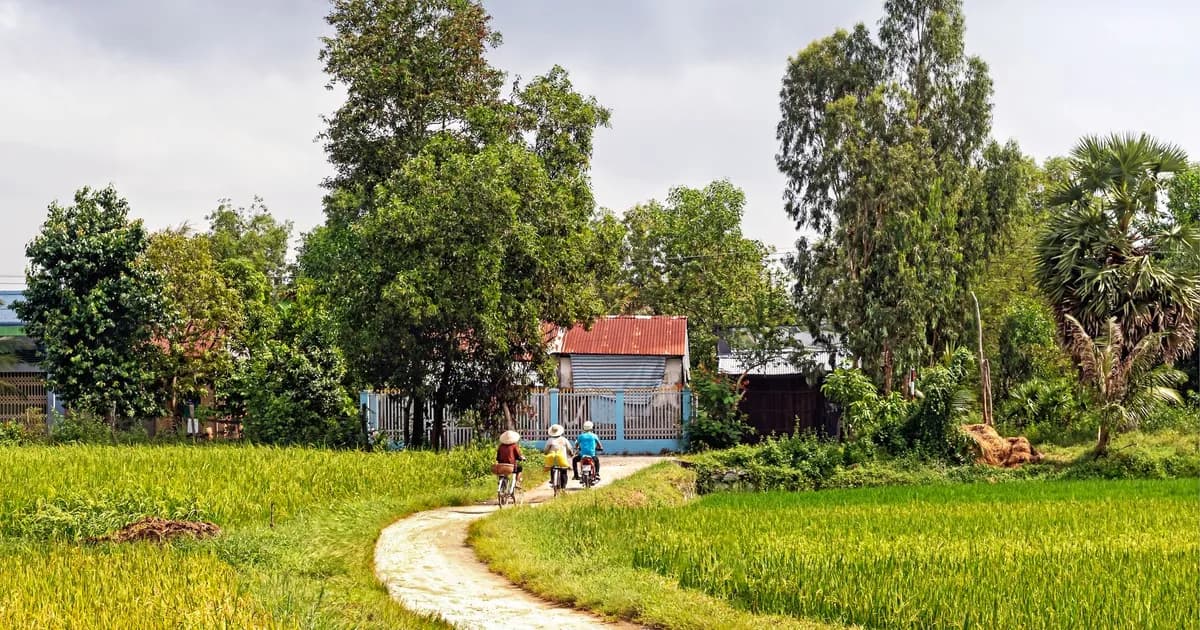
Several things make Vietnam attractive to cyclists. It is long and varied, with coast, delta, hills and high mountains within a relatively short distance. Rural roads often pass through villages, rice fields and tea plantations at a pace that suits a bicycle. Distances between interesting places are modest, and accommodation, from simple homestays to comfortable hotels, is available almost everywhere, with food at every turn.
There are limits. Traffic is dense and unpredictable, particularly near cities and on national highways, where trucks, buses and motorbikes share the road. Heat and humidity can be punishing for much of the year. Steep mountain sections demand real fitness, and roads in the far north can be damaged by landslides after heavy rain. Cycling is also, by its nature, less forgiving of poor planning than a hired car and driver.
The best cycling in Vietnam therefore tends to happen on secondary roads, in quieter regions, in the right season, with a sensible daily distance. Those conditions describe what slow travel has always asked for, which helps explain why the two ideas are converging.
The routes travellers are choosing
A 2026 guide to cycle touring in northern Vietnam, published by a local operator, lists several routes that give a feel for the options. These figures come from the operator and should be treated as planning guides rather than guarantees.
- Ninh Binh: about 60 to 90 km of mostly flat riding with minimal climbing, suitable for leisure riders and beginners.
- Cao Bang and Ban Gioc: roughly 150 to 200 km with moderate climbing, described as suitable from beginner to confident riders.
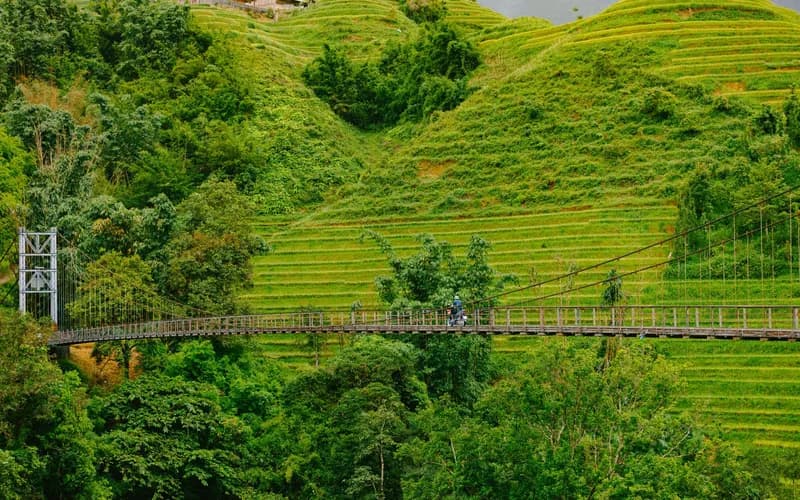
- Mu Cang Chai to Sapa: about 120 to 160 km with substantial climbing, for confident riders.
- Ha Giang Loop: about 300 to 350 km with very heavy climbing, for experienced riders and adventurers.
- Dien Bien and the northwest: about 180 to 250 km, graded for adventurers.
For readers who know the region through motorbike travel, the loop experience is quite different on a bicycle. Our guide to the Ha Giang Loop describes the landscape and its pressures, and anyone considering the loop on a bike should read it with distance, altitude and weather in mind. The same operator notes that the main roads in Ha Giang and Cao Bang have been surfaced in recent years, which makes cycling more practical than it was, though side tracks vary considerably.
Get matched with up to 5 trusted Vietnam agencies
- Free
- No obligation
- Up to 5 agencies
Easier entry points: Mai Chau, Pu Luong and the deltas
Not every cycling trip needs mountain passes. One of the most appealing entry points is the Mai Chau to Pu Luong corridor in the north, where rice valleys, stilt-house villages and modest climbs combine in a five-day format that several operators now offer. Our guide to Pu Luong Nature Reserve covers the area on foot and by road, and much of the same logic applies to riding.
In the south, the Mekong Delta offers flat, shaded lanes between orchards and canals, with ferries and small bridges that make cycling a pleasant way to move between villages. Along the central coast, quieter stretches between Hoi An and neighbouring towns suit short rides rather than long hauls. If you simply want to try a bicycle for a day or two, rental is cheap and widely available, and a guided half-day can be a good way to learn what the local roads feel like.
Seasons and pacing
Season matters more for cyclists than for most travellers. According to the northern operator guide, October to November and March to April offer the most comfortable conditions in the north, at roughly 18 to 26 degrees with clearer skies. December to February can be cold at altitude, with temperatures near freezing above 1,000 metres, and May to September is monsoon season with heavy downpours. As we explain in our wider guidance on planning around the weather, the country has several climate zones, so the right month for the north is not necessarily the right month for the centre or south.
The same guide suggests a sustainable pace for experienced riders of about 40 to 60 km per day with no more than 400 to 800 metres of climbing, and a rest day every three days. That is a useful reality check. Many first-time visitors overestimate what they can do in heat and on hills, and then spend half the trip in a support van. A slower plan, with shorter days and time for lunch, markets and conversation, usually produces a better trip.
Safety, traffic and honest caveats
Cycling is not risk-free in Vietnam. Traffic follows its own logic, with motorbikes weaving and horns used as a form of communication rather than aggression. Riders need to be predictable, to stay visible with lights and reflective clothing at dusk, and to wear a helmet. Avoid riding at night, avoid major highways when possible, and plan routes on quieter roads using offline maps and preloaded GPX files.
Insurance deserves attention. Check that your travel policy covers cycling, including any off-road riding or mountain sections, and that it includes medical evacuation. Our guide to renting and riding a motorbike safely in Vietnam deals with similar questions around traffic and insurance, and much of it applies equally to cyclists sharing the same roads.
Finally, remember that e-bikes bring their own considerations. They are heavier, charging can be difficult in remote areas, and battery rules for flights are strict, which is something to check before you pack any equipment. Hiring locally avoids the problem.
Supported, semi-guided or self-guided
Costs vary widely. The northern operator guide gives rough ranges per day, excluding flights, of about 40 to 70 US dollars for self-guided travel, 80 to 140 for semi-guided, and 150 to 250 for fully guided trips with a support vehicle. These figures reflect one operator's view and will differ between companies, seasons and group sizes, but they illustrate the trade-off. Self-guided travel is cheapest and most flexible but demands the most planning, navigation and self-reliance. Fully supported trips are more expensive but remove the worry about repairs, luggage and routes.
For most first-time cyclists in Vietnam, a semi-guided or small-group supported trip is the sensible choice. A good local guide brings knowledge of quiet roads, safe lunch stops and village hosts, and is likely to put more money into local hands than a long-distance rider passing through. Ask any operator about group size, the guide's local experience, bicycle quality, safety equipment and how much of your payment stays in the region.
What this means for slow travellers
The rise of cycling matters for a reason beyond sport. A bicycle is among the slowest and quietest ways to cross a landscape, and it changes how a traveller relates to a place. You stop in more villages, you are visible and approachable, and you spend more time on small roads where the benefits of tourism reach households rather than large operators. It also produces fewer emissions than a car or a motorbike, which is a small but real point as Vietnam's cities begin to restrict petrol vehicles.
The caveats matter equally. Cycling can add pressure to fragile places if numbers grow, and operators will need to manage group sizes and routes carefully. It also asks more of the traveller than a conventional trip. The honest recommendation is to treat cycling as one chapter of a Vietnam journey, not necessarily the whole of it, and to pair it with the rest of the trip as you would any other activity. If you want to build a route that combines riding with trains, homestays and rest days, our plan your journey service can help.
What to Do Next
- Decide whether you want a full cycling trip or a day or two of riding inside a wider itinerary.
- Choose the season first: October to November or March to April for the north.
- Pick a route that matches your fitness and your tolerance for traffic, starting with flatter options such as Ninh Binh or the Mai Chau to Pu Luong corridor.
- Plan 40 to 60 km days at most, with a rest day every three days.
- Confirm that your travel insurance covers cycling and medical evacuation.
- Choose a semi-guided or small-group operator, and ask how local guides and homestays are involved.
- Pack a helmet, lights, reflective clothing, a basic repair kit and offline maps.
Frequently Asked Questions
Is cycling popular in Vietnam for tourists?
It is a growing niche rather than a mass market. Operators have added new multi-day itineraries in 2026, and detailed cycle-touring guides are appearing, but there is no official count of cycling tourists. Most visitors still travel by car, train, bus or motorbike.
What is the best time of year to cycle in northern Vietnam?
October to November and March to April are generally the most comfortable months, with mild temperatures and clearer skies. Winter can be cold at altitude, and the summer monsoon brings heavy rain. Central and southern Vietnam follow different seasonal patterns.
How far can you realistically cycle each day?
For experienced riders, about 40 to 60 km per day with limited climbing is a sustainable pace, with a rest day every few days. Beginners and anyone riding in heat or on hills should plan less.
Is it safe to cycle in Vietnam?
It can be, with sensible planning. Traffic is dense and unpredictable, so choose quieter roads, wear a helmet, use lights and reflective clothing, avoid riding after dark and carry travel insurance that covers cycling.
Can I rent a bicycle instead of bringing my own?
Yes. Basic bicycle rental in tourist towns is inexpensive, and operators provide higher-quality hybrid, gravel and mountain bikes, often with e-bike options, for multi-day trips. Renting locally avoids the hassle of airline transport.
Do I need a guide?
No, but a guide helps on longer or more remote routes. Semi-guided and small-group formats combine local knowledge with some independence, and are often the best balance for first-time cyclists.
Is cycling better than a motorbike for slow travel?
They suit different travellers. A bicycle is slower, quieter and more physically demanding, and lets you stop easily and meet people. A motorbike covers more distance with less effort but carries higher road risks and licence and insurance requirements. Our slow travel guide to Vietnam explains how to weigh these options within a wider itinerary.