Vietnam's Craft-Village Revival: Can Tourism Save the Trades It Is Visiting?
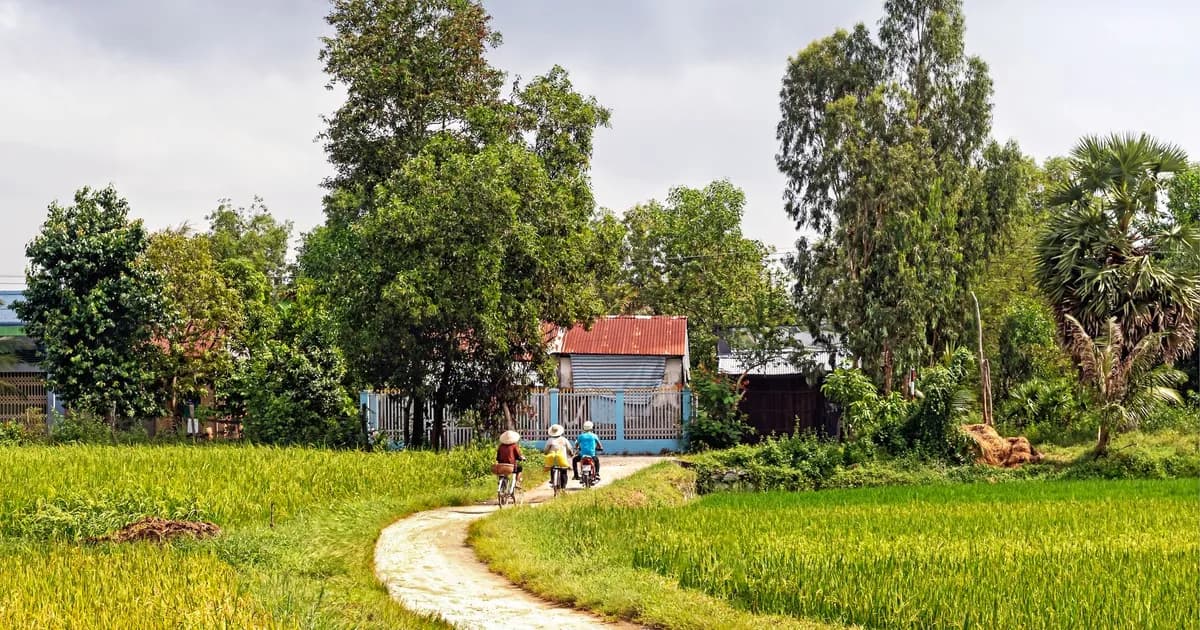
There is a quiet argument going on in Vietnam's craft villages, and it is about whether visitors are a lifeline or a threat. On one side are villages that have survived for centuries on pottery, silk, stone, lacquer and bamboo, now watching young people leave for factory jobs. On the other are tourism planners who see those same villages as the next product to sell. In 2026 the two conversations have finally met, and the outcome will shape what you find when you step off the road into a workshop.
This piece looks at the numbers, the recent recognitions, the places where the model is working and the places where it is not, and at how a slow traveller can visit a craft village in a way that leaves something behind.
The scale of what is at stake
Vietnam is, quietly, one of the great craft nations. According to figures reported by Vietnamese press in 2026, the country had about 5,400 craft villages and villages with craft activities at the end of 2025, including 263 traditional crafts and 1,975 formally recognised craft villages. In the World Craft Cities network, Vietnam is reported to rank second globally by number of craft villages, behind Iran.
Those numbers describe an enormous living heritage, but they hide a fragile reality. Many of the trades are carried by ageing artisans, a handful of families or a single cooperative. Officials at the national tourism authority have publicly warned that many traditional crafts remain at risk of fading. That is the backdrop against which tourism is being offered as a rescue: bring visitors, create demand for experiences and products, and give young people a reason to stay.
It is a hopeful idea, and, as with most hopeful ideas about tourism, it works only when it is done carefully.
One request. Up to five tailored proposals.
Skip contacting agencies one by one — share your trip once and let up to five trusted Vietnam agencies come to you. Free, with no obligation.
Get my free quotesRecognition is arriving, and it matters
One visible sign of momentum is international recognition. Hanoi's membership in UNESCO's World Craft Cities programme now stands at four villages. Bat Trang, famous for ceramics, and Van Phuc, the silk village, were recognised in 2024. Chuyen My, known for mother-of-pearl inlay and lacquer, and Son Dong, known for lacquer sculpture, were recognised on 8 May 2026.
Recognition does not pay the electricity bill, but it does three useful things. It raises the profile of the craft with domestic and foreign visitors. It gives local authorities a reason to invest in basics such as signage and access. And it gives artisans a stronger argument when they ask their own children to consider the family trade.
The same impulse shows up in the intangible heritage lists. Thai brocade weaving in Nghe An was added to Vietnam's national intangible cultural heritage list in 2025, a reminder that crafts are also living knowledge, not only objects.
Hanoi's villages: a promising network with rough edges
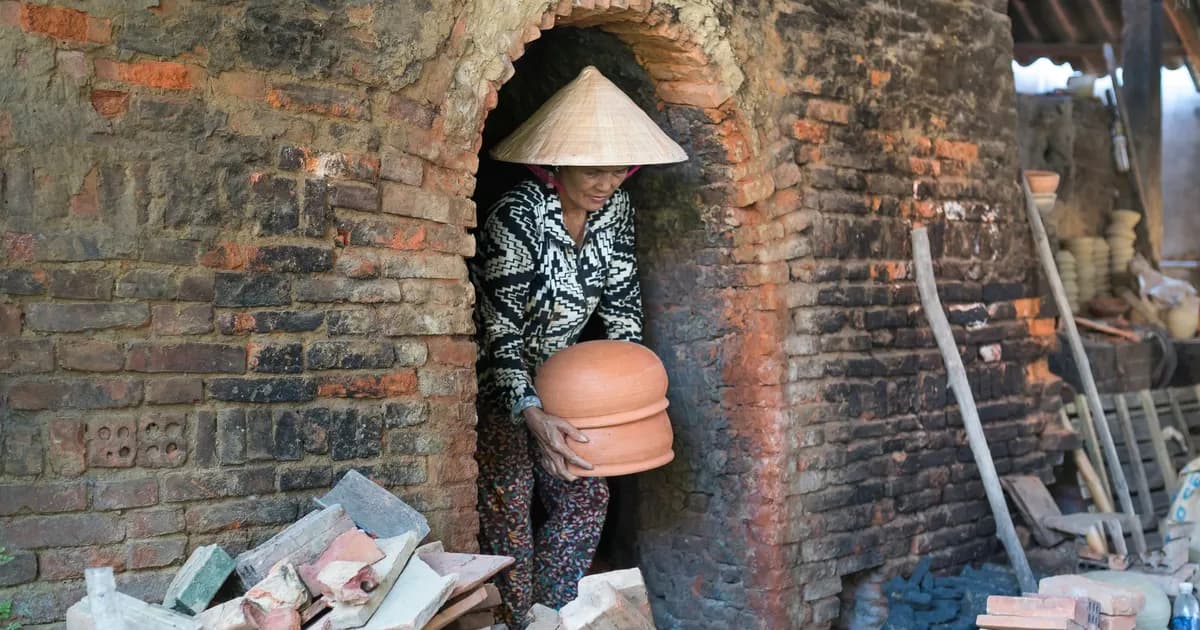
Greater Hanoi has the densest cluster of craft villages within easy reach of a traveller, and it is also where the tension is most visible. According to tourism professionals interviewed in Vietnamese media, Bat Trang and Van Phuc have responded relatively well to demand: Bat Trang, for instance, lets visitors try the potter's wheel and watch clay being mixed and glazed. But most other villages around the capital operate as isolated destinations, with limited links to tour routes and visitor services.
The weaknesses are practical and unglamorous. Industry voices quoted in the press say parking areas and toilets fall short in many villages, products can look alike from one workshop to the next, and experiential activities are limited. Some production also creates dust, smoke and wastewater, and rising visitor numbers add pressure to narrow streets and family homes. Representatives of the Hanoi handicrafts association have described a lack of distinctive products as a central problem.
Pilot projects in 2026 are trying to fix that. One example is an agriculture-and-craft tour that combines pottery making, a shared meal with artisans and a visit to an ancient riverside village. A community-based model tied to Muong culture is being developed in My Duc, and heritage experience tours are being piloted in Ha Mo. A proposed northeastern route would connect Hanoi, Bac Ninh, Thai Nguyen, Tuyen Quang and Quang Ninh, linking wood carving in Bac Ninh, Tan Cuong tea in Thai Nguyen and Dong Trieu pottery in Quang Ninh.

Get matched with up to 5 trusted Vietnam agencies
- Free
- No obligation
- Up to 5 agencies
Da Nang and Hoi An: a craft belt with a plan
Central Vietnam offers the clearest example of a craft strategy with institutional backing. After its merger with the former Quang Nam province, Da Nang reports nearly 70 craft villages and traditional craft villages and around 3,000 craft establishments, which together welcome millions of visitors each year, according to local reporting in July 2026.
The best-known names are worth knowing individually:
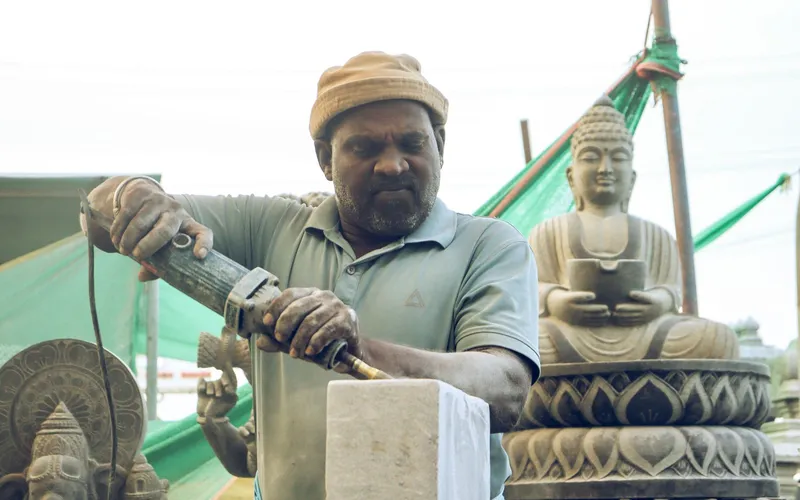
- Non Nuoc stone carving village, at the foot of the Marble Mountains, is a national intangible cultural heritage and more than 400 years old. The city has approved a programme to preserve and promote Non Nuoc stone carving through 2030, with a vision to 2045, and has held a sculpture competition to showcase artisan skill.
- Thanh Ha pottery village, on the Thu Bon River near Hoi An, has about 500 years of ceramic-making. It opened to tourism in 2011, counts 32 pottery workshops (four of them specialising in traditional ceramics) and around 70 artisans, and has gained a new inland waterway pier that improves access.
- Cam Kim mat weaving, Kim Bong carpentry and Tra Que vegetable village form, with Thanh Ha, a cultural belt around Hoi An Ancient Town.
Local tourism authorities have also surveyed the villages around Hoi An to design themed routes aimed at several groups, including cruise passengers and meetings-and-incentives travel. That detail deserves a calm reading. Routes designed for cruise passengers can mean busloads arriving at once, which is precisely the pressure a small workshop cannot absorb. If you want to see this belt as a slow traveller, our guide to Hoi An beyond the lanterns suggests how to approach it on your own terms, by bicycle and without a schedule.
Ninh Binh and the north: new villages on the map
North of the capital, villages in Ninh Binh province are being added to itineraries. These include Ninh Van stone carving, Bo Bat pottery and Van Lam embroidery. For travellers who already know the limestone scenery of the region, a craft stop is an easy way to add depth to a stay; our profile of Ninh Binh and the Trang An landscape covers the setting, and craft visits fit naturally into a multi-night base.
The broader pattern across the north is more important than any one village. Craft is being repositioned from souvenir shopping to a form of cultural experience: you do not buy a bowl, you spend an hour making one badly, eat lunch with the family who makes them well, and then decide whether you want to buy anything.
Why this is a trend, not a fad
Several forces are pushing in the same direction.
- Domestic travel demand. Vietnamese travellers are increasingly looking for day-trip and weekend experiences that feel authentic, which sustains weekday income for villages even when foreign arrivals dip.
- Policy attention. Provincial governments now treat craft villages as a tourism asset in their regional plans, with conservation programmes running to 2030 and beyond.
- International recognition. UNESCO listings and craft-city networks give villages a credential that visitors and travel agents understand.
- Traveller preference. International visitors, particularly Europeans, are asking for experiences with people rather than sights alone. We explored that shift in our analysis of experience-first travel in Vietnam.
Taken together, they suggest that craft-village tourism will keep growing for years. Whether it grows well is the open question.
The honest risks
A slow-travel publication should be candid about the downside.
- Staging. When a village is built around visitors, the workshop can become a stage set. Demonstrations replace production, and the craft becomes a show.
- Sameness. Experts quoted in Vietnamese media warn that many villages lack distinctive products. A crowd of identical conical-hat or ceramic stalls teaches visitors nothing.
- Infrastructure strain. Without parking, toilets and drainage, extra visitors become a burden on households.
- Income leakage. Where tour operators capture most of the fee, artisans see little of it.
- Wrong measures of success. Specialists suggest that the right yardstick is artisan income, the number of young people learning the trade and the transfer of skills between generations, not simply visitor counts.
That last point is the most useful lens for travellers. It tells you what to look for.
How to visit a craft village well
You do not need a political view on cultural policy to be a good guest. A few habits make a real difference.
- Go small and go early. Arrive before tour buses and ask whether the workshop takes small groups. A morning with a family is better for everyone than ten minutes with a coach party.
- Pay for time, not just for products. If you take a class, pay the stated fee without bargaining. Our guide to tipping, bargaining and paying a fair price explains when haggling is normal and when it is not.
- Buy directly from the maker. Ask who made the piece. If the answer is vague, move on.
- Ask about the apprentices. A village with young people at the wheel or the loom is a village with a future. Ask politely, and take the answer seriously.
- Photograph with permission. Hands at work are beautiful, and artisans are people, not scenery.
- Choose a base and stay. Two or three nights in one area, with half-day craft visits, beat a rush of one-hour stops.
If you want help linking craft villages with homestays and small-group transport, a local specialist can save time; the directory of travel agencies in Vietnam is a good starting point.
What this means for your plans
Craft villages fit the slow-travel philosophy well because they reward depth: one trade, one family, one day, learned properly. They are also easy to add to an existing route, since many sit within an hour of a major city or heritage town. For a wider sense of the values behind this approach, see our slow travel charter.
What to Do Next
- Choose one craft that interests you, such as ceramics, stone, silk, lacquer or weaving, rather than trying to see them all.
- Pick a base near two or three villages: Hanoi for Bat Trang and Van Phuc, Hoi An for Thanh Ha and Cam Kim, or Ninh Binh for its stone, pottery and embroidery villages.
- Book a hands-on session directly with the workshop or through a small operator, and ask in advance how many people join.
- Carry cash in small notes and leave room in your luggage, or ask the workshop about shipping.
- Ask the maker how the trade is passing to the next generation, and buy accordingly.
- Use our plan-your-journey page to fit craft days into a slower route.
Frequently Asked Questions
How many craft villages does Vietnam have?
Vietnamese press reports citing end-of-2025 figures count about 5,400 craft villages and villages with craft activities, including 263 traditional crafts and 1,975 recognised craft villages. Only a fraction are set up for visitors.
Which craft villages near Hanoi are best for travellers?
Bat Trang for ceramics and Van Phuc for silk are the most visitor-ready, and both are in UNESCO's World Craft Cities network. Chuyen My and Son Dong joined in May 2026, so facilities may still be developing.
Is it better to visit with a tour or independently?
Independent visits suit travellers who can ride a bicycle or scooter and are comfortable arranging a class by message. Small-group operators help if you want translation, a deeper introduction to the family, or access to a village without public transport.
Should I bargain in craft villages?
Fixed class fees should be paid as quoted. For objects, polite price discussion is normal in markets but less so when buying directly from the maker, where the price often reflects days of work. Ask about the price calmly and pay fairly.
Are craft villages crowded?
Well-known villages such as Bat Trang can be busy at weekends and when tour groups arrive. Weekday mornings and smaller villages offer a quieter experience.
How do I know if a village is genuine rather than staged?
Look for working production, tools in use, family members of several ages and products that vary from stall to stall. If every workshop sells the same objects and nobody is making anything, the village has become a showroom.
Can I buy and ship large pieces home?
Many workshops will pack and ship ceramics, stone or furniture, but costs can be high and breakage is a risk. Ask for a written quote, insurance and a tracking number before paying.