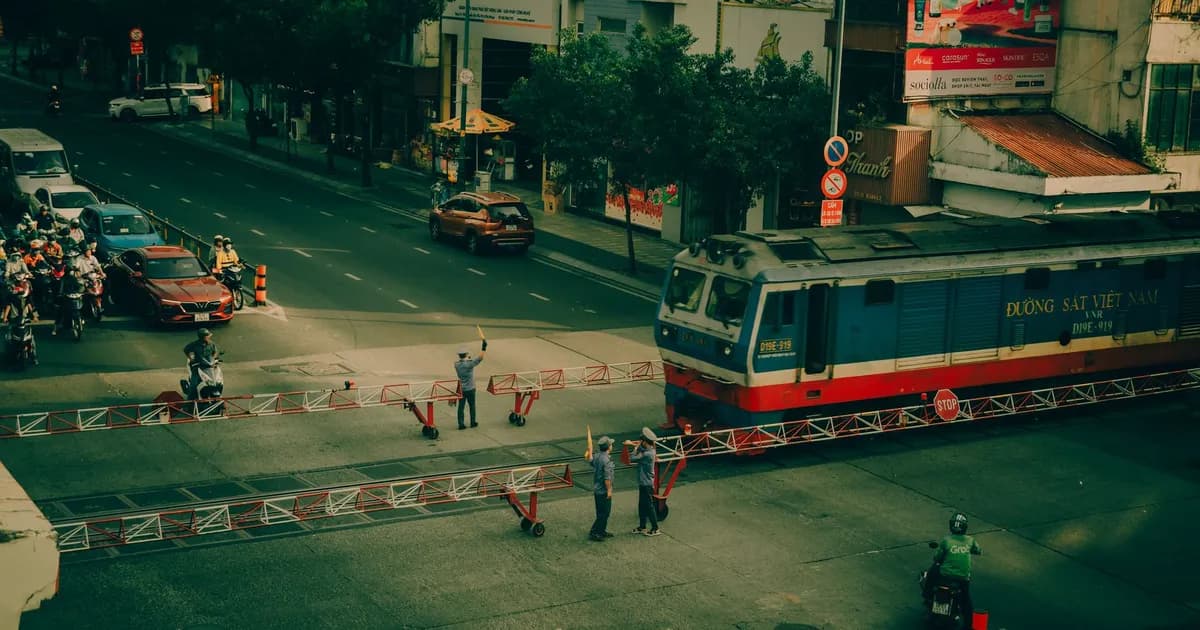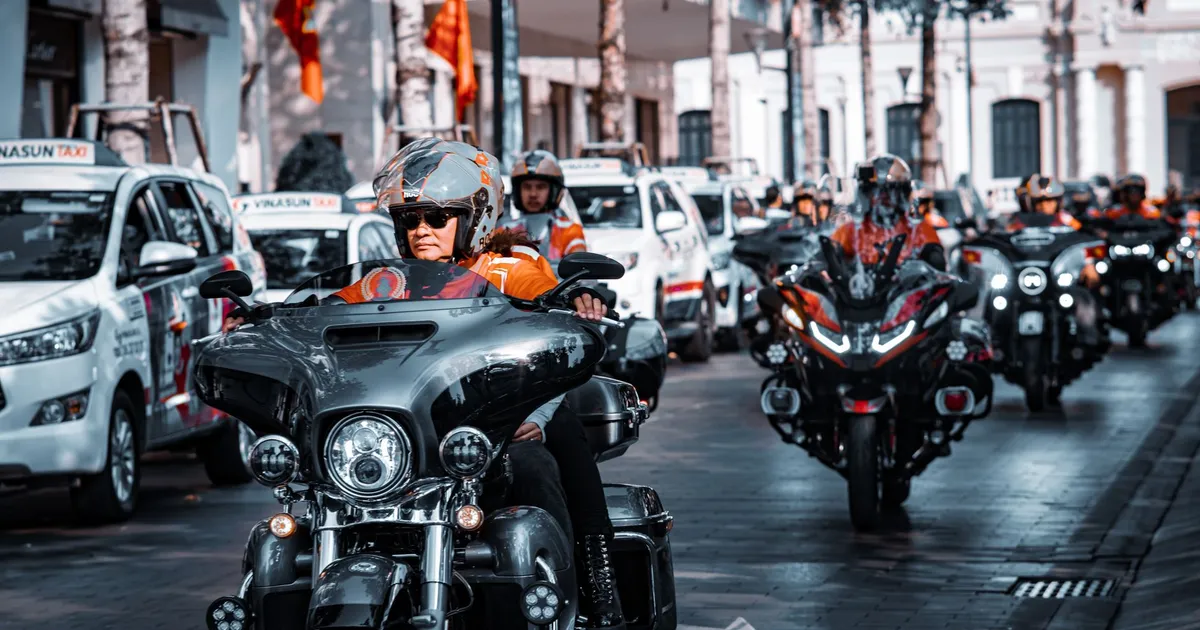


Somewhere in the middle of planning a Vietnam trip, most travellers hit the same wall. The train does not go where you want to go, the flight wastes half a day at either end, and the sleeper bus arrives at four in the morning. The answer, more often than people expect, is a car with a driver. It is not a luxury indulgence in Vietnam. It is ordinary infrastructure, used constantly by Vietnamese families and businesses, and it is often the difference between a route that works and one that collapses.
Why a Driver Is the Default, Not an Upgrade
Self-driving a car in Vietnam is legally awkward for most visitors. Vietnam recognises international driving permits issued under the 1968 Vienna Convention, which covers many but by no means all nationalities, and permits issued under the older 1949 convention are generally not accepted. Rental companies that hand foreigners the keys to a car without a driver are the exception rather than the rule, and insurance questions become complicated fast.
Beyond the paperwork there is the road itself. Vietnamese traffic is not chaotic in the way first-time visitors assume, but it does run on a set of unwritten conventions about merging, overtaking and horn use that take months to internalise. Add night driving on unlit provincial roads, freight trucks on the mountain passes, and a penalty regime that has become genuinely severe, and the calculation shifts. Our article on Vietnam's traffic fines under Decree 168 sets out how much a moment of inattention can now cost.
Hiring the driver removes all of it. You are buying local knowledge, legal cover and the ability to look out of the window.
One request. Up to five tailored proposals.
Skip contacting agencies one by one — share your trip once and let up to five trusted Vietnam agencies come to you. Free, with no obligation.
Get my free quotesWhat It Actually Costs
Prices vary by region, vehicle and season, but a usable range looks like this. A four-seat sedan with driver for a full day, arranged locally in Vietnamese dong, typically sits somewhere between roughly 1,200,000 and 2,700,000 dong depending on distance and where you book. Published price lists from established companies often show figures around 2,650,000 dong a day for a compact sedan and about 2,850,000 for a mid-size SUV. Agencies quoting in dollars to international clients commonly land between 95 and 139 US dollars a day for a car or van with driver, and some offer hourly hire at around 20 dollars an hour with a daily minimum in the region of 250 kilometres.
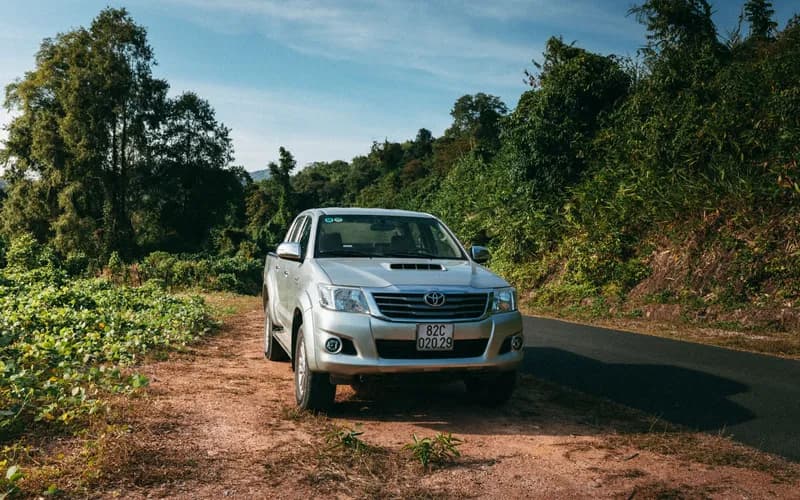
Those numbers are not contradictory, they simply describe different markets. A driver arranged by a hotel in Hue for a day around the imperial tombs is cheap. The same service booked through an inbound operator in Europe, with a newer vehicle, insurance documentation and an English-speaking driver, is not. Both can be fair. The trap is comparing the two as though they are the same product. For how this line fits a whole trip budget, our Vietnam cost and budgeting guide puts transport alongside accommodation and food.
The Four Ways to Book
- Through your accommodation. Fast, informal, usually reasonably priced, and the hotel carries some reputational responsibility. Weakest on written terms and on English.
- Through a specialist transport company. Clearer pricing, better vehicles, proper receipts. Best for long transfers and multi-day hire.
- Through your tour operator or agency, as part of a wider itinerary. Most expensive per day, but the vehicle, guide and accommodation are coordinated and someone else owns the problem when something goes wrong. Our directory of vetted Vietnam agencies is a starting point.
- Through a ride-hailing app for short intercity hops. Workable between major cities, unreliable for rural routes, and not designed for full-day hire with stops.
Get matched with up to 5 trusted Vietnam agencies
- Free
- No obligation
- Up to 5 agencies
What Should Be in the Agreement
This is where most disputes are born, and almost all of them are avoidable with a five-minute conversation before departure. Confirm, in writing or by message so there is a record:
- The exact route, including every stop you intend to make and roughly how long you want at each.
- Whether fuel and road tolls are included. On expressway routes tolls are significant and are a common add-on.
- The daily kilometre allowance and the charge for exceeding it.
- Whether the price is one-way or return. On a one-way transfer the driver still has to get home, and that empty return leg is usually built into the price. If it is not, expect a surcharge.
- Driver meals and, on multi-day hire, driver accommodation. The convention is that the client covers a modest allowance, often in the range of 200,000 to 300,000 dong a night. Agree the figure rather than discovering it.
- Start time, waiting time and any overtime rate for late finishes.
- The vehicle itself: size, age, air conditioning, and whether luggage will actually fit. A seven-seat van with four passengers and four large cases is not a seven-seat van any more.
Driver, Guide, or Both
An ordinary driver is a driver. Many speak little English, and that is not a fault, it is what the price reflects. If you want commentary, historical context and someone who can order food and explain a village festival, you are asking for a guide, and that is a separate professional with a separate fee.
The middle option, an English-speaking driver, costs more than a standard driver and less than a guide, and suits travellers who mainly need logistics plus conversation. Be realistic about the level: basic communication is common, fluent narration is not. If a fixed itinerary matters to you, write the day out in advance with times and place names in Vietnamese, and hand it over. It removes almost all friction.
Where a Car and Driver Wins, and Where It Loses
It wins decisively on the routes public transport handles badly: Hanoi into the northwest highlands, the Hai Van pass and the tomb circuit around Hue, the Mekong Delta's scattered towns, and any day that involves three or four stops rather than one destination. It wins for families, for travellers with mobility limits, for anyone with heavy luggage, and for the rainy season, when a motorbike stops being fun after the first hour.
It loses on the long north-south legs, where a flight or an overnight train is faster, cheaper and less tiring than eight hours of expressway. It loses in dense city centres, where a taxi or a ride-hailing app is better value for short hops. And it loses whenever the point of the journey is the journey itself. Our comparison of trains, flights and sleeper buses in Vietnam is the companion piece to this one, and the honest answer for most itineraries is a mix.
For a destination like the tea plateau described in our guide to Moc Chau in Son La, where sights are spread across thirty kilometres of winding road, a car and driver for a single day often unlocks more than three days of improvising.
Common Traps
The commonest problem is not overcharging, it is scope. A driver quotes a day rate, then the client adds two stops, a lunch detour and a sunset viewpoint, and the day runs to eleven hours. The driver is not being difficult when he asks for more money; the job changed. Agreeing the shape of the day in advance protects both sides.
Second: seat belts. They are mandatory for all seats in Vietnam and enforcement has tightened. Some older vehicles have rear belts tucked under the seat covers. Check before you set off.
Third: unrealistic timings. Vietnamese road distances translate badly into driving time. A hundred kilometres on a provincial road can take three hours. Ask the driver how long a leg takes rather than estimating from a map, and take the answer seriously.
Fourth: paying everything up front. A deposit is normal. Full prepayment to an individual with no written terms is not.
Fifth: the wrong vehicle. If you are four adults doing six hours, a four-seat sedan is technically adequate and practically miserable. Pay the difference for the seven-seater.
A sixth trap is subtler: assuming that a driver's silence means agreement. Vietnamese professional culture leans strongly toward avoiding open disagreement with a client, so a driver may accept an itinerary he privately knows is unworkable rather than contradict you. If the plan is genuinely too ambitious, you will discover it at four in the afternoon, three stops behind schedule and with a mountain pass still ahead. The way around this is to ask open questions rather than yes-or-no ones. Not "can we do all of this by six?" but "how long will each of these take?" The answers are usually accurate and freely given, and they let you cut a stop yourself rather than having the day cut it for you.
Finally, be careful with same-day route changes that cross provincial boundaries or add expressway sections. Tolls, distance and the driver's own journey home all shift, and an alteration that feels trivial from the back seat can add a couple of hundred thousand dong to the day. Raise it as a question of money at the moment you propose it, not at the moment you settle up.
What to Do Next
- Map your itinerary and mark the legs where public transport genuinely does not work. Those are your car-and-driver days.
- Decide the booking channel for each: hotel for local days, transport company for long transfers, agency for coordinated multi-day routes.
- Ask for a written quote that names the route, the inclusions, the kilometre allowance and the vehicle model.
- Confirm whether you need a driver only or an English-speaking driver, and price both.
- Write out each day with times and Vietnamese place names, and share it the evening before.
- Keep a buffer. Build one flexible half-day into a multi-day hire so weather or a slow morning does not wreck the schedule.
Frequently Asked Questions
Can I rent a car and drive myself in Vietnam?
Rarely, and it is more trouble than it is worth for most visitors. Vietnam recognises international driving permits issued under the 1968 Vienna Convention, but not those issued under the 1949 convention, and self-drive rental for foreigners is uncommon outside a few operators. Insurance and liability questions make the car-and-driver option the practical standard.
How much should I tip the driver?
Tipping is not obligatory but is normal for good service on multi-day hire. Something in the region of 100,000 to 200,000 dong per day is a common gesture, more if the driver has gone well beyond the agreed itinerary. On a single short transfer, rounding up the fare is sufficient.
Is one driver enough for a long transfer?
For a day of six to eight hours, yes. Beyond that, question it. Fatigue on Vietnamese roads is a real risk, and a reputable company will either split the drive over two days or arrange a relief driver. If an operator promises twelve hours of driving with a single driver, treat it as a warning sign.
Do I pay for the driver's food and accommodation?
On multi-day hire, yes, by convention. Meals are usually a small allowance and accommodation is typically a modest room, often in the range of 200,000 to 300,000 dong a night. Agree the amount before departure and check whether it is already inside the quoted day rate.
Can I book a car and driver at short notice?
In cities and major tourist towns, usually within a day. In rural areas and during Tet, national holidays or peak festival weeks, availability tightens sharply and prices rise. For anything during the lunar new year period, book weeks ahead.
What happens if the vehicle breaks down?
With a company, replacement is their responsibility and should be covered in the terms. With an informal arrangement, it may become your problem. This is the main practical argument for booking through an established operator on long or remote routes rather than saving a few hundred thousand dong.
Is a car and driver safe for solo female travellers?
It is widely used and generally safe, but book through your accommodation, an agency or an established company rather than an unverified individual, share the vehicle and driver details with someone, and prefer daytime departures on rural routes. These are ordinary precautions rather than Vietnam-specific ones.