
Ly Son Island: Vietnam's Volcanic Garlic Isle, Taken Slowly
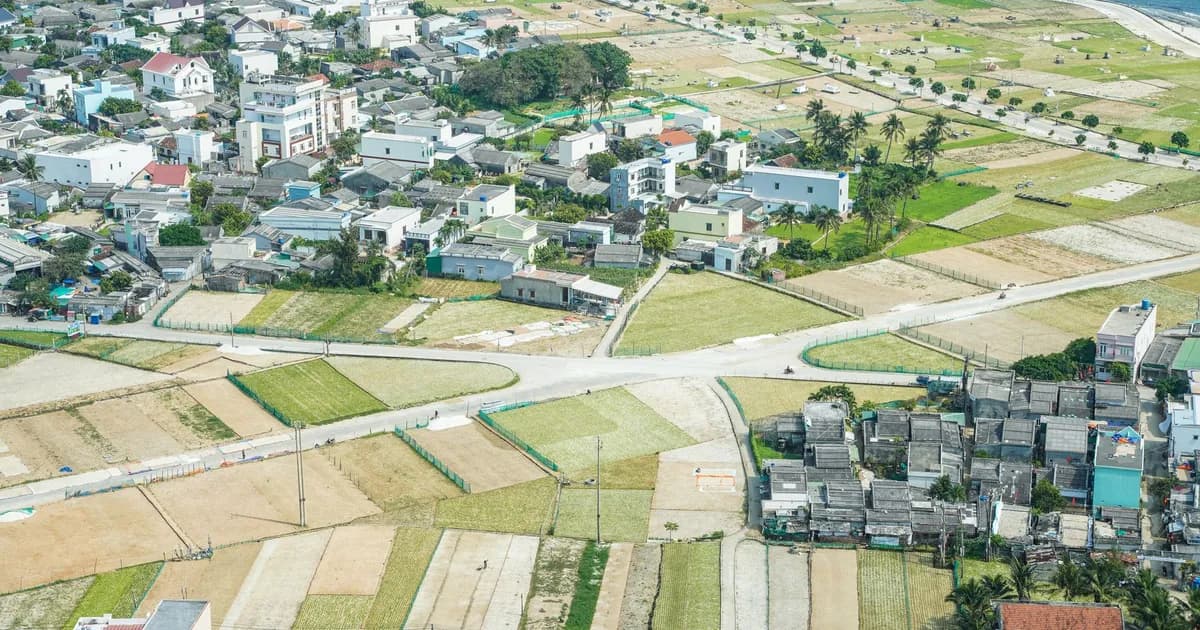
Ly Son is a volcanic island about 30 kilometres off the coast of Quang Ngai, in Vietnam's south-central belt. Ten square kilometres, more or less: five extinct craters, a working fishing fleet, more than fifty shrines and temples, and garlic fields laid out under a blanket of white coral sand. Almost everyone who visits is Vietnamese. Most come for a weekend, and by Sunday evening the island exhales and returns to itself. That rhythm, loud for two days and quiet for five, is the whole argument for giving Ly Son three or four unhurried nights instead of the day trip most itineraries allow it.
Why Ly Son rewards patience
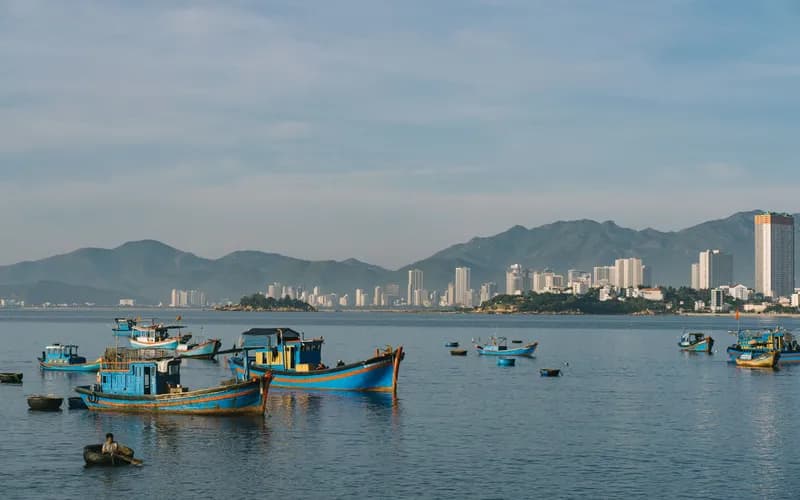
You can circle Ly Son on a rented scooter in ninety minutes. That fact has done the island a disservice, because it convinces visitors the place is a checklist: the stone arch, the crater, the cave pagoda, done by lunch. What a fast loop cannot give you is the thing Ly Son is genuinely good at, which is repetition. The same stretch of reef is a different landscape at low tide, when women walk out a hundred metres to cut seaweed, than it is at four in the afternoon when the water is back and the light has gone flat.
Three days is enough to learn the island's timetable: boats in before dawn, ice trucks at the harbour by six, fields watered in the cool hours, almost nobody outdoors between noon and three. Once you know the rhythm you stop fighting it. You rise for sunrise because that is when the island is awake, and you rest through the heat because everyone else does. Ly Son makes the case for travelling Vietnam off the beaten path better than any brochure could.
Be honest about what it is not. Ly Son is not a resort island. There is no spa, no beach club, and most of the swimming is rocky rather than languid. Come for landscape, fishing culture and history and it delivers far beyond its size. Come for a beach holiday and you will be disappointed by lunchtime on the first day.
One request. Up to five tailored proposals.
Skip contacting agencies one by one — share your trip once and let up to five trusted Vietnam agencies come to you. Free, with no obligation.
Get my free quotesGetting there, and what changed on the map
Boats leave from Sa Ky port, roughly 23 kilometres from the centre of Quang Ngai. The crossing takes about 45 minutes to an hour depending on the vessel and the swell. Fares were adjusted upward in March 2026, from 207,000 VND to 237,000 VND per passenger on the main service, while some operators still advertise tickets nearer 205,000 VND. Budget around 250,000 VND each way and you will not be caught out.
There are typically between five and nine sailings a day in settled weather, the first around 07:30 and the last in mid-afternoon. Crossings are cancelled outright when the sea is rough, which happens regularly between October and December. This is the single most important planning fact about Ly Son: the island can strand you, politely and without warning, for a day or two. Never schedule an international flight for the evening of the day you intend to leave.
Reaching Sa Ky is straightforward. Quang Ngai sits on the main north-south rail line, so the reunification trains from Da Nang or Hue put you within a half-hour taxi of the port, and long-distance buses use the coastal highway. One administrative note worth knowing: after the 2025 reorganisation of Vietnam's provinces, Ly Son is managed as a special administrative unit inside a redrawn Quang Ngai province, and older maps and booking sites have not all caught up. If addresses and province names in your paperwork look unfamiliar, our explainer on Vietnam's redrawn provincial map will make sense of it.
Five craters and a pagoda in the cliff
Ly Son is the surviving tip of volcanic activity that ended tens of millions of years ago, and the geology is not subtle. Thoi Loi, the high point at roughly 169 metres, holds a reservoir built inside its crater with a capacity of around 270,000 cubic metres, which is also the island's freshwater lifeline. The climb or short scooter ride to the rim at dawn is the one sight genuinely worth setting an alarm for: the fishing fleet strung out below, the smaller island of An Binh floating to the north, and the whole patchwork of fields turning from grey to green.
Gieng Tien, on the western side, is the more atmospheric crater, its walls eroded into pale cliffs that drop into the sea. Between them sits Cong To Vo, a natural basalt arch that has become the island's postcard image and is consequently busy at sunset. Hang Pagoda is the one that lingers: a shrine roughly four centuries old, set some 24 metres deep inside a sea cliff, cool and dim, watched over by a statue of Guanyin at the entrance. Take your shoes off, keep your voice down, and stay long enough for your eyes to adjust.
A practical caution about the coastline. The basalt is sharp, the reef shelves unpredictably, and there are no lifeguards anywhere on the island. Swim where locals swim, at the times locals swim, and treat anything else as scenery.
Get matched with up to 5 trusted Vietnam agencies
- Free
- No obligation
- Up to 5 agencies
Garlic, onions and the island's working year
Ly Son's fields are an engineering project as much as an agricultural one. Farmers spread a layer of crushed white coral sand over the volcanic soil, which regulates temperature and moisture, and they replace that layer periodically, hauling material by cart and boat. The result is the island's famous garlic, including the prized single-clove bulbs known as toi co don, which sell for many times the price of ordinary mainland garlic.
The island's calendar is built around the crop. Local guides point to the stretch from September through early December as the most visually striking part of the growing cycle, when the fields are freshly worked and the coral sand is at its brightest. Onions and shallots rotate through the same ground. Watch for an hour and the labour becomes obvious: almost everything is done bent over, by hand, by people who have been doing it since childhood.
There is a real sustainability problem underneath the postcard. Sand extraction damages the reef that produces it, groundwater is under pressure, and salt intrusion is a live concern in a place where fresh water arrives mainly as rain. If you buy garlic, buy it from a grower or a village shop rather than a mainland stall, because a great deal of ordinary garlic is sold under the Ly Son name. Ask the price before you accept a bag.
Four centuries of the Hoang Sa flotilla
Ly Son's other identity is historical. From the seventeenth century, crews from these islands were despatched on state-ordered voyages to the Hoang Sa and Truong Sa archipelagos, surveying, salvaging and marking sovereignty in waters that remain contested today. Many did not return. The island's memorial complex, its family shrines and its symbolic graves all speak to that.
The living expression of it is the Khao Le The Linh ceremony, held in the third lunar month, in which the community makes offerings for the soldiers of the old flotilla. It is recognised as national intangible cultural heritage and it is not a performance staged for visitors. If you are on the island during the ceremony, stand at the edge, ask before photographing faces, dress as you would for a funeral rather than a beach, and accept tea if it is offered.
Understanding this history changes how the island reads. The fifty-odd shrines are not decorative. They are the infrastructure of a community that has always sent its men out onto dangerous water and has always needed somewhere to put the grief.
An Binh, the island behind the island
A short local boat ride north takes you to An Binh, still widely called Be Island, where fewer than a hundred families live. It is small enough to walk end to end, with a beach of white coral fragments, a viewpoint over the strait and almost no traffic. Most visitors go for two hours and come back on the same boat.
Stay the night instead. There are a handful of very basic homestays, the electricity is thinner than on the main island, and the evening is exactly as quiet as you would hope. Check the return boat times before you commit, because the last crossing is early and the service stops entirely in bad weather. Bring cash and any medication you need.
Where to stay, what to eat, what it costs
Accommodation on Ly Son runs from family guesthouses at roughly 300,000 to 600,000 VND a night to a few small hotels with sea views at two or three times that. Homestays are the better choice here, because the island's interest is social rather than architectural. Scooter hire is around 100,000 to 150,000 VND a day, and petrol is sold from bottles at roadside stalls.
Eat at the harbour. Whatever came in that morning will be on the table by evening, usually simple: grilled fish, squid, sea urchin in season, and the local jellyfish and garlic salad that is genuinely worth trying once. A full seafood dinner for two, ordered sensibly, runs well under 400,000 VND. Card acceptance is patchy and ATMs are few, so arrive with more cash than you think you need. If you would rather have the ferry, homestay and a Quang Ngai connection arranged by someone who deals with the island regularly, our vetted Vietnamese travel agencies can handle it without turning the trip into a packaged tour.
Pairing Ly Son with the central coast
Ly Son works poorly as a standalone destination and beautifully as one chapter of a slow central-coast route. The natural companion is the quiet stretch of shoreline south of it, where Quy Nhon's unhurried coast offers the swimming and the Cham towers that Ly Son cannot. A ten-day loop of Hue, Da Nang, Quang Ngai and Ly Son, then Quy Nhon, moves you roughly 400 kilometres in total and asks for only three travel days.
Going north instead, the same rail line delivers you to Hoi An's hinterland without a single internal flight. Ly Son is a good argument for the train: it puts you in Quang Ngai, a town most travellers skip, and a night there before the morning ferry is no hardship.
When to go, and what can go wrong
March to September is the settled season, with calm seas and reliable sailings. July and August are hot and busy with domestic holidaymakers. The shoulder months of March, April and early September give you the best balance of weather and space. From October into December the sea turns, crossings are cancelled and some homestays close.
Avoid weekends if you can, and avoid the national holidays outright. The Reunification and Labour Day break at the end of April fills every bed on the island, and rooms that cost 400,000 VND in March are gone or doubled. Medical care is limited to a small island facility, with anything serious referred to the mainland, which means the ferry, which means the weather. Travel insurance is not optional here.
What to Do Next
- Fix your dates first, then check ferry conditions. Aim for March to early September, on weekdays, and build a spare day into the end of your island stay in case the sea closes the crossing.
- Book two nights minimum on the main island and consider a third on An Binh. Message homestays directly; many respond faster on Vietnamese messaging apps than by email.
- Plan your arrival into Quang Ngai the night before. A late-afternoon train from Da Nang or Hue and a simple hotel near the station will get you onto the first morning ferry without stress.
- Carry cash. Withdraw what you need in Quang Ngai before boarding, because island ATMs are few and cards are unreliable.
- Decide how you are getting to central Vietnam in the first place. Domestic routes and airport roles are shifting this year, and our piece on Vietnam's changing flight map explains which gateways now make sense.
- Read up on the Hoang Sa ceremonies before you go. Arriving with context turns a memorial complex from a stop into the reason you came.
Frequently Asked Questions
How many days should I spend on Ly Son?
Three nights is the sweet spot: one for the main island's craters and coast, one for An Binh, and one spare in case the ferry is cancelled. Two nights works if your dates are fixed and the forecast is settled. A day trip is possible but misses everything that makes the island worth the journey.
Is Ly Son suitable for foreign visitors who do not speak Vietnamese?
Yes, with patience. English is limited outside a few homestays, signage is mostly Vietnamese, and menus are often spoken rather than written. A translation app, a written list of place names and a willingness to point will carry you through. This is part of why the island still feels unvarnished.
How much does a trip to Ly Son cost?
Excluding travel to Quang Ngai, budget roughly 1.2 to 1.8 million VND per person per day for a homestay, meals, scooter hire and ferry tickets. Ferry fares are about 237,000 VND each way on the main service after the March 2026 increase. Ly Son is inexpensive by Vietnamese standards, but cash-dependent.
When is the best time to visit for good weather?
March to September, when seas are calm and crossings are dependable. October to December brings rough water, cancelled ferries and the tail of the typhoon season. The hottest months, June to August, are also the busiest with Vietnamese holidaymakers, so March, April and early September offer the best compromise.
Can I see the garlic fields being worked?
Yes, and you do not need to arrange anything. The fields are alongside the roads across the island, and the September to early December stretch is the most striking part of the cycle. Stay on paths between plots, ask before photographing people at work, and buy from growers rather than roadside resellers.
Is Ly Son crowded?
It is crowded in bursts. Weekends and national holidays bring large numbers of domestic visitors, and the end-of-April break sells out the island entirely. Midweek outside the holidays, you will often have craters and beaches largely to yourself. International visitors remain rare in any season.
Is it safe to swim and snorkel?
Swim with care. The reef is sharp, the shelving is uneven, currents run hard around headlands, and there are no lifeguards. Use the beaches locals use, avoid swimming alone or after drinking, and treat rough-sea days as days for walking rather than water. Snorkelling is best on calm mornings with a local boatman.