
Something structural is happening in how Vietnam's urban middle class travels — and it is not what the industry expected.
For years, the dominant assumption was that rising incomes would translate into longer trips, more distant destinations, and higher volumes. Instead, the data from 2024 into 2025 tells a different story. Trips are getting shorter. Destinations are getting closer. And spending per trip — particularly per night — is climbing. This is not a contraction. It is a reorientation. Vietnamese travelers are not traveling less because they have less; they are traveling differently because they want more from each journey. The shift from distance and duration toward depth and quality is now measurable enough to call structural. Understanding what is driving it, and what it means for how Vietnam's travel market is being rebuilt around it, matters for anyone paying attention to this country's tourism future.
The Numbers Behind the Shift
The clearest signal comes from trip-length data. Outbox's Vietnam Travel Market Tracker for Summer 2025 finds that 3–4 night trips now account for 42.3% of domestic travel, while 1–2 night trips are growing. Trips of ten nights or more have declined by 2.8 percentage points year-on-year. The long annual vacation is losing ground to the frequent short break.
What makes this significant is what happens to spending when the trip shortens. The 6–8 million VND per-night bracket — roughly mid-to-upper mid-range — recorded a 6.1 percentage point increase in popularity compared to Summer 2024. Travelers are compressing their time away and expanding their nightly budget. That combination is the defining arithmetic of premiumization.
The format of travel is shifting too. "Partly using tour services at destinations" — meaning travelers who book their own transport and accommodation but layer in curated in-destination experiences — jumped 9.3 percentage points to become the most preferred trip type at 37.1%. Fully self-planned trips fell 7 points. All-inclusive package tours slipped to 27.4%. The old binary of "independent" versus "package" is dissolving into something more hybrid and more deliberate.
One request. Up to five tailored proposals.
Skip contacting agencies one by one — share your trip once and let up to five trusted Vietnam agencies come to you. Free, with no obligation.
Get my free quotesWhy This Is Happening Now
Three forces are converging.
The first is structural time pressure. Vietnam's urban professional class — concentrated in Ho Chi Minh City, Hanoi, Da Nang, and Can Tho — operates under work and family schedules that make extended travel difficult to justify. A 3-night coastal escape fits around a school calendar. A 10-day trip does not. The micro-holiday is not a compromise; it is an adaptation.
The second force is digital planning behavior. Outbox's data shows that 71.6% of Vietnamese travelers use social media for trip planning, and 62% use video platforms. More telling: the majority plan trips less than one month in advance, with 70.2% of 18–24-year-olds booking inside a one-month window. A compelling reel on a Friday can become a booked weekend by Saturday morning. Short-lead, short-duration travel is now the natural rhythm of how this generation discovers and acts on travel desire.
The third force is a genuine shift in what travel is for. Outbox reports that 84.2% of Summer 2025 trips are motivated by "relax and rest" — not sightseeing, not checklist completion. Multi-generational family trips now account for 50.5% of domestic summer travel, up 3.1 points year-on-year. The purpose of travel has quietly moved from accumulation to restoration. That shift in purpose is what makes higher per-night spending feel rational: if the point is quality time, then quality conditions are worth paying for.

What the Market Is Building in Response
Operators are reading these signals and reshaping their products accordingly. The growth category is modular and curated: private car transfers, half-day food tours, boutique villa stays with chef services, small-group wellness retreats. These are priced two to three times higher per person than legacy group packages, but they are being marketed — and increasingly accepted — as better value when measured against the quality of experience per hour rather than cost per day.
The Vietnam National Administration of Tourism's 2025 trends framework explicitly names "digital itineraries," "offbeat alternatives," and "purposeful journeys" as defining features of the current cycle. VNAT is also pushing dispersion — encouraging travelers away from saturated hubs toward lesser-known coastal and mountain destinations. This aligns neatly with what premium micro-holiday seekers already want: somewhere that feels considered, not crowded.
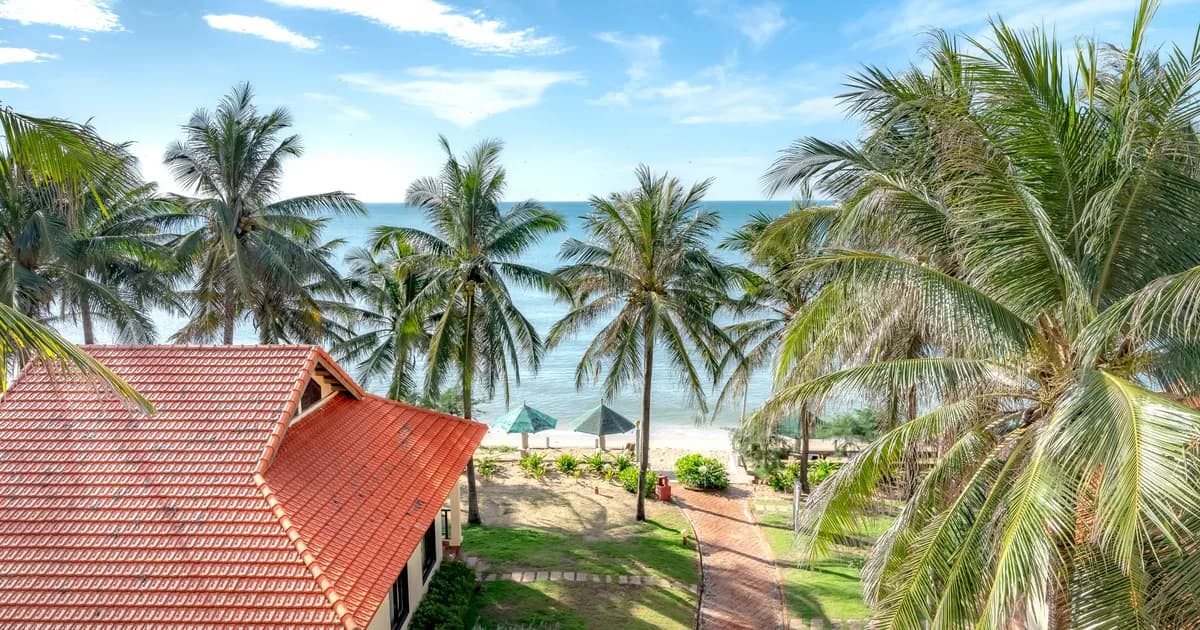
Da Nang remains the most popular domestic destination at 23.5% of domestic travelers, and the crowding complaints that come with that concentration are well-documented. The market's response is not to abandon the coast but to find quieter versions of it — smaller towns, boutique properties set back from the main strips, experiences that require a local guide rather than a ticket queue.
Get matched with up to 5 trusted Vietnam agencies
- Free
- No obligation
- Up to 5 agencies
The Redefinition of Value
What this shift ultimately represents is a change in the unit of measurement for travel value. For the previous generation of Vietnamese domestic tourism, value was calculated in distance covered, nights away, and destinations ticked. More was more.
The emerging calculus is different. Value is now measured in the quality of a single meal, the calm of a well-designed room, the specificity of a guided experience that could not have been found in a group tour brochure. Agoda's 2025 survey data, cited by Vietnam News, captures the tension well: 55% of travelers identify budget as a primary decision driver, yet 86% plan to take at least the same number of trips in 2025 as in 2024. These travelers are not retreating from travel. They are optimizing it — spending more carefully, not less.
This is the logic of premiumization in a market that has not yet fully premiumized. The 2–4 million VND per-night bracket is still the most common choice at 32.5%. The shift is happening at the margins, but the margins are moving fast. The 6–8 million VND segment's 6.1-point gain in a single year is not a rounding error. It is a direction.
What This Means for the Slow-Travel Reader
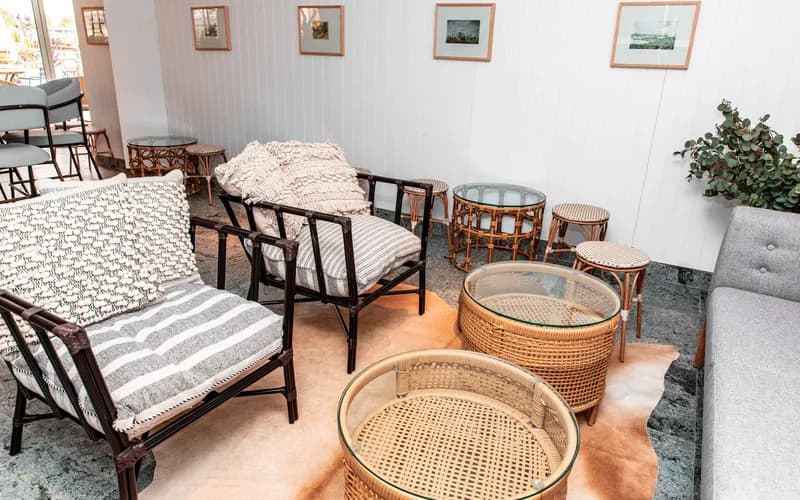
For travelers who already think in terms of depth over volume, Vietnam's premiumization shift is, in a sense, the domestic market catching up to a sensibility that slow travel has long advocated. The hybrid model — book your own transport, invest heavily in one or two standout experiences, choose a property for its character rather than its star rating — is exactly what Outbox's data now identifies as the leading trip format among Vietnamese travelers themselves.
The practical implication is that the market for considered, curated, short-form travel in Vietnam is growing, not shrinking. More operators are building for it. More properties are designed around it. The challenge, as always, is discernment: distinguishing the genuinely premium from the repackaged standard, the thoughtfully curated from the algorithmically promoted.
That challenge is not new. But the scale of the market now building around these preferences means the options — and the need for judgment — are both larger than they were two years ago.
Frequently Asked Questions
Is the premiumization trend limited to younger urban travelers?
Not entirely. While the 25–34 age group shows the heaviest reliance on digital channels for planning, Outbox's data shows that 45+ travelers are also booking within short lead times — 62.4% inside a one-month window. The multi-generational family trip format, which now accounts for over half of domestic summer travel, spans age groups by definition. The shift toward quality and customization appears to be broadly distributed across Vietnam's urban middle class, not confined to a single demographic.
Does spending more per night actually produce a better experience, or is it marketing?
The honest answer is: it depends on what you are buying. The 6–8 million VND per-night bracket can mean a genuinely better location, higher service ratios, distinctive design, or access to experiences unavailable at lower price points. It can also mean a rebranded standard product with a higher headline price. The growth of small operators selling "curated experiences" through social media has introduced real quality inconsistency into the market. Scrutinizing inclusions — private transfers, small-group ratios, F&B credits, guide credentials — matters more than the nightly rate alone.
Why are all-inclusive package tours declining if budget is still a primary concern for most travelers?
Because the all-inclusive package optimizes for price per day, not quality per experience. As travelers shorten their trips and sharpen their sense of what they actually want from travel — rest, family time, one or two memorable moments — the logic of buying a bundled product designed for the average preference weakens. The hybrid model, where travelers control the framework and purchase selective upgrades, gives them both cost transparency and the ability to concentrate spending on what matters most to them. It is a more sophisticated form of budget management, not an abandonment of it.
Does this shift benefit international visitors to Vietnam, or is it primarily a domestic market story?
Both. The domestic urban middle class is the primary driver, but the products being built for them — small-group food tours, private villa stays, curated wellness retreats, boutique coastal properties — are equally accessible to international travelers. In some cases, international visitors are entering a market that has been meaningfully upgraded by domestic demand. The range of considered, high-quality short-form experiences available in Vietnam today is noticeably broader than it was three or four years ago, and domestic premiumization is a significant reason why.