
Something is shifting in how serious travelers think about Vietnam. For years, the country's wellness offer was a footnote — a massage menu at the end of a beach holiday, a spa afternoon in Da Nang. That framing is now visibly outdated. Across the highlands and quieter coasts, a different kind of infrastructure is taking shape: forest-bathing programs in the northern mountains, herbal detox retreats grounded in Southern folk medicine, hot spring rituals tied to ethnic minority traditions. Vietnam's tourism authority has flagged wellness as a strategic growth pillar through 2026. Retreat operators are selling out 2026 dates more than a year in advance. The question worth asking is not whether Vietnam has a wellness offer — it clearly does — but whether the country is building something genuinely distinct, or simply replicating what Thailand and Bali have already done at a lower price point.
The Geography of Slow Recovery
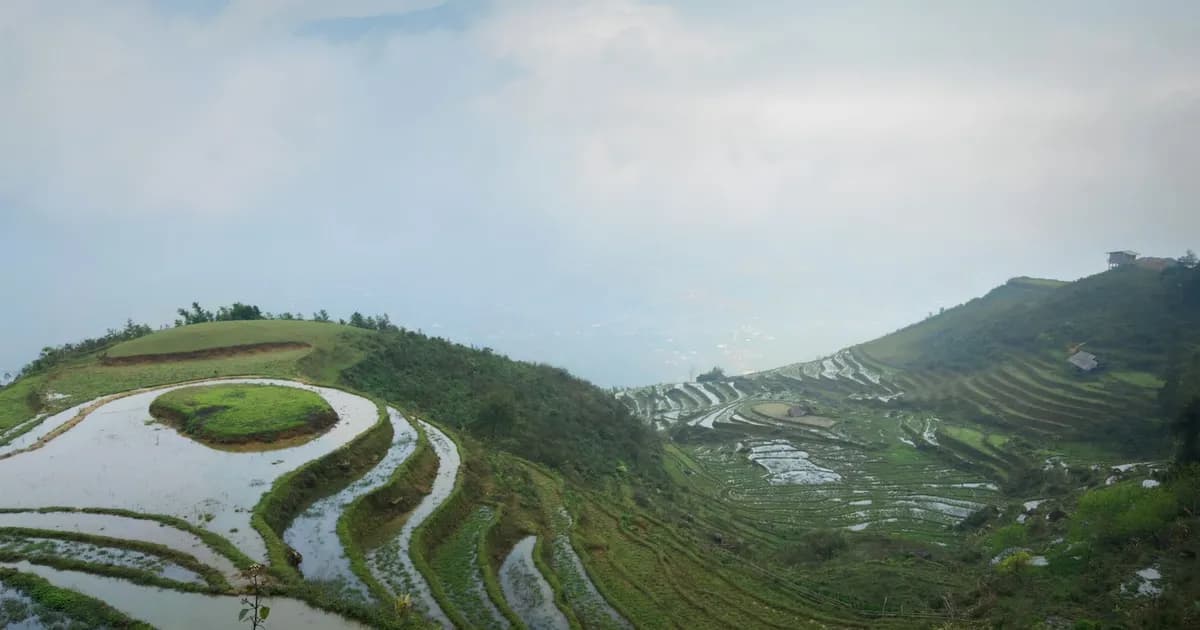
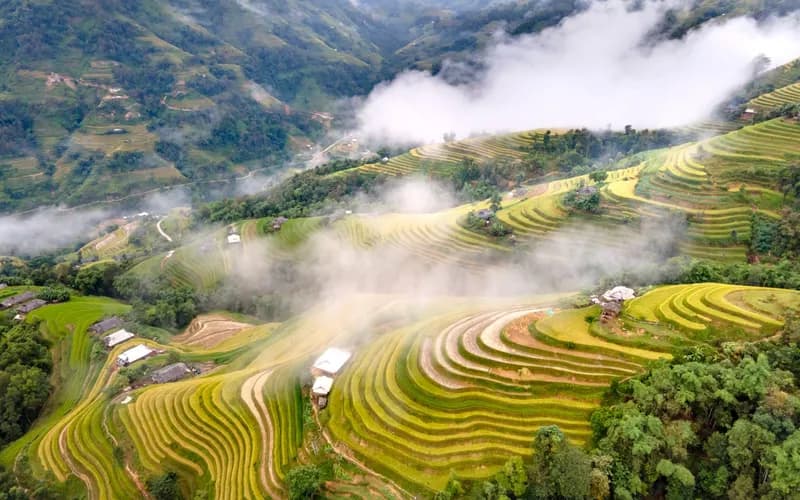
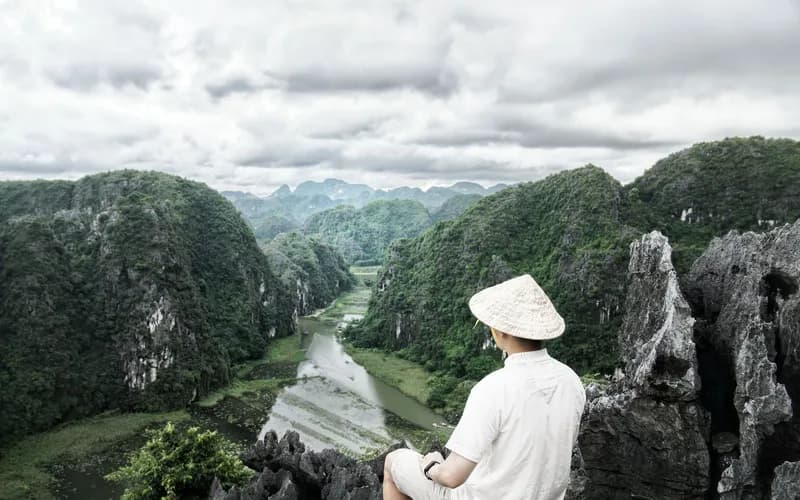
Vietnam's landscape has always been its most underused wellness asset. The country runs nearly 1,700 kilometres from north to south, and the variation within that span is remarkable: cool pine forests above Da Lat, river valleys cutting through Pu Luong's limestone karst, the Red Dao villages of Ha Giang where medicinal plants are gathered from the forest floor, the long quiet beaches of Quy Nhon where the South China Sea arrives without the crowds of Nha Trang. What operators are now doing — and what the government is actively encouraging — is treating this geography not as a backdrop but as the treatment itself.
Forest bathing, the Japanese practice of slow sensory immersion in woodland environments, has found a natural home in Vietnam's highland retreats. Blue Diamond Retreat describes it as a two-hour, low-exertion practice focused on stillness and nervous-system regulation — no fitness requirement, no technical skill. The appeal for post-pandemic travelers seeking mental restoration is obvious. Forest Therapy Hub, which works with Vietnamese partners on certified programs, frames the practice as regenerative tourism: restorative for the traveler, economically beneficial for local communities, and aligned with conservation goals. That three-way alignment is harder to manufacture than it sounds, and Vietnam's existing forest ecosystems and ethnic minority knowledge systems give it a genuine foundation.
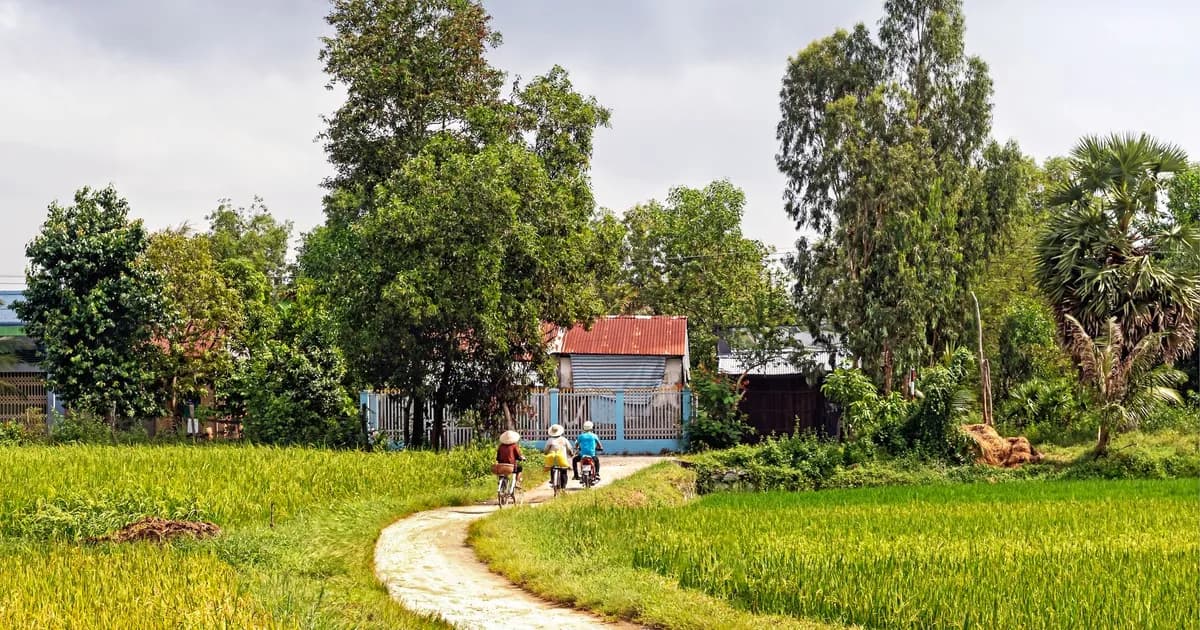
The coastal dimension is less discussed but equally real. Quy Nhon, in Binh Dinh province, has the unhurried quality that wellness travel requires: long beaches, low visitor density, and a local pace that hasn't yet been overwritten by resort development. Thanh Hoa, further north, combines natural hot springs with the kind of rural quietness that makes extended stays feel restorative rather than merely comfortable. These are not destinations that have been engineered for wellness tourism. They are places where wellness tourism is finding room to grow precisely because they haven't been engineered for anything in particular.
One request. Up to five tailored proposals.
Skip contacting agencies one by one — share your trip once and let up to five trusted Vietnam agencies come to you. Free, with no obligation.
Get my free quotesWhat Vietnam Is Actually Selling
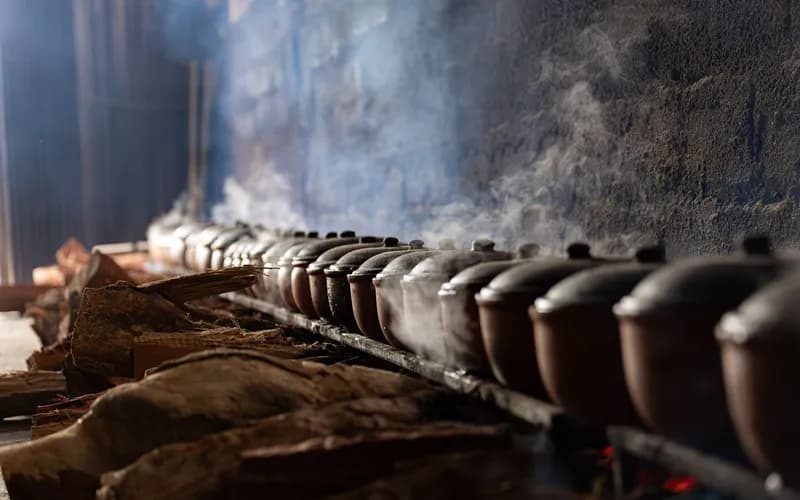
The most interesting development in Vietnam's wellness sector is not the yoga retreats or the detox programs — those exist everywhere — but the emergence of traditional medicine as a credible, internationally oriented product. Southern Herbology, known in Vietnamese as Thuốc Nam, is a folk-medicine tradition rooted in locally available plants, decoctions, and compresses. Namia River Retreat in Hoi An has built a multi-day program around it, combining herbal steam therapies, plant-based cuisine, and guided movement into what they describe as a slower, more mindful alternative to coastal tourism. Their April 2026 herbal detox retreat was being marketed more than a year out, with early-bird pricing and limited availability — signals of genuine demand, not aspirational positioning.
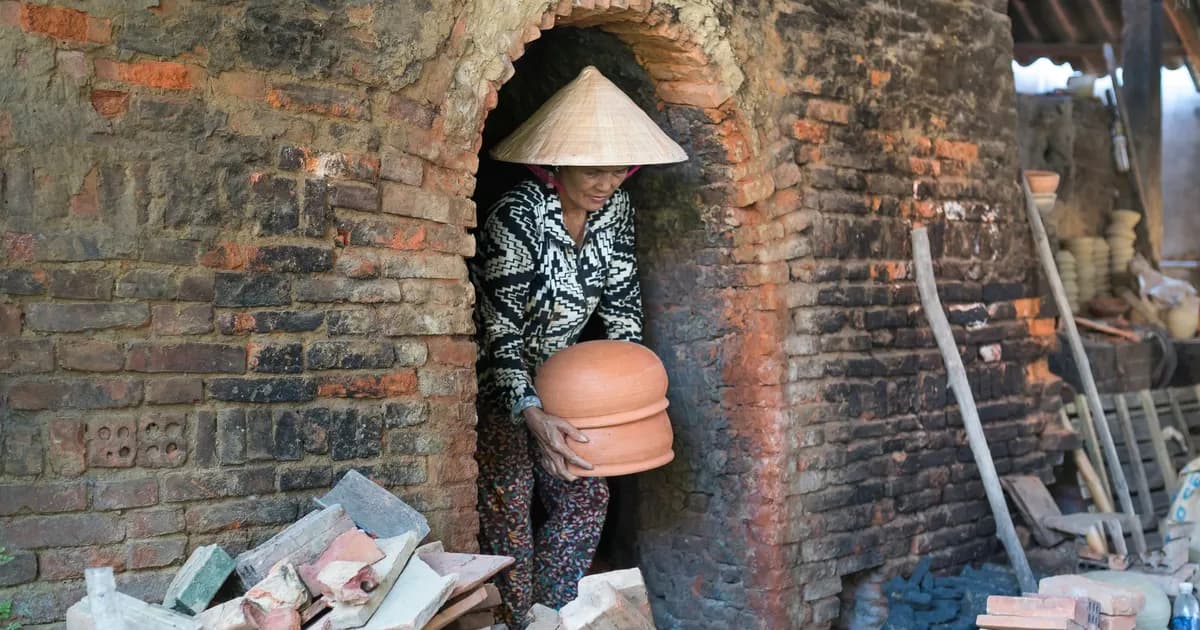
Further north, the Red Dao herbal bath in Hoàng Su Phì represents a different register entirely. Families gather medicinal plants from surrounding forests, boil them in large pots, and prepare hot baths in wooden tubs — a ritual believed to relieve muscle pain, reduce inflammation, and support recovery. Vietnam's National Authority of Tourism has highlighted it as both an ethnic cultural product and a wellness treatment. The price is a few tens of dollars as an add-on to a homestay night. The experience is irreducibly local in a way that no resort spa can replicate.
This is the distinction that matters. Vietnam's most compelling wellness offer is not a luxury product that happens to be cheaper than Bali. It is a set of practices with genuine roots — in landscape, in community knowledge, in traditional medicine — that are being made accessible to international travelers without being hollowed out in the process. That is a harder thing to sustain than it looks, and not every operator is managing it. But the best examples are real.
The Comparison That Keeps Coming Up
Every serious discussion of Vietnam's wellness sector eventually reaches Thailand and Bali. The comparison is useful but imprecise. Thailand's Chiang Mai has decades of infrastructure, internationally trained practitioners, and a wellness tourism ecosystem that Vietnam is not close to matching in scale or consistency. Bali has a cultural identity so thoroughly fused with the idea of spiritual restoration that it functions almost as a brand in itself. Vietnam has neither of those advantages.
What it has instead is price, space, and novelty. Multi-day residential retreats — forest bathing, herbal detox, yoga and nature immersion — are being listed on international platforms at roughly US$600–1,500 for five to seven days, inclusive of accommodation and meals. Comparable programs in Thailand or Bali typically run higher, sometimes significantly so. Individual treatments at local settings cost a fraction of resort spa rates in either country. For travelers who want to extend their stay, add extra sessions, or simply trade up to a more intimate property, Vietnam's cost structure makes that possible without recalculating the entire budget.
The saturation argument is also real. Ubud has been discovered, rediscovered, and written about so many times that the experience of being there now carries the weight of everyone else's experience of being there. Pu Luong does not have that problem. Neither does Quy Nhon. The Forest Therapy Hub's assessment that Vietnam is a fast-developing destination for certified forest-bathing retreats reflects something genuine: the infrastructure is still being built, which means the experience is still relatively unmediated.
The honest caveat is that infrastructure being built also means infrastructure not yet finished. Mr Linh's Adventures, one of the more credible voices in Vietnam's adventure and wellness DMC space, acknowledges challenges in staff training, service consistency, and English-language communication at smaller properties. Northern retreats often require five to eight hours of ground travel from Hanoi. Seasonal weather affects mountain road access. These are not reasons to avoid Vietnam's wellness offer — they are reasons to plan it carefully and choose operators who are transparent about what they provide.
Get matched with up to 5 trusted Vietnam agencies
- Free
- No obligation
- Up to 5 agencies
A Sector Still Finding Its Shape
The most honest way to describe Vietnam's wellness belt in 2025 is: genuinely promising, unevenly developed, and worth watching closely. The government's strategic framing is real — wellness tourism is being treated as a growth sector, not a niche. The traditional medicine foundations are real. The landscape diversity is real. The price advantage is real. What is still catching up is the consistency of the product, the depth of the practitioner training, and the infrastructure that makes remote retreats accessible without being exhausting to reach.
What is also real is the direction of travel. Retreat operators are booking 2026 dates with confidence. International certification bodies are establishing Vietnamese partnerships. Destinations that were unknown to wellness travelers three years ago — Pu Luong, Quy Nhon, Hoàng Su Phì — are appearing in sector reports alongside Chiang Mai and Ubud. That shift does not happen by accident. It happens when a place has something worth offering and enough operators willing to build around it carefully.
Vietnam is not yet the finished article. But the most interesting wellness destinations rarely are.
The No-Think Model and What It Requires
"No-think travel" is operator language rather than a regulated category, but it describes something real. Guests arriving at a structured retreat increasingly want to hand over the logistics entirely: transport, meals, the daily schedule, even the order of treatments. The appeal is obvious to anyone who has spent a week somewhere beautiful while still managing a calendar.
Delivering it is harder than marketing it. Credible programming needs a published daily structure, qualified facilitators and a coherent therapeutic logic linking each element. It also needs honesty about digital detox. At some properties Wi-Fi is genuinely restricted and devices are kept aside during sessions; at many others it is an aspiration left to the guest, which disappoints people who booked expecting to be off-grid.
Credentials are the unresolved part. Vietnam has no dedicated wellness tourism law, so providers operate under general tourism, medical and traditional-medicine rules spread across two ministries. For any programme claiming burnout recovery or supervised detox, the due diligence falls on you: ask for the daily schedule and the facilitators' qualifications in writing before paying a deposit. If you would rather build the recovery into the route itself, Pu Luong suits that approach, and our two-to-four-week itinerary guide shows how to pace it.
Frequently Asked Questions
Is Vietnam's wellness tourism offer genuinely distinct from Thailand or Bali, or just cheaper?
The price difference is real and significant, but it is not the whole story. Vietnam's most compelling wellness experiences — Red Dao herbal baths, Southern Herbology detox programs, forest bathing in highland ecosystems — are grounded in local traditions and landscapes that have no direct equivalent elsewhere in Southeast Asia. The product is less polished than Bali or Chiang Mai in many cases, but it is also less mediated. For travelers who value authenticity over finish, that trade-off is often worth making.
Which regions are most developed for wellness travel right now?
Hoi An and the surrounding area has the most internationally oriented retreat infrastructure, particularly for herbal medicine and yoga programs. Ha Giang in the far north offers the Red Dao herbal bath and highland immersion. Da Lat's cool climate and pine forests make it a natural fit for forest bathing and meditation. Quy Nhon and Pu Luong are earlier in their development but are attracting serious operators. The north-to-south spread means there is no single hub — which is part of the appeal.
How should travelers evaluate whether a retreat is substantive or just a spa repackaged?
The clearest signal is program structure. A substantive retreat will describe specific facilitated practices — guided forest sessions, structured herbal protocols, workshops with named practitioners — rather than a generic list of treatments. Operators who are transparent about what is and is not included, who acknowledge the travel time and physical conditions involved, and who can explain the traditional or ecological basis of their offer are generally more credible than those leading with aesthetics and amenity counts.
Is it safe to participate in traditional medicine treatments as a foreign traveler?
For non-medical wellness practices — forest bathing, yoga, herbal baths, plant-based cuisine — the risk profile is low. For anything involving stronger herbal decoctions, acupuncture, or treatments making medical claims, travelers should confirm that licensed practitioners are involved. Vietnam's tourism operators are generally required to partner with licensed practitioners for medical-adjacent services. Treating any claim about curing specific conditions with skepticism is reasonable, as it would be anywhere in the world.