

Nobody plans a trip to Indonesia around illness, and most people who go come home perfectly well. But the archipelago spans 17,000 islands and roughly 5,000 kilometres, and the health picture in a Jakarta suburb has almost nothing in common with the one on a small island in Maluku. Slow travel makes this more relevant, not less: the longer you stay and the further you go from the tourist corridor, the more the ordinary precautions matter and the further you are from a decent hospital. None of this is a reason not to go. It is a reason to prepare properly once, before you leave.
Start With the Boring Part
Book a travel clinic appointment six to eight weeks before departure. That lead time is not padding: some vaccine courses need multiple doses spaced weeks apart, and a rushed appointment three days before your flight leaves you partially covered.
Health authorities typically recommend that travellers to Indonesia are up to date on routine vaccinations and consider hepatitis A and typhoid, both of which are food and water transmitted and therefore relevant almost everywhere. Hepatitis B and Japanese encephalitis are commonly discussed for longer stays, rural travel or extended time in agricultural areas. Rabies pre-exposure vaccination is raised for travellers spending significant time in areas where post-exposure treatment is hard to reach.
None of this is a prescription. Your history, your route and your length of stay change the answer, which is exactly why the conversation belongs with a clinician who has your record in front of them rather than with a travel article.
One request. Up to five tailored proposals.
Skip contacting agencies one by one — share your trip once and let up to five trusted Indonesia agencies come to you. Free, with no obligation.
Get my free quotesDengue Is the Realistic Mosquito Risk
Dengue is present across all Indonesian islands, including Bali and including cities. It is carried by Aedes mosquitoes, which bite during the day, particularly in the early morning and late afternoon, and which breed in small pools of standing water rather than in swamps. That behaviour matters, because it means the dusk-to-dawn precautions people associate with malaria are the wrong shape for dengue.
There is no prophylactic tablet. Prevention is repellent, applied properly and reapplied, plus long sleeves and trousers at the times when the mosquitoes are active. Cases rise during and just after the rainy season. Symptoms are high fever, severe headache, joint and muscle pain and often a rash. If you develop a fever in Indonesia, do not self-medicate with ibuprofen or aspirin, which can worsen bleeding risk in dengue, and get a blood test. Diagnostic testing is cheap and quick at any decent clinic.
Malaria: Where It Actually Matters
The malaria map in Indonesia is heavily skewed east, and this is one of the most misunderstood points for travellers. Risk is generally considered negligible in Bali, in Jakarta and in the main urban and tourist areas of Java. It is real and in places substantial in Papua and West Papua, in parts of Maluku and North Maluku, in East Nusa Tenggara including rural Flores, Sumba and Timor, and in interior Kalimantan.
The practical implication is that a Bali-and-Java trip and an eastern-islands trip are different medical propositions, and the second may warrant prophylaxis that the first does not. Take the itinerary itself to your travel clinic rather than the word Indonesia, because the answer depends entirely on where you go and how long you stay.
Get matched with up to 5 trusted Indonesia agencies
- Free
- No obligation
- Up to 5 agencies
Rabies: The Risk That Ends a Trip
Rabies is present in much of Indonesia, notably in Bali, and increased human cases have been reported from West Timor. The carriers are dogs, cats and monkeys, and monkeys are the reason this belongs in a travel guide rather than a medical one. Temple monkey populations at popular sites are habituated, bold and entirely willing to bite or scratch for a water bottle or a pair of sunglasses.
The rule is simple: do not touch, do not feed, and do not carry visible food, drink or loose items near macaques. If you are bitten, scratched or even licked on broken skin by any mammal, wash the wound with soap and running water for a full fifteen minutes, apply antiseptic, and seek medical care immediately. Post-exposure treatment is time-critical and it is not universally stocked. Denpasar and the larger cities can generally provide it; a small island several ferries from anywhere often cannot, and the evacuation to get it will cost you days.
This is a live consideration on wildlife-watching trips. Our guide to the tarsier and macaque forests of North Sulawesi covers the distance you should keep at Tangkoko, where habituated crested macaques approach visitors routinely.
Water, Ice and the Bali Belly Question
Do not drink the tap water anywhere in Indonesia, including in high-end hotels. Bottled and refill water is universal and cheap. In established restaurants and cafes, ice is usually produced commercially in cylindrical form with a hole through the middle, and is generally safe; crushed or irregular ice in very informal settings is worth avoiding.
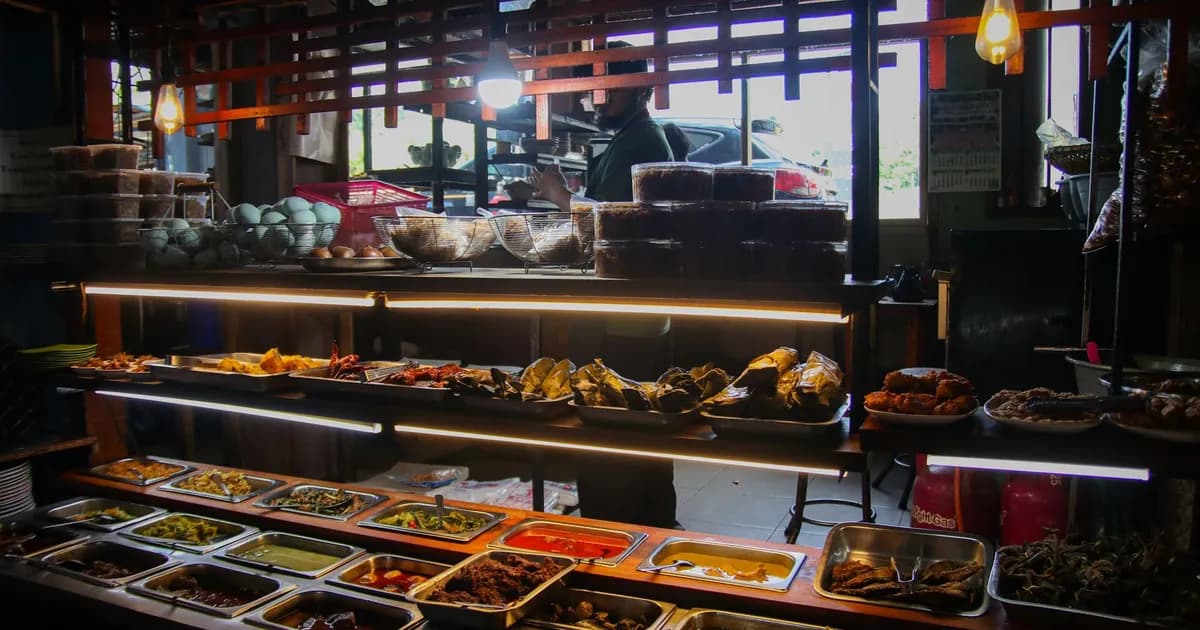
Stomach upsets are the most common travel complaint here by a wide margin, and the cause is more often a new bacterial environment than genuinely bad food. Busy warungs with high turnover are usually a safer bet than a quiet place with a large menu, freshly cooked and served hot beats anything sitting warm, and peeled fruit you open yourself is reliable. Carry oral rehydration salts and use them at the first sign of trouble, because dehydration in tropical heat is what turns a bad day into a hospital visit. Our guide to eating across the archipelago is worth reading for the same reason: knowing what a dish is makes it far easier to eat well and confidently.
A note on plastic. Indonesia has a serious waste problem, and a travelling habit of four plastic bottles a day makes it worse. A filter bottle or purification tablets solve the water question and the waste question at once, and refill stations are now widespread in Bali, Lombok, Java and the main dive towns.
Sun, Heat and the Slow Traveller's Advantage
Equatorial sun is stronger than most visitors expect and cloud cover does not help much. Heat exhaustion typically arrives on day two or three, after an ambitious first day, and looks like fatigue, headache and irritability rather than anything dramatic. Drink more than you think you need, add electrolytes if you are sweating heavily, and plan around the middle of the day rather than through it.
This is where slow travel genuinely helps. A schedule that moves every second day, in tropical heat, with early flights and long transfers, is a reliable way to arrive somewhere run down and susceptible. Staying put for four nights instead of two is a health decision as much as an aesthetic one.
The Medical System: Clinics, Cash and Where Care Actually Exists
Indonesia has excellent private hospitals in Jakarta, Denpasar, Surabaya and a handful of other cities, staffed by well-trained doctors and used routinely by expatriates. Outside those centres, provision thins quickly. A regional town will have a public hospital of variable quality. A small island may have a puskesmas, a community health centre, with limited hours, limited stock and no surgical capacity.

Two practical points follow. First, private hospitals almost always require payment up front, by card or cash, regardless of what your insurance says; you claim afterwards. Keep a card that works and understand your withdrawal limits, which our guide to money and connectivity in Indonesia sets out in detail. Second, pharmacies are widespread, with chains such as Kimia Farma, Guardian and Century in most towns, and pharmacists are generally helpful. Bring a copy of any prescription with the generic drug name, and check the legal status of anything you carry: Indonesia treats certain painkillers, sedatives, stimulants and all cannabis-derived products with extreme severity, and ignorance is not a defence.
Insurance and Evacuation
This is the paragraph most people skip and the one that matters most. Because specialist care is concentrated in a few cities, and because Indonesia is enormous, serious incidents in the east are frequently resolved by medical evacuation to Jakarta, Singapore or Australia. Those evacuations run into tens of thousands of dollars and are not something you can improvise.
Check three things in your policy before you travel. Does it cover medical evacuation and repatriation with a realistic ceiling. Does it cover the specific activities you plan, including diving to your qualified depth, trekking above 3,500 metres and riding a motorbike, which is very commonly excluded unless you hold the correct licence and an International Driving Permit. And does it cover you for the full length of your trip, since many annual policies cap single trips at 30 or 45 days.
Activity-Specific Risks Worth Naming
Diving in Indonesia often happens a long way from a recompression chamber. Chambers exist in a small number of locations including Denpasar and Manado, but a liveaboard in Raja Ampat or the Banda Sea can be many hours from one. Specialist diver insurance, conservative profiles and a strict no-fly interval after your last dive are not optional in that context.
Volcano trekking brings altitude into the picture. Rinjani tops out above 3,700 metres and Kerinci higher still, which is enough for altitude sickness to affect unacclimatised walkers, and both involve long days on unstable ground far from help. The permit and insurance regime on Rinjani has tightened considerably, and our guide to what Rinjani now requires of trekkers explains why the park itself now treats coverage as compulsory.
Road traffic remains the single largest cause of serious injury to visitors in Indonesia, well ahead of anything exotic. Helmets, an appropriate licence and a refusal to ride at night on unfamiliar roads will do more for your health here than any vaccine.
What to Carry
- Oral rehydration salts, more than you think, since they are the single most useful item in the bag.
- Repellent with a proven active ingredient, plus a lightweight long-sleeved layer.
- High-factor sunscreen, ideally reef-safer formulations if you will be snorkelling.
- A basic wound kit: antiseptic, sterile dressings and tape, because coral cuts and scooter grazes infect quickly in the tropics.
- Any personal medication in original packaging with a copy of the prescription.
- A written note of your blood type, allergies, insurance policy number and emergency assistance phone line, stored offline as well as on your phone.
What to Do Next
- Book a travel clinic appointment six to eight weeks out and take your actual itinerary, not just the country name.
- Read your insurance policy's exclusions for diving, trekking altitude, motorbikes and trip length, and upgrade before you leave rather than after an incident.
- Decide your malaria position based on your eastern itinerary specifically, in consultation with a clinician.
- Assemble a small medical kit around rehydration salts, wound care and repellent, and buy a filter bottle rather than a case of plastic.
- Save your insurer's emergency number, your policy number and the address of the nearest quality hospital on each leg, offline on your phone.
Frequently Asked Questions
Do I need vaccinations to enter Indonesia?
Entry requirements and health recommendations are different things. Indonesia does not generally require vaccination certificates from most travellers, aside from yellow fever documentation if you are arriving from a country where it is endemic. Recommended vaccinations, such as hepatitis A and typhoid, are about protecting you rather than satisfying immigration, and should be discussed with a travel clinic.
Is Bali safe to drink and eat in?
Bali's food scene is as safe as anywhere in Southeast Asia if you apply the usual rules: no tap water, hot freshly cooked food, busy places with turnover. Stomach upsets happen to visitors regardless of whether they eat in a warung or a resort, and are usually a matter of unfamiliar bacteria rather than poor hygiene.
Do I need malaria tablets for Bali?
Generally no. Risk in Bali, Jakarta and the main tourist areas of Java is considered negligible, and prophylaxis is not normally advised for those areas alone. If your trip continues to Papua, Maluku, rural Flores, Sumba, Timor or interior Kalimantan, the answer can change entirely, so take the full route to a clinician.
What should I do if a monkey bites or scratches me?
Treat it as urgent. Wash the wound with soap under running water for fifteen minutes, apply antiseptic, and get to a clinic or hospital the same day for assessment and, if indicated, post-exposure rabies treatment. Do not wait to see whether it looks infected, and do not assume a scratch is too minor to matter.
How good are hospitals in Indonesia?
Private hospitals in Jakarta, Denpasar and Surabaya are genuinely good and used by expatriate communities. Provision drops off sharply outside major cities, and remote islands may have only a basic community health centre. This gradient, rather than the quality of the best facilities, is what makes evacuation cover important.
Does my travel insurance cover riding a scooter?
Very often not. Many policies exclude motorbike injuries unless you hold a valid motorcycle licence at home and an International Driving Permit with a motorcycle endorsement, and some exclude them regardless. Given how many visitor injuries in Indonesia involve two wheels, this is the clause worth reading before anything else.