How to Travel Indonesia in the Rainy Season
The single most common mistake in planning an Indonesian trip is treating the rainy season as a season to be avoided. In an archipelago that stretches more than five thousand kilometres across the equator, there is no such thing as a nationwide wet season, and even where the rain is heaviest it usually arrives as a violent afternoon performance rather than a grey British week. The wet months are also the cheapest, the greenest and by some distance the quietest. What they demand is a different kind of planning: fewer moves, more slack in the schedule, and a clear-eyed read of which regions are genuinely difficult in December and which are perfectly fine.
When the Rain Actually Falls, Region by Region
For Bali, Java and the Lesser Sunda islands, including Lombok, Sumbawa, Flores and Sumba, the wet season runs roughly from November to March. December and January are typically the wettest and most humid months; November and March behave as milder transition months and are the best value in the calendar.
Sumatra is different. Its wet season is longer and less tidy, and in North Sumatra rainfall often peaks around November rather than December. Java is not uniform either: West Java is markedly wetter than East Java, so Bandung in January and Malang in January are not comparable propositions.
Maluku and much of Papua run on a partly reversed cycle, with the heaviest rain around the middle of the year rather than at the turn of it. This is why the Banda Islands and Raja Ampat appear in itineraries precisely when Bali is wettest. Sulawesi sits in between, with the north and the Toraja highlands wettest from November to March.
Temperatures barely move through any of this. Expect 27 to 32 degrees on the coast year-round, with humidity peaking in December and January and the highlands, Sembalun, Bromo, Toraja, Bukittinggi, genuinely cool at night in any month.
One request. Up to five tailored proposals.
Skip contacting agencies one by one — share your trip once and let up to five trusted Indonesia agencies come to you. Free, with no obligation.
Get my free quotesWhat a Rainy Day Really Looks Like
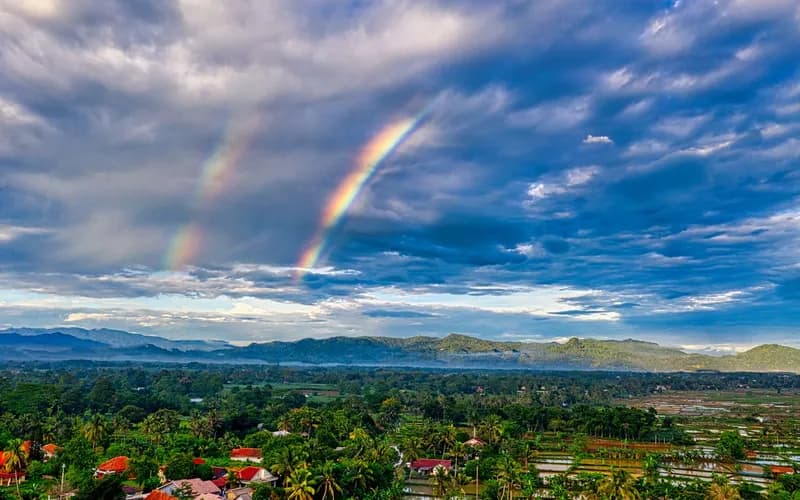
A typical wet-season day in Bali or Java starts clear. Cloud builds through late morning, the storm arrives somewhere between one and four in the afternoon, rains hard for one to three hours with thunder that rattles windows, and then clears into a washed evening. You lose the afternoon, not the day.
There are exceptions that matter. Two or three times a season a front sits over a region for thirty-six hours and rains continuously, roads flood in low-lying parts of Jakarta and coastal Java, and everything stops. Mountain areas get their rain earlier and longer, so highland afternoons cloud over from about midday from October onwards. And on exposed coasts the wind matters more than the rain: it is what cancels boats.
The practical adjustment is to invert your day. Do your walking, diving, market visits and transfers in the morning, eat a long lunch, and treat the late afternoon as reading time. This is not a compromise; it is how most Indonesians organise the day anyway.
The Islands That Stay Good in the Wet
Some regions barely notice the western wet season. Raja Ampat's calmest and most reliable window runs roughly from October to April, which is the exact inverse of Bali's. The Banda Islands and northern Maluku follow similar logic. If your trip falls in January and you want dependable sea conditions, the answer is to go east rather than to go anyway.
Within the west, the best wet-season bases are highland and interior rather than coastal. Yogyakarta works well: the temples, the workshops, the food and the batik studios are all rain-tolerant, and a downpour in a walled courtyard at Prambanan is not a loss. Lake Toba is at its most dramatic under cloud. The Minangkabau highlands around Bukittinggi are green and cool. Malang and the coffee country of East Java handle rain far better than the beach economies do.
What suffers is anything that depends on a boat, a sunrise or a long unsealed road. Komodo day trips get cancelled, Flores overland becomes slow and landslide-prone, and pre-dawn crater visits often deliver cloud. If you are building a route across several islands in the wet months, our guide to island-hopping Indonesia slowly explains how to leave enough slack between legs.
Get matched with up to 5 trusted Indonesia agencies
- Free
- No obligation
- Up to 5 agencies
Ferries, Fast Boats and Flight Delays
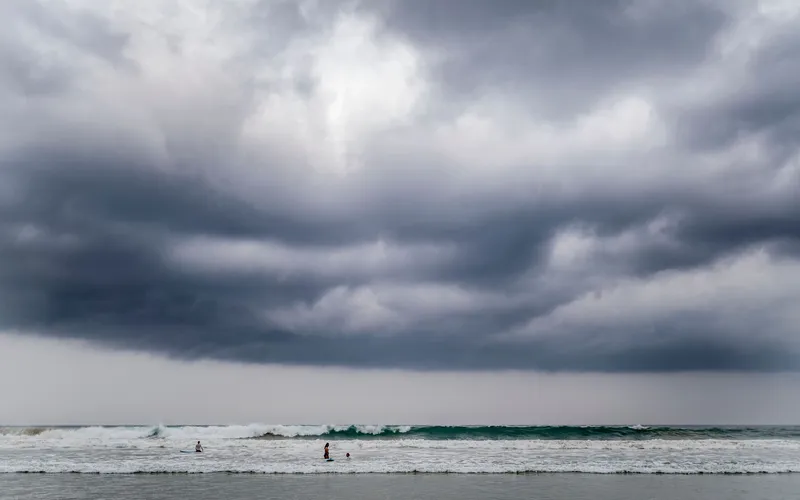
Sea transport is where the wet season actually costs you. Small fast boats between Bali, the Gilis, Lombok and Nusa Penida cancel in high swell, and the decision is often made at the dock an hour before departure. Large public ferries, being large, run in conditions that stop the fast boats, so in rough weather the slower option is the more reliable one. Longer inter-island crossings can be suspended for a day or two at a time by the maritime authorities.
Flights are less affected by rain than people expect but more affected by knock-on delay. An afternoon storm over a hub airport pushes everything back, and Indonesian domestic schedules have little recovery capacity late in the day. Book morning flights in the wet season and never connect with less than three hours, and never plan an international departure on the same day as a domestic flight.
The rule that saves trips is one buffer day for every flight or boat you must catch, and two before an international flight home. In the dry season this feels excessive. Between December and February it is the difference between an inconvenience and a lost flight.
Trekking and Volcanoes in the Wet Season
Volcano trekking in the wet months ranges from unwise to prohibited. Rinjani's official route normally closes for part of the wet season, and the closure exists because the descent gullies become dangerous, not because of comfort. Semeru closes too. Where trekking is permitted, wet-season conditions mean mud, leeches in forest sections, poor visibility at the top and a real risk of lightning above the treeline.
Bromo and Ijen stay open and are the realistic wet-season options, but the sunrise you came for will be cloud perhaps six days out of ten in January. The compensating pleasure is that the crowds thin out and the vegetation is spectacular. Walk in daylight instead of joining the pre-dawn convoy and you get a better day either way. Our piece on trekking Indonesia's volcanoes responsibly covers guides, closures and what to refuse.
Lowland walking, rice-terrace paths, karst valleys, waterfall trails, is often better in the wet. Water levels are high, the light is soft and the landscape is at full colour. Wear shoes you can wash.
Health, Mosquitoes and Wet-Season Ailments
Standing water means mosquitoes, and dengue transmission across Indonesia rises during and just after the rains. The Aedes mosquito bites during the day, particularly early morning and late afternoon, so evening-only repellent is not enough. Use repellent in daylight, cover ankles at dusk, and ask your guesthouse whether they fog or manage standing water.
Two other wet-season specifics. Leptospirosis risk rises where flood water is present, so do not wade through urban floodwater with open cuts. And fungal skin problems are the most common complaint among long-stay travellers in the wet months, caused by nothing more exotic than never quite drying out. Pack a spare pair of shoes and dry your feet properly.
Food hygiene changes little by season, but water-related stomach upsets are marginally more common after heavy rain when local supply is disrupted. Our guide to staying healthy in Indonesia covers water, insurance and what remote medical access actually looks like.
What It Saves You
The financial case for wet-season travel is strong and rarely stated plainly. Accommodation in Bali, Lombok and Flores commonly runs 30 to 50 per cent below July rates outside the Christmas and New Year fortnight, and the difference is largest in exactly the properties that are hardest to book in high season. Flights into Denpasar and Jakarta are cheaper from late January through March. Guides, drivers and dive operators have availability and will often negotiate.
You also get the thing money cannot buy in August: room. Borobudur at eight in the morning in February is a different building from Borobudur in July. Ubud's rice paths are walkable. Restaurants have tables.
The exception is the Christmas and New Year period, which is peak domestic and Australian holiday season and is both the wettest and most expensive fortnight of the year in Bali. Avoid it in both directions. For the full picture on what a trip costs by month, see our Indonesia budget guide.
The Calendar Traps
Three dates interact badly with wet-season planning. Nyepi, Bali's day of silence, usually falls in March, and the island shuts completely for twenty-four hours including the airport. Ramadan moves earlier each year and currently sits in the first months of the year, changing opening hours, ferry crowds and the atmosphere of Muslim-majority islands. And the Christmas to New Year window compresses everything.
None of these are reasons not to travel. Nyepi is one of the most remarkable things in Indonesia if you plan to be still for it. But each one needs to be on your calendar before you book, and our guide to timing a trip around Ramadan, Nyepi and the religious calendar sets out the dates and the practical effects.
What to Pack and What to Skip
Bring a light rain shell rather than an umbrella, because the rain arrives sideways and umbrellas die in the first squall. Bring quick-dry clothing, two pairs of footwear so one can always be drying, dry bags for electronics, and a small torch for the power cuts that accompany serious storms. A sarong dries faster than a towel and doubles as everything else.
Skip the heavy waterproof trousers, the poncho, and anything cotton that takes two days to dry. Skip also the instinct to book everything in advance: wet-season travel works better when you can move a night or reverse a leg on two days' notice, and outside the New Year fortnight you will find rooms.
What to Do Next
- Decide which half of the archipelago your dates belong to: west and south for May to September, east and Maluku for the western wet months.
- Build your route around two or three bases rather than six, and give each one at least four nights.
- Insert one buffer day per boat or flight, and two before your flight home.
- Book morning transport wherever you have the choice, and refuse afternoon domestic connections.
- Check Nyepi, Ramadan and the New Year fortnight against your window before paying for anything.
- Choose a highland or interior base for the wettest weeks rather than a beach, and accept the trade rather than fighting it.
Frequently Asked Questions
Is it a bad idea to visit Bali in the rainy season?
No, provided you expect to lose most afternoons and you avoid the Christmas and New Year fortnight. Rain in Bali typically arrives as a hard afternoon storm rather than all-day drizzle, prices are substantially lower, and the island is far less crowded. Beach and boat days are the activities most affected.
Which months are the wettest in Indonesia?
For Bali, Java and the Lesser Sunda islands, December and January. North Sumatra often peaks around November. Maluku and much of Papua are on a partly reversed cycle and are wettest around the middle of the year, which is why Raja Ampat and the Banda Islands are good choices in January.
Do ferries and fast boats still run in the wet season?
Large public ferries usually do; small fast boats cancel regularly in high swell, often with an hour's notice. In rough weather the slow ferry is the more reliable option. Never make a fast boat the last leg before an international flight.
Can I still climb volcanoes between November and March?
Rinjani's official route normally closes for part of the wet season, as does Semeru. Bromo and Ijen stay open but frequently give you cloud instead of a sunrise. Lowland and forest walking is often better in the wet than in the dry.
Is dengue a serious risk in the rainy season?
Transmission rises during and after the rains, so it deserves practical respect rather than alarm. The mosquito that carries it bites in daylight, so use repellent through the day, not just in the evening, and prefer accommodation that manages standing water. Check your travel insurance covers hospitalisation.
How much cheaper is the wet season?
Accommodation commonly runs 30 to 50 per cent below peak rates outside the New Year fortnight, with the biggest discounts on the properties that sell out in July and August. Flights are cheapest from late January to March. Guides and drivers have availability and rates soften.
What is the best wet-season itinerary in Indonesia?
If your dates are fixed in January or February, a strong shape is Yogyakarta and Central Java for culture, East Java for highlands and coffee, and then either Raja Ampat or the Banda Islands for reliable sea conditions. It is a slower, more interior trip than a dry-season route, and it is arguably the better one.