Champasak and Wat Phou: Southern Laos at Its Slowest
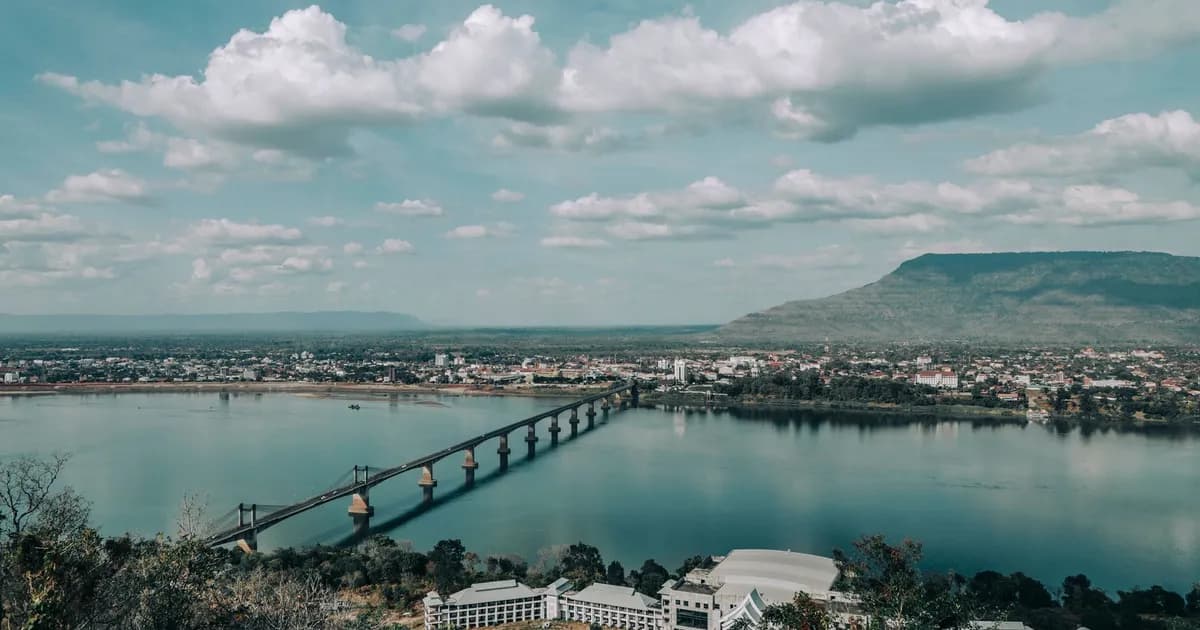
In the deep south of Laos, on a sleepy bend of the Mekong, sits a town that was once the seat of a kingdom and is now one of the quietest corners in the country. Champasak is a single riverside street of faded French villas and Lao shophouses, and a short way beyond it rises Wat Phou, a Khmer temple older than Angkor, climbing a forested hillside towards a sacred mountain. Together they make one of the most rewarding and least hurried destinations in Laos, a place where centuries of history sit lightly on a landscape that seems in no rush at all.
This is slow travel in its most natural form. There is little to "do" in Champasak in the busy sense, and that is precisely the appeal. You come to walk an ancient temple at dawn, to watch the Mekong slide past from a wooden balcony, and to let the pace of the river set the pace of your days.
Where Champasak sits, and why it is overlooked
Champasak lies on the west bank of the Mekong in the far southwest of Laos, not far from the borders with Thailand and Cambodia. The town today is modest, just a few roads stretching along the riverfront, but it carries real history: it was the seat of the independent Kingdom of Champasak, which flourished from the early eighteenth century until the early twentieth, and later a centre of French colonial administration for the region.
Most travellers who reach the far south come for the Bolaven Plateau's coffee or the Four Thousand Islands, and pass Champasak by. That is its good fortune. Where those destinations have their own gentle buzz, Champasak remains genuinely sleepy, a place the tour groups largely skip. For travellers piecing together the quieter corners of the south, our guide to the Bolaven Plateau's coffee and waterfalls covers the natural companion to a Champasak stay.
One request. Up to five tailored proposals.
Skip contacting agencies one by one — share your trip once and let up to five trusted Laos agencies come to you. Free, with no obligation.
Get my free quotesWat Phou: the mountain temple before Angkor
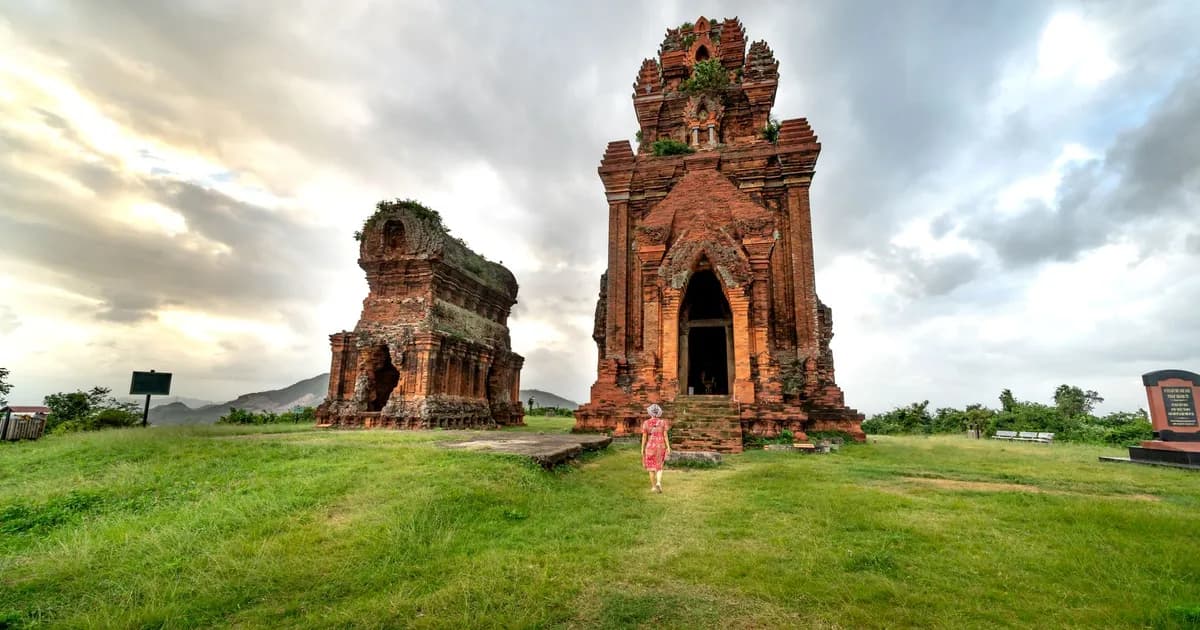
The reason to make the journey is Wat Phou, one of the oldest and most atmospheric archaeological sites in Laos and a UNESCO World Heritage Site. This is a ruined Khmer Hindu temple complex, built by the same civilisation that raised Angkor, but older: while the surviving buildings date mostly from the eleventh to thirteenth centuries, the site's sacred history reaches back much further, and it predates the great temples of Cambodia. To stand here is to see the roots from which Angkor grew.
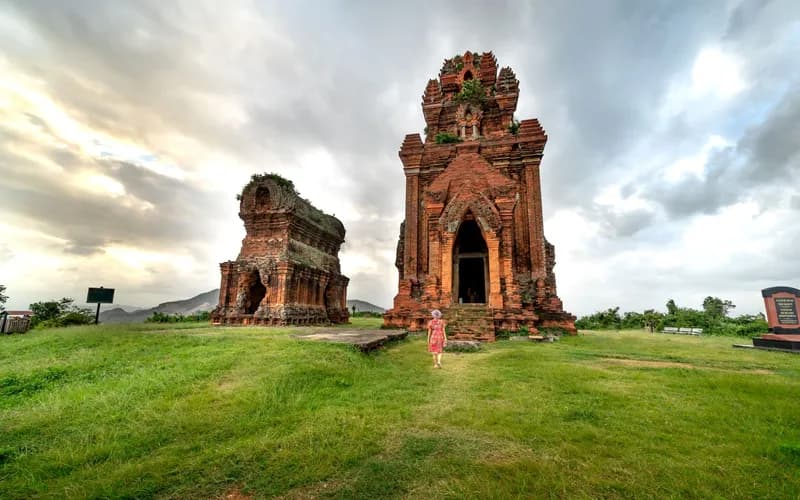
What makes Wat Phou unforgettable is its setting. Rather than sitting on a flat plain, it climbs a hillside in a series of terraces towards the foot of Phou Khao, the mountain whose natural rock formation resembles a linga, the symbol sacred to Shiva, which is almost certainly why the site was chosen. You walk up past ruined palaces and along a causeway once lined with sandstone posts, climbing steep, worn stairs beneath frangipani trees to the upper sanctuary, where a sacred spring still flows from the cliff. The view back down over the Mekong plain from the top is one of the great quiet rewards in Laos.
The sacred landscape and the annual festival
Wat Phou is not a dead monument but a living sacred place. Buddhism long ago layered itself over the site's Hindu origins, and it remains an active pilgrimage destination for Lao people, who come to make offerings at the upper shrine. The whole landscape, the mountain, the spring, the ancient causeway, is understood as sacred, and visiting with that in mind deepens the experience considerably.
The site comes most alive during the annual Wat Phou Festival, held around the full moon of the third lunar month, usually in February, when pilgrims gather from across the region for days of ceremonies, music and celebration. It is a remarkable time to visit if your dates align, though the town is busier and accommodation tighter. At any other time of year, the temple is serene and uncrowded, and an early-morning visit before the heat and the few tour vans arrive is the closest thing to having a wonder of the ancient world to yourself.
Get matched with up to 5 trusted Laos agencies
- Free
- No obligation
- Up to 5 agencies
Champasak town: faded grandeur on the Mekong
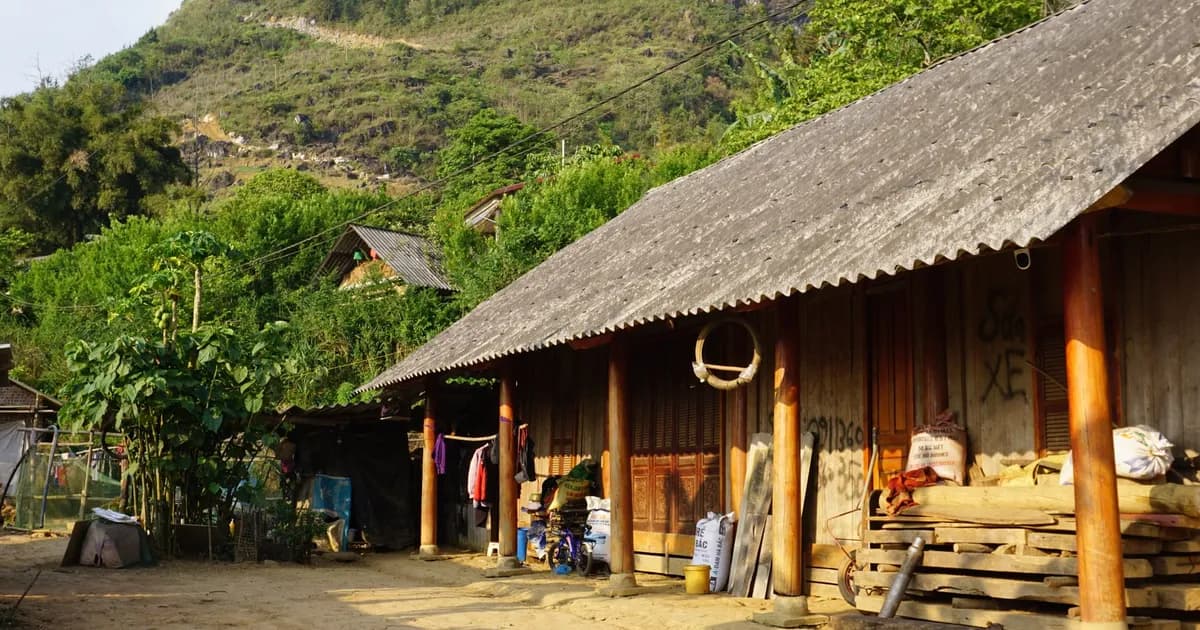
Back down by the river, Champasak town rewards the same unhurried attention. Its single main street, running along the Mekong, is lined with faded French-era buildings and traditional Lao shophouses, many still in use, that give the town a quietly photogenic, slightly melancholy charm. This was once the administrative heart of the region, and the bones of that grander past still show through the sleepy present.
The riverfront is the town's living room. In the early morning a small market sells fresh fish, sticky rice and local coffee; through the day, boats work the water and life moves slowly in the shade. There is little to do beyond wander, eat, and watch the river, which is exactly the point. Champasak is a place to stay a night or two longer than you planned, and to let its slowness recalibrate your own. It is the kind of hidden corner our guide to off-the-beaten-path Laos is written to celebrate.
Don Daeng and the slow river
For an even deeper stillness, cross to Don Daeng, the island in the Mekong opposite Champasak. Largely rural, ringed by a sandy path and dotted with traditional villages, it offers a glimpse of Lao river life almost untouched by tourism, along with a few places to stay for those who want to fall fully off the grid for a night. Cycling its quiet lanes, past rice fields and stilt houses, is one of the gentlest pleasures the south has to offer.
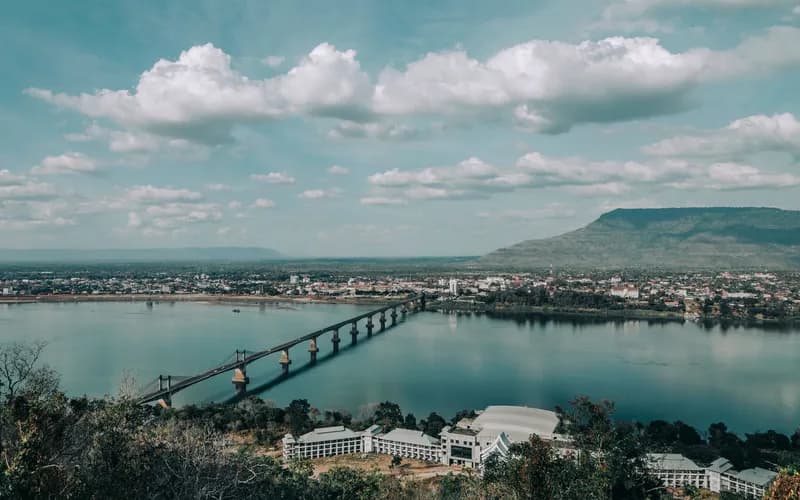
The Mekong itself is the thread that ties the whole region together. From Champasak the river runs south towards the Four Thousand Islands, where it braids into a maze of channels and islets; our guide to Si Phan Don, the Four Thousand Islands, covers that dreamy stretch, which pairs naturally with Champasak into a slow southern river journey. Taken together, they make the case that the deep south is where Laos is at its most unhurried.
Getting there, and when to go
Champasak is reached via Pakse, the main city of the south, which has an airport with domestic and some regional connections and sits about an hour and a half away by road. From Pakse, a short journey by road, and in places a river ferry, brings you to Champasak town and the temple. The town's small scale means bicycles and tuk-tuks are all you need once you arrive.
On timing, the cool dry season from November to February is the most comfortable, with pleasant temperatures for climbing to the upper sanctuary and the Wat Phou Festival falling at its end. The hot season that follows can make the temple climb punishing by midday, so early starts are wise. The green season brings rain and a lush landscape but heavier afternoon downpours. Whenever you come, plan your temple visit for first light, both for the cool and for the emptiness.
Fitting Champasak into the south
Champasak is best experienced not as a standalone stop but as part of a slow loop through southern Laos, a region that rewards the traveller willing to linger. Paired with the coffee highlands of the Bolaven Plateau and the languid islands of Si Phan Don, it forms a southern circuit that sees a fraction of the visitors of the Luang Prabang route to the north, and offers a gentler, more rural face of the country.
Give the south a week if you can, and Champasak its rightful two or three unhurried days within that. It is not a place to rush through on the way to somewhere else; it is a place to slow down and let southern Laos work on you, and it repays every extra hour you are willing to give it. To weave it into a wider southern itinerary, our slow travellers guide to Laos can help you shape the route, and a specialist on our Laos travel agencies page can handle the logistics of the deep south.
What to Do Next
- Route via Pakse, the gateway city, and continue to Champasak by road and river ferry.
- Visit Wat Phou at first light, allowing time to climb the terraces to the upper sanctuary and the sacred spring.
- Spend a night or two in Champasak town, exploring the colonial riverfront at a walking pace.
- Cross to Don Daeng island for an even quieter day of cycling and river life.
- Pair Champasak with the Bolaven Plateau and Si Phan Don for a slow southern circuit, and time a February visit around the Wat Phou Festival if you can.
Frequently Asked Questions
What is Wat Phou?
Wat Phou is a ruined Khmer Hindu temple complex in southern Laos and a UNESCO World Heritage Site. Built by the same civilisation as Angkor but older, it climbs a hillside in terraces towards a sacred mountain, with the surviving structures dating mostly from the eleventh to thirteenth centuries and its sacred history reaching back further still.
How do I get to Champasak?
Champasak is reached via Pakse, the main southern city, which has an airport and road connections. From Pakse it is about an hour and a half by road, with a river ferry in places, to Champasak town and the temple. Once there, bicycles and tuk-tuks are all you need.
When is the best time to visit Champasak and Wat Phou?
The cool dry season from November to February is most comfortable, with the Wat Phou Festival falling around February's full moon. The hot season makes the temple climb punishing by midday, so early starts help, and the green season is lush but wet. Visit the temple at first light whenever you go.
What is the Wat Phou Festival?
The Wat Phou Festival is an annual religious celebration held around the full moon of the third lunar month, usually in February, drawing pilgrims from across the region for ceremonies, music and festivities. It is a vivid time to visit, though the town is busier and rooms are scarcer.
Is Champasak worth visiting?
Very much so, if you value history and quiet over sights and activity. Champasak offers a pre-Angkor temple, a sleepy colonial river town and easy access to island and river life, all at a genuinely slow pace and with few crowds. It is one of southern Laos's highlights.
How many days should I spend in Champasak?
Two or three days is ideal: one for Wat Phou, one to explore the town and riverfront, and, if you have time, one for Don Daeng island. It pairs naturally with the Bolaven Plateau and Si Phan Don for a longer southern loop.