
Vientiane, Slowly: Three Days in the Capital of Laos
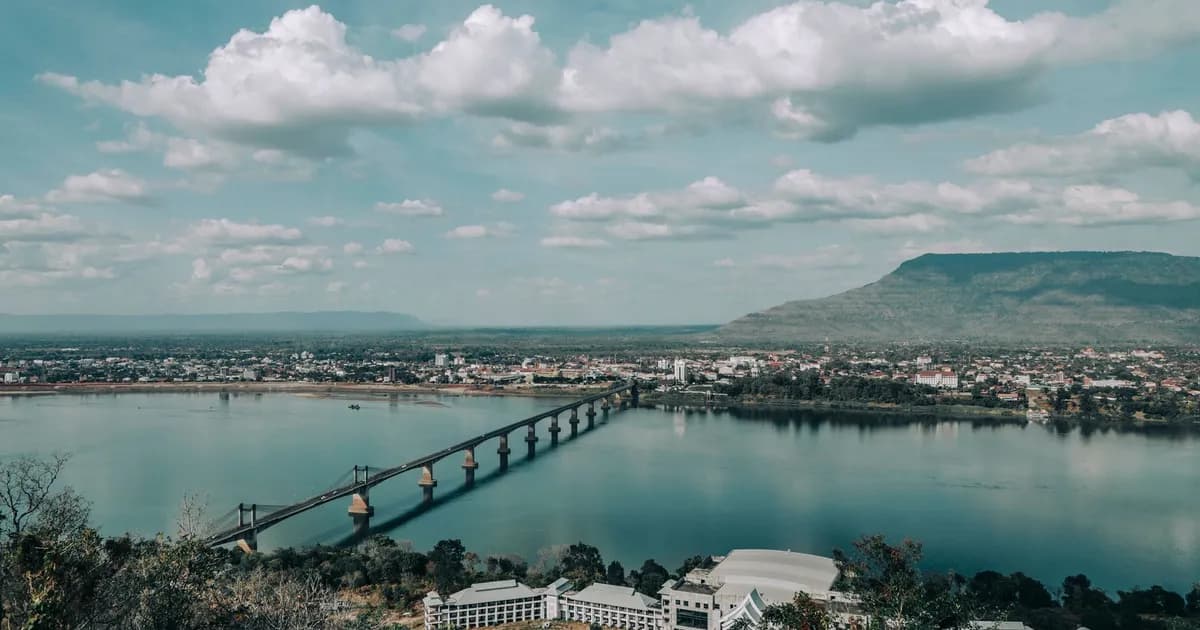
Vientiane is the capital that most travellers skip, and that is precisely why it rewards you. There are no queues, no touts working the pavement, no single monument you are obliged to photograph before lunch. What there is instead is a low-rise city on a wide bend of the Mekong where the working day ends early, where the riverfront fills with families and aerobics classes at six, and where a gilded stupa the size of a small hill stands at the end of a nearly empty boulevard. Give Vientiane three days rather than the standard rushed overnight, and it stops being a transit stop and starts being the gentlest possible introduction to Laos.
Why Vientiane rewards a slower visit
Most itineraries treat Vientiane as a hinge: a night between an international flight and the train north, or between the Thai border and Luang Prabang. That logic is understandable, and it is also why so many people come away saying there is nothing to do here. Vientiane does not hand you a headline sight. It gives up its character in small increments, and only if you stay long enough to notice the rhythm.
The city is home to somewhere under a million people in its wider capital area, yet the centre still behaves like a provincial town. Shops shutter in the early afternoon heat. Monks collect alms at dawn along Setthathirath Road with none of the audience that has grown up around the ceremony elsewhere. By eight in the evening most restaurants are winding down. If you are travelling the country at a slow-travel pace, this is not a shortcoming; it is the point. Vientiane is where you recalibrate your expectations before heading into the provinces, and it pairs naturally with the seasonal thinking set out in our slow traveller's guide to where to go in Laos and when.
An honest caveat: Vientiane is not beautiful in the way Luang Prabang is beautiful. Lane Xang Avenue carries real traffic, construction dust is a fact of life, and some of the riverfront development is bluntly ugly. What the city offers is texture rather than spectacle. Accept that trade and you will enjoy it far more.
One request. Up to five tailored proposals.
Skip contacting agencies one by one — share your trip once and let up to five trusted Laos agencies come to you. Free, with no obligation.
Get my free quotesGetting your bearings on foot
The useful part of Vientiane is small. A rough rectangle of about two kilometres holds almost everything you will want: the Mekong embankment and Chao Anouvong Park along the water, the old quarter around Nam Phou and Setthathirath Road with its cluster of temples, and Lane Xang Avenue running inland to the Patuxai monument. Pha That Luang sits roughly four kilometres further out, which is a short tuk-tuk ride or a pleasant early-morning bicycle run.
Walking works here in a way it does not in Bangkok or Hanoi, but only at the right hours. Between roughly eleven and three the heat is genuinely punishing for most of the year. Plan your temple mornings for seven to ten, take the middle of the day slowly with coffee and a book, and come back out at five when the light softens and the embankment comes alive.
- Bicycles rent for around 20,000 to 40,000 kip a day from guesthouses in the old quarter.
- Ride-hailing apps operate in the capital and remove the need to negotiate tuk-tuk fares.
- The riverfront promenade is the best orientation walk in the city; do it on your first evening.
Pha That Luang and the temples worth a morning
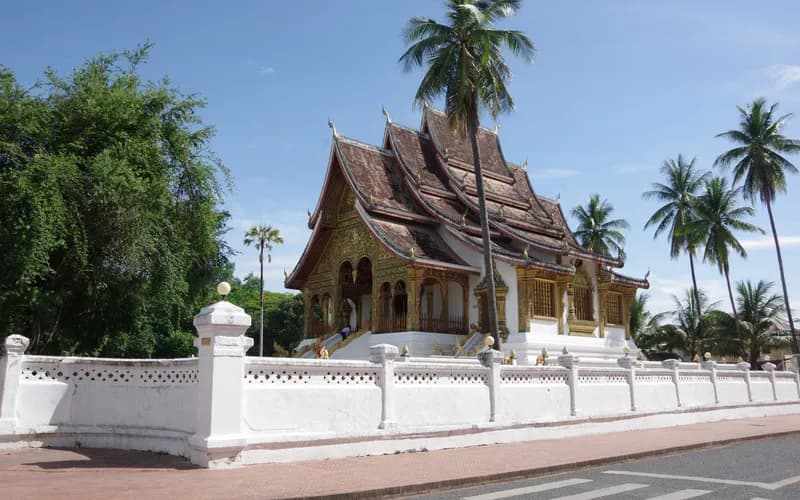
Pha That Luang is the national symbol of Laos, and it is more striking in person than photographs suggest, mostly because of the emptiness around it. The great gilded stupa stands on a raised terrace at the end of a ceremonial avenue, and on an ordinary weekday you may share it with a dozen people. Entry is a nominal fee of around 5,000 kip, and the site typically opens from eight until noon and again from one until four, so avoid arriving at the lunchtime closure.
If you are in Laos in November, the timing changes everything. Boun That Luang, the capital's biggest religious festival, centres on the stupa in late November, with the main day falling on 24 November in 2026 and celebrations spreading across roughly a week. The esplanade fills with pilgrims from every province, thousands of monks, a sprawling fair and candlelit processions around the spire. It is one of the few times Vientiane feels like a capital city.
Two temples in the old quarter deserve your time. Wat Si Saket, completed in 1818, is the oldest surviving temple in Vientiane, spared when the city was sacked in 1828; its cloister walls hold thousands of small Buddha images in niches, and the atmosphere in the early morning is extraordinary. Directly opposite, Haw Phra Kaew was once the royal temple that housed the Emerald Buddha before it was taken to Bangkok; today it functions as a museum of Lao religious art. Both ask a small entrance fee, and both expect covered shoulders and knees.
Get matched with up to 5 trusted Laos agencies
- Free
- No obligation
- Up to 5 agencies
COPE and the harder history
The COPE Visitor Centre, on the grounds of the National Rehabilitation Centre, is the most important thing you will see in Vientiane, and it is free. Between 1964 and 1973 more than two million tonnes of ordnance were dropped on Laos, a large proportion of it cluster munitions, and a significant share failed to detonate on impact. The centre explains, calmly and without melodrama, what that means for farmers and children six decades later, and how prosthetic limbs are made and fitted for survivors.
Allow at least ninety minutes. There is a small cafe and a shop whose proceeds support the programme, and a donation here does concrete good. The centre also gives essential context for travel elsewhere in the country, which we cover in detail in our practical guide to unexploded ordnance safety for travellers in Laos. Read both before you go walking off marked paths in Xieng Khouang or Houaphanh.
Eating in Vientiane
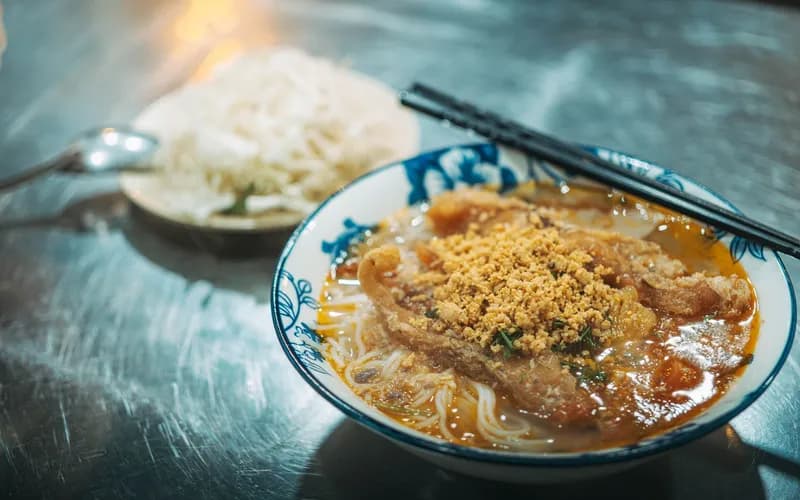
Vientiane eats early and eats well, and the city's food is a good deal more varied than the country's reputation suggests. Breakfast is the meal to get right. Look for khao piak sen, a soft rice-flour noodle soup served with pork or chicken and a plate of herbs, or foe, the Lao version of rice-noodle soup, eaten standing up at stalls that open at six and sell out by nine. The French colonial inheritance survives most deliciously in khao jee pate, a baguette split and filled with pate, pickled vegetables and chilli sauce.
Talat Sao, the morning market near the bus station, is more shopping mall than market these days, but the food stalls at its edges remain genuine. In the evening, the riverside night market sets up along the embankment; the clothing stalls are forgettable, the grilled fish and sticky rice are not. For coffee, order Lao beans from the Bolaven Plateau, which is a good reason to plan a trip south to the coffee country and waterfalls of the Bolaven Plateau later in your route.
A day out: Buddha Park and the road along the Mekong
Buddha Park, or Xieng Khuan, sits about 25 kilometres southeast of the city near the Friendship Bridge. Begun in 1958 by the mystic Bunleua Sulilat, it is a field of more than two hundred concrete sculptures mixing Buddhist and Hindu iconography, including a reclining Buddha some forty metres long and a pumpkin-shaped structure you climb through to a rooftop view.
It is, frankly, closer to folk art than to a masterpiece, and it can feel crowded with local weekend visitors. Go early on a weekday and it is atmospheric and strange in the best way. The park generally opens from eight until four with last entry around half past three, entry is a modest fee, and city bus 14 from the Talat Sao terminal runs there for a few thousand kip, taking around an hour. A round-trip tuk-tuk or ride-hail will cost considerably more but saves half a day.
Where to stay, and how long to give it
Three nights is the sweet spot: one to arrive and walk the river, one for temples and COPE, one for Buddha Park and a slow afternoon. Two nights works if you are disciplined. One night is a waste of a good city.
Stay in the old quarter between Setthathirath Road and the river if you want to walk everywhere. Simple, clean guesthouses run roughly 20 to 35 US dollars a night, while restored colonial-era boutique hotels sit somewhere between 60 and 120. Booking a night or two ahead is sensible but rarely urgent outside the November festival week. Pack for a hot, humid city with a conservative dress code, which is covered in our Laos packing list for slow travellers.
Getting in and out: trains, planes and the Friendship Bridge
Vientiane now has two railway stations, and confusing them is the single most common logistical mistake travellers make here. Vientiane Capital station, on the Laos-China Railway to Luang Prabang, Luang Namtha and Boten, is around 13 kilometres north of the centre and needs a taxi or shuttle. Khamsavath station, roughly four kilometres from the centre near Pha That Luang, serves the metre-gauge line across the Friendship Bridge towards Nong Khai and Bangkok. Allow an hour for either transfer, and buy railway tickets in advance during festivals and Lao New Year. Our step-by-step guide to riding the Laos-China Railway covers booking windows, classes and luggage rules.
Wattay International Airport is barely four kilometres from the centre, which is one of Vientiane's quiet luxuries. Overland, the first Thai-Lao Friendship Bridge connects to Nong Khai with frequent shuttle buses and a straightforward immigration process.
What to Do Next
- Block three nights in Vientiane at the start or end of your route, not as a stopover squeezed between two long travel days.
- Check your dates against Boun That Luang in late November 2026 and either aim for it deliberately or avoid the accommodation crunch around it.
- Book accommodation in the old quarter, within walking distance of the river, so you can move on foot at dawn and dusk.
- Confirm which railway station your onward ticket departs from, and build an hour of transfer time into the plan.
- Put COPE in the morning of your second day, when you have the energy to give it proper attention.
- Sketch the rest of your route with our plan your journey tool for Laos before you commit to internal transport.
Frequently Asked Questions
Is Vientiane worth visiting, or should I skip straight to Luang Prabang?
It is worth visiting if you adjust your expectations. Vientiane has no single knockout sight, but it has an unhurried, genuinely lived-in atmosphere that few Southeast Asian capitals retain, plus the country's most important museum in COPE. Travellers who skip it usually do so because they gave it one exhausted night.
How many days do I need in Vientiane?
Three nights is ideal and two is workable. That gives you one slow arrival evening, a full temple and museum day, and a half day for Buddha Park or the market, without needing to rush any of it.
Is Vientiane safe for solo and first-time travellers?
Yes, by regional standards it is a calm and low-pressure city, and violent crime against visitors is rare. The usual caution applies to bag snatching on quiet streets at night, to road traffic, and to swimming in the Mekong, where currents are strong and deceptive.
What is the best time of year to visit Vientiane?
November to February is the most comfortable window, with dry days and cooler evenings, and it coincides with the That Luang festival. March and April are very hot and often hazy from agricultural burning. The May to October rains bring short heavy downpours rather than all-day washouts.
Do I need to dress conservatively in Vientiane?
For temples, yes. Shoulders and knees should be covered for all visitors, and shoes come off before entering a prayer hall. Around town, normal light clothing is fine, though very short shorts and vest tops will mark you out as a newcomer.
How do I get from Vientiane to Luang Prabang?
The Laos-China Railway is the fastest and most comfortable option, running from Vientiane Capital station in roughly two hours. Buses take most of a day on a winding mountain road, and there are short domestic flights. Book rail tickets a few days ahead in high season.
Is Buddha Park worth the trip out of the city?
If you have three days, yes. It is odd, photogenic and cheap to reach on the public bus, and the ride out along the Mekong is part of the experience. If you only have one full day in Vientiane, prioritise COPE and the old quarter temples instead.