

Most people who travel Laos never go east of Phonsavan. The road bends north-east into Houaphanh province, climbs above a thousand metres, and the tour minibuses simply stop appearing. What waits at the end of it is one of the strangest and most affecting places in Southeast Asia: a limestone valley where an entire government, an army and a civilian population lived underground for nearly a decade while bombs fell overhead. Vieng Xai is not a ruin and not a theme park. It is a working town built around its caves, an hour from a provincial capital, Sam Neua, that has almost no tourist face at all. For travellers who measure a trip by depth rather than distance, Houaphanh is the most rewarding corner of Laos still left uncrowded.
Where Houaphanh Actually Is
Houaphanh occupies the far north-east of Laos, wedged against the Vietnamese border, with Xieng Khouang to the south-west and Luang Prabang province to the west. Sam Neua, also spelled Xam Neua, is the provincial capital: a compact town in a bowl of hills, sitting high enough that mornings in January are genuinely cold. Vieng Xai lies about 30 kilometres east, roughly an hour of winding, scenic driving through karst.
This is not a place you pass through on the way to somewhere else. Houaphanh is a cul-de-sac in every practical sense. The overland routes in are long, the flights are unreliable, and there is no onward hop to a beach. That geography is exactly why the province has kept its texture. Nobody arrives here by accident, and almost nobody arrives in a hurry.
If you have already spent time in the karst country further west, the landscape will feel familiar and the atmosphere will not. Compared with the villages of the Nam Ou valley around Nong Khiaw, Houaphanh receives a fraction of the visitors, and the difference shows in everything from guesthouse standards to how people react when you walk into a market.
One request. Up to five tailored proposals.
Skip contacting agencies one by one — share your trip once and let up to five trusted Laos agencies come to you. Free, with no obligation.
Get my free quotesThe Cave City: What You Actually See at Vieng Xai
Between 1964 and 1973, Laos was bombed on a scale that is still difficult to state plainly. In Houaphanh, the response was to move life into the limestone. The Pathet Lao leadership, its administration, a hospital, a bakery, a printing press, schools and a theatre were all installed inside a network of caves in the Vieng Xai valley. Estimates of how many people sheltered there run to around twenty thousand at the peak, spread across the valley and the surrounding hills.
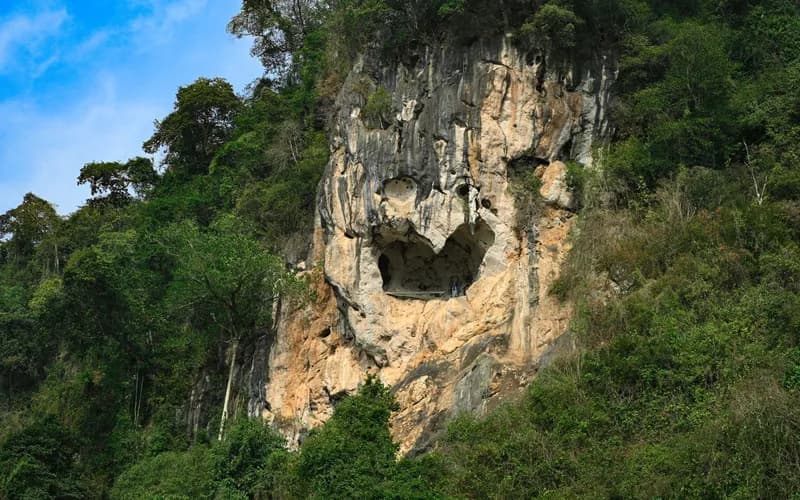
Visits start at the visitor centre in Vieng Xai, which is generally open in the morning and runs guided tours twice a day, at 9am and 1pm. The standard tour lasts about three hours and costs 60,000 kip per foreign visitor, which includes an audio guide and a map. Tours outside those two fixed times can usually be arranged for an additional charge per group. The audio guide runs to eighteen chapters and is available in English, French and Lao, and it is the reason the visit works: rather than a guide reciting dates, you hear testimony, ambient sound and reconstructed detail as you move through each cave.
The caves are spread across the valley floor rather than clustered together, so you either walk a fair distance or hire a bicycle at the visitor centre. Take the bicycle. Cycling between the residence caves through rice fields, with the karst walls rising on both sides, is a large part of what makes Vieng Xai memorable, and it turns a three-hour tour into an unhurried half day.
Inside, the caves are cool, damp and mostly bare. There are meeting rooms with original furniture, emergency chambers sealed against chemical attack, and open-air houses built at the cave mouths after the ceasefire, when it became safe to live above ground again. The effect is cumulative rather than dramatic. You do not leave impressed; you leave quiet.
Sam Neua: A Provincial Capital Without a Tourist Face
Most travellers use Sam Neua as a base, because Vieng Xai has very limited accommodation and thin dining options. Sam Neua is not beautiful in the way Luang Prabang is beautiful. It is a functional Lao town of concrete shophouses, a river, a covered market and a monument or two, and its appeal is that it has not been arranged for you.
The morning market is the best hour of the day. Highland communities come down to trade: Tai Daeng, Tai Dam, Hmong and Khmu among them, carrying tall woven bamboo baskets, selling foraged forest greens, river fish, bamboo shoots and produce that crosses in from the Vietnamese border trade. Go early, buy something, and resist the urge to photograph everything before you have spoken to anyone.
Evenings are short. The town is at altitude, restaurants close early, and there is very little nightlife. This is a place to eat noodles at six, walk the riverbank at seven and read. If that sounds like a shortcoming, Houaphanh may not be your province. If it sounds like relief, book three nights rather than two.
Get matched with up to 5 trusted Laos agencies
- Free
- No obligation
- Up to 5 agencies
Hintang: Standing Stones Older Than the Jars
Xieng Khouang has the Plain of Jars. Houaphanh has something older and considerably stranger, and almost nobody visits it. The Hintang archaeological park, in Houameuang district south-west of Sam Neua, holds more than 1,500 upright stone pillars and over 150 large stone discs, scattered along forested ridgelines. Current dating places them somewhere in the range of 2,500 to 3,000 years old, which puts them in the Iron Age and comfortably ahead of the jars.
In 2026 the standing stones were formally recognised as national heritage in Laos, a step that should eventually bring better signage, access and protection. For now the site remains raw: dirt tracks, no crowds, thin interpretation and occasional survey work by archaeologists who are still arguing about what the pillars marked. The drive is slow and the road can be rough after rain, so treat it as a full-day excursion with a hired driver rather than a casual detour.
The comparison with the jars is worth making on the ground. If you have already walked the sites around Phonsavan, read our piece on the Plain of Jars and Xieng Khouang before you come, then judge Hintang against it. Two megalithic cultures, two provinces, one long unanswered question.
Weaving, Markets and the Tai Highland Cultures
Houaphanh is the source of a great deal of what is sold as Lao textile elsewhere in the country. Tai Daeng and Tai Dam weavers here produce supplementary-weft silk and cotton work of real technical difficulty, with motifs that carry meaning rather than decoration. Much of the finest material leaves the province for shops in Luang Prabang and Vientiane at several times the price.
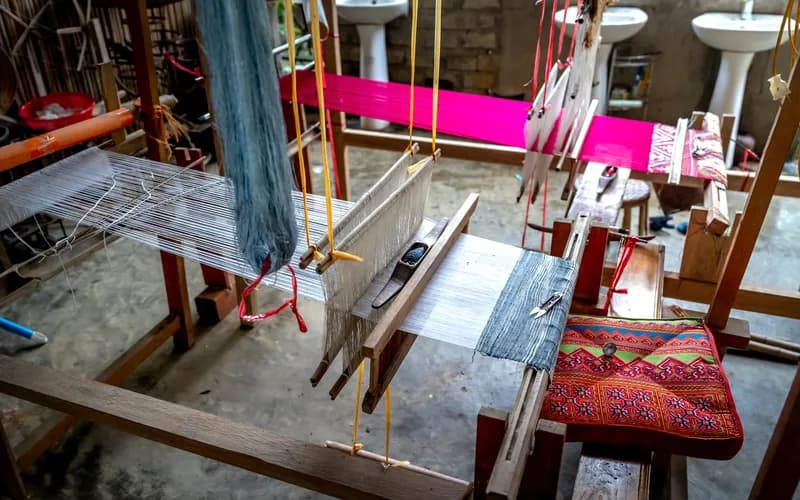
Buying at the source is possible and worth doing carefully. Ask to see the loom. Ask which dyes were used. Handwoven silk with natural dyes costs meaningfully more than chemically dyed cotton, and a weaver who can explain the difference deserves to be paid for it. Expect to negotiate gently and expect the honest price to be higher than the market stall down the road, because it should be.
The province also holds the eastern half of Nam Et-Phou Louey National Park, one of the strongest community-conservation projects in the country. The park is best known for the Nam Nern Night Safari, a boat-based wildlife-viewing trip run with local villages where households earn more when guests see more animals. Laos took several ASEAN community-based tourism awards in early 2026, and the wildlife-viewing work at Nam Et-Phou Louey was among the operations recognised. It is a long detour and a limited season, but it is the clearest example in Laos of tourism money reaching people who would otherwise hunt.
Getting There, and How Long It Really Takes
There are three realistic ways into Houaphanh, and none of them are quick.
- By road from Phonsavan. The most common route, and the one most travellers use, taking most of a day on a mountain road. It links naturally to a Xieng Khouang stop.
- By road from Luang Prabang or Vientiane. The direct bus from Vientiane runs close to twenty hours via Vang Vieng and Phonsavan. It is a genuine endurance event and a night-bus seat is not a bed.
- By air to Sam Neua. Lao Airlines has served the Sam Neua airfield from Vientiane, but the route is chronically irregular and has been suspended and reinstated repeatedly. Never build an itinerary that depends on it without a confirmed ticket and a road fallback.
There is also the Nam Soi border crossing to Vietnam, which puts Houaphanh on a logical overland arc towards Thanh Hoa and northern Vietnam rather than making it a dead end. If a border crossing is part of your plan, check the current status first in our overview of Laos land border crossings, because the smaller posts change rules more often than the main ones.
When to Go, and What the Weather Does
Houaphanh is high, and that changes the calendar. November to February is dry and clear, with genuinely cold nights in Sam Neua and mornings that can drop close to single digits. Bring a fleece and a warm layer, which is not advice you expect for Laos. March and April bring haze from agricultural burning, which flattens the views and can make the drive to Hintang pointless. May to September is the wet season, when the landscape is at its greenest and the unpaved roads to the archaeological park and the national park are at their least reliable.
The sweet spot is late October through early December: roads dry, air clear, temperatures manageable and almost no other visitors. If you are still shaping the wider trip, our Laos trip planning notes set out how to fit a slow north-eastern leg into a fortnight without turning the whole holiday into bus days.
Staying Safe: UXO and the Rules of the Ground
Houaphanh remains one of the most heavily contaminated provinces in Laos for unexploded ordnance. This is not a reason to avoid it and it is a reason to behave properly. Stay on marked paths and established tracks. Do not walk into fields, scrub or forest floor off the trail, particularly around Hintang where clearance work has been done in defined corridors only. Never touch, move or photograph a suspicious metal object at close range, and never buy war scrap as a souvenir.
Local guides know the cleared ground. Hire them. If you want the full picture before you travel, our guidance on staying safe from UXO in Laos covers the practical rules in more detail than a paragraph allows.
What This Region Asks of You
Houaphanh rewards patience and punishes schedules. Roads take longer than any map suggests. Restaurants close. The flight may not fly. English is thinly spoken outside the visitor centre and one or two guesthouses, so a handful of Lao words goes a long way. Cash matters more than anywhere else in the country, because card acceptance is minimal and ATMs are concentrated in Sam Neua town.
It also asks for a certain seriousness. The caves are a memorial as much as an attraction, and a place where people you may meet lost family members. Dress modestly, keep your voice down inside, and let the audio guide do its work without narrating over it. If you want a sense of how much of Laos still travels at this register, our collection of lesser-known destinations across Laos puts Houaphanh in company.
What to Do Next
- Give the province four nights minimum: two full days for Vieng Xai and Sam Neua, one for Hintang, one buffer for road conditions.
- Book accommodation in Sam Neua rather than Vieng Xai, and reserve ahead in the November to February window when rooms are limited.
- Arrive in Vieng Xai before the 9am or 1pm tour departure, pay the 60,000 kip fee, and take the audio guide plus a bicycle.
- Arrange a car and driver in Sam Neua a day ahead for Hintang, and confirm the road is passable before committing.
- Carry enough kip for the whole stay, drawn in Sam Neua or before arrival, and assume card payment will not work outside a couple of hotels.
- Pack a warm layer and a torch for the caves, and shoes you can walk wet limestone in.
- Plan the exit before you arrive, whether that is back to Phonsavan, onwards to the Vietnamese border, or a flight you have already ticketed.
Frequently Asked Questions
How many days do you need in Vieng Xai and Sam Neua?
Four nights is the honest minimum for a province this hard to reach. That gives you a full day at the Vieng Xai caves, a morning at the Sam Neua market, a long day trip to Hintang and one spare day for the road conditions or weather to misbehave. Two nights is possible if you fly in and out, but the flight is exactly the thing you cannot rely on.
How much does the Vieng Xai cave tour cost?
The standard guided visit is 60,000 kip per foreign visitor, which includes the eighteen-chapter audio guide and a map. Tours run at 9am and 1pm and last around three hours. Visits at other times can usually be arranged for an extra fee charged per group rather than per person. Bicycle hire at the visitor centre is a small additional cost and is worth it.
Is Houaphanh safe to travel in?
Yes, for ordinary travel. Crime against visitors is rare and the province is politically unremarkable. The real hazards are road conditions, cold nights at altitude and unexploded ordnance in uncleared ground. Stay on marked trails, use local guides for anything off the main tracks, and do not handle metal debris under any circumstances.
Can you fly to Sam Neua?
There is an airfield at Sam Neua and Lao Airlines has operated a Vientiane service, but the route has been suspended and reinstated many times and schedules change with little notice. Treat a flight as a bonus rather than a plan. Almost everyone arrives by road from Phonsavan, which takes most of a day.
What is the best time of year to visit Houaphanh?
Late October to early December, when the roads are dry, the burning season has not started and the air is clear. December to February is also good but genuinely cold at night. Avoid March and April if views matter to you, and expect unreliable unpaved roads from May to September.
Do people speak English in Sam Neua?
Rarely, outside the Vieng Xai visitor centre and one or two guesthouses. French is occasionally understood by older residents. Learning ten words of Lao, particularly greetings, numbers and thank you, changes the quality of every interaction you will have in the province, and it is appreciated far more here than it is in Luang Prabang.
Is Hintang worth the drive?
If megaliths, archaeology or empty landscapes interest you, yes. If you want a polished heritage site with interpretation panels and a cafe, not yet. The 2026 national heritage designation should improve access over time, but right now Hintang is a rough track, a ridgeline and 1,500 stones that nobody has fully explained.