The Changing Mekong: Dams, Low Water and Slow River Travel in Laos
For the slow traveller, the Mekong is Laos. The great river is the country's spine, its highway and its larder, the setting for its most memorable journeys and the lifeblood of the communities strung along its banks. So it matters, more here than almost anywhere, that the Mekong is changing, and changing fast. A cascade of hydropower dams is re-engineering the river, altering its flow, its levels and its ecology, and the effects are increasingly visible to anyone who travels on it. This is not a reason to stay away, but it is something a thoughtful traveller should understand.
The story is a complicated one, tangled up with energy, development and the needs of a poor country. But its consequences for the river, for the people who depend on it, and for the way we travel it, are real and worth facing honestly.
A river being re-engineered
The Mekong rises in the Tibetan plateau and runs through China before entering Southeast Asia, and along its length a growing number of large dams now regulate its flow. Laos, which has positioned itself as the intended "battery of Southeast Asia", exporting hydropower to its neighbours, has been a central player, building dams on the mainstream and its tributaries as a route to development and revenue.
The result is that the Mekong is no longer a wild river responding only to the rhythm of the monsoon. Its flow is increasingly managed, held back and released by dam operators upstream, both in China and within Laos itself. That management has profound downstream effects, and it has turned a river that once rose and fell with the seasons into something closer to a controlled system, with consequences that ripple all the way to the delta in Vietnam. It is a change that sits behind the very quietness that draws travellers to Laos, explored in our piece on why Laos is a slow-travel refuge.
One request. Up to five tailored proposals.
Skip contacting agencies one by one — share your trip once and let up to five trusted Laos agencies come to you. Free, with no obligation.
Get my free quotesThe numbers behind the change
The evidence of change is not subtle. In recent dry seasons, water levels along the Thai-Lao stretch of the river have run around two metres below normal, low enough in places that people have been able to walk across channels that were once boat routes. The dams have driven two decades of disruption: unseasonable flooding and drought, unusually low water in the dry season, and a sharp drop in the sediment the river carries, the nutrient-rich silt that once renewed the floodplains and fed the fisheries.
That loss of sediment matters as much as the loss of water. The Mekong is one of the most productive inland fisheries on earth, and both the fish and the farmland downstream depend on the river's natural pulse and its silt. As dams trap the sediment and flatten the seasonal flood, the biological engine of the whole river system falters. The changes are measurable, they are accelerating, and they are the backdrop to any journey on the river today.
What is being built now
The dam-building is not finished; it is intensifying. On the mainstream in northern Laos, preparatory work is under way on the Pak Beng dam, with major construction scheduled to begin after the wet season in late 2026. Further downstream, the large Luang Prabang dam is already more than seventy per cent complete and is expected to begin commercial operation around 2030. These are among several mainstream projects that will further alter the river in the years ahead.
For the traveller, this means the Mekong you see in 2026 is a river mid-transformation, and one that will look different again in a few years. Some of the classic river experiences remain, but they are increasingly shaped by the dams above them. Understanding that the river is a work in progress, rather than a timeless constant, is part of travelling it with clear eyes.
Get matched with up to 5 trusted Laos agencies
- Free
- No obligation
- Up to 5 agencies
What it means for slow river travel
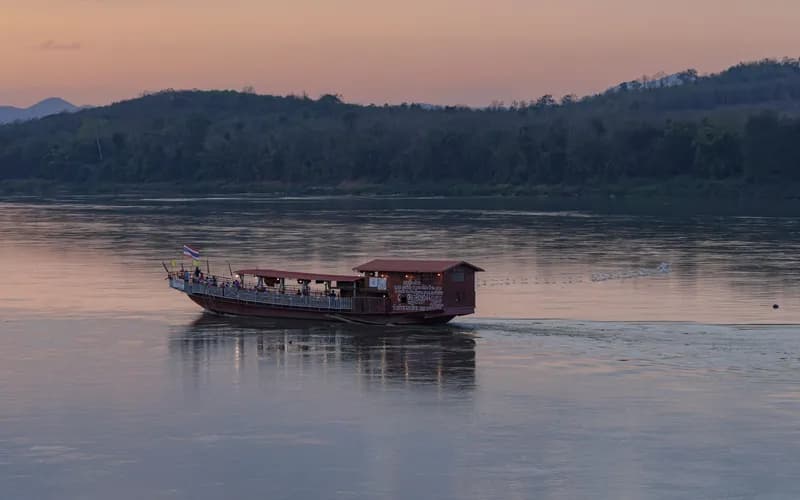
The most beloved Mekong journeys are still there, but they come with new caveats. The famous two-day slow boat from Huay Xai to Luang Prabang, one of the great lazy journeys of Southeast Asia, still runs, but low water in the dry season can affect navigability and schedules on some stretches, and the river's managed flow makes conditions less predictable than they once were. Our guide to the slow boat down the Mekong remains the best starting point, with the added wisdom of checking current conditions before you commit.
Downstream, the languid channels of Si Phan Don, the Four Thousand Islands, are likewise shaped by the river's changing moods; our guide to Si Phan Don describes a stretch whose seasonal character is increasingly influenced by upstream releases. None of this makes river travel in Laos any less worthwhile. It simply means the river rewards a little flexibility, and a traveller who holds their plans loosely and checks conditions locally will have the best of it.
The human cost
It would be dishonest to write about the changing Mekong without acknowledging its heaviest consequence, which falls not on travellers but on the people of the river. The Mekong feeds tens of millions, and the collapse of fish stocks in some stretches has been severe enough that villages have emptied, their fishing livelihoods gone. Where the river once provided, the altered flow and vanished sediment have, in places, taken away.
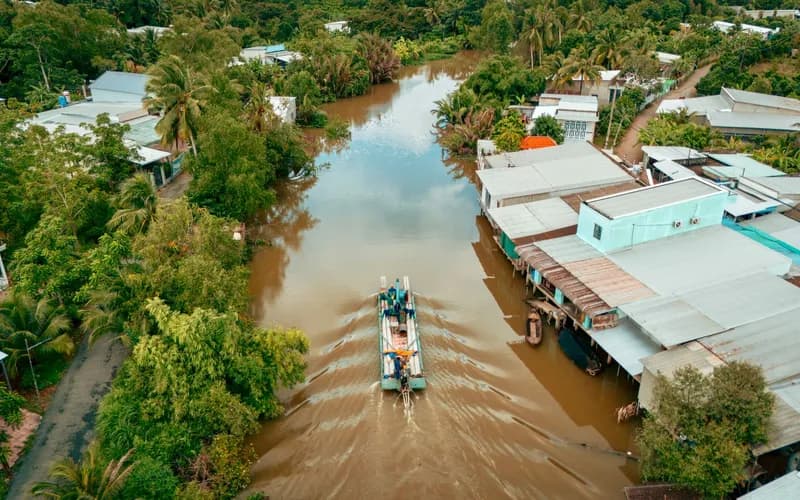
For the traveller, this is a call to a certain humility and awareness. The river communities you pass are living through a profound change not of their making, and travelling among them thoughtfully, supporting local boatmen, guesthouses and markets, and understanding the pressures they face, is the least a visitor can do. This is the spirit our slow travellers guide to Laos encourages: to travel as a guest who understands the place, not merely a consumer of its scenery.
How to travel the Mekong thoughtfully now
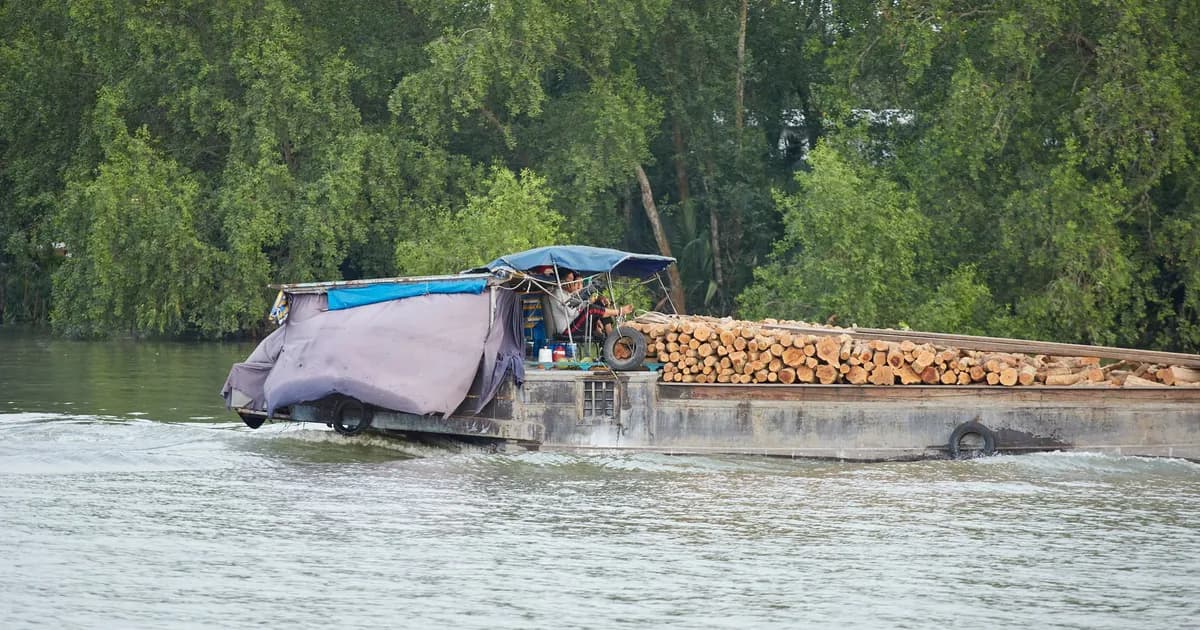
None of this should deter you from experiencing the Mekong, which remains one of the world's great rivers and the heart of any Laos trip. But it does suggest a way of travelling it. Hold your river plans flexibly, and check current water conditions locally before booking boats, especially in the dry season when levels can be lowest. Favour the smaller, local operators and boatmen whose livelihoods your fare directly supports over larger, impersonal outfits.
Travel the river slowly enough to understand it, take the time to talk to the people who live on it, and carry an awareness of the forces reshaping it. A journey down the Mekong made in this spirit is not diminished by the river's troubles; it is deepened by them, becoming a more honest encounter with a living, changing place. To plan a river-focused trip that supports local communities and works around the season, a specialist on our Laos plan-your-journey page can help.
A regional story, not just a Lao one
It is worth placing Laos's dams in their wider frame, because the Mekong belongs to no single country. The river flows through six nations, and what happens on its upper reaches, in China and northern Laos, is felt all the way downstream in Cambodia and the Vietnamese delta, where tens of millions more depend on its water, its fish and its silt. A dam built for hydropower in Laos can alter a rice harvest in Vietnam, which is why the river's management is one of the most delicate diplomatic questions in the region.
For Laos itself, the dams represent a genuine dilemma rather than a simple villainy. A poor, landlocked country with few other resources has looked to its rivers as a path to development and export income, selling hydropower to power-hungry neighbours. The benefits are real, and so are the costs, and they fall on different people: the revenue flowing to the state and investors, the losses to the fishing communities downstream. There is no easy resolution, and travellers do the situation no justice by casting it as a simple morality tale.
What this means for the visitor is mostly a matter of perspective. Understanding that the Mekong is a shared, contested and changing river, rather than a picturesque backdrop, turns a boat trip into something richer: a window onto one of the defining environmental and development stories of Southeast Asia. That understanding costs nothing and deepens everything, and it is the mark of a traveller who has truly arrived somewhere rather than merely passed through.
What to Do Next
- Keep river plans flexible, and check current Mekong water conditions locally before booking boats, especially in the dry season.
- Ride the classic slow boat and explore Si Phan Don, but with realistic expectations about seasonal levels.
- Favour small local boatmen and operators whose livelihoods your fare directly supports.
- Take time to understand the river communities and the pressures they face, travelling with humility.
- Treat the Mekong as a living, changing river rather than a timeless constant, and let that awareness shape a more honest trip.
Frequently Asked Questions
Why is the Mekong River changing?
A growing cascade of hydropower dams, in China and in Laos, is regulating the river's flow, holding back and releasing water and trapping the sediment it once carried. This has produced lower dry-season levels, altered flooding, and declines in fish and floodplain fertility downstream.
Does low water affect the Mekong slow boat?
It can. The classic Huay Xai to Luang Prabang slow boat still runs, but very low water in the dry season can affect navigability and schedules on some stretches, and the river's managed flow makes conditions less predictable. Check current conditions locally before booking.
What dams are being built on the Mekong in Laos?
Among current mainstream projects, preparatory work is under way on the Pak Beng dam with major construction due in late 2026, and the Luang Prabang dam is more than seventy per cent complete, with commercial operation expected around 2030. Several other projects are planned.
Is it still worth travelling the Mekong in Laos?
Yes. The Mekong remains one of the world's great rivers and the heart of a Laos trip. The changes call for flexibility and awareness rather than avoidance, and travelling thoughtfully, supporting local communities, makes the journey more meaningful, not less.
How do the dams affect local communities?
The altered flow and loss of sediment have hit the Mekong's fisheries hard in places, and collapsing fish stocks have left some fishing villages struggling or emptied. Tens of millions depend on the river, so these changes carry a serious human cost that travellers should be aware of.
How can I travel the Mekong responsibly?
Hold your plans flexibly, check conditions locally, and favour small local boatmen, guesthouses and markets so your money supports river communities directly. Travel slowly enough to understand the river and the people who depend on it, with awareness of the pressures it faces.