

Laos is not a dangerous country to travel in, but it is a country where the margin for improvisation is thin. Medical infrastructure is limited outside Vientiane, some illnesses here are genuinely serious, and the nearest hospital you would actually want for a complex problem is often in Thailand. None of that should put you off. It simply means the health side of a Lao trip is worth twenty minutes of real preparation rather than a hopeful shrug at the airport. Here is what matters, in the order it matters.
What Actually Puts Travellers in Hospital
Start with the honest hierarchy, because it is not the one most people expect. The overwhelming cause of serious injury to foreign visitors in Laos is road traffic, and specifically motorbikes: gravel shoulders, night driving, unlit vehicles, loose livestock and a helmet culture that is improving but patchy. Everything else on this page is a distant second.
After that come falls and water accidents, in caves, on wet limestone, at waterfalls and in rivers with stronger currents than they appear to have. Then infectious illness, which is mostly unpleasant rather than dangerous, with dengue as the exception that puts people on drips. Rabies is rare but absolute in its consequences. Malaria is a genuine but geographically limited risk.
Plan accordingly. A good helmet, a refusal to ride at night, and the discipline not to swim after heavy rain will do more for your safety than any pill.
One request. Up to five tailored proposals.
Skip contacting agencies one by one — share your trip once and let up to five trusted Laos agencies come to you. Free, with no obligation.
Get my free quotesVaccinations Worth Sorting Before You Fly
See a travel clinic four to six weeks ahead if you can, because some courses need multiple doses. The general public health guidance for Laos, including the US Centers for Disease Control advice, points to a fairly consistent list.
- Hepatitis A and typhoid for essentially all travellers, because food and water-borne illness is common outside controlled kitchens.
- Hepatitis B, routinely recommended for most travellers.
- Routine vaccinations up to date, with measles specifically flagged for international travel.
- Tetanus, which matters more than people think in a country where minor cuts and animal scratches are common.
- Japanese encephalitis for longer stays, rural itineraries, wet-season travel and anyone spending significant time outdoors or sleeping in unscreened rooms.
- Rabies pre-exposure vaccination for cyclists, trekkers, motorbike travellers, anyone working with animals and anyone heading well away from Vientiane.
Rabies pre-exposure deserves emphasis. It does not make you immune. What it does is remove the need for rabies immunoglobulin after a bite, and immunoglobulin is precisely the product most likely to be unavailable in provincial Laos. For a long or rural trip, it converts a frantic evacuation into a manageable clinic visit.
Water, Ice and the Bottle Problem
Do not drink tap water anywhere in Laos. Bottled water is cheap and universally available, and boiled water is standard in guesthouses and served free in restaurants as weak tea or plain hot water, which is safe.
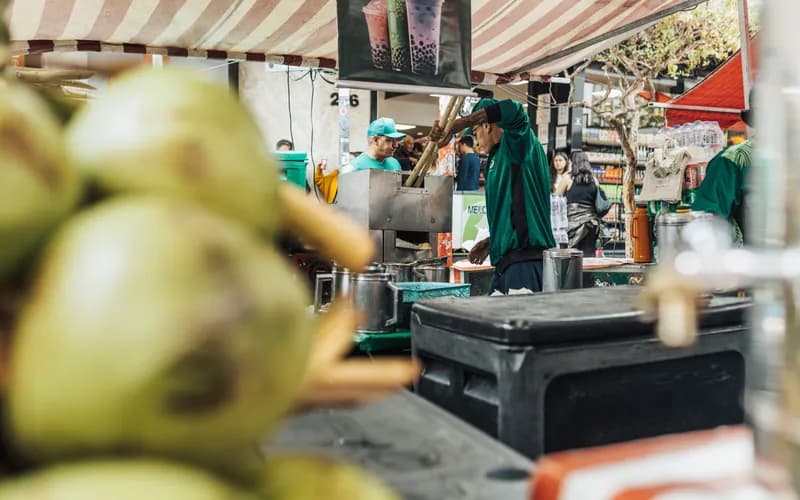
Ice is the question everyone asks. In towns and on well-travelled routes, ice is generally commercial tube or cylinder ice made from treated water, and it is far lower risk than its reputation. In remote villages, at roadside stalls with a chest of crushed ice and no obvious supplier, use judgement. If the surrounding operation looks careless, skip it.
There is an environmental problem attached. A month in Laos on bottled water is a lot of plastic in a country with very limited waste processing. A filter bottle or a steripen removes most of that, works with tap water in guesthouses, and pays for itself quickly. Many cafes in Luang Prabang, Vientiane and Vang Vieng refill bottles free or for a token amount.
Get matched with up to 5 trusted Laos agencies
- Free
- No obligation
- Up to 5 agencies
Eating Well Without Getting Ill
Lao food is excellent and street food is not the enemy. High turnover is the best hygiene indicator you have: a busy stall that cooks to order in front of you is a better bet than an empty restaurant reheating a buffet. Eat where Lao families eat, at the hours they eat, and you will mostly be fine.
The specific risks are narrower than general nervousness suggests, and they are worth knowing precisely rather than avoiding vaguely:
- Raw and fermented dishes carry the real risk. Raw larb, raw or lightly fermented river fish and raw river crab in some papaya salads are associated with parasitic infection, including liver flukes, which are a well-documented public health problem in the Mekong basin. Ask for your larb cooked, which is normal and unremarkable.
- Unpasteurised dairy and pre-cut fruit sitting warm are the other classic culprits.
- Padaek, the fermented fish sauce that gives Lao food its depth, is fine as a cooked seasoning; the concern is specifically raw freshwater fish and crab.
You lose almost nothing by observing these rules. The country's best dishes, from khao soi in the north to grilled fish and sticky rice everywhere, are cooked. If you want to eat with confidence rather than caution, it helps to know the dishes by name first, which is what our guide to Lao food and what to eat is for.
Carry oral rehydration salts. Ordinary travellers' diarrhoea is common, self-limiting and mostly a fluid problem. Blood, high fever or symptoms lasting beyond three days is a doctor's visit, not a self-treatment situation.
Mosquitoes: Dengue by Day, Malaria in the South
Dengue is present throughout Laos and rises sharply in the wet season, roughly May to November, with urban outbreaks in Vientiane and other towns. The mosquito that carries it bites during daylight, particularly early morning and late afternoon, which catches out travellers who only think about mosquitoes at night. There is no specific treatment. If you develop a high fever with severe headache, joint pain or a rash, get tested, hydrate, use paracetamol rather than ibuprofen or aspirin, and do not travel on to a remote area while you are still febrile.
Malaria is a different problem in a different place. Risk is concentrated in rural and forested areas, notably in the southern provinces and near the Vietnamese and Cambodian borders, and is negligible in Vientiane and Luang Prabang. Whether you need prophylaxis depends entirely on your itinerary and season, which is exactly the conversation to have with a travel doctor rather than a forum.
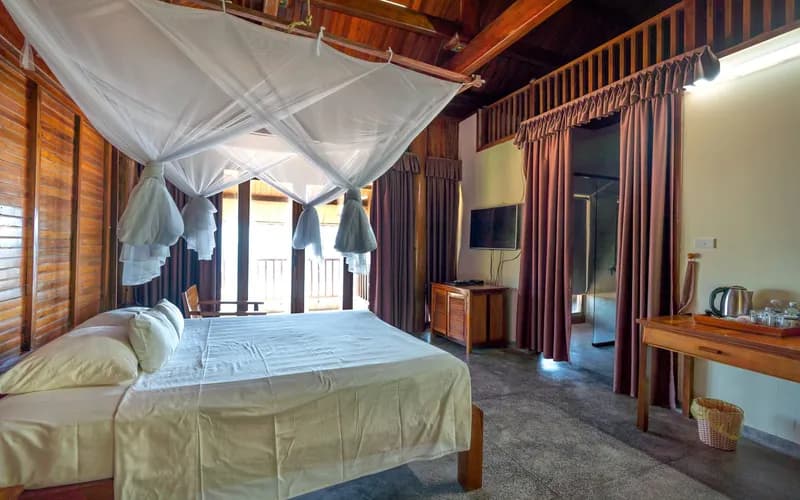
Prevention is the same for both: repellent with DEET or picaridin on exposed skin, long sleeves at dawn and dusk, a room with screens or air conditioning, and a net if you are sleeping in a village homestay or a bungalow with gaps in the walls.
Dogs, Bites and Rabies
Dogs are everywhere in Laos, mostly indifferent, occasionally territorial at night and around villages. Rabies is present in the animal population and is effectively always fatal once symptoms appear. Cats, monkeys and bats count too.
If you are bitten, scratched or licked on broken skin, wash the wound with soap and running water for a full fifteen minutes, apply antiseptic, and seek medical care the same day. This is not a wait-and-see situation. Post-exposure treatment is available in Vientiane and, more reliably still, across the border in Thailand. In a provincial town, assume you will need to travel for it, and start moving rather than waiting for the next morning.
Medical Care in Laos, and When to Cross to Thailand
Be realistic about the system. Public provincial hospitals in Laos are under-resourced, diagnostics are limited, and blood supply and intensive care capacity are constrained. Vientiane has private clinics used by the expatriate community, including the Alliance International Medical Centre and the French Medical Centre, which handle consultations, minor injuries and stabilisation competently, and English or French-speaking doctors are usually available there.
For anything serious, the practical standard of care is Thailand. From Vientiane, the hospitals of Nong Khai and Udon Thani are close enough to reach by road in one to two hours including the Friendship Bridge crossing, and Bangkok's international hospitals are a short flight away. Many long-term residents simply cross the border for anything beyond routine.
The implication for your itinerary is worth stating plainly. In a town like Savannakhet or another provincial capital, you are not near advanced care, and in a village homestay you are further still. That is not a reason to stay in the capital. It is a reason to carry what you need, know your evacuation route, and treat serious symptoms as a travel decision rather than a wait-and-see one.
Bring your own medication in original packaging with a copy of the prescription, plus a small kit: rehydration salts, antiseptic, plasters, paracetamol, an antihistamine, and any personal medicines in quantities that cover the whole trip. Pharmacy stock in Laos is inconsistent and quality control is uneven.
Insurance, Cash and the Small Print
Travel insurance is not optional here, and one clause matters more than all the others: medical evacuation. An air ambulance from a provincial town to Bangkok costs more than most people's entire trip, and it is the single scenario that turns an accident into a financial catastrophe.
Read the exclusions carefully. Most policies void motorbike claims unless you hold a valid licence for that engine size and were wearing a helmet, and many exclude riding entirely. Adventure activities, caving and kayaking often need an add-on. Clinics in Vientiane frequently expect payment up front and reimbursement later, so you need accessible funds as well as a policy. Understanding how payment actually works in Laos is part of your health planning, not separate from it.
Trekking, Caves and Rivers
Field conditions add their own list. Leeches are harmless and irritating. Heat exhaustion is common in the March to May hot season and creeps up on people walking mid-afternoon. Wet-season floodwater carries leptospirosis risk, so cover open cuts and avoid swimming in flooded ground. Caves such as Konglor demand a helmet, a working torch and a guide, not improvisation.
Trekking with a community guide changes the health equation considerably: someone knows the terrain, the water sources and the way out. That is one more argument for organised community treks rather than informal arrangements, alongside the ethical case.
What to Do Next
- Book a travel clinic appointment four to six weeks before departure with your actual route, not just the country name.
- Decide on rabies pre-exposure based on how rural and how long your trip is, and on Japanese encephalitis for wet-season rural travel.
- Buy insurance with explicit medical evacuation cover, and check the motorbike clause before you rent anything.
- Pack a filter bottle, repellent, rehydration salts and a personal medicine kit in original packaging.
- Sketch your route with medical access in mind using our plan your journey resources for Laos, so you know where the nearest real hospital is on each leg.
Frequently Asked Questions
Do I need vaccinations for Laos?
No vaccine is legally required for most travellers arriving from a country without yellow fever, but hepatitis A and typhoid are recommended for essentially everyone, with hepatitis B, routine vaccines and tetanus alongside. Japanese encephalitis and rabies are advised for longer, rural or outdoor-heavy trips. Ask a travel clinic four to six weeks ahead.
Can I drink the tap water in Laos?
No. Drink bottled, boiled or filtered water everywhere, including in Vientiane. A filter bottle or purifier is the better option for a longer trip because it cuts a large amount of plastic waste in a country with very limited recycling capacity.
Is street food safe in Laos?
Generally yes, with two conditions: choose busy stalls that cook to order, and avoid raw or fermented river fish, raw larb and raw crab in papaya salad, which carry a documented parasite risk in the Mekong basin. Cooked Lao food is the norm and asking for larb cooked is entirely routine.
Is malaria a risk in Laos?
Only in parts of the country. Risk is concentrated in rural and forested areas, particularly in southern provinces and near the Vietnamese and Cambodian borders, and is considered negligible in Vientiane and Luang Prabang. Whether you take prophylaxis depends on your specific route and season and should be decided with a travel doctor.
What happens if I get seriously ill or injured in Laos?
You will most likely be stabilised locally and then moved. Vientiane has private clinics for consultations and minor emergencies; anything complex is normally handled in Thailand, either at hospitals in Nong Khai and Udon Thani close to the border or in Bangkok. This is exactly why insurance with medical evacuation cover is essential.
What should I do if a dog bites me in Laos?
Wash the wound with soap and running water for fifteen minutes, disinfect it, and get to medical care the same day for post-exposure rabies treatment. Do not wait to see whether the animal seems ill. If you are in a provincial area, start travelling towards Vientiane or the Thai border immediately rather than waiting.