

Savannakhet is one of the largest urban centres in Laos and one of the least visited places in the country. Most travellers meet it only as a name on a bus timetable somewhere between Vientiane and Pakse. They glimpse a flat brown river and a bus station on the ring road, and they keep going. The ones who get off find a riverfront of ochre shophouses, a square where nothing much happens for hours, a small dinosaur museum, a working forest half an hour out of town, and almost no other foreigners. Savannakhet is not spectacular. It is one of the most honestly slow places left in Laos, which is a different and rarer thing.
A Town the River Built, Then the Traffic Forgot
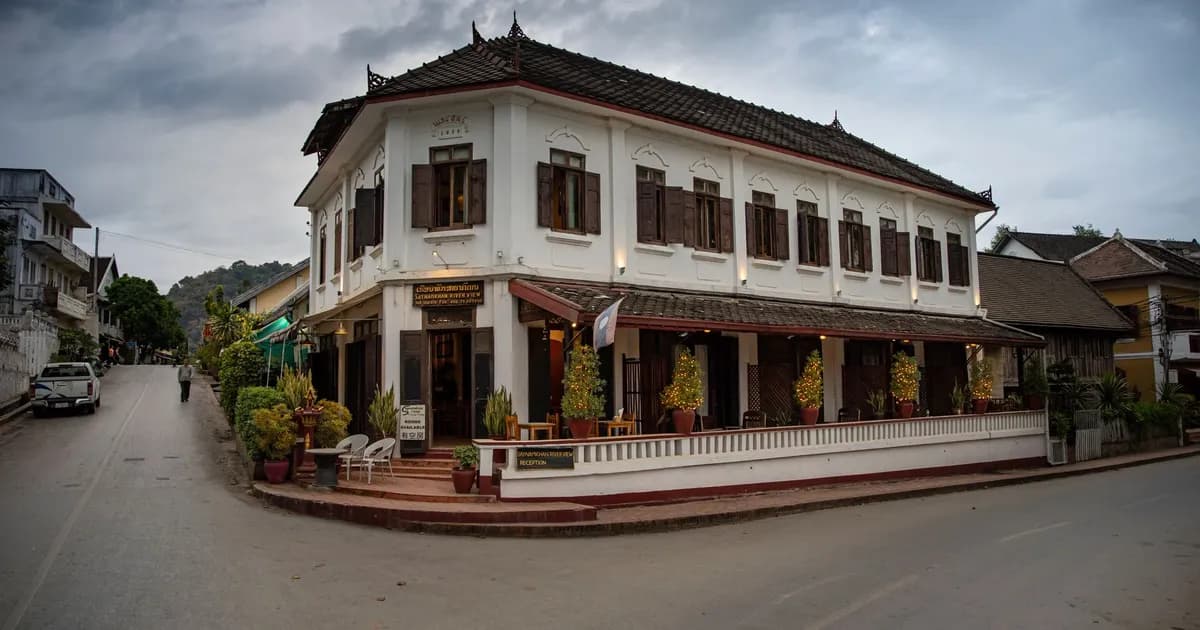
Savannakhet sits on the Mekong roughly halfway down the country, facing Mukdahan in Thailand across the water. The French built it up as a trading and administrative post, and Vietnamese and Chinese merchant families gave the old quarter its shape: two-storey shophouses with shuttered upper floors, a Catholic church, a grid of streets that runs down to the river and stops.
Savannakhet province is the most populous in Laos, and the town is a genuine regional capital with schools, hospitals and a busy market. What it does not have is a tourism economy. Part of the reason is a bridge. When the second Thai-Lao Friendship Bridge opened in the mid-2000s a few kilometres upstream, freight and cross-border traffic moved onto Route 9 and the new corridor to Vietnam. Lorries now pass Savannakhet rather than through it. The old quarter kept its buildings and lost its reason to hurry.
The result is a town with more colonial-era architecture than almost anywhere in Laos outside Luang Prabang, and roughly one per cent of the visitors. Some of those buildings have been restored into guesthouses and cafes. Many have not: stucco flaking to brick, trees rooted in cornices, a padlocked door with a family shrine still visible through the shutters. Savannakhet is one of the few places in Southeast Asia where you can watch a colonial quarter simply age, without a masterplan attached.
One request. Up to five tailored proposals.
Skip contacting agencies one by one — share your trip once and let up to five trusted Laos agencies come to you. Free, with no obligation.
Get my free quotesWalking the Old Quarter
The centre of gravity is Talat Yen square, a dusty open rectangle with the church of St Theresa on one side and low arcaded buildings on the others. It is not a plaza in the European sense. Nothing is staged. In the late afternoon a badminton net goes up, students appear on scooters, and a couple of drinks stalls open. That is the whole event, and it is enough.
Walk or cycle the ten or so blocks between the square and the river. The town is flat and small, and a bicycle from a guesthouse costs almost nothing. Look for the Savannakhet Provincial Museum for the regional history, and the small dinosaur museum, which keeps short afternoon hours and charges a token fee of a few thousand kip. Central Laos genuinely is fossil country: French geologists working in the province in the 1930s identified dinosaur remains here, and digs have continued in the region since. The museum is modest and largely un-translated, and it is still one of the more surprising rooms in the country.
The riverfront comes alive around five. Families walk, teenagers sit on the wall, plastic chairs come out, and the sun goes down behind Thailand. This is the hour Savannakhet is best at. If you want more of this kind of place, the less-travelled corners of the country follow the same pattern: not much to tick off, a great deal to sit inside.
That Ing Hang and the Older Layer
About fifteen kilometres north-east of town stands That Ing Hang, a whitewashed and gilded stupa roughly nine metres high, generally dated to the sixteenth century and said to enshrine a relic of the Buddha. It is one of the most important pilgrimage sites in central Laos and draws worshippers from north-eastern Thailand as well as from the Lao side.
Two things to know before you go. First, by long-standing local custom women are not permitted inside the innermost enclosure; the rule is posted and observed, and it is not yours to argue with. Second, the site is at its most alive during Boun That Ing Hang, held in November or December depending on the lunar calendar, when the grounds fill with pilgrims, market stalls and music for several days. Outside the festival it is often almost empty, which has its own quality.
Further south, along a rough road following the river, sits Heuan Hin, the Stone House: the remains of a Khmer-era sandstone structure widely understood to have been one of the rest houses built along the roads of the Angkorian empire under Jayavarman VII. There is not a great deal left, and no interpretation to speak of. It has an annual festival on the April full moon. Going there is a half-day commitment for a modest ruin, which is precisely the sort of trade slow travel is built for.
Get matched with up to 5 trusted Laos agencies
- Free
- No obligation
- Up to 5 agencies
Dong Natad: The Forest at the Edge of Town
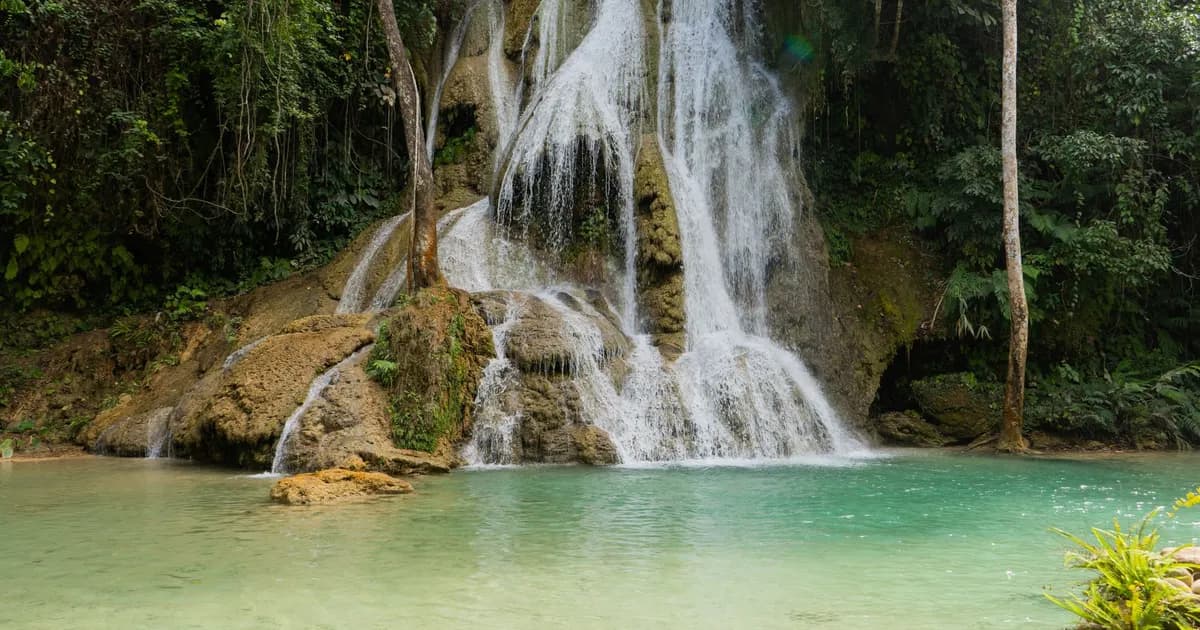
Dong Natad is a provincial protected area of semi-evergreen forest about fifteen kilometres from the centre, and it is the reason to stay a third night. This is not wilderness. It is a forest that villages use, and that is what makes it interesting: households collect resin, honey, mushrooms, bamboo shoots and wild vegetables under long-standing arrangements, and the forest survives because it is worth more standing than felled.
A three-kilometre nature trail loops near Nong Lom lake, an easy walk through tall trees with birds, butterflies and, in the wet season, a great deal of mud. Guided day walks and village overnight stays have been arranged for years through the provincial tourism information centre on the riverfront, with fees shared with the host villages.
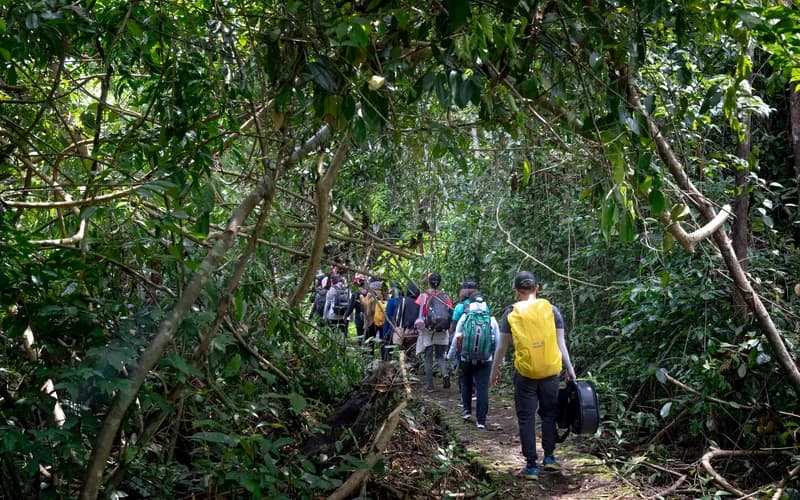
Two honest caveats. The centre is not reliably staffed and programmes have come and gone, so message ahead through your accommodation and have a fallback day. And guide English varies widely. If a community arrangement is running, take it over a freelance offer at your guesthouse; the money reaches different pockets. The same principle applies across the country, and it is worth understanding how community trekking is actually organised in Laos before you book anything.
Route 9 and What the War Left Behind
East of Savannakhet, Route 9 runs to the Vietnamese border at Dansavanh, passing Xepon. This is the corridor where the Ho Chi Minh Trail crossed into Laos, and eastern Savannakhet province was among the most heavily bombed landscapes on earth during the American war. Rusting hardware still sits beside villages along the route, and there are modest local displays rather than a curated museum experience.
Travel here demands a specific kind of care. Unexploded ordnance remains in the ground across the province, clearance is decades from finished, and the risk is real for anyone who leaves marked paths, digs, or lights fires in unfamiliar ground. Stay on trails, use local guides, and read up on how unexploded ordnance actually affects travellers in Laos. Treated seriously, the eastern districts are one of the most sobering and worthwhile day trips in the country.
Eating and Drinking at Savannakhet Speed
The food here leans Vietnamese more than anywhere else in Laos except perhaps the far south. Morning is for noodle soup and thick baguettes filled with pate and pickled vegetables. Later there is khao piak sen, the soft rice noodle soup, plus laap, tam mak hoong and grilled Mekong fish with sticky rice.
A few things to expect:
- The night market by the river is cheap, grilled and unhurried, and it is the default dinner.
- Kitchens close early. By nine most of the town has finished eating.
- Beerlao on a plastic chair facing Thailand is the local evening plan, and there is no better one.
- Cash still rules outside a handful of hotels; carry small kip notes.
Savannakhet is also where you notice how regional Lao cooking really is. If you want the wider picture, the differences between north, centre and south reward a slow route down the country.
Getting There, Getting Around and How Long to Stay
Buses connect Savannakhet with Vientiane in roughly eight to nine hours, with ordinary services running through the morning and a VIP sleeper overnight; fares have historically sat around 75,000 kip for a local bus and near 120,000 kip for the night bus, though the weak kip means you should treat any figure as a starting point rather than a quote. Pakse is about five hours south, Thakhek two to three hours north. An international bus crosses the bridge to Mukdahan in Thailand in well under an hour plus immigration formalities. The airport handles occasional Lao Airlines domestic flights.
What Savannakhet does not have is a train. The Laos-China railway runs through the north of the country, and the long-discussed line east towards the Vietnamese coast is not carrying passengers. If you are coming up from Bangkok, the practical route is the direct sleeper train to Vientiane and then a bus south, which is a genuinely pleasant two-day approach.
In town, walk or cycle. Tuk-tuks handle the stupa and the airport. Give the place three nights: one to arrive and walk, one for the stupa and the eastern road or the museums, one for Dong Natad. Two nights works. One night is a waste of the bus ride.
When to Go
November to February is dry, cooler and by far the most comfortable window, and it catches the That Ing Hang festival in most years. March to May is severe: central Lao lowlands are among the hottest parts of the country, and afternoon plans collapse. June to October brings rain, a much greener forest, mud on the Dong Natad trails and dramatic light on the river. Savannakhet has no real high season, so accommodation is rarely a problem in any month.
What to Do Next
- Block three nights in your itinerary between Thakhek and Pakse rather than treating Savannakhet as a lunch stop.
- Message your guesthouse a week ahead to ask whether Dong Natad community treks are currently running, and get a name and a price.
- Check the lunar calendar for Boun That Ing Hang if you are travelling in November or December.
- Pair it with the Thakhek loop and Konglor cave to build a proper central Laos leg instead of a Vientiane-to-Pakse dash.
- Read who is actually travelling to Laos in 2026 to understand why towns like this stay quiet while others fill up.
Frequently Asked Questions
Is Savannakhet worth visiting?
Yes, if you want an unpolished Lao river town rather than sights. It offers the largest surviving colonial quarter in Laos outside Luang Prabang, an important pilgrimage stupa, community forest walks and a riverfront evening culture, all with very few other visitors. If your trip is built around highlights and photographs, it will underwhelm you.
How many days do I need in Savannakhet?
Three nights is the sweet spot: one for the old quarter and the river, one for That Ing Hang and either the museums or the eastern road, and one for a Dong Natad walk or overnight. Two nights covers the town itself. A single night rarely justifies the journey.
Can I cross into Thailand from Savannakhet?
Yes. The second Thai-Lao Friendship Bridge links Savannakhet with Mukdahan, and international buses run the crossing several times a day. The road bridge is the only legal crossing here; the old passenger ferry no longer operates for foreign travellers.
Is Savannakhet safe given the unexploded ordnance history?
The town itself is not a contamination concern. The risk lies in rural eastern districts along the old Ho Chi Minh Trail corridor, and it is manageable with basic discipline: stay on established paths, never dig or handle metal objects, do not light fires on unfamiliar ground, and travel with local guides who know which land is cleared.
Do I need a guide for Dong Natad?
For the short nature trail near the lake you can manage independently if you have transport out there. For anything longer, an overnight stay, or the wet season, take a guide arranged through the community programme. It is safer, the money is distributed better, and you will learn what the forest is actually used for.
What is there to do in Savannakhet in the evening?
Walk the riverfront around sunset, eat at the night market, and sit with a drink facing Thailand. There is no nightlife to speak of and most kitchens close by nine. That is the point of the place rather than a shortcoming of it.