
Almost everyone overpacks for Laos, and almost everyone regrets it within three days. The country is hot, humid, informal and cheap to do laundry in, which means the volume of clothing most people bring is pure dead weight on a boat ramp or a guesthouse staircase. What Laos does demand is specificity: a modest outfit for temples, something that dries overnight in August, a torch for the power cuts, and a bag you can carry up a river bank yourself. This is the list we would give a friend flying in next month, organised by what the country actually throws at you rather than by category.
The short version
Pack for three to four days of clothing, no more. Laundry is available in every town with a guesthouse and typically costs the equivalent of one to three US dollars a kilo, usually returned the same evening or the next morning. Bring modest, quick-drying clothes, one properly warm layer if you are heading north between November and February, footwear you can slip off at a temple door, and a small kit of things that are genuinely hard to buy in Laos.
Aim for a bag you can carry comfortably for twenty minutes, because at some point you will. Wheeled suitcases are a poor fit for a country of unpaved lanes, riverbank steps and minivans that stack luggage on the roof.
One request. Up to five tailored proposals.
Skip contacting agencies one by one — share your trip once and let up to five trusted Laos agencies come to you. Free, with no obligation.
Get my free quotesClothing that works in Laos
Natural and technical fabrics both work; heavy cotton denim does not. Laos is humid for most of the year and cotton that takes two days to dry becomes a problem in the wet season. Lightweight linen, cotton blends, and quick-dry synthetics or merino are the practical choices.
- Three or four loose tops, at least two with sleeves that cover the shoulders.
- Two pairs of lightweight long trousers; these beat shorts for temples, motorbikes, sun and mosquitoes.
- One pair of shorts or a skirt below the knee for genuinely hot afternoons.
- A long-sleeved shirt for sun protection on boats and in open tuk-tuks.
- Underwear and socks for four days, plus a small travel clothesline.
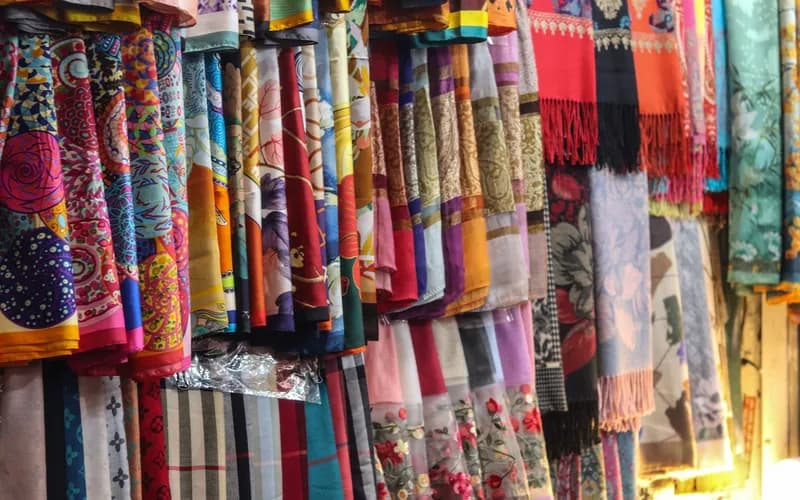
The single most useful item you can carry is a large scarf or a length of Lao cotton or silk. It works as a temple shoulder cover, a sun shield on a slow boat, a pillow on a night bus, a towel, a modesty wrap at a village homestay and a souvenir you actually use. Buy one locally on your first day rather than bringing one; the weaving traditions of Laos are one of its great pleasures.
What temples and villages actually require
Laos is more relaxed than it looks, and also less relaxed than tourists assume. The rule at temples is simple and non-negotiable: shoulders and knees covered, for men and women, and shoes removed before entering a prayer hall. Some larger sites lend sarongs, but do not count on it, and never rely on a rented cover-up when you are visiting a working village temple.
At homestays and in rural villages, dress a notch more conservatively than in Vientiane. Swimwear is for the water only; walking through a village in a bikini top reads as genuinely rude. The same logic applies to the alms ceremony, where the correct behaviour is covered clothing, distance and silence, as set out in our guide to cultural etiquette in Lao temples and at the alms ceremony.
Get matched with up to 5 trusted Laos agencies
- Free
- No obligation
- Up to 5 agencies
Footwear for stairs, boats and mud
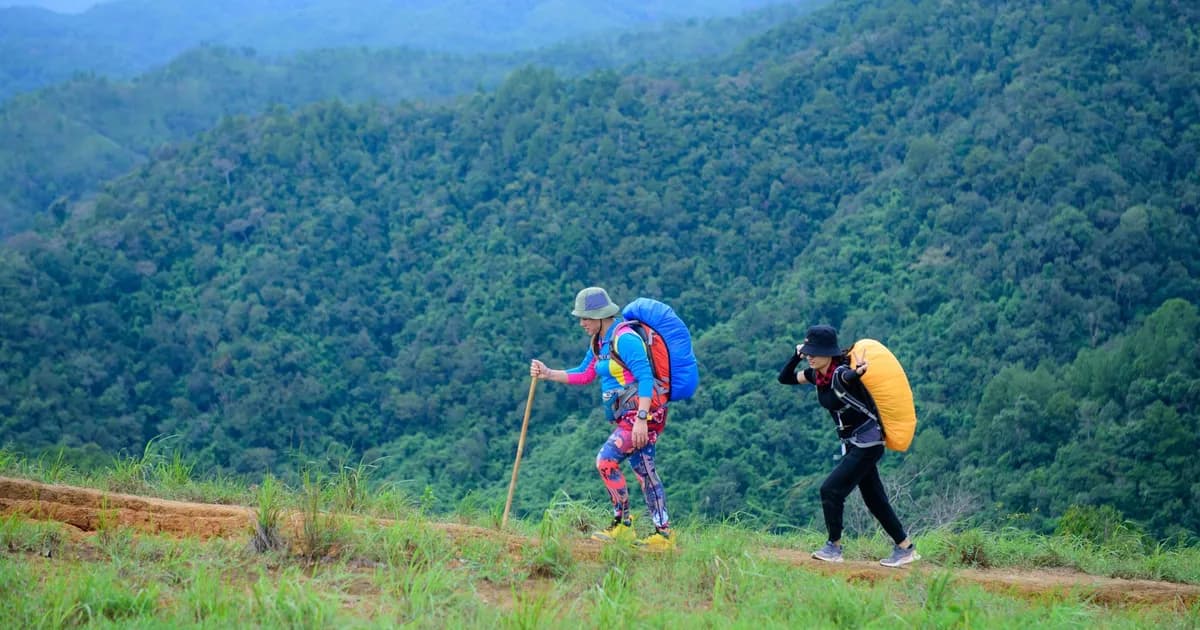
Bring two pairs, and no more. Sandals with a proper sole that you can remove in one motion are the everyday workhorse, because you will take your shoes off several times a day. Add trail shoes or light hiking boots if you plan to trek in Luang Namtha, Nong Khiaw or the Bolaven Plateau, where paths turn to slick clay after rain.
Leave heavy leather boots and dress shoes at home. Nothing in Laos requires them, and they will not dry. Flip-flops are worth adding for guesthouse bathrooms; they cost almost nothing in any market if you would rather buy them there.
The rainy season kit, May to October
The wet season in Laos is far less disruptive than people imagine. Rain usually arrives as a heavy downpour of one or two hours in the afternoon rather than a full day of grey drizzle, and the landscape in exchange is spectacularly green. What it does require is waterproofing your possessions rather than yourself.

- A dry bag of ten to twenty litres for a camera, phone, passport and documents. Essential on the slow boat and any river crossing.
- A compact umbrella, which locals prefer to rain jackets in the heat, plus a light packable rain shell for boats and motorbikes.
- Sandals that cope with mud and dry fast; abandon the idea of dry feet.
- A couple of resealable plastic bags for wet clothes and electronics.
Roads in remote provinces can wash out between July and September, so build slack into your schedule. Our overview of how to get around Laos by bus, boat and train explains which routes suffer most in the rains.
The cool season surprise, November to February
This is the mistake experienced tropical travellers make. Vientiane and the south stay warm all year, but the northern highlands get genuinely cold between December and early February. In Phongsaly, Xieng Khouang, Houaphanh and the hills around Luang Namtha, night-time temperatures can fall into single digits Celsius, and guesthouses are rarely heated and often single-glazed.
Pack one warm mid-layer, a fleece or a light down jacket that compresses to nothing, and a hat. You will use it on early-morning boats and buses too, where the wind chill on the Mekong at seven in the morning is sharper than the forecast suggests. Between March and April the opposite problem appears: extreme heat combined with agricultural burning haze across the north, when a respirator-grade mask is worth carrying if you are sensitive to air quality.
Health, water and the small pharmacy
Pharmacies exist in every town, but brands, dosages and expiry dates are inconsistent outside Vientiane and Luang Prabang, and rural clinics are basic. Carry a compact kit rather than trusting resupply.
- Insect repellent with DEET or picaridin; dengue is present year-round and peaks in the wet season.
- Rehydration salts, an anti-diarrhoeal, antihistamines and any prescription medicines in original packaging.
- Blister plasters, antiseptic and a few adhesive dressings for trekking scrapes.
- High-factor sunscreen, which is expensive and hard to find outside the main cities, and often sold with whitening agents.
- A reusable bottle with a filter or purification tablets; tap water is not drinkable, and refill stations are increasingly common.
- Menstrual products, especially tampons and menstrual cups, which are difficult to buy outside the capital.
Travel insurance that explicitly covers motorbikes, trekking and water activities is not optional here. Medical evacuation to Thailand is the standard response to a serious injury and costs tens of thousands of dollars. Our guide to staying healthy in Laos covers vaccinations, water and what to do if you get ill in a rural province.
Electronics, documents and money
Laos runs on 230 volts, and sockets commonly accept both flat American-style and round European-style pins, so a simple universal adapter covers everything. Power cuts are routine outside the main cities, and in some villages electricity runs only in the evening.
- A headtorch, which earns its place in caves, at homestays and during blackouts.
- A power bank of at least 10,000 mAh, charged before long bus days.
- Printed and digital copies of your passport, visa or entry approval, and insurance certificate.
- A modest supply of clean, untorn US dollar notes as a fallback; damaged notes are often refused.
- A second bank card stored separately, since ATMs in small towns run out of cash and card readers fail.
Cash discipline matters more in Laos than in its neighbours. Plan your withdrawals around the towns that reliably have working machines, and budget realistically using our guide to the cost of a trip to Laos in 2026.
What to leave at home
Drones, unless you have researched the current permission rules carefully; flying near government buildings, airports and border zones causes serious problems. Camouflage-patterned clothing, which is associated with the military and is best avoided across the region. Large quantities of toiletries, which are cheap and widely available. A full medical library of items you have never needed elsewhere. And the fourth and fifth pair of trousers, which you will carry for three weeks without wearing.
Consider also leaving behind the impulse to buy a new bag. Laos is not a technical destination. A forty-litre rucksack, or a duffel with backpack straps, handles almost any itinerary in the country, including a week of village trekking with a local guide.
What to Do Next
- Check which regions and months your route covers, then decide whether you need the warm northern layer at all.
- Weigh your packed bag before you leave and remove anything that takes you over ten kilograms.
- Buy insurance that names motorbikes, trekking and boats explicitly, and save the policy offline.
- Set aside a dry bag and a headtorch, the two items travellers most often wish they had brought.
- Plan your first two days around a market visit so you can buy a locally woven scarf and any missing toiletries.
- If Vientiane is your entry point, use the practical detail in our three-day Vientiane guide to shake down your kit before heading into the provinces.
Frequently Asked Questions
How big should my bag be for Laos?
Forty to fifty litres is ample for any trip length, because laundry is cheap and available everywhere. A soft bag you can carry yourself beats a wheeled suitcase on riverbanks, unpaved lanes and minivan roof racks.
Can I wear shorts in Laos?
Yes, in towns and at guesthouses, though long, light trousers are more comfortable in the sun and around mosquitoes. Shorts above the knee are not acceptable inside temples, and in rural villages they read as underdressed.
Do I need hiking boots?
Only if you are trekking multi-day routes in the north or on the Bolaven Plateau. For everything else, sturdy sandals plus a pair of trail shoes will cover you, and they dry far faster after a rainstorm.
What should I pack for the rainy season in Laos?
A dry bag for electronics and documents, a compact umbrella, a light rain shell, fast-drying sandals and an extra day of schedule flexibility. Rain is usually a short intense burst rather than an all-day event.
Is it cold in Laos in winter?
In the northern highlands, yes. December and January nights in Phongsaly, Houaphanh and Xieng Khouang can drop into single digits Celsius, and rooms are unheated. One compressible warm layer solves it. The south and Vientiane remain warm.
What is hard to buy in Laos?
High-factor sunscreen without whitening agents, tampons and menstrual cups, larger shoe and clothing sizes, specific prescription medicines and reliable replacement electronics. Almost everything else is available and inexpensive.
Do I need a plug adapter for Laos?
A universal adapter is sensible, although many sockets accept flat and round pins without one. The voltage is 230 volts, so check that chargers for appliances from 110-volt countries are dual voltage.