
Accommodation is the one part of a Laos trip that most travellers over-plan and under-research. They book three months of hotels on a platform before leaving home, then discover that the places they actually wanted to sleep in were never listed, that half the country runs on walk-ins, and that the difference between a bad night and a memorable one often comes down to a five-minute conversation with the person on the desk. Laos rewards a different approach: understand the categories, know the real prices, book the handful of nights that genuinely need booking, and leave the rest open.
What Accommodation in Laos Actually Costs
Laos remains one of the better-value countries in Southeast Asia for a bed, though the gap between its tourist towns and everywhere else has widened. As a working set of 2026 figures: dormitory beds run roughly 100,000 to 250,000 kip, simple private double rooms in a family guesthouse from about 150,000 to 400,000 kip, and comfortable mid-range rooms with air conditioning, reliable hot water and usually breakfast from around 400,000 kip to a million. Above that you are into boutique properties, converted colonial houses and the small luxury end, where Luang Prabang in particular can run into several hundred dollars a night in high season.
Luang Prabang is the outlier and it is worth naming plainly: average nightly rates there sit well above the national average, and in the December to February peak the difference is dramatic. The same money that buys you a riverside bungalow with a balcony in Champasak buys a windowless room off a lane in Luang Prabang. That is not a reason to skip Luang Prabang; it is a reason to budget for it separately.

Two further notes. First, published prices are frequently quoted in kip but pinned mentally to dollars, and because the kip has weakened substantially, kip prices have been revised upwards repeatedly. Do not trust a figure you read in a two-year-old blog. Second, longer stays are negotiable almost everywhere outside peak season: asking for a weekly rate on arrival typically gets you between ten and twenty-five per cent off. Our full breakdown of what a trip to Laos costs in 2026 sets accommodation alongside food, transport and everything else.
One request. Up to five tailored proposals.
Skip contacting agencies one by one — share your trip once and let up to five trusted Laos agencies come to you. Free, with no obligation.
Get my free quotesThe Guesthouse: Still the Backbone
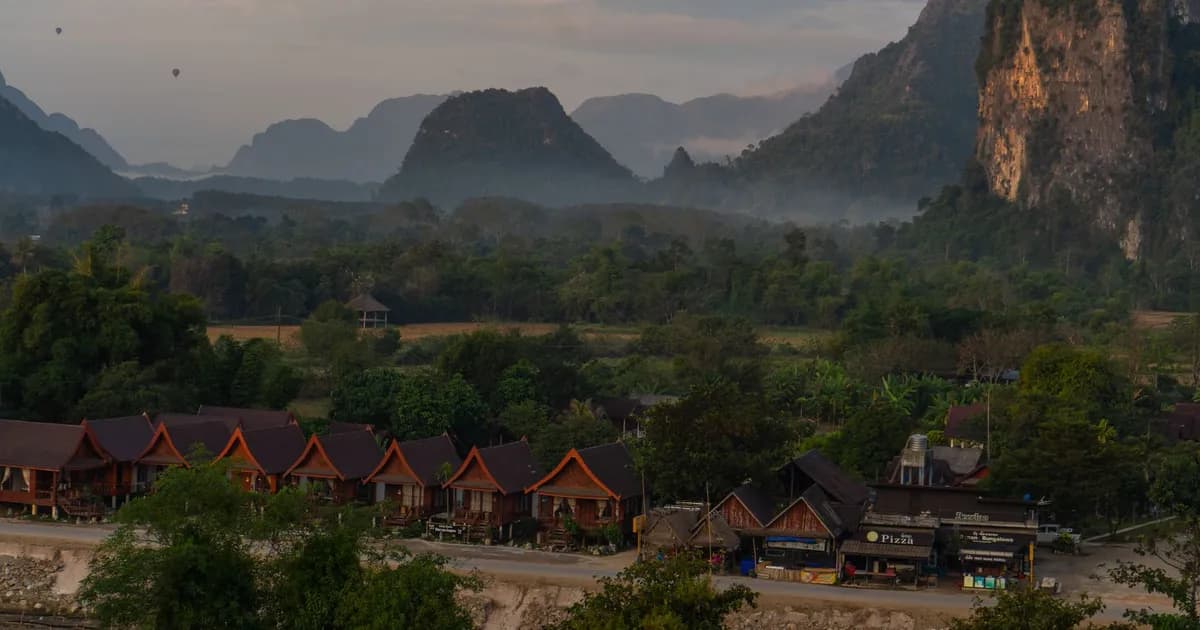
The Lao guesthouse is the default and, for slow travellers, usually the best choice. Typically it is a family house with six to twelve rooms, run by the family who live on the ground floor, with a shared terrace, plastic chairs, a dog, and a laminated map of the district on the wall. Rooms are plain: tiled floor, hard mattress, fan or split-unit air conditioning, a bathroom with a cold-water shower or an electric heater box.
What makes them worth choosing is not the room. It is the information. The person on the desk knows which boat is running, which road is closed, whose cousin drives to the next town at six in the morning and whether the waterfall is worth the trip this week. That knowledge is worth more than a pool. It is also the mechanism by which your money stays in the town you are sleeping in rather than leaving on the next flight.
Things to check before you commit: whether hot water actually works, whether the room has a window that opens onto something other than a corridor, and whether the guesthouse sits on a road that becomes a truck route at five in the morning. Walk up to the room. Nobody in Laos will be offended.
Homestays, and What They Really Involve
Homestay in Laos means something specific, and it is not what the word means on booking platforms in Europe. A genuine Lao homestay is a night in a village house, usually on a mat on a raised wooden floor, behind a curtain, in a communal sleeping space. There is a shared bucket bathroom. Dinner is eaten with the family, often on the floor, and often includes lao-lao rice whisky whether you want it or not. Electricity may be solar and may go off at nine.
These nights are frequently the ones travellers remember for years. They are also genuinely demanding, and they place a real burden on the host household. The deciding factor is how the stay is organised: whether the village receives a fixed, agreed payment; whether households rotate so no single family carries every group; whether a village guide is employed and paid; and whether visitor numbers are capped. Networks in Luang Namtha, Khammouane, Houaphanh and around several protected areas have been running this way for years and have the ASEAN homestay and community-based tourism certifications to show for it.
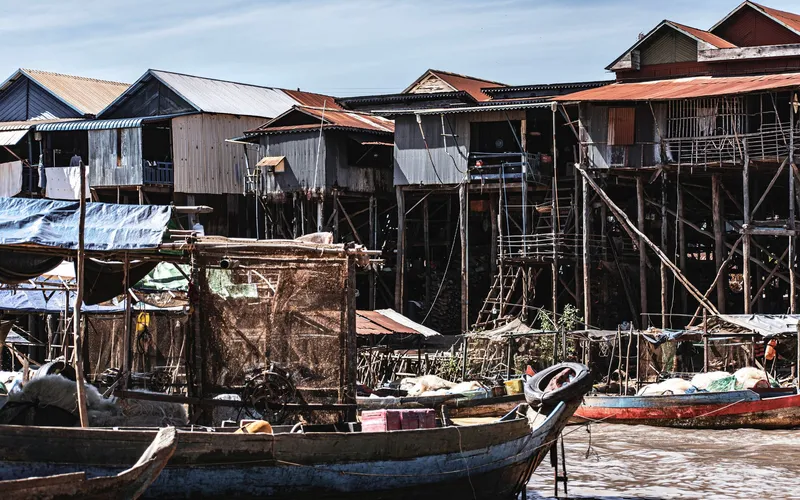
Practically, homestays are almost never bookable online. They are arranged through a provincial tourism office, a village tourism committee or an operator on the day or the day before, usually as part of a trek or a boat trip. If you want the criteria to judge an operator by, we set them out in our guide to community homestay treks. Bring a sleeping bag liner, a torch, earplugs and a small gift of practical use rather than sweets for the children.
Get matched with up to 5 trusted Laos agencies
- Free
- No obligation
- Up to 5 agencies
Eco-Lodges and the Quiet Upper End
The most interesting development in Lao accommodation over the past few years has been at the small, quiet, expensive end: riverside lodges, restored heritage houses, tented camps near protected areas and a handful of genuinely well-run eco-properties in places that had nothing a decade ago. These are not resorts. Many have fewer than fifteen rooms, no television, patchy internet by design, and a rate that includes meals because there is nowhere else to eat.
They are worth considering even on a modest overall budget, as one or two nights rather than a whole trip. A night at a lodge inside or beside a protected area often buys access you cannot otherwise get: a guided night safari, a dawn boat, a forest walk with someone who knows the species. Check what the rate includes, whether transfers are extra and how far the nearest road actually is. Our survey of where Laos's new hotels are going covers who is building what and where, which is useful context before you pay lodge rates.
Where Online Booking Works and Where It Doesn't
Booking platforms in Laos have good coverage in exactly four places: Vientiane, Luang Prabang, Vang Vieng and Pakse. Add Thakhek, Savannakhet, Luang Namtha and Nong Khiaw for thinner but usable coverage. Beyond that the listings thin out fast, and in provinces such as Phongsaly, Houaphanh, Attapeu and Sekong you will find a handful of properties online out of the dozens that exist.
This matters in two directions. Where coverage is good, booking ahead in high season is genuinely necessary and often cheaper than the walk-in rate. Where coverage is poor, the properties that appear online are not necessarily the best ones, merely the ones with an English-speaking family member and a working card reader. Some of the nicest rooms in provincial Laos have no internet presence at all beyond a phone number on a sign.
A payment note that catches people out: many smaller guesthouses take cash only, and card machines outside the main towns fail routinely. Prepaid bookings can also leave you arguing over an exchange rate applied at the desk. Read our piece on kip, dollars and the ATM situation before you rely on a card anywhere north of Luang Prabang.
How to Walk In and Choose Well
Walking in is not a fallback in Laos. It is the normal way to find a room in most of the country, and done properly it takes fifteen minutes.
- Arrive in daylight. Choosing a guesthouse after dark in an unlit town is how people end up in the wrong room at the wrong price.
- Leave your bag somewhere safe, or with the first guesthouse, and walk. Look at two or three places before deciding.
- Always ask to see the room. Check the shower, the fan, the lock and the window.
- Ask the price for one night and then for three or five. The second number is usually better.
- Ask what time the family locks the gate, and whether breakfast is included.
- Pay one night at a time for the first night if you are unsure.
In practice you will pay a little more than an online rate in the busy towns and a little less in the quiet ones. In exchange you get to see the room, avoid prepayment, and keep your itinerary flexible, which is the whole point of travelling this way.
Booking for Festivals and High Season
There are a small number of dates where the advice reverses completely and you should book months out. Lao New Year in mid-April fills Luang Prabang and Vientiane entirely, with prices doubling or worse. That Luang festival in Vientiane in November, the Luang Prabang boat races, Bun Bang Fai rocket festivals in the villages that hold them, and the Christmas to New Year window all produce genuine shortages. The dry-season peak from December to February is tight in Luang Prabang and in the small lodges everywhere.
Conversely, the green season from roughly June to September is when accommodation is at its cheapest and most available, and when asking for a discount is entirely normal. If you are choosing dates partly around comfort and cost, our guide to where to go and when in Laos maps the seasons region by region.
Questions Worth Asking Before You Commit
Where you sleep is the single largest line in most Laos budgets and the decision with the most local consequence. A few questions separate a property that contributes to the town from one that merely extracts from it. Who owns it? Are the staff from the district or brought in? Is the water heated by solar? Does it run a generator all night? Does it charge a fair rate for laundry, or three times the going rate because you have no alternative?
None of this requires you to interrogate a family over breakfast. It requires noticing. A guesthouse that employs four people from the village, buys its vegetables at the local market and charges what it says on the board is doing something worth supporting, and it usually looks and feels different from the moment you walk in. The principles we apply to these judgements are set out in our slow travel charter.
What to Do Next
- Book only the nights you must: your arrival night, any festival dates, and Luang Prabang in peak season.
- Set a nightly budget in kip rather than dollars, and revise it upwards for Luang Prabang specifically.
- Choose one or two nights of genuine splurge, ideally a lodge that buys you access rather than a hotel that buys you a lobby.
- Arrange homestays on the ground, through a provincial tourism office or a village committee, not online.
- Carry enough cash for three nights of accommodation at all times, in small kip notes.
- Arrive in new towns before dark so you can walk, look and choose.
- Ask for a weekly rate anywhere you like enough to stay five nights or more.
Frequently Asked Questions
Do I need to book accommodation in Laos in advance?
Only in specific cases: your first night after a long flight or border crossing, Luang Prabang between December and February, festival dates, and small lodges with few rooms. Everywhere else, walking in works and often costs less.
How much should I budget per night?
For a simple private double in a family guesthouse, plan on roughly 150,000 to 400,000 kip. Comfortable mid-range rooms sit between about 400,000 kip and a million. Luang Prabang runs well above the national average, so budget for it as a separate line.
What is a homestay actually like in Laos?
Expect a mat on a raised wooden floor in a shared sleeping space, a bucket bathroom, dinner with the family and limited electricity. It is simple rather than comfortable, and for most travellers it is the most memorable night of the trip.
Can I pay by card?
In Vientiane, Luang Prabang, Vang Vieng and Pakse, usually yes at mid-range properties and above. Elsewhere, assume cash. Card terminals fail often, and many family guesthouses do not have one at all.
Is it rude to look at the room before agreeing?
Not at all. It is expected. Asking to see a room, checking the shower and then politely declining is completely normal practice in Laos and nobody will take offence.
Are hostels common in Laos?
They exist in Vientiane, Luang Prabang, Vang Vieng, Pakse and a few other towns, and are a reasonable way to meet other travellers or find trekking companions. Outside those places, a private guesthouse room often costs little more than a dorm bed elsewhere in the region.
When is accommodation cheapest?
The green season, roughly June to September, is the cheapest and most available time, with negotiable rates almost everywhere. May and October are good compromises between price and weather.