

Laos is having the biggest tourism year in its history and most of the country still feels empty. Both of those statements are true, and the gap between them is the single most useful thing a traveller can understand about Laos right now. The arrivals data tells one story: growth, targets met, ministries pleased. The road tells another: guesthouses at half capacity in Savannakhet, boats waiting for passengers in the far south, and a queue outside a single cafe in Luang Prabang. Understanding who is actually coming, and where they go, explains both.
The Headline Number and What It Hides
Laos recorded close to 4.6 million international arrivals in 2025, comfortably beating an official target of 4.3 million. For 2026 the government has set a range of five to six million. The first quarter delivered around 1.36 million visitors, up roughly eight per cent year on year, and the first half came in at just over 2.59 million, a rise of nearly ten per cent.
Those are impressive figures for a landlocked country of around 7.5 million people. They are also easy to misread. An arrival is a border crossing, not a holiday. A Thai family visiting relatives across the Mekong for two days, a Vietnamese trader coming through Dansavanh, a Chinese tour group riding the railway down for a weekend in Luang Prabang and a Belgian couple spending three weeks between Nong Khiaw and the Bolaven Plateau all count identically in the total.
That single fact resolves the apparent contradiction. Laos is receiving a large and rising volume of short, regional, often repeat crossings. It is not receiving a proportionate rise in long-stay leisure travellers spread across the country.
One request. Up to five tailored proposals.
Skip contacting agencies one by one — share your trip once and let up to five trusted Laos agencies come to you. Free, with no obligation.
Get my free quotesWhere the Visitors Actually Come From
The composition has been remarkably stable. Across the first eight months of 2025, Thailand supplied the most visitors at 977,675, followed by Vietnam with 790,403 and China with 750,650. In the first half of 2026 the same three led again: Thailand 833,738, China 675,365 and Vietnam 586,190.
Add those together and the three neighbours account for the overwhelming majority of everyone who enters Laos. Long-haul markets, meaning most of Europe, North America and Australia, make up a comparatively slim slice of the total, even though they account for a disproportionate share of nights slept, guides hired and provincial guesthouses filled.
For a slow traveller this has a practical consequence that is almost never stated plainly: you are not competing with four and a half million people for a room. You are competing with a much smaller pool of long-stay visitors, and only in about five places.
It is also worth noting what the totals leave out. Domestic travel, which the government now counts separately and takes increasingly seriously, does not appear in the international figure at all, yet Lao families travelling for Buddhist holidays fill guesthouses at Vang Vieng and picnic sites at Kuang Si more visibly than any foreign market does. And arrivals say nothing about duration. Official modelling assumes an average international stay of around ten days, but that average is pulled hard in two directions at once: by very large numbers of one and two-night regional crossings on one side, and by a small, stubborn group of long-haul travellers spending three or four weeks on the other. Almost nobody actually travels for ten days.
The China Question
Chinese arrivals reached roughly 1.1 million in 2025. The 2026 projection is around two million, a near doubling, and officials have linked it explicitly to the 65th anniversary of diplomatic relations between the two countries and to growing appetite for travel along the railway.
Two honest observations. First, the mid-2026 data did not yet show China overtaking Thailand, so the two-million figure should be read as an ambition rather than a settled outcome. Second, and more relevant on the ground, Chinese travel to Laos is heavily structured: group tours, fixed circuits, railway timings, specific hotels, specific restaurants and specific viewpoints at specific hours. Concentrated demand behaves very differently from dispersed demand. It creates twenty crowded minutes at a waterfall and complete silence at the same waterfall an hour later.
Get matched with up to 5 trusted Laos agencies
- Free
- No obligation
- Up to 5 agencies
The Railway Made a Corridor, Not a Country
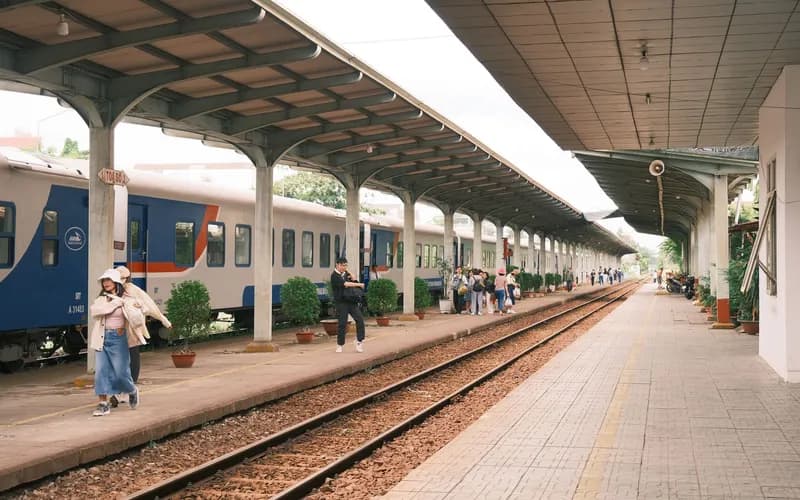
The Boten to Vientiane line did not open Laos evenly. It opened a north-south ribbon: Luang Namtha province at Boten, Luang Prabang, Vang Vieng and Vientiane. Places on the line have been transformed. Places forty kilometres off the line have barely noticed. Xieng Khouang, Houaphanh, Savannakhet and the deep south still move at the speed of the bus network, which is to say slowly and with much less company.
This is the clearest structural change in Lao travel this decade, and it is worth reading in full: what the Laos-China railway has actually done to travel patterns is a story about a corridor, not a country. The corridor takes the volume. Everything else gets the quiet.
Busy and Empty at the Same Time
Here is the practical map of 2026. Luang Prabang is genuinely busy in the dry season, especially at the alms round, the night market and Kuang Si. Vang Vieng is busy in a different, younger register, with balloon flights and a full lagoon circuit. Vientiane is busy in a working-capital way rather than a tourist way. Those three towns absorb most of the pressure.
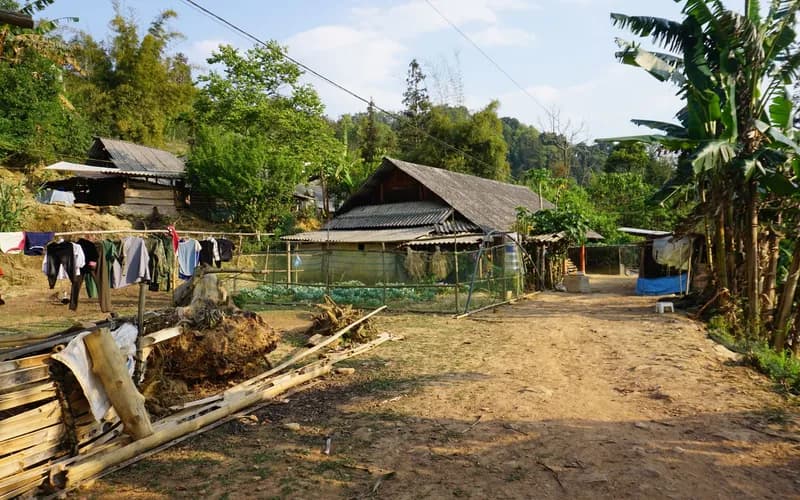
Everywhere else, the arithmetic collapses. Phonsavan, Thakhek, Vieng Xai, Champasak, Muang Ngoi, the 4000 Islands in low season and every provincial capital in between operate at a fraction of capacity. A town like Savannakhet, which holds the second-largest colonial quarter in the country, can pass an entire afternoon without a foreign visitor walking through its main square. This is not a country that has been overrun. It is a country with three pressure points and a great deal of open space.
What This Does to Prices and Bookings
Rising arrivals plus a weak kip is an unusual combination. For a visitor spending euros, dollars or baht, Laos remains inexpensive by regional standards. For Lao businesses importing fuel, vehicles, coffee machines and building materials, costs have risen sharply, and prices in the tourism sector have moved upward accordingly, particularly in the corridor.
Three effects worth planning around:
- In Luang Prabang and Vang Vieng, good boutique accommodation in the December to February window now needs booking weeks ahead, and the best guides are committed earlier still.
- In provincial Laos, walk-in remains normal and reserving more than a couple of days out is rarely necessary.
- Quoted prices go stale fast. Treat any figure written down more than a few months ago as an order of magnitude, not a price.
The Luang Prabang situation in particular deserves its own reading, because the pressure there is a genuine heritage question and not merely a crowding one: see how the town is handling its tourism surge alongside UNESCO obligations.
What the 2026 to 2030 Plan Signals
The government has framed a five-year tourism strategy targeting roughly 43 million visitors in total between 2026 and 2030, split close to evenly between domestic and international travel, with average international stays modelled at around ten days. Whether those numbers are achieved matters less than what they reveal about intent.
Read as a signal, the plan points to more air routes, more border capacity, more resort and casino-zone development near the Chinese and Thai frontiers, and continued promotion of the railway as the spine of the product. It does not point to a strategy of dispersing visitors into Houaphanh or Attapeu. Regional balance is mentioned in policy documents; capital follows the corridor.
The honest implication for travellers is that the quiet parts of Laos will most likely stay quiet through this planning cycle, and the busy parts will get busier. If you want the quiet, you do not need to hurry, but you do need to actually go there rather than adding a day trip to the corridor.
How to Travel Well Inside This Trend
None of this argues for avoiding Luang Prabang. It argues for structuring a trip so that the concentrated places are experienced at their uncrowded hours and the dispersed places get the bulk of your nights. In practice that means arriving in a busy town midweek rather than at the weekend, walking at six in the morning rather than at ten, and giving a small province three nights instead of a photo stop.
It also means choosing operators whose work is spread across provinces rather than pooled into a single circuit. The economics of Lao tourism at the moment reward concentration; travellers are one of the few forces pushing the other way. If you want the underlying case for why this country repays that approach, we set it out in why Laos has become Southeast Asia's slow-travel refuge.
What to Do Next
- Decide early which two provinces get the majority of your nights, and treat the corridor towns as connective tissue rather than the trip.
- Book Luang Prabang and Vang Vieng accommodation well ahead for December to February; leave everything else flexible.
- Shift your daily rhythm in busy towns to early morning and late afternoon, when tour-group timing empties the sites.
- Budget with current figures rather than older guidebook prices, and expect the corridor to cost noticeably more than the provinces.
- Choose agencies and guides who work outside the railway line, and hold them to it. Our charter for slow travel sets out what that standard looks like in practice.
Frequently Asked Questions
How many tourists visit Laos in 2026?
Laos targets between five and six million international arrivals for 2026, after close to 4.6 million in 2025. First-half figures of just over 2.59 million, up nearly ten per cent, put the lower end of that range within reach. Remember that an arrival is a border crossing, so short regional trips are included.
Which countries send the most visitors to Laos?
Thailand, China and Vietnam, by a wide margin and in that general order. In the first half of 2026 Thailand supplied 833,738 visitors, China 675,365 and Vietnam 586,190. Long-haul markets from Europe, North America and Australia are a much smaller share of arrivals but a much larger share of nights spent inland.
Is Laos crowded now?
Only in specific places at specific times. Luang Prabang, Vang Vieng and to a lesser extent Vientiane carry most of the pressure during the November to February dry season. Provincial Laos, including most of the centre, north-east and deep south, remains very quiet all year.
Has the railway made Laos more touristy?
It has concentrated tourism rather than spread it. The line created a busy north-south corridor between Boten, Luang Prabang, Vang Vieng and Vientiane, while places off the line have seen little change. Travelling perpendicular to the railway is the simplest way to leave the crowds behind.
Is Laos getting more expensive?
Yes in the corridor and in mid-to-upper accommodation, driven partly by the weak kip raising import costs for businesses. For foreign visitors the country remains inexpensive compared with Thailand or Vietnam, but written prices go out of date quickly and should be checked rather than assumed.
When is the best time to avoid the crowds?
Late May to early October sees far fewer visitors, with green landscapes, dramatic river levels and afternoon rain rather than all-day washouts. If you want dry weather without the peak, target early November or late February rather than the Christmas to New Year window.