Kuala Lumpur Slowly: The City That Deserves More Than a Layover
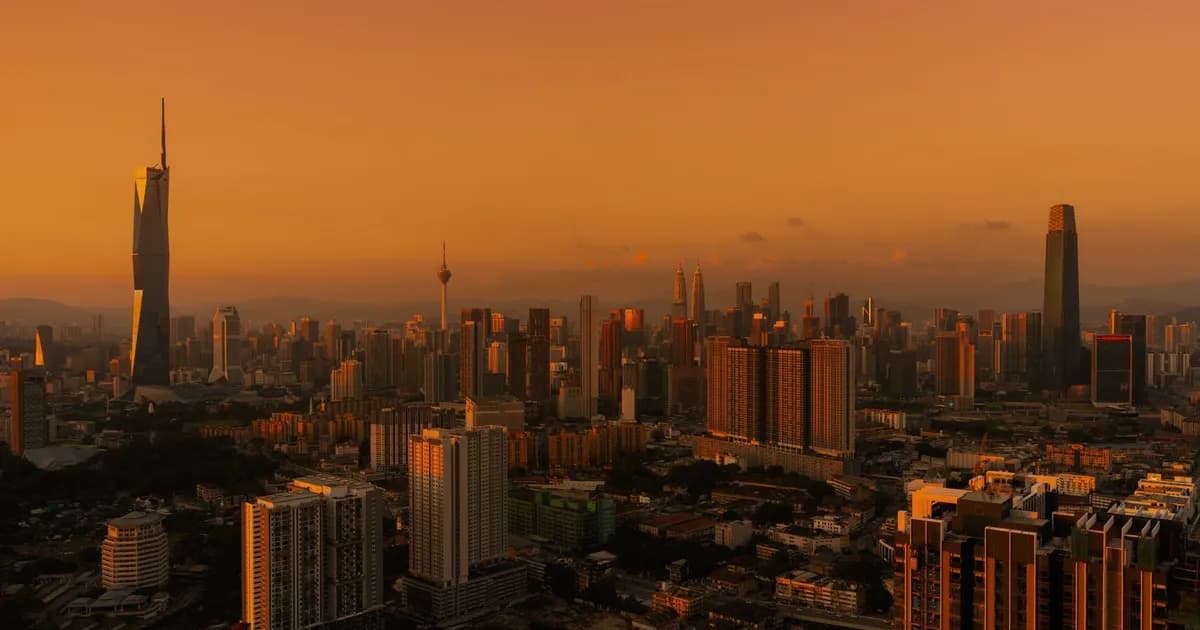
Most visitors meet Kuala Lumpur at speed. A night between flights, a morning under the Petronas Twin Towers, an air-conditioned mall, and then onward to an island. It is an understandable habit, and it is also why Malaysia's capital remains one of the most persistently underrated cities in Southeast Asia. Give it a week and it stops being a skyline. It becomes a layered, humid, talkative place where three culinary traditions share a single street corner, where a limestone hill full of macaques sits twenty minutes from a metro platform, and where genuine rainforest survives inside the city boundary. Kuala Lumpur does not perform for visitors. It gets on with its work, and it rewards anyone patient enough to fall into step with it.
Why a Week Changes What You See
A two-day Kuala Lumpur is a checklist: towers, Batu Caves, Jalan Alor, done. A seven-day Kuala Lumpur is something else entirely, because the city's pleasures are cumulative rather than singular. You start to recognise the woman who makes your roti canai. You learn which of the five ways home from Pasar Seni is coolest at four in the afternoon. You discover that the same street changes character three times between breakfast and midnight, and that the version you would have seen on a rushed overnight stop was the least interesting of the three.
A longer stay also solves a practical problem. Kuala Lumpur is hot — genuinely, relentlessly hot, sitting around thirty-two degrees most afternoons with humidity to match — and a compressed itinerary forces you to walk through the worst of it. A week lets you adopt the local pattern instead: out early, indoors or resting through the middle of the day, out again after five when the light softens and the streets refill. That is not laziness. It is the only sensible way to be outdoors here, and it happens to be exactly how slow travel is supposed to work.
If you are still deciding how the capital fits into a wider trip, our overview of where to go and when across Malaysia sets out how Kuala Lumpur pairs with the peninsula's coasts, islands and highlands.
One request. Up to five tailored proposals.
Skip contacting agencies one by one — share your trip once and let up to five trusted Malaysia agencies come to you. Free, with no obligation.
Get my free quotesReading the City: River, Tin and Three Communities
Kuala Lumpur means muddy confluence, and the name is not decorative. The city began in the 1850s at the meeting of the Klang and Gombak rivers, as a supply point for tin prospectors working the Klang Valley. Everything that followed grew outward from that muddy junction: the Chinese clan associations and guild houses, the Indian labour brought in under British administration, the Malay kampungs that predate all of it, and the administrative capital that was grafted on top.
You can still stand at the confluence. The River of Life project cleaned and lit the meeting point beside Masjid Jamek, and while the blue-lit fountain display is firmly a piece of civic theatre, the walkways on either bank have made the old core genuinely walkable for the first time in decades. Cross to Merdeka Square and you are in the colonial administrative set-piece: the Sultan Abdul Samad Building with its copper domes, the old Royal Selangor Club, and the padang where independence was declared in 1957.
Within twenty minutes on foot from there you can reach Chinatown's Petaling Street, the Central Market, Little India around Masjid India, and the edge of Kampung Baru — a Malay village of wooden stilt houses that has held its ground in the middle of a high-rise city for over a century. That compression is the real story of Kuala Lumpur, and no observation deck will show it to you.
Where to Base Yourself
Neighbourhood choice matters more here than in most cities, because Kuala Lumpur's districts feel genuinely different from one another and the traffic between them can be punishing.
- Bukit Bintang is the obvious choice: dense, central, well connected by monorail and MRT, and loud until very late. Good for a first short visit, less good for sleep.
- Chinatown and Pasar Seni put you inside the old core, within walking distance of the river, the markets and the best transport interchange in the city. Budget and mid-range stays dominate, often in restored shophouses.
- Bangsar is leafier and more residential, strong on independent cafés and an excellent evening market, with an LRT connection into town. A good pick for a week or more.
- Brickfields, the city's Little India, sits beside KL Sentral, which makes it unbeatable for onward travel and surprisingly good for food.
- Kampung Baru and Chow Kit are less polished and more everyday, and closest to the Kuala Lumpur that Malaysians actually live in.
For a week, something in Chinatown, Bangsar or Brickfields tends to work better than the Bukit Bintang tourist corridor. You will spend less, sleep more and eat considerably better.
Get matched with up to 5 trusted Malaysia agencies
- Free
- No obligation
- Up to 5 agencies
Moving Around: The Train Map Is Better Than You Think
Kuala Lumpur's rail network is one of the quiet successes of Southeast Asian urban transport, and most short-stay visitors never use it properly. Two MRT lines, three LRT lines, a monorail, a bus rapid transit line and the KTM Komuter suburban trains now cover most of what a traveller needs, and the Putrajaya MRT line in particular opened up parts of the city that used to mean a long and expensive taxi ride.
The practical points are simple. Buy a Touch 'n Go card on arrival; it works on every rail line, most city buses, tolls and many convenience stores. If you are moving constantly, the Rapid Kembara pass gives foreign visitors unlimited travel on Rapid KL trains and buses — priced since January 2026 at RM25 for one day and RM55 for three days, a sharp increase on the RM10 MyCity Pass it replaced. For most slow travellers staying a week, simply topping up a Touch 'n Go card and paying per journey works out cheaper.
Be realistic about the gaps. Stations are not always where you would hope, walkways between interchanges can be long, and mid-afternoon heat makes a fifteen-minute connecting walk feel considerably longer. Ride-hailing fills those gaps cheaply, and our guide to getting around Malaysia without a car covers how the same logic extends well beyond the capital.
Eating Kuala Lumpur Properly
Nowhere in Malaysia makes the country's culinary argument more clearly than its capital, because Kuala Lumpur is where all of it arrives at once: Malay, Chinese and Indian traditions, plus Nyonya, Mamak, Hakka, Teochew, Kelantanese and everything that fifty years of internal migration has carried in.
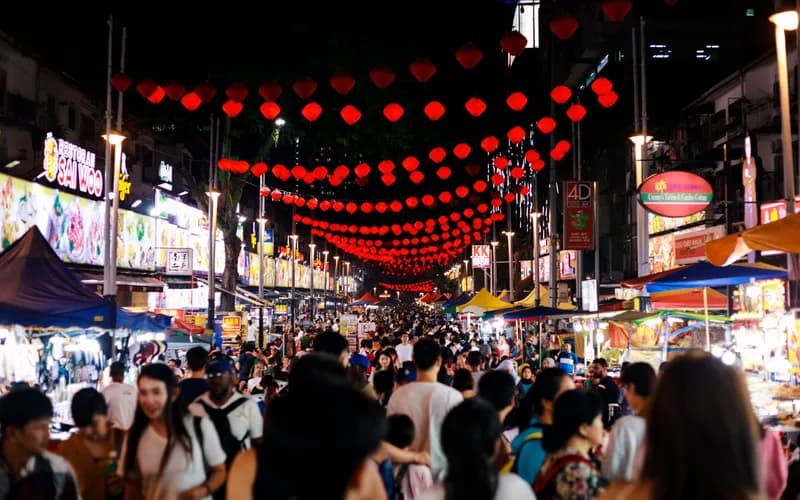
A week gives you room to eat by time of day rather than by list. Breakfast is nasi lemak wrapped in banana leaf from a roadside stall, or kaya toast and strong kopi in an old kopitiam. Mid-morning is roti canai at a mamak shop, which will also feed you at two in the morning. Lunch is economy rice, the nasi campur counter where you point at what you want and pay by the spoonful, or banana leaf rice in Brickfields. Late afternoon is cendol or air mata kucing near Petaling Street. Dinner is a hawker centre, a Chinese seafood place under fluorescent light, or satay from a charcoal grill.
Prices remain among the lowest of any capital city in the region. A full hawker meal for RM8 to RM15 is routine, and a good sit-down dinner for two rarely needs to exceed RM100. The city now also sits inside the Michelin Guide's Malaysian selection, which has sharply raised the profile of a handful of stalls and restaurants. We looked at what that has done to the wider scene in our piece on Malaysia's food-travel moment. The short version is that the queues at the anointed places have lengthened considerably, and the best eating is still mostly happening at the ones that never got a mention.
Green Escapes Inside the City Limits
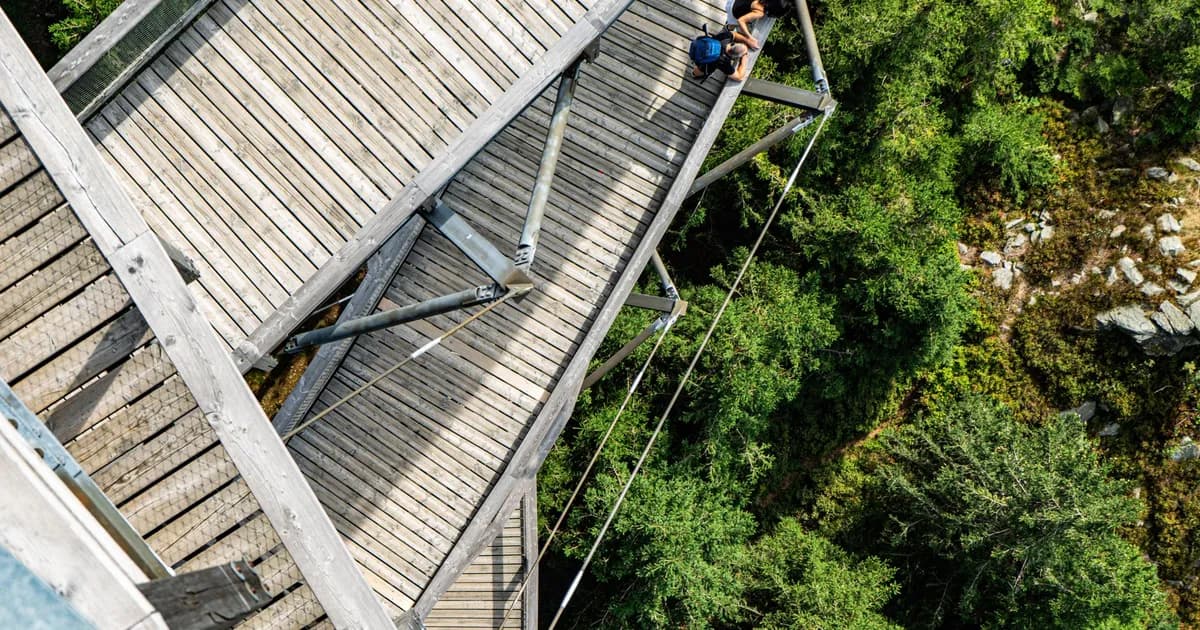
Kuala Lumpur hides more forest than its reputation suggests. The KL Forest Eco Park beside Menara Kuala Lumpur is a small surviving fragment of lowland dipterocarp forest with a canopy walkway, five minutes from Bukit Bintang and free to enter. Bukit Nanas, Bukit Gasing and the Bukit Kiara trails give you humid, genuinely green mornings without leaving the conurbation at all.
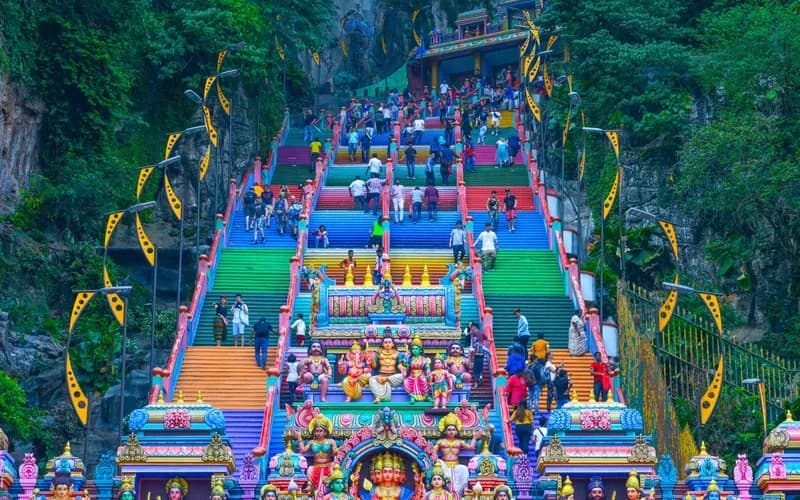
Further out but still reachable on public transport, Batu Caves is the obvious one: 272 painted steps, a vast limestone cavern, a Hindu shrine complex and a resident population of macaques with no respect whatsoever for your belongings. Go before eight in the morning, both for the light and for the relative quiet. The Perdana Botanical Gardens, the Lake Gardens, the bird park and the Islamic Arts Museum cluster together in a quieter western pocket of the city that most visitors skip entirely — and the museum, with its collection of architectural models, manuscripts and textiles, is among the finest of its kind anywhere.
The Honest Caveats
Kuala Lumpur is not an easy city to love immediately, and pretending otherwise does nobody any favours.
The heat is constant and there is no cool season; the best relief you get is a rainy late afternoon. Pavements are inconsistent and in places simply absent, so expect to walk in the road more than you would like. Traffic is heavy, and a three-kilometre ride at six in the evening can take forty minutes. Construction is everywhere, because this is a city permanently rebuilding itself: the Merdeka 118 tower, now the second-tallest building in the world, has spent years reshaping the district around Stadium Merdeka, and its observation deck has been slated to open during 2026. Treat any ticket pricing you find online as unconfirmed until it actually does.
Haze from regional land-clearing can affect air quality, usually somewhere between June and September, though the severity varies enormously from one year to the next. And Kuala Lumpur is not a beautiful city in the conventional sense. It is an interesting one, which tends to last longer.
A Loose Ten-Day Shape
Rather than an itinerary, a rhythm. Two days finding your feet in the old core: the confluence, Merdeka Square, Chinatown, the Central Market. Two days on the eastern side: Kampung Baru at dawn, the towers and KLCC park, Bukit Bintang after dark. A day out to Batu Caves and back before the worst of the heat. A day in the Lake Gardens and the Islamic Arts Museum. A day doing nothing much at all in Bangsar. Then two or three days using the city as a base — Putrajaya's planned-city strangeness, the tea and cool air of the highlands, or the Kuala Selangor fireflies at dusk.
From there the rest of the country opens up. KL Sentral puts you on an ETS train to Ipoh in about two and a half hours and to Penang in roughly four, and our guide to travelling Peninsular Malaysia by train explains how to string those legs together without flying.
What to Do Next
- Block out at least five nights in Kuala Lumpur rather than one or two, and choose accommodation in Chinatown, Brickfields or Bangsar rather than the Bukit Bintang strip.
- Buy a Touch 'n Go card at the airport or any rail station and load RM50 to RM100 onto it before your first journey.
- Build each day around the heat: outdoors before ten, indoors or resting from noon until four, outdoors again after five.
- Pick one neighbourhood per day instead of crossing the city twice. Kuala Lumpur punishes zigzagging itineraries more than most cities.
- Book onward ETS train seats a few days ahead if you are continuing north, especially around weekends and public holidays.
- If you want a shaped, unhurried version of all this, start with our plan your journey page for Malaysia.
Frequently Asked Questions
How many days should I spend in Kuala Lumpur?
Three days covers the landmarks. Five to seven days is where the city starts to make sense, because you can adopt the local daily rhythm, explore one neighbourhood at a time and use the capital as a base for day trips to Batu Caves, Putrajaya or Kuala Selangor. Anything under two nights is a layover rather than a visit.
Is Kuala Lumpur walkable?
Partly. The old core around Masjid Jamek, Chinatown and the Central Market is genuinely walkable, and the River of Life walkways help a great deal. Elsewhere pavements are patchy, pedestrian crossings are scarce and the heat limits how far you will want to go on foot. The realistic approach is to walk within neighbourhoods and take the train or a ride-hail between them.
What is the best time of year to visit Kuala Lumpur?
There is no dry season in the conventional sense. The capital sees rain to some degree all year, with rainfall generally peaking around March and April and again in October and November. Afternoon thunderstorms are common and usually brief. Temperatures barely move from one month to the next. In practice, which month you choose matters far less than how you plan your days around heat and afternoon rain.
Is Kuala Lumpur expensive?
It remains one of the better-value capital cities in Southeast Asia. Hawker meals typically run RM8 to RM15, rail journeys across the city cost a few ringgit, and comfortable mid-range accommodation is widely available for well under what you would pay in Singapore or Bangkok. Alcohol is the notable exception, as it is heavily taxed and can cost more than the meal it accompanies.
Do I need to dress conservatively in Kuala Lumpur?
For everyday city life, no. The capital is relaxed and cosmopolitan. Mosques including Masjid Negara and Masjid Jamek require covered shoulders and knees and lend robes at the entrance, and similar modesty applies at Hindu temples and in more traditional neighbourhoods such as Kampung Baru. Carrying a light scarf solves most situations before they arise.
Can I reach the airport by train?
Yes. KLIA Ekspres runs non-stop from KL Sentral to both airport terminals in roughly thirty minutes, and KLIA Transit makes intermediate stops for a lower fare. Both are operated separately from the Rapid KL network, so a Rapid Kembara pass does not cover them. Allow extra time if you are connecting from another line inside KL Sentral, which is a large and initially confusing station.
Is Kuala Lumpur a good base for the rest of Malaysia?
It is the country's transport hub, so yes. KL Sentral connects to ETS trains running north to Ipoh, Penang and the Thai border, to KTM Komuter services around the Klang Valley, and to both airports for flights to Borneo and the islands. Many travellers find that a few days in the capital at the start of a trip and one more night at the end works better than trying to fit everything into a single stay.