Gunung Mulu Slowly: Caves, Bats and the Forest Above Sarawak's Limestone
Most people who go to Gunung Mulu National Park treat it as a checklist: fly in, see the caves, watch the bats, fly out. That is a perfectly good trip, and it also misses what makes Mulu one of the most remarkable places in Malaysia. This is a World Heritage rainforest on a limestone massif, reachable only by small aircraft or a long river journey, where the weather decides the schedule and the best moments tend to arrive when you stop trying to fit everything in. Give it three to five days, and Mulu changes from an attraction into a place.
Why Mulu rewards a slower approach
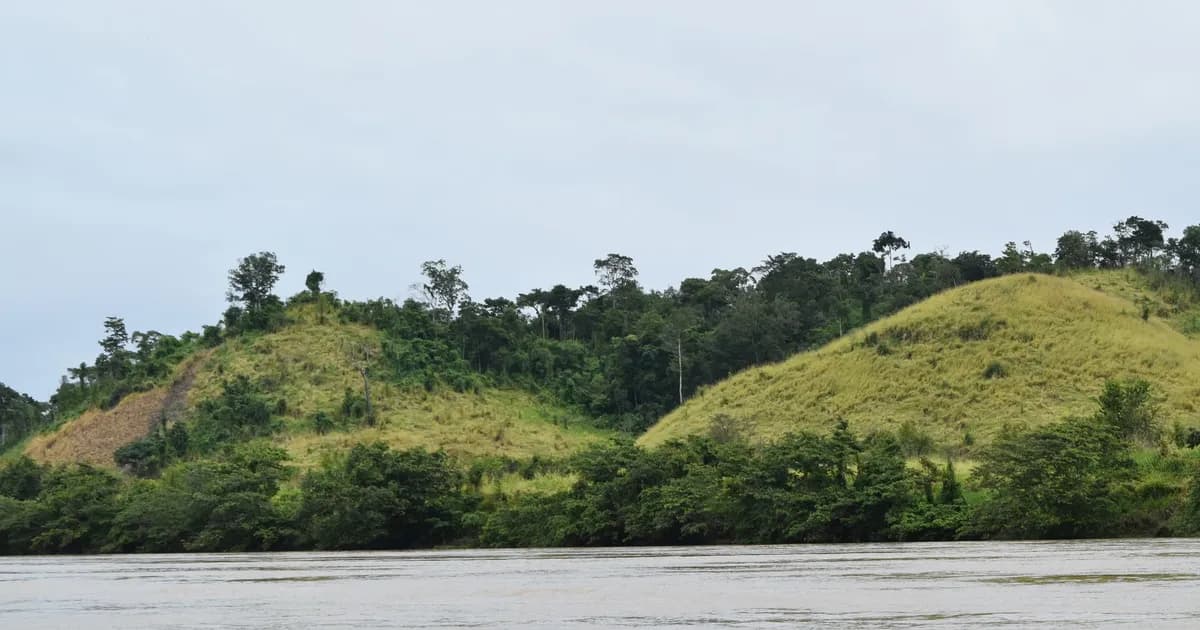
Gunung Mulu National Park in Sarawak was inscribed as a UNESCO World Heritage Site in 2000, recognised for its karst landscape and for one of the longest chains of caves in the world. The numbers are famous: the Sarawak Chamber is often described as large enough to hold dozens of jumbo jets, and the Deer Cave is home to millions of bats. But the statistics are not the point. What you actually experience is a lowland rainforest that closes in over a plank walkway, a river that rises and falls with the afternoon rain, and a silence underground that is very different from anything on the surface.
Mulu is also a place where logistics enforce slowness. There is no road in. Flights from Miri take roughly half an hour, and there are also services from Kuching and Kota Kinabalu. Rain and low cloud cancel flights with some regularity, and the cave and trail programme is guided and timed. If you arrive with a rigid plan, the park will quietly dismantle it. If you arrive with a spare day or two, you will see more, not less.
This is also a destination that suits the way we think about travel at Unrush. It is expensive relative to the rest of Sarawak, so the honest question is whether you are paying for depth. We think you are, provided you stay long enough to use the park properly. If you are weighing it against quieter corners, our guide to hidden gems for slow travellers in Malaysia puts Mulu in context.
One request. Up to five tailored proposals.
Skip contacting agencies one by one — share your trip once and let up to five trusted Malaysia agencies come to you. Free, with no obligation.
Get my free quotesGetting there and choosing your base
Everything begins with the flight. MASwings operates the small turboprop services into Mulu, and the short hop from Miri is the usual choice because it keeps the journey simple: arrive in Miri the day before, sleep near the airport, and fly in the next morning. Connecting through Kuching or Kota Kinabalu works, but it adds a longer leg and more exposure to weather delays. Whichever route you pick, avoid booking a same-day onward international flight for the day you leave Mulu. Build in a buffer night.
Because Mulu sits in Sarawak, remember that Sarawak runs its own immigration checks even for people arriving on domestic flights from the peninsula. Our explainer on Malaysia's internal borders between Sabah, Sarawak and the peninsula covers what to carry and what to expect at the desk.
Once you are in, your choice of lodging shapes the rhythm of the stay. There are three broad options. The resort-style hotel near the park offers comfort and package deals; reported prices for a three-day, two-night package including transfers, meals and guided cave tours were around RM1,249 per person in mid-2026, though you should check current rates directly. Park headquarters offers a much cheaper spread of bungalows, longhouse-style rooms, a rainforest lodge and hostel beds, and it puts you at the starting point of the plank walk. A few small guesthouses sit just outside the park boundary and tend to be the best value for travellers who want to cook little and talk to people. For a slow stay, park headquarters or a nearby guesthouse is usually the better choice. You walk to everything, you hear the forest at night, and you are never dependent on a hotel shuttle.
The show caves, done properly
The four main show caves are Deer Cave, Lang Cave, Wind Cave and Clearwater Cave. They are accessed in two different ways, which is useful to know when you plan your days.
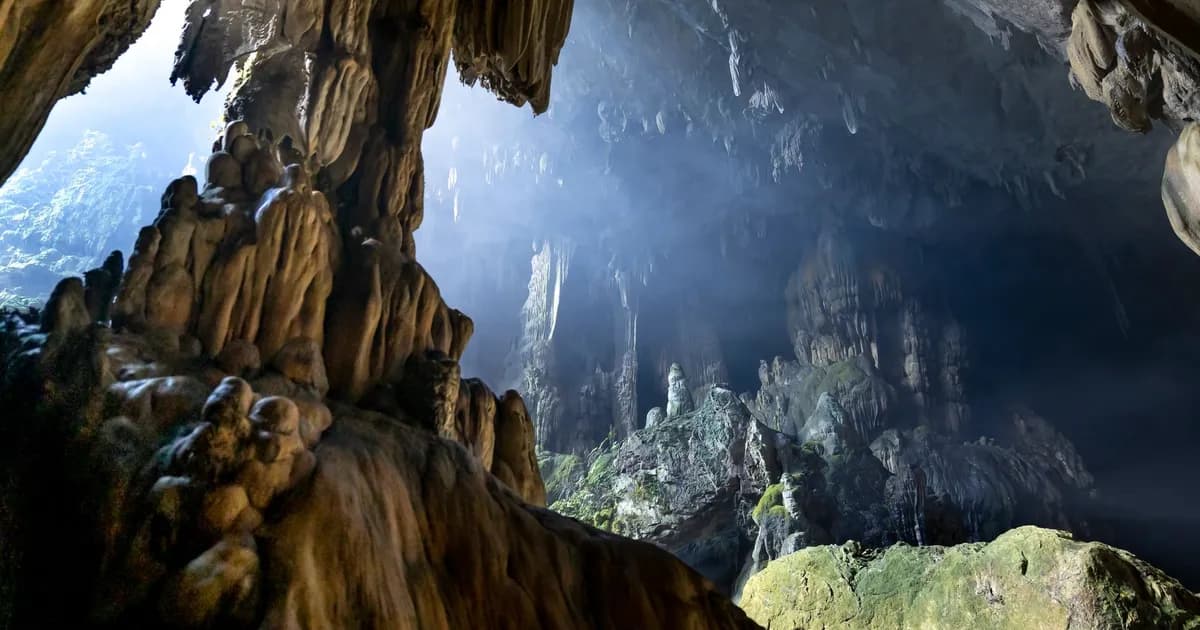
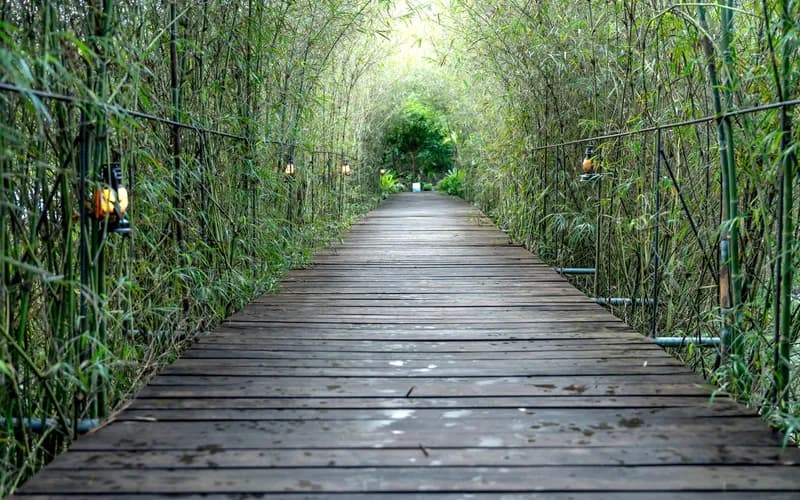
Deer Cave and Lang Cave lie at the end of a 3-kilometre plank walk through the forest from park headquarters. It is an easy, flat walk, but it takes time, and it is worth doing slowly because the forest here is the opening act. Deer Cave is vast. The entrance chamber is enormous, and from the right angle you can see the famous profile of Abraham Lincoln in the rock. Lang Cave, by contrast, is small and intimate, with delicate stalactites and stalagmites that reward a long look.
Wind Cave and Clearwater Cave are reached by longboat along the river, followed by short walks. The river trip is half the pleasure. If you can, schedule it for the morning, when the light on the water is better and the forest is noisy with birds. The caves themselves are cool, damp and dramatic, with underground streams and sections that feel almost sculpted.
All cave visits are guided, and slots are booked at park headquarters or through your accommodation. Do not assume you can improvise the same morning. Book the evening before, and keep your afternoons free so a delayed flight or a heavy rain does not wipe out your plan.
Get matched with up to 5 trusted Malaysia agencies
- Free
- No obligation
- Up to 5 agencies
The bat exodus and what to expect
The evening bat exodus is the moment most visitors come for. At around five or six in the afternoon, millions of wrinkle-lipped bats pour out of Deer Cave in long, shifting ribbons to feed across the forest and beyond. Visitors gather at the bat observatory near the cave mouth to watch.
It is a genuine spectacle, and it is also variable. Rain can delay or suppress the exodus, and the shape of the stream changes from night to night. Some evenings the bats come out in a wide coil; on others they stay low and fast. Treat it as wildlife rather than a show, because that is exactly what it is. Go on more than one evening if you can, and take a moment to notice the hawks that wait for the stragglers.
Two practical points. First, keep your light and noise low, since the bats and the other watchers will appreciate it. Second, check the forecast and the guide's advice before the walk back, because the plank path is long and the light fades quickly once the bats are gone.
The Pinnacles, the Headhunters' Trail and the wider forest
If you want to go beyond the show caves, Mulu offers some of Borneo's most demanding guided walking. Our broader advice on how to hike in Malaysia, with permits, guides and leeches applies here, and Mulu adds its own rules.
The Pinnacles trek is the headline. It takes a minimum of three days and two nights. Visitors travel by boat for an hour or two, then hike roughly 9 kilometres to the overnight camp, and make the climb to the viewing platform the next morning. The final ascent covers about 2.4 kilometres and gains a very large amount of height, with 16 ladders and many ropes along the way. A licensed guide is mandatory, and the climb is prohibited during heavy rain or when cut-off times are exceeded. A reported guided price is in the region of RM465 per person for the Pinnacles, but confirm current fees with the park. This is a hard day on legs and knees. It is also one of the most striking views in Borneo, a field of blade-like limestone spires rising out of the forest. Do not attempt it casually, and do not schedule it on your last day.
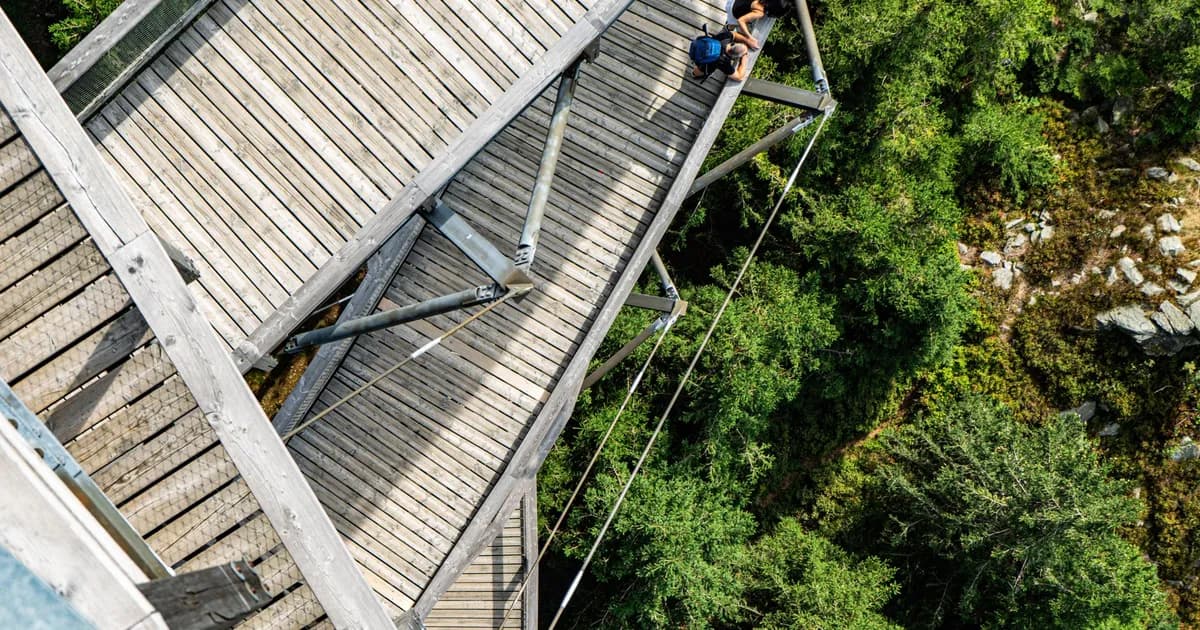
The Headhunters' Trail is a gentler option for those who want to feel the forest without the vertical effort. The route is about 11.3 kilometres, connects Mulu with Limbang, and takes four to five hours of walking over boardwalks, marsh sections and a rope bridge. It follows an old route used by the people of the area, and a local guide will tell you about that history. The Mulu Canopy Skywalk, a 480-metre walkway suspended around 25 metres above the forest floor, is a good short option for birdwatching, and night walks reveal frogs, insects and spiders that you will never see by day.
A realistic three to five day plan
Here is how we would shape a stay, with room for weather.
Day one: arrive by the morning flight, check in, and walk the first stretch of the plank path in the afternoon. Book your cave slots, then see the bat exodus if conditions allow. Day two: Deer Cave and Lang Cave in the morning, a long lunch, and a quiet afternoon. If the weather is good, a night walk with a guide. Day three: the longboat trip to Wind Cave and Clearwater Cave, with a swim or a rest afterwards where permitted. Day four and five: the Pinnacles trek or the Headhunters' Trail, with the final day left as a deliberate buffer for flights.
If you only have two nights, you can still see the show caves and the bats, but you will be rushed and exposed to weather risk. Our honest advice is to treat two nights as the minimum and three or four nights as the sensible target. If you want to combine Mulu with other places in Sarawak, a few unhurried days in Kuching on the Sarawak River make a gentle counterpart to the wilderness, with food, museums and river walks after the jungle.
Practical notes: weather, health and cost
Mulu is wet. Rainfall is high all year, and afternoon storms are common. Bring a poncho or light rain jacket, sturdy shoes with grip, quick-drying clothes and a spare set of socks. Leeches are a fact of life on forest trails; our guidance on staying healthy in Malaysia covers repellent, insect bites and first aid.
Costs add up quickly because everything is guided and everything arrives by air. Budget for flights, park fees, guide fees for each activity and meals at your lodging. If you travel in a pair or small group, guide fees are shared, which improves the value. Cash is useful in small places, and card acceptance is patchy outside the main lodgings.
Fitness matters more than most guides admit. The show caves are easy, but the Pinnacles and the longer treks are serious. If you are unsure, be honest with yourself and with the operator. A good guide would rather advise you to shorten a trek than carry you off a ladder.
Finally, remember that conditions change. Fees, schedules and flight patterns are updated regularly, so verify with the park and the airline before you commit. Planning a bigger journey? Our plan your journey page can help you fit Mulu into a wider route.
What to Do Next
- Decide how many nights you can give Mulu, with three or four as the sensible target.
- Check current MASwings flights from Miri, Kuching or Kota Kinabalu, and add a buffer night at each end.
- Choose your base: park headquarters for simplicity and value, or a resort package for comfort.
- Ask the park or your lodging about guided cave slots and book the evening before.
- If you want the Pinnacles, check your fitness honestly and confirm the guide and fees well in advance.
- Pack for rain, leeches and humidity, and leave a buffer for weather.
Frequently Asked Questions
How do I get to Gunung Mulu National Park?
Mulu is reached by small aircraft. MASwings flies from Miri, which takes around half an hour, and there are also services from Kuching and Kota Kinabalu. There is no road to the park from the coast, so plan for the flight and the weather.
How many days do I need in Mulu?
Two nights covers the show caves and the bat exodus, but it leaves little margin for weather. Three or four nights is more comfortable, and you need at least three days and two nights for the Pinnacles trek.
Do I need a guide in Mulu?
Yes for the show caves and the main treks. Cave tours are guided, and the Pinnacles requires a licensed guide. The plank walk itself can be done on your own, but the caves and trails are not open for solo exploration.
When is the best time to see the bats?
The bats leave Deer Cave in the late afternoon, usually around five or six. Rain can delay or reduce the flight, so allow more than one evening if your schedule allows.
Is the Pinnacles trek suitable for beginners?
It is demanding. The climb has ladders and ropes, and it is closed in heavy rain. It suits fit walkers who are comfortable with steep, wet ground. If you doubt your fitness, choose the Headhunters' Trail or stay with the show caves.
Is Mulu worth the cost?
If you give it enough time, yes. It is not cheap, but the combination of caves, forest and wildlife is unusual even by Borneo standards. A short, rushed visit offers poorer value than a longer stay.
What should I pack?
A poncho, grippy shoes, quick-drying clothes, insect repellent, a headlamp and a dry bag. Keep electronics protected, and bring some cash for small purchases.