Malaysia's Record Numbers: Where the Crowds Actually Go
Malaysia is having the best run of tourism numbers in its history, and the headline figures are being repeated everywhere without much scrutiny. Forty-two point two million international visitors in 2025. More than ten and a half million in the first three months of 2026 alone. Nearly three hundred million domestic trips. A national campaign target of 47 million visitors and RM329 billion in receipts. Those numbers are real, but they are also blunt instruments, and if you read them the way the press releases intend you will end up with a distorted picture of what Malaysia actually feels like on the ground right now. Read them carefully instead and they turn into something genuinely useful: a map of where the pressure is, and where it is not.
The Headline Number, and What It Hides
Malaysia recorded 42.2 million international visitor arrivals in 2025, up around 11 per cent on the 38 million of 2024, and the first quarter of 2026 brought a further 10.6 million, roughly 5 per cent ahead of the same period a year earlier. On paper that makes Malaysia the most-visited country in Southeast Asia by a wide margin.
The first thing to understand is what the word visitor is doing in that sentence. Malaysian tourism statistics count two distinct groups: tourists, meaning people who stay at least one night, and excursionists, meaning day-trippers who cross the border and go home again. Both are folded into the headline. In the January to April window of 2025, for instance, Malaysia counted 13.4 million visitors but only 8.4 million tourists. Around four in every ten arrivals never spent a night in the country.
That single distinction reshapes the whole picture. A large share of Malaysia's record-breaking total is made up of people shopping in Johor Bahru for an afternoon, not people competing with you for a room in George Town. The campaign year is real, and we have written separately about what Visit Malaysia 2026 means for travellers, but the growth is far less evenly distributed than the number suggests.
One request. Up to five tailored proposals.
Skip contacting agencies one by one — share your trip once and let up to five trusted Malaysia agencies come to you. Free, with no obligation.
Get my free quotesWhere the Crowds Actually Are
The domestic figures are the more revealing dataset, because Malaysians take vastly more trips within their own country than foreigners do, and their choices drive the weekend and school-holiday crush that visitors actually experience.
In 2025 Malaysia recorded 290.1 million domestic visitors, up 11.5 per cent on the previous year, with domestic tourism receipts rising 13.6 per cent to RM121.3 billion. By total visitors, Selangor led with 36.4 million, followed by Kuala Lumpur with 35.1 million and Perak with 23.6 million. If you narrow it to overnight domestic tourists the ranking shifts: Pahang 11.0 million, Selangor 10.6 million, Perak 10.4 million, Kuala Lumpur 10.1 million and Johor 9.8 million.
Two things stand out. The first is how dominated the domestic picture is by the Klang Valley and its immediate orbit — Selangor, Kuala Lumpur, and the Genting and Cameron uplands of Pahang. The second is Perak's quiet strength. Ipoh and the Kinta Valley draw more domestic overnight stays than Penang does, a fact almost never mentioned in international coverage, and it is one reason Ipoh rewards an unhurried visit on a weekday rather than a long weekend.
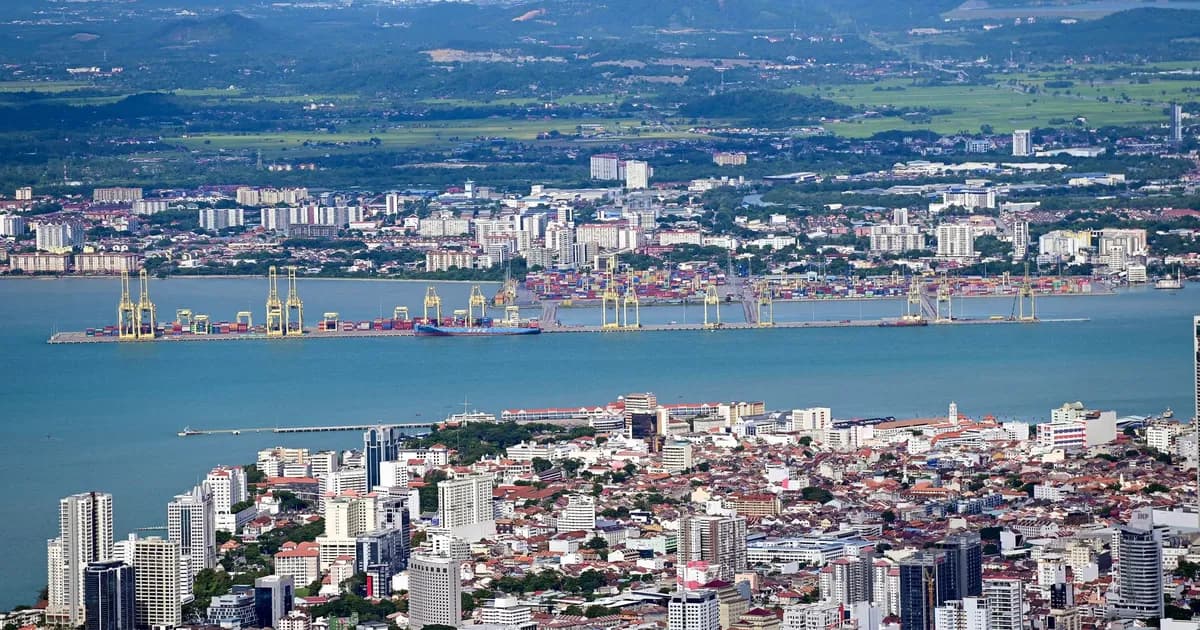
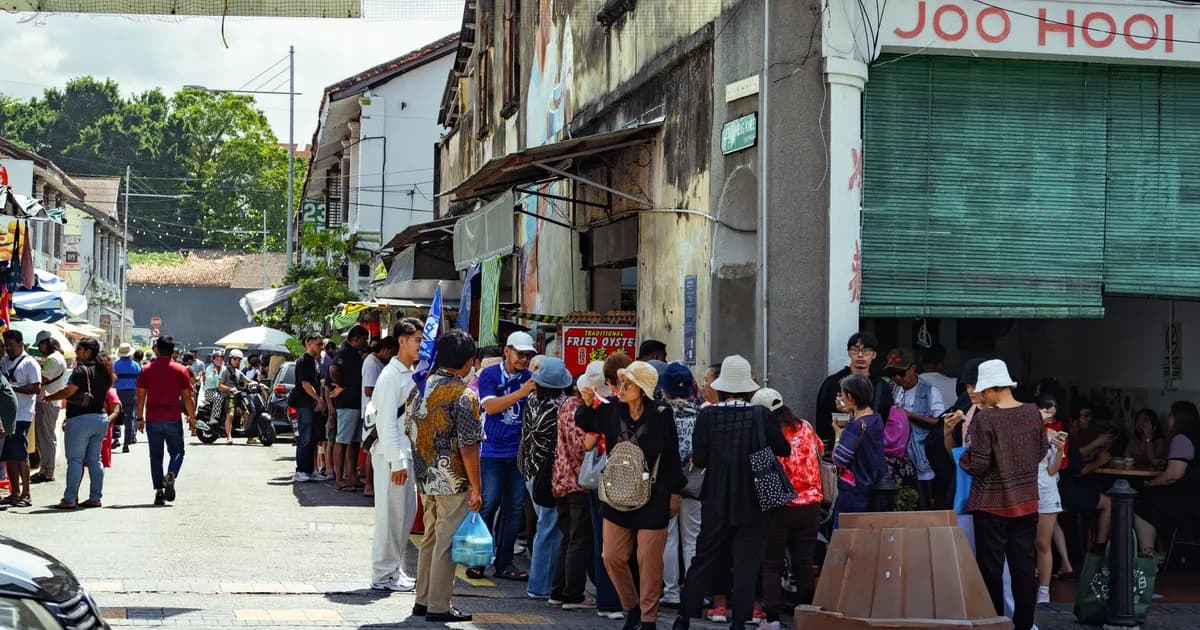
Penang, by contrast, recorded 5.6 million overnight domestic tourists — a serious number for an island state, but roughly half of Pahang's. Penang's crowding problem is concentrated: it is a George Town problem, and largely a weekend and festival problem, rather than a whole-island, year-round one.
The Singapore Effect
No source market distorts Malaysia's figures like Singapore. Singaporeans are consistently the single largest group of arrivals, and in early 2026 they accounted for close to half of all international visitors. A very large proportion of those trips are short: a day of shopping, a dental appointment, a tank of cheaper petrol, a weekend at a Johor resort.
This matters for two reasons. First, it means Malaysia's visitor total is not a good proxy for pressure on the places most foreign travellers want to see. Johor and the southern corridor absorb an enormous volume that never reaches Penang, Langkawi or Borneo. Second, it means the busiest single piece of infrastructure in Malaysian tourism is the Johor Causeway, not any beach or heritage site — and the Johor Bahru to Singapore Rapid Transit System link, due to begin service around the end of this decade, will increase that flow further. If your route touches that border, our practical notes on crossing between Singapore and Malaysia are worth reading before you commit to a travel day.
Chinese arrivals have also rebounded strongly, running at roughly 3.7 million, helped by extended visa-free access. Chinese group travel concentrates in specific places — Kuala Lumpur, Genting, Melaka, parts of Sabah — rather than spreading evenly, which again means the growth is felt intensely in some spots and barely at all in others.
Get matched with up to 5 trusted Malaysia agencies
- Free
- No obligation
- Up to 5 agencies
Why Borneo Stays Quieter Than You Expect
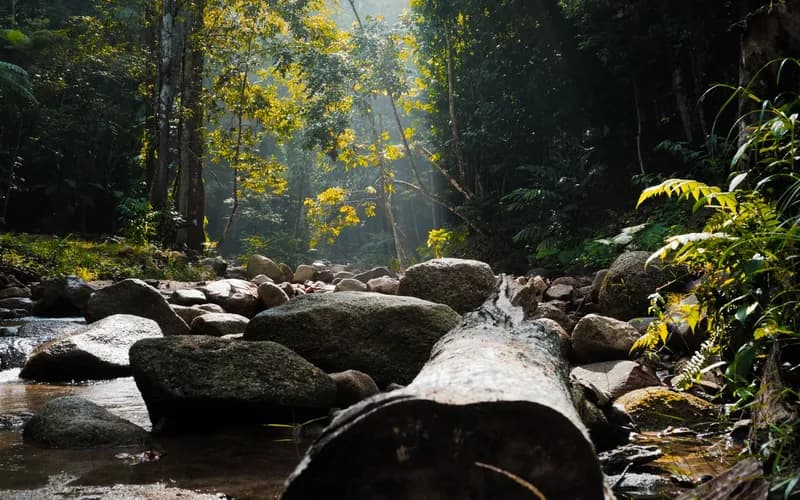
Sabah and Sarawak together make up around 60 per cent of Malaysia's land area and receive a small fraction of its visitors. Part of that is logistics: almost everyone arrives by air, flights from the peninsula add cost and a travel day, and Sabah and Sarawak run their own immigration controls even for arrivals from Kuala Lumpur.
Part of it is structural. Borneo's headline attractions are permit-limited by design. Mount Kinabalu's summit is rationed by a daily climbing quota. Sipadan's diving is capped by a daily permit allocation distributed through licensed operators, not sold to individuals. Gunung Mulu's show caves and the Pinnacles trek run on booked capacity. These caps mean that even as interest grows, the visitor numbers at the marquee sites cannot grow much, which pushes the pressure onto booking windows rather than onto the sites themselves.
The practical consequence is that Borneo feels considerably emptier than the national statistics imply, provided you book the constrained things early and are relaxed about the rest. A week on the Sarawak River costs less and feels quieter than a week almost anywhere comparable in the region, which is much of the argument for slow days in Kuching.
What Record Numbers Feel Like on the Ground
Statistics and experience diverge in predictable ways, and it is worth naming them.
- Accommodation prices have moved more than crowds have. The accommodation sector recorded revenue growth in the mid-teens during early 2026, well ahead of arrivals growth. You are more likely to notice Malaysia's boom in a room rate than in a queue.
- The crush is calendrical, not constant. Malaysian school holidays, Hari Raya, Chinese New Year and Deepavali produce sharp, short spikes. Outside them, midweek travel in most of the country remains remarkably uncrowded.
- Pressure is site-specific. Batu Caves at nine on a Sunday, the Langkawi cable car in peak season, George Town's mural streets on a Saturday afternoon and the Penang ferry terminal during a festival are genuinely busy. Two streets away, they are not.
- Infrastructure is catching up unevenly. Rail and airport capacity have improved markedly; waste management, parking and pedestrian space in heritage cores have not kept pace.
The Pressure Points to Plan Around
A handful of places are absorbing a disproportionate share of the growth, and they are worth planning around rather than avoiding.
George Town is the clearest case. Its core is small, its housing stock is finite, and short-term rentals have expanded into residential buildings faster than any framework existed to manage them. Penang has now become the first Malaysian state to license private short-term accommodation, with a by-law in force since August 2026 and enforcement beginning on 1 November 2026 — a change we cover in detail in our piece on Penang's new short-term rental rules. Expect fewer, more expensive, better-documented listings on the island.
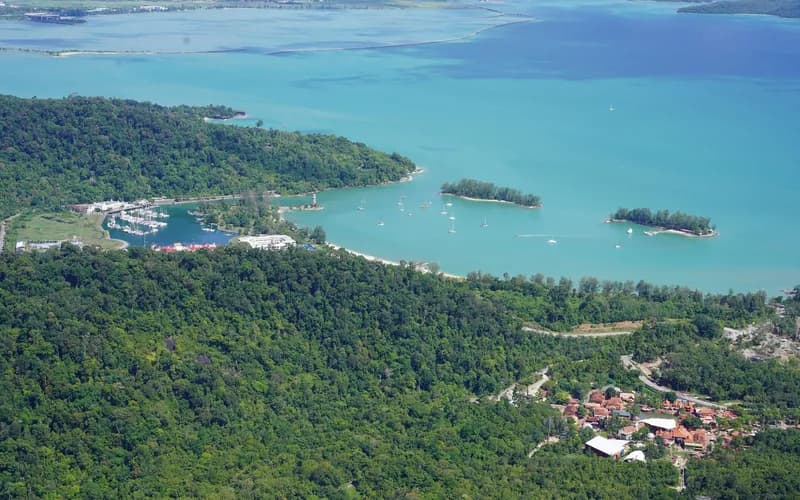
Langkawi carries a different kind of load, with cruise calls and duty-free shopping adding day visitors on top of resort guests. The Cameron Highlands suffer most acutely on weekends, when the single main road becomes the bottleneck. Melaka's Jonker Walk is a Friday-to-Sunday phenomenon and pleasantly ordinary on a Tuesday.
What This Means for a Slow Trip
The honest summary is that Malaysia's record numbers are good news for travellers who are willing to be slightly out of step with them. The country is not, at a national level, an overtourism story. It is a concentration story, and concentration is easy to plan around when you are not in a hurry.
That means travelling midweek where you can. It means staying longer in fewer places, which is both cheaper and the only reliable way to see somewhere on an off-peak day. It means treating the second city of any region as the default rather than the compromise — Ipoh over Penang, Kuala Terengganu over Langkawi, Sibu or Miri over the Sarawak circuit everyone flies. Our guide to Malaysia off the beaten path is essentially a list of places the growth curve has not yet reached.
It also means accepting the trade-off honestly. Quieter places have fewer flights, thinner accommodation choice and less English-language infrastructure. That is the actual price of avoiding the crowd, and for a slow traveller it is usually worth paying.
What to Do Next
- Check the Malaysian school holiday and public holiday calendar before fixing dates, and shift your arrival by two or three days if it collides with a peak.
- Book accommodation earlier than you normally would in George Town, Langkawi and the Cameron Highlands, where supply is genuinely tight and prices are rising faster than elsewhere.
- Reserve permit-limited experiences in Borneo — Kinabalu, Sipadan, Mulu — several months ahead, and build the rest of the trip around those fixed points.
- Plan heritage-core visits for weekday mornings and use weekends for slower, more residential neighbourhoods or for travel days.
- Consider a second-city substitution for at least one leg of your route, and give it the extra night you would have spent in the obvious place.
- If Penang is on your list for late 2026 or beyond, confirm that any private apartment booking is licensed before you pay.
Frequently Asked Questions
Is Malaysia overtouristed in 2026?
Not as a country. Malaysia's record arrival figures are heavily weighted toward same-day visitors from Singapore and toward a small number of destinations. Specific places at specific times — George Town on a festival weekend, the Cameron Highlands on a Sunday, Batu Caves mid-morning — are genuinely crowded. Most of the country, midweek, is not.
How many tourists actually stay overnight in Malaysia?
Roughly six in ten of the counted visitors. In the January to April period of 2025, Malaysia recorded 13.4 million visitor arrivals but 8.4 million tourist arrivals, with the balance being excursionists who did not stay a night. When comparing Malaysia's totals with neighbouring countries, this definitional difference explains a great deal of the gap.
Which Malaysian states get the most visitors?
By domestic visitor volume in 2025, Selangor led with 36.4 million, ahead of Kuala Lumpur at 35.1 million and Perak at 23.6 million. Counting only overnight domestic tourists, Pahang led with 11.0 million, followed by Selangor, Perak, Kuala Lumpur and Johor. Penang recorded 5.6 million overnight domestic tourists.
Are prices rising because of the tourism boom?
Accommodation is where it shows most. Revenue in the accommodation sector grew in the mid-teens in percentage terms during early 2026, faster than the growth in arrivals, which points to higher room rates rather than simply more rooms sold. Food, transport and everyday costs have moved much less, and hawker meals remain among the best value in the region.
When is the quietest time to travel in Malaysia?
Avoid Malaysian school holidays, the week around Hari Raya Aidilfitri, Chinese New Year and Deepavali. Outside those windows, midweek travel almost anywhere is quiet. The east coast of the peninsula empties during the northeast monsoon from roughly November to February, though many island resorts close entirely in that period.
Is Borneo busier than it used to be?
Interest has grown, but visitor numbers at the headline sites are capped by permit systems that limit daily access to Mount Kinabalu, Sipadan and the Mulu caves. The practical effect is that booking has become harder and earlier while the sites themselves remain relatively uncrowded. Away from those specific attractions, Sabah and Sarawak still feel markedly quieter than the peninsula.
Should I avoid Malaysia during Visit Malaysia 2026?
There is no strong reason to. The campaign has brought more flights, more events and more open attractions, and the additional visitors it draws are concentrated in places and periods you can work around. If anything, the improved air connectivity makes a multi-region slow trip easier to assemble than it was a few years ago.