The Domestic Majority: Who Philippine Tourism Is Really Built For in 2026
For years, the story of Philippine tourism was told through foreign arrivals: the annual target, the shortfall, the Korean and Chinese market shares, the chase for pre-pandemic numbers. In 2026 that framing has quietly stopped matching reality. Filipinos themselves now take well over 100 million domestic trips a year, and forecasts put domestic travel at roughly seven in ten of all tourism activity in the country. Foreign arrivals reached about 4.11 million between January and August, up a modest 3.7 percent year on year and still short of both pre-pandemic levels and the government's own targets. The Philippines is no longer primarily an international destination that happens to have domestic visitors. It is a domestic market that also receives foreigners — and that changes what a visiting slow traveller should expect.
The Numbers Behind the Shift
Two sets of figures tell the story. On the international side, growth is real but slow: roughly 4.11 million foreign arrivals in the first eight months of 2026, a single-digit improvement on last year, delivered largely by Korea, the United States and a widening spread of smaller markets. The Department of Tourism has opened a public arrivals dashboard this year, which is itself a sign of how closely the gap between target and outcome is being watched.
On the domestic side the scale is an order of magnitude larger. More than 100 million domestic trips a year is not a rounding error against four million foreign arrivals; it is the market. Individual cities show the ratio starkly. In Davao City, domestic travellers accounted for close to a million arrivals in the first half of 2026 against roughly 44,000 foreign visitors — more than twenty domestic guests for every international one.
Those proportions decide what gets built, what gets priced, what gets marketed and when things are busy. If you have been reading Philippine travel coverage aimed at foreigners, you have been reading about the smaller half of the story. Our analysis of who is actually visiting the Philippines this year covers the international side in detail; this piece is about the other ninety-odd percent.
One request. Up to five tailored proposals.
Skip contacting agencies one by one — share your trip once and let up to five trusted Philippines agencies come to you. Free, with no obligation.
Get my free quotesWhy Foreign Arrivals Have Plateaued
The international recovery has been held back by a combination of factors that have little to do with the destination itself. The Chinese market, once one of the country's largest, has not returned at anything like its former volume, and the reopening has been incremental — a 14-day visa-free entry arrangement for Chinese nationals came into effect in January 2026, alongside visa-free access for Indian and Taiwanese travellers, as the government tries to rebuild volume through easier entry rather than heavier marketing.
Airline capacity is the second constraint. Long-haul seats into Manila and Cebu have grown, but not fast enough to absorb demand at comfortable fares, and airfare inflation has eaten into the country's traditional value advantage against Thailand and Vietnam. The third factor is perception: the Philippines remains harder to plan than its neighbours, with more internal flights, more ferries and more weather risk in a typical two-week itinerary.
None of this is catastrophic. It simply means the international market is growing at the pace of infrastructure rather than the pace of ambition.
Discover More to Love and the Deal Economy
The government's response has been to lean into the domestic market. In June 2026 the Department of Tourism launched Discover More to Love, a domestic campaign running from July to November under the existing Love the Philippines brand. It is not a rebrand so much as a marketplace: more than 3,000 travel deals assembled from partners, over 250 regional packages, discounted fares from Philippine Airlines, Cebu Pacific, AirAsia Philippines and Sunlight Air, and more than 70 hotels and resorts offering reductions reported at up to 70 percent through the hotel sales and marketing association.
The campaign's stated focus is staycations, wellness, food and nature, and its explicit purpose is to keep bookings steady in emerging destinations outside the peak months. For a foreign traveller, three consequences follow.
First, the low season is no longer empty. Provincial resorts that once went quiet from June to October now fill their midweek rooms with Filipino guests on discounted packages.
Second, the deals are genuinely available to you. Most of these offers are not restricted by nationality, and booking direct with a participating hotel during the campaign window is often cheaper than any international platform.
Third, the product is changing shape. Hotels are building packages around food, wellness and short nature experiences because that is what the domestic market buys, and those packages tend to suit a slow traveller better than the old island-hopping day-tour format.
Get matched with up to 5 trusted Philippines agencies
- Free
- No obligation
- Up to 5 agencies
The New Calendar: Weekdays Are the Off-Season
A domestic-led market has a different rhythm from an international one. Foreign visitors arrive for two or three weeks and are indifferent to which day it is. Filipino travellers mostly move on weekends and public holidays, and the country has a lot of public holidays.
The practical upshot: Friday to Sunday and the long weekends around national holidays are the real peaks now, especially anywhere within a few hours of Manila, Cebu or Davao. Tuesday to Thursday in the same place can feel like a different destination. Boat trips leave half-empty, restaurants have tables, and rates soften.
This is one of the largest, least discussed advantages of travelling slowly here. If you are staying somewhere for a week or more, simply moving your activities to midweek and your rest days to the weekend changes the texture of the trip. It also means you should book accommodation for weekends further ahead than you would expect, particularly during fiesta season. Our guide to planning around Philippine fiestas and Holy Week maps the fixed points in that calendar.
Where the Growth Is Landing
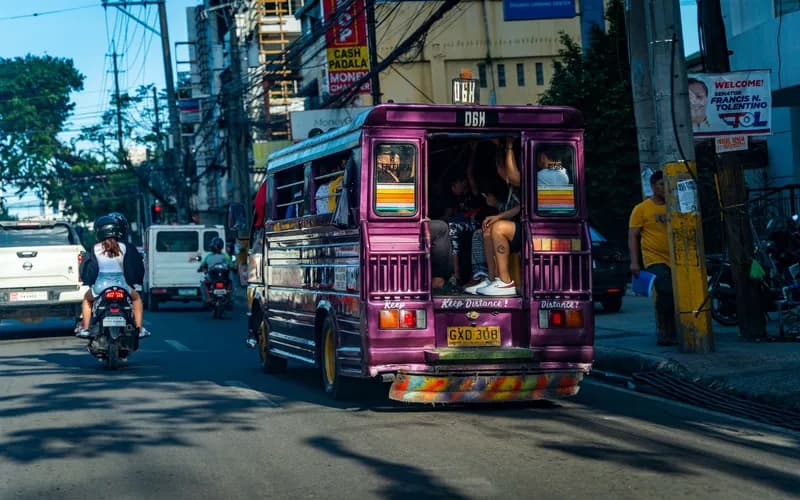
Domestic demand does not spread evenly. It concentrates where there are flights, roads and a reason to go for three days. That has favoured second-tier cities and their hinterlands: Davao recorded double-digit growth in the first half of 2026; Iloilo, Bacolod, Cagayan de Oro and Clark have all gained from improved connectivity; and provinces within a comfortable drive of a regional airport have seen new small resorts and farm stays open.
It also means the classic international circuit — Boracay, El Nido, Coron, Siargao — no longer monopolises investment. That dispersal is the same trend we traced in our piece on the shift beyond Boracay, now with a domestic engine behind it rather than a policy one.
The flip side is worth naming. Places that grew around foreign backpackers and have not adapted to Filipino family travel are finding the recovery slow. A handful of once-busy traveller hubs are quieter than their reputations suggest, with closed restaurants and thinner boat schedules.
Prices, Rooms and What to Expect
Hotel performance in 2026 has been steady rather than spectacular. Average daily rates rose in the low single digits in the first half of the year, supported by business travel and metropolitan demand, while operators in leisure markets have shown a willingness to discount hard when bookings soften. In practice that means:
- Rack rates are higher than they were two years ago, but real, obtainable rates are often much lower, especially midweek and direct.
- Discounting is concentrated in the middle and upper-middle bracket. Genuinely cheap guesthouses have less room to move and have mostly just raised prices with costs.
- Domestic package pricing tends to bundle breakfast, transfers and sometimes a tour, which is good value if you wanted those and poor value if you did not.
For a full picture of what a trip actually costs this year, our Philippines budget guide breaks the numbers down by travel style and region.
What This Means for Slow Travellers
The domestic majority is good news for the kind of travel we advocate, with caveats.
The good: more places are viable year-round, because they no longer depend on a foreign high season. Small provincial accommodation is better than it was, because Filipino guests expect clean rooms, good wifi and decent coffee. Food has improved markedly outside the tourist centres, because the customers are locals with opinions. And a market built on three-day trips leaves the long, quiet stretches — the second week in one place — almost entirely to you.
The caveats: national holidays are now genuinely difficult, with flights, ferries and rooms sold out weeks ahead. Information aimed at foreigners lags behind reality, so English-language blogs may describe a place as empty when it is busy every weekend. And a domestic-led market is built around driving and short flights, which can make slow overland travel less obvious than it should be.
For somewhere that remains outside both currents, our profile of Catanduanes, the Pacific-facing island is a useful reference point: a province where neither foreign nor domestic tourism has arrived at scale.
What to Do Next
- Build your itinerary around midweek movement. Arrive somewhere on a Sunday or Monday and leave on a Thursday wherever you can.
- Check the Philippine public holiday calendar before fixing dates, and treat Holy Week, All Saints' weekend and the Christmas period as fully booked unless you have reserved months ahead.
- Book participating hotels directly during domestic campaign windows rather than through international platforms; the deal prices are usually only on the direct channel.
- Look at second-tier airports — Iloilo, Bacolod, Davao, Cagayan de Oro, Clark — as starting points rather than routing everything through Manila or Cebu.
- Ask accommodation owners which days are busy locally, not which season is busy. The answer is usually about weekends, not months.
- If you want help assembling a slower route that follows this rhythm, start with our plan your journey page for the Philippines.
Frequently Asked Questions
Does the domestic tourism boom make the Philippines more expensive for foreign visitors?
Not significantly. It raises weekend and holiday prices sharply in accessible destinations, but midweek rates in the same places are often unchanged or lower. The bigger cost pressure this year has been airfares rather than accommodation.
Are domestic campaign deals open to foreign travellers?
Generally yes. Most hotel and airline offers under the current domestic campaign are not restricted by nationality or residency, though a few packages require a Philippine payment method. Check the terms and book direct.
When is the quietest time to travel now?
Weekdays outside school holidays, in any month. The old advice to avoid June to October for crowd reasons no longer holds, because those months are now well used domestically, while weather remains the real seasonal factor.
Has the drop in Chinese visitors changed anything on the ground?
Mainly in Boracay, Cebu and parts of Palawan, where Chinese group tourism was significant before the pandemic. Some hotels and restaurants there have repositioned towards domestic and Korean guests. Elsewhere the effect is barely visible.
Should I avoid places that are popular with Filipino travellers?
No. Travelling alongside domestic visitors is usually the better experience: the food is aimed at people who know it, prices are local, and the atmosphere is unforced. Simply avoid the peak weekends if you want quiet.
Is the Philippines still good value compared with Thailand or Vietnam?
On the ground, yes, particularly outside the marquee islands. Getting there and moving between islands is where the country loses its advantage, which is another argument for staying longer in fewer places.
Keep reading
More from the ground · Philippines