Beyond the Stopover: Why Travelers Are Slowing Down in Singapore
For decades, Singapore has been the world's most efficient pause button. A place you passed through on the way to somewhere else: a night near the airport, a photograph at Marina Bay, a plate of chicken rice, and then a connecting flight to Bali, Bangkok or Sydney. The city made this easy. It is clean, safe, English-speaking and famously well-organised, the kind of place designed to move you along rather than hold you in place.
But something has changed. Slowly, and without much fanfare, travelers are staying longer. The stopover is becoming a stay. What was once a 24-hour box to tick is turning into three, five, sometimes seven unhurried days spent walking heritage lanes, sitting in hawker centres, and discovering that the "city in a garden" is far greener, older and stranger than the skyline suggests. This is not a marketing invention. It is a genuine shift in how thoughtful travelers approach a city they thought they already knew.
The Classic Stopover, and Where It Falls Short
The Singapore stopover was a triumph of logistics. Long-haul routes between Europe and Australasia made the city a natural refuelling point, and the tourism machine responded with a tidy circuit: Gardens by the Bay after dark, a rooftop bar, the Merlion, Orchard Road, perhaps a themed island of rides, and then out again before the jet lag fully lifted. You could do it in a day. Many people did, and still do.
The problem is not that the stopover circuit is bad. The problem is that it is complete on the surface and empty underneath. It shows you the Singapore that was built to be seen, the engineered spectacle, while quietly withholding the Singapore that is actually lived in. You leave with the impression of a gleaming, slightly sterile transit hub, and you never learn that ten minutes from those towers there are streets where the smell of incense and frying garlic mixes over century-old shophouses.
Travelers are catching on. The single-day itinerary, once a badge of efficiency, increasingly feels like a missed opportunity, a case of having been somewhere without ever arriving. And once you notice that gap, it is hard to un-notice it.
One request. Up to five tailored proposals.
Skip contacting agencies one by one — share your trip once and let up to five trusted Singapore agencies come to you. Free, with no obligation.
Get my free quotesWhy Travelers Are Choosing to Stay Longer
The broader travel mood has turned decisively toward slow travel. Across 2025 and into 2026, the conversation among independent travelers has moved away from covering ground and toward feeling a place, staying put, learning its rhythms, letting a destination reveal itself rather than performing it in a rush. Singapore, of all places, has become an unlikely poster child for this shift.
Part of it is deliberate. The Singapore Tourism Board has openly leaned into the idea, encouraging visitors to treat the city as a destination in its own right rather than a corridor between other destinations, and pointing them toward its heritage precincts and its green spaces rather than only its shopping malls. The message is simple and, unusually for tourism marketing, honest: you did not really see Singapore, so come back and stay.
Part of it is generational. Younger travelers in particular are value-conscious in a specific way. They are less interested in luxury shopping and branded attractions and more interested in the texture of ordinary life, the neighbourhood coffee shop, the wet market, the temple that is still a working temple. Singapore, once dismissed as too polished to be interesting, turns out to reward exactly this kind of attention. The 2025 anniversary year, marking sixty years of independence, gave the country an occasion to tell its own story more loudly, and much of that story is about the layered, multi-ethnic culture that a one-day visitor never meets.
The Neighbourhood Shift: Singapore by Precinct
The most important change is how people move through the city. Instead of ticking off attractions scattered across the map, slow travelers are choosing a neighbourhood and settling into it, treating precincts the way you might treat districts of Paris or Tokyo.
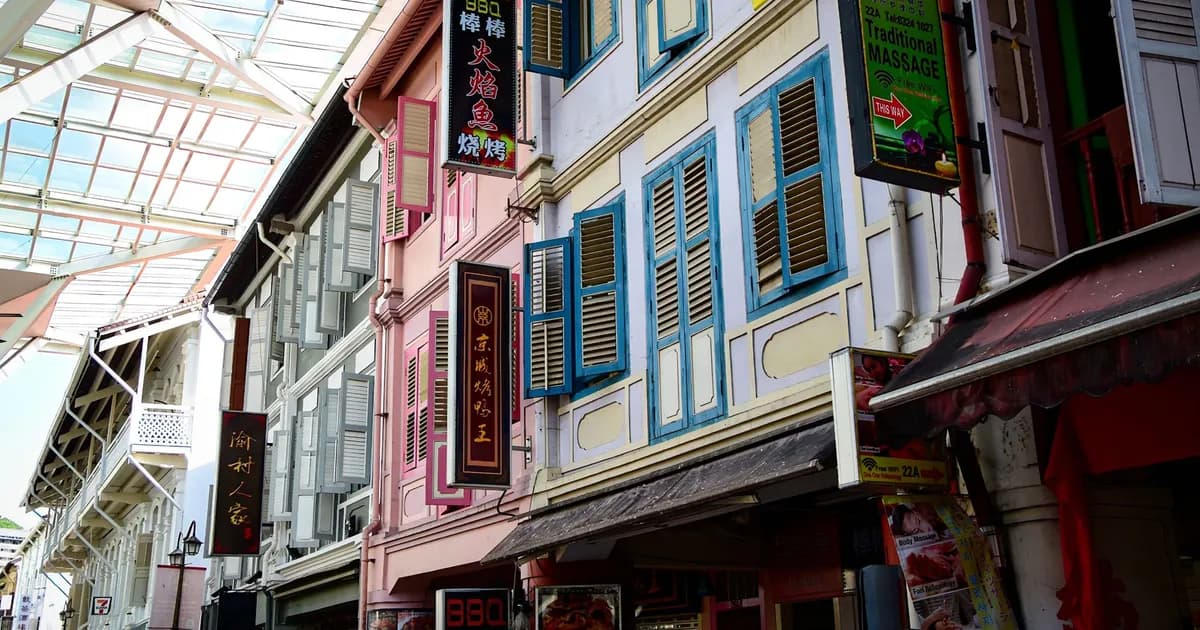
Kampong Glam, the historic Malay-Arab quarter, rewards a whole morning of drifting: the golden dome of the Sultan Mosque, the textile shops of Arab Street, the independent boutiques and murals of Haji Lane. Little India assaults the senses in the best possible way, all marigolds, spice merchants and the great glowing temple of Sri Veeramakaliamman. Chinatown holds Buddhist and Hindu temples on the same street. And then there are the quieter precincts that stopover visitors almost never reach: Tiong Bahru, with its curved Art Deco walk-ups, indie bookshops and famously good bakeries; Katong and Joo Chiat to the east, the heart of Peranakan culture, where pastel shophouses line the road and the laksa is a local institution.
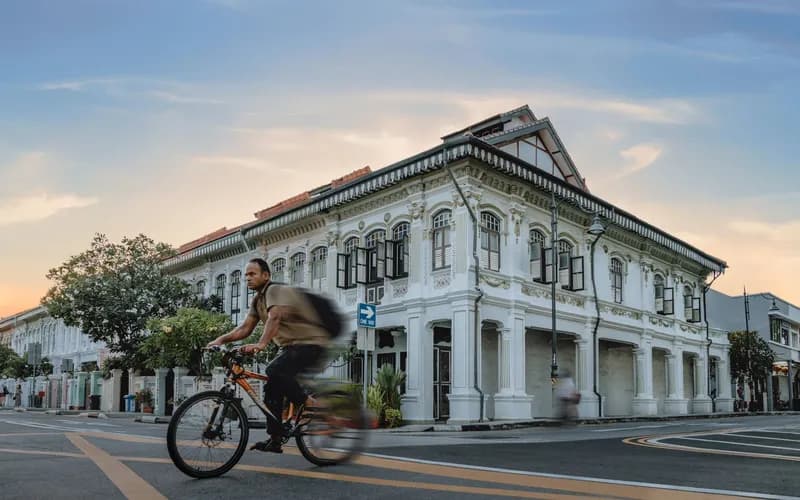
Wandering these areas is the whole point. There is no single monument to photograph and move on from; the reward is cumulative, built from small encounters over hours. This is where the city stops being a transit hub and becomes a place with a memory. If you want a sense of how the precincts fit together and when to visit each, our slow traveler's guide to where to go and when maps out a rhythm that rewards lingering rather than sprinting. And for the corners that even long-stay visitors overlook, the off-the-beaten-path guide is a good companion.
Get matched with up to 5 trusted Singapore agencies
- Free
- No obligation
- Up to 5 agencies
A City in Nature, Not Just a City with Parks
The second draw is green, and it runs deeper than most visitors expect. Singapore's self-description has quietly evolved from "Garden City" to "City in Nature", and the difference matters. This is not a story about a few manicured parks between office towers. It is a story about a small, dense island that has threaded genuine nature through its entire fabric.
The showpieces are well known: Gardens by the Bay with its Supertrees and cooled conservatories, and the Singapore Botanic Gardens, a UNESCO World Heritage Site with a rainforest older than the country itself. But the deeper pleasure is the connective tissue. A vast Park Connector Network stitches neighbourhoods to reserves, so you can walk or cycle for hours on green paths. The Rail Corridor, a former railway line reborn as a green spine, runs the length of the island and passes through forest, back gardens and quiet suburbs. The Southern Ridges links a chain of hilltop parks by elevated walkway. Out at the edges lie real wildness: the mangroves and migratory birds of Sungei Buloh Wetland Reserve, or the rustic scrub of Coney Island.
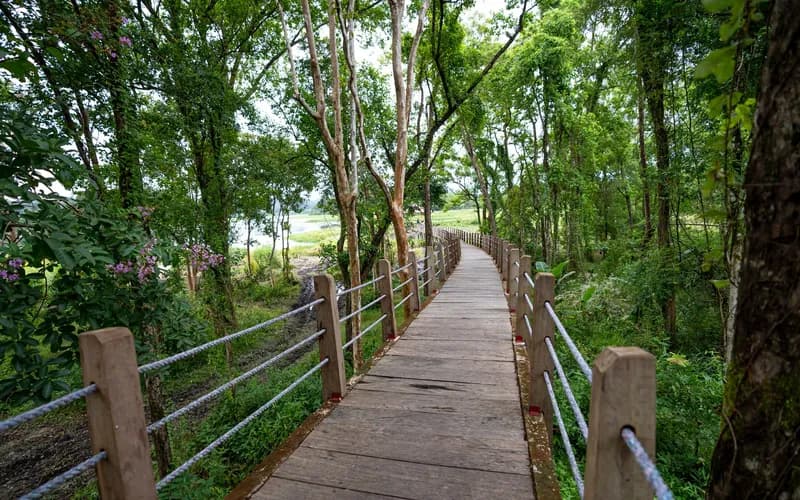
None of this can be experienced from a taxi window on a one-day layover. It asks for time, comfortable shoes and a willingness to sweat a little in the tropical heat. Give it those things and Singapore reveals itself as one of the few major cities where you can hear birdsong more often than traffic.
Food Culture as a Reason to Slow Down
If there is one thing that finally convinces travelers to stay, it is the food, and specifically the hawker centre. Singapore's hawker culture was inscribed on UNESCO's list of intangible cultural heritage, and that recognition captures something real: these open-air food courts are the country's living room, the place where every community, class and generation eats side by side over dishes perfected across decades.
You cannot do a hawker centre justice on a stopover. One meal gives you one dish. But the culture only opens up over repeated visits, breakfast kaya toast and kopi at an old coffee shop, a lunch of Hainanese chicken rice, char kway teow or a bowl of laksa, an evening working through satay and barbecued stingray. Each stall is a specialist, often run by the same family for a generation or more, and the pleasure is in the accumulation: learning which queue is worth joining, which uncle refuses to rush, which flavours reward a second and third visit.
This is food as culture rather than food as spectacle, and it is one of the strongest arguments for slowing down anywhere in Asia. To go deeper on what to order and where, our guide to what to eat in Singapore is built for exactly this kind of unhurried eating, one hawker stall at a time.
How to Actually Slow Down in a City Built for Speed
There is a lovely irony in slowing down in Singapore, because the city is engineered for efficiency. The transport is fast, the wayfinding is flawless, everything works. The temptation is to use that efficiency to do more, to pack the days. The art of a slow Singapore trip is to use the efficiency to do less, better.
In practice that means basing yourself in one neighbourhood rather than a generic hotel district, and letting your days radiate outward from it. It means keeping mornings for walking and green space, before the heat peaks, and reserving the hot mid-afternoon for a long lunch, a museum or a nap. It means resisting the urge to see everything and choosing instead to know one or two areas well. And it means leaving room for the unplanned, the shop you did not know you needed to enter, the conversation with a stallholder, the temple you stumbled into.
Three to five days is a sensible minimum for this kind of trip, enough to shake off the transit-hub impression and start to feel the city's contrasts. A week is better. However long you have, a little local knowledge goes a long way, and this is where working with people who actually know the ground pays off. You can start shaping an itinerary through our plan your journey resources, and connect with vetted specialists on our Singapore travel agencies page. If the slow-travel philosophy resonates, our slow travel charter sets out the principles that guide how we think a place like this deserves to be visited.
What to Do Next
- Give the city real time. Block out at least three days, ideally five, so Singapore can move from stopover to destination in your mind.
- Pick a base neighbourhood. Choose a precinct such as Kampong Glam, Tiong Bahru or Katong and let your days unfold from there rather than from a generic hotel strip.
- Build your days around the heat. Walk and explore green corridors in the cooler morning hours, and save the hot afternoons for long meals, museums and rest.
- Treat hawker centres as a project, not a pit stop. Return several times, order widely, and follow the queues of locals rather than the recommendations of guidebooks alone.
- Walk at least one green spine. Set aside half a day for the Rail Corridor, the Southern Ridges or the Botanic Gardens to feel the "city in nature" for yourself.
- Get local help where it counts. Use the plan your journey tools and speak with a specialist so your itinerary reflects how you actually like to travel.
Frequently Asked Questions
Is Singapore worth more than a stopover?
Yes. A one-day layover shows you the engineered highlights but not the lived city. With three to five days you can settle into a neighbourhood, explore heritage precincts and green corridors, and dig into hawker culture, which is where Singapore becomes genuinely rewarding rather than merely impressive.
How many days do you need in Singapore?
Three days is a reasonable minimum to move past the transit-hub impression, five days is comfortable, and a week lets you slow down properly and get to know two or three neighbourhoods well without rushing between them.
What is the best neighbourhood to stay in for a slow trip?
There is no single answer, which is part of the appeal. Kampong Glam suits those who want culture and independent shops on their doorstep, Tiong Bahru rewards a quieter, café-and-bakery pace, and Katong or Joo Chiat put you in the heart of Peranakan heritage a little away from the centre.
Is Singapore really a green city or is that marketing?
It is real, and it runs deeper than the famous Gardens by the Bay. A dense Park Connector Network, the Rail Corridor, the Southern Ridges and reserves such as Sungei Buloh mean you can spend days walking and cycling through genuine greenery, which is difficult to appreciate on a short stopover.
Do I need to plan hawker centre visits in advance?
Not really, but you should give them time. The culture opens up over repeated meals rather than a single visit, so return often, order beyond the obvious dishes, and follow the longest local queues. Our food guide is a good place to decide what to try first.
When is the best time to visit Singapore?
Singapore is warm and humid year-round with no real off-season, so timing is less about weather and more about events and crowds. For a slow trip, weekday mornings in any month are the calmest time to explore precincts and green corridors before the heat and the crowds build.
Is Singapore a good base for slow travel in Southeast Asia?
It can be, though the deeper reward is treating Singapore as a destination rather than a springboard. If you do use it as a gateway, give the city itself a few unhurried days first, so it is a place you experienced rather than one you merely connected through.
Keep reading
More from the ground · Singapore