Singapore Travel Changes for 2026-27: SAF Levy, the RTS Link and New Rail
Singapore rarely changes its travel rules dramatically, but it changes them constantly and on schedule. Three things landing between late 2026 and early 2027 will affect most visitors: a new environmental levy on air tickets departing the country, the opening of a cross-border rail link to Johor Bahru that will alter how people move between Singapore and Malaysia, and a set of new MRT stations in the east. A tightened vaping law, already in force, is the one most likely to cause an expensive surprise. Here is what each actually means, with dates and figures where they are confirmed and honest uncertainty where they are not.
The SAF Levy: A New Charge on Every Departing Ticket
Singapore is introducing a Sustainable Aviation Fuel levy, designed to fund the country's target of blending one percent sustainable aviation fuel into departing flights. It is not a tax in the conventional sense — the revenue is pooled to buy SAF centrally rather than added to general government income — but from the traveller's side it behaves exactly like a mandatory surcharge on your ticket.
The schedule has already moved once. The original plan applied the levy to tickets sold from April 2026 for flights departing October 2026. That was deferred. Under the current schedule set out by the Civil Aviation Authority of Singapore, the levy applies to tickets and services sold from 1 October 2026, for flights departing Singapore from 1 January 2027. Tickets bought before that selling date, for travel after it, are not caught. Transit passengers who do not begin their journey in Singapore remain exempt, which matters if you are connecting through Changi rather than starting there.
One request. Up to five tailored proposals.
Skip contacting agencies one by one — share your trip once and let up to five trusted Singapore agencies come to you. Free, with no obligation.
Get my free quotesWhat the SAF Levy Actually Costs You
The levy is banded by distance and by cabin class, with four geographic bands: Southeast Asia; Northeast Asia, South Asia, Australia and Papua New Guinea; Africa, Central and West Asia, Europe, the Middle East, the Pacific Islands and New Zealand; and the Americas. Across all bands and classes the published range runs from S$1 to S$41.60 per ticket.
In economy, which is where most readers will sit, the published examples are modest: around S$1 to Bangkok, S$2.80 to Tokyo, S$6.40 to London and S$10.40 to New York. Premium cabins pay substantially more, which is where the upper end of the range comes from. For a slow traveller taking one long-haul flight, this is a rounding error against the cost of the trip; for someone hopping around Southeast Asia on repeated short flights it adds up slowly, and is one more argument for fewer, longer stays. If you are building a full cost picture, our Singapore trip budget guide covers the ground-level expenses that dwarf this figure.
The Johor-Singapore RTS Link: Where It Stands
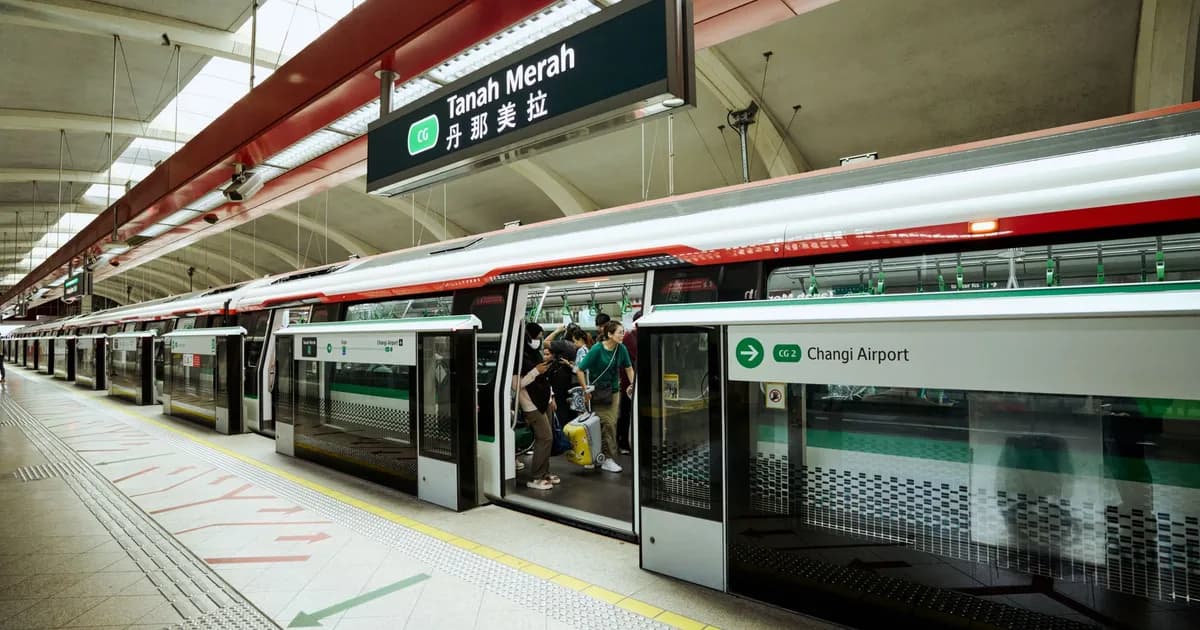
The Rapid Transit System Link is a four-kilometre cross-border rail shuttle connecting Woodlands North in Singapore with Bukit Chagar in central Johor Bahru, including a marine viaduct over the Strait of Johor. The crossing itself takes roughly five to six minutes, against the hour or more that the Causeway regularly demands at peak times. Designed capacity is substantial, with trains at short intervals during peak periods.
As of late 2026 the project is in its final testing phase. Woodlands North station was reported complete in early September 2026, multi-train high-speed trials ran earlier in the year, and fault-free running trials were due to begin around September. Officials have targeted completion by the end of 2026 with passenger service beginning in early 2027 — January has been widely cited. Treat any specific opening date as provisional until an official announcement; large rail projects slip, and this one has already moved.
Get matched with up to 5 trusted Singapore agencies
- Free
- No obligation
- Up to 5 agencies
What the RTS Link Will and Will Not Do
The most useful feature for travellers is co-located immigration: you clear both countries' controls at your departure station rather than queuing twice. That, more than the five-minute journey time, is what removes the misery from the crossing. Indicative fares have been discussed in the range of S$5 to S$7, with ticketing details still unconfirmed — expect contactless bank cards and a dedicated stored-value option rather than an extension of Singapore's existing transport cards.
Be clear about what it does not do. It is a shuttle between two stations, not a through service to Kuala Lumpur, and it connects at Woodlands North to the Thomson-East Coast Line, so a trip from central Singapore still involves a substantial MRT ride first. For visitors, the realistic use is a genuine day or overnight trip to Johor Bahru for food and markets, which becomes practical for the first time. It does not make Malaysia a casual afternoon detour.
New Rail on the Island: TEL5 and the Downtown Line Extension
Closer to home, the Land Transport Authority is opening Thomson-East Coast Line Stage 5 together with the Downtown Line Stage 3 Extension in the second half of 2026, adding three stations — Xilin, Bedok South and Sungei Bedok — with Sungei Bedok serving as an interchange between the two lines. The practical effect for visitors is better access to the eastern residential districts and to the coast, and a more direct route between the east and the Thomson corridor.
This is incremental rather than transformative, but it is the kind of change that quietly widens where it is sensible to stay. Combined with the earlier eastern extensions, it makes basing yourself outside the tourist core more practical than it was a few years ago. For the broader picture of what has opened recently across the country, see our roundup of what is new in Singapore this year.
The Vaping Law Is Now Considerably Harsher
This is the change most likely to cost an unprepared visitor real money. Singapore has banned the possession, use, purchase and sale of e-cigarettes and vaporisers for years, but in 2026 the framework was rewritten and penalties were raised sharply. Composition fines for a first offence are commonly reported around S$2,000, with maximum penalties running far higher, and enforcement now explicitly reaches travellers passing through Changi.
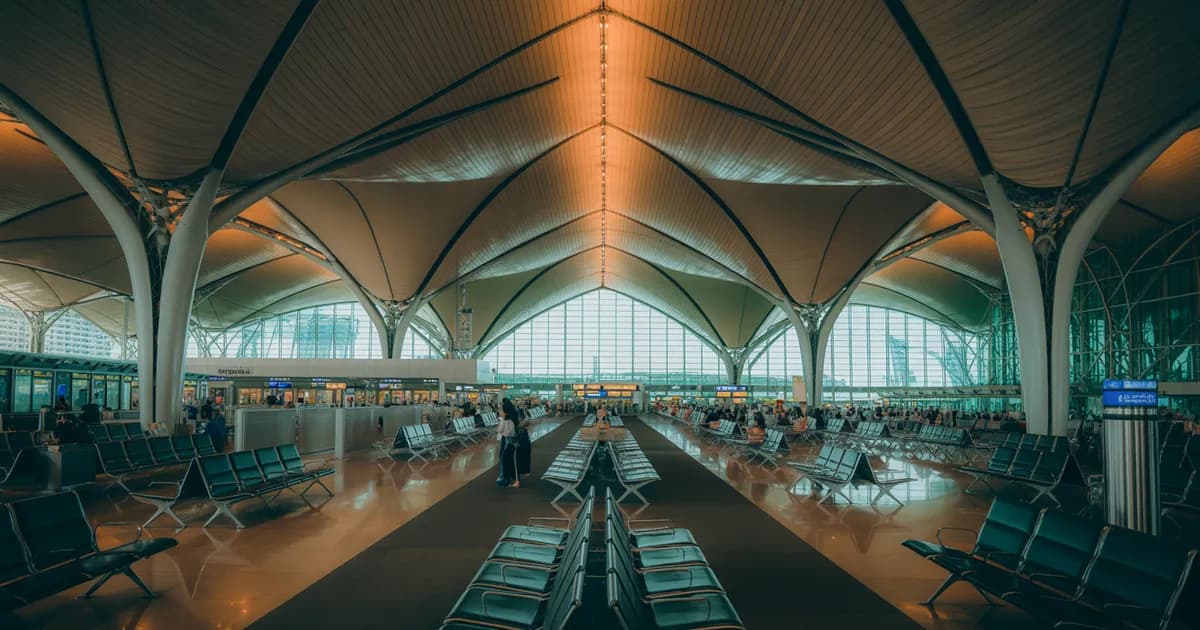
Two practical points. First, transit does not protect you: passengers connecting through Changi have had devices confiscated and faced penalties, and the airport has installed disposal bins precisely because of this. Second, there is no tourist exemption and no quantity that is acceptable. Leave the device at home. Singapore's wider framework of fines and prohibitions is easy to navigate once you know it, and we cover the rest of it in our guide to Singapore's rules, fines and etiquette.

What Has Not Changed
Amid all this, the core entry and transport mechanics are stable. The SG Arrival Card remains free and must be submitted within three days before arrival; the only thing worth repeating is that unofficial sites charging for it still exist and are still worth avoiding. Most nationalities continue to receive visa-free entry on arrival for stays of thirty to ninety days depending on passport.
On the ground, contactless bank cards and the SimplyGo system still work for buses and the MRT with no separate ticket purchase, and fares remain among the best value in any high-income city. The GST tourist refund scheme continues to operate electronically for departures through Changi and Seletar, with the prevailing rate at nine percent. Our article on entering and getting around Singapore covers those mechanics in full.
The Wider Context: Why These Changes Cluster Now
None of this is coincidental. The SAF levy reflects an aviation hub trying to decarbonise without losing competitiveness, which is why the charge is modest, banded and transparently ring-fenced. The RTS Link answers a genuine crisis of capacity at the Causeway, where hundreds of thousands of people cross daily. The eastern rail extensions continue a decade-long programme of shifting density and amenity away from the centre.
For travellers, the common thread is that Singapore keeps making it easier and cheaper to spend time outside the postcard districts while nudging the cost of flying upward. That is, quietly, an argument for changing how you structure a trip: fewer flights, more days, more ground-level movement. It matches what the country's own tourism strategy has been signalling.
How to Plan Around All of This
If you are travelling before January 2027, the SAF levy is unlikely to touch you. If you are booking now for travel after that date, check whether your ticket was issued before or after 1 October 2026, since that is the trigger, not your travel date alone. If a Johor day trip is part of your thinking, plan it as a flexible option rather than a fixed itinerary item until the RTS Link's opening is formally confirmed, and keep the bus-and-Causeway route as the fallback.
And if you are shaping a longer, slower itinerary around these shifts, our journey planning page is the place to start. The practical upshot of every change above is the same: the ground game in Singapore keeps getting better, and flying keeps getting marginally more expensive.
What to Do Next
- Check your ticket issue date if you are flying out of Singapore on or after 1 January 2027. Tickets sold from 1 October 2026 carry the SAF levy.
- Budget between S$1 and roughly S$10 for the levy in economy on most routes, more in premium cabins.
- If you are connecting through Changi rather than starting there, note that transit passengers are exempt.
- Leave any vaping device at home, including in checked baggage and including if you are only transiting.
- Treat the RTS Link as provisional until an official opening date is confirmed, and check for updates close to your travel dates.
- If you are staying in the east, check whether the new TEL5 and Downtown Line stations are open by your dates.
- Submit the SG Arrival Card through the official ICA channel within the three days before arrival, and pay nothing for it.
Frequently Asked Questions
When exactly does the SAF levy start?
It applies to tickets and services sold from 1 October 2026, for flights departing Singapore from 1 January 2027. Both conditions matter. A ticket purchased in September 2026 for travel in March 2027 is not caught, while a ticket bought in November 2026 for that same flight is.
How much will the SAF levy add to my ticket?
Between S$1 and S$41.60, depending on distance band and cabin class. In economy the published examples are around S$1 to Bangkok, S$2.80 to Tokyo, S$6.40 to London and S$10.40 to New York. Premium cabins account for the top of the range.
Am I charged the levy if I am only transiting through Changi?
No. Transit passengers who do not begin their journey in Singapore are exempt. The levy is on departures originating in Singapore.
Is the RTS Link open yet?
Not at the time of writing. The line is in final testing, with completion targeted for the end of 2026 and passenger service expected in early 2027. Until an official date is announced, plan any Johor crossing using the existing bus and Causeway options and treat the RTS Link as a bonus if it opens during your trip.
Will the RTS Link replace the Causeway buses?
No. It runs only between Woodlands North and Bukit Chagar, and the existing road crossings will continue to carry cars, motorcycles and buses. For most visitors the RTS Link is an alternative for a specific trip, not a replacement for all cross-border transport.
What happens if I am caught with a vape in Singapore?
Expect confiscation and a fine, commonly reported around S$2,000 for a first offence, with considerably higher maximum penalties and the possibility of further consequences for repeat or aggravated cases. Enforcement extends to travellers in transit at Changi. There is no tourist allowance.
Has anything changed about visas or the arrival card?
No. The SG Arrival Card remains free and is submitted online within three days of arrival, and visa-free entry continues for most nationalities. The only recurring problem is third-party sites charging fees for a free government service.
Keep reading
More from the ground · Singapore