

Singapore is one of the few places on earth where you can eat a meal cooked by a recognised master for the price of a coffee, sitting on a plastic stool under a fan, with the noise of a hundred conversations around you. That everyday experience, the hawker centre, is not a tourist attraction that was built to be visited. It is how a great many Singaporeans have eaten breakfast, lunch and dinner for generations. In December 2020, UNESCO added Singapore's hawker culture to its list of intangible cultural heritage, an unusual honour for something so ordinary and so alive. The inscription was a celebration. It was also, quietly, a warning: cultures land on heritage lists most often when someone has realised they could be lost.
Five years on, that tension defines the conversation about hawker food. The stalls are busier than ever with visitors and locals alike, and yet the people behind the woks are getting older, the maths of running a stall is getting harder, and the question of who will cook this food in twenty years has no comfortable answer. This is not a story of collapse. It is a story of a living tradition at a crossroads, and it is worth understanding before you sit down to eat, because how travellers behave is now part of the outcome.
A culture the world recognised, and a trade getting older
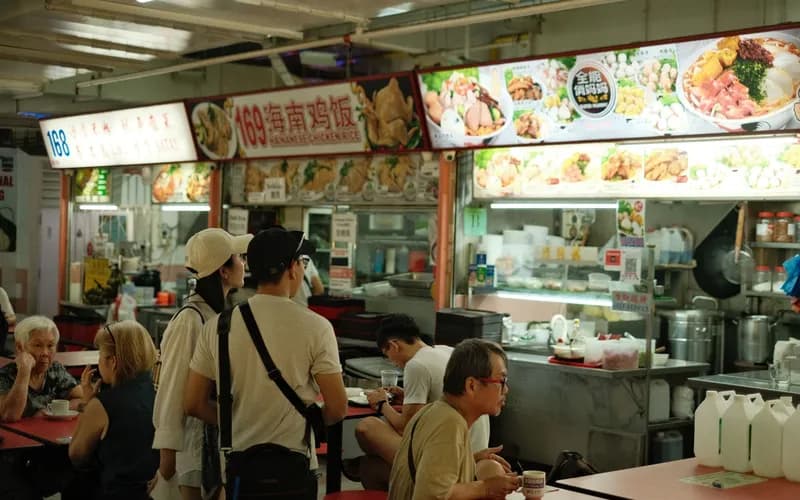
When UNESCO inscribed hawker culture in 2020, it described something bigger than food: a system of shared spaces where people of every background, income and age eat side by side. Hawker centres are Singapore's community dining rooms. They are also small businesses, thousands of them, and most are run by one or two people who have stood at the same stall for decades.
That is the heart of the problem. Estimates put the number of stallholders at around six thousand across roughly a hundred and ten centres, and the median age of a hawker sits close to sixty. Many of the cooks whose char kway teow or chicken rice people queue for are approaching, or well past, the age at which most workers retire. When they stop, the recipe often stops with them. A stall is not a brand that can be handed to a manager; it is a pair of hands, a memory of proportions, and a rhythm learned over years. If you want to understand why a single plate of food can carry so much weight, our slow traveller's guide to Singapore food is a good place to start.
The ageing is not a scandal or anyone's fault. It is demographic arithmetic meeting a demanding job. But it means the tradition is unusually fragile at exactly the moment the world has decided to celebrate it.
One request. Up to five tailored proposals.
Skip contacting agencies one by one — share your trip once and let up to five trusted Singapore agencies come to you. Free, with no obligation.
Get my free quotesWhy the numbers worry people who love the food
The worry is not that hawker centres will empty overnight. It is quieter than that. It is the individual stall that closes when an elderly cook falls ill, or simply decides that thirteen-hour days over a flaming wok are no longer worth it. Each closure is small. Together, over a decade, they reshape what is available.
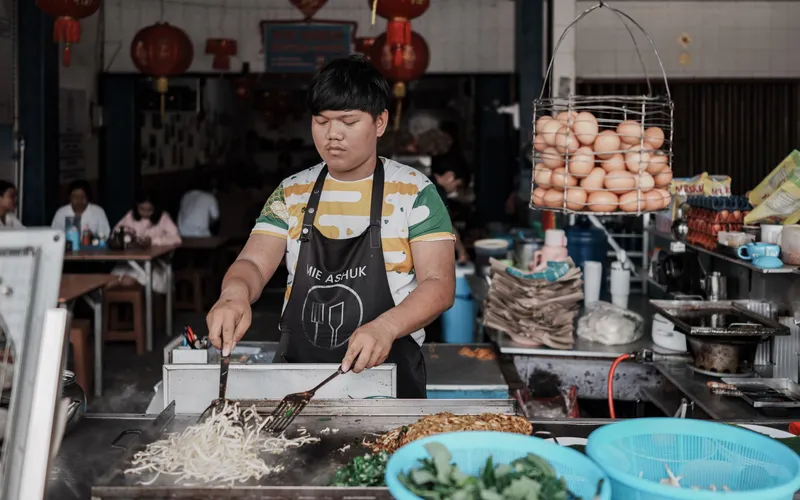
Some of the losses are already visible. Long-standing stalls that fed the same neighbourhood for decades have shut in recent years, and every so often one of these closures makes the news precisely because people feel the loss. Surveys of Singaporeans repeatedly show a public that is anxious about the future of the trade even as it keeps eating there. The affection is real; the succession is not guaranteed. That gap, between how much a food is loved and how few people want to cook it, is the crux of the whole matter.
For a traveller, the practical takeaway is simple and a little urgent: some of the dishes people describe as unmissable are made by cooks who will not be at the stall forever. Eating thoughtfully now is not nostalgia. It is paying attention while there is still something to pay attention to.
The economics behind a three-dollar plate
To understand the succession problem you have to understand the money, and the money is unforgiving. A hawker stall is a small business with thin margins, long hours and low prices, prices that are low partly by design and partly by expectation. Generations of Singaporeans have treated cheap, excellent food as close to a birthright, which puts enormous pressure on any hawker who wants to raise a price by even fifty cents.
Meanwhile costs move the other way. Ingredients, gas, packaging and labour have all risen; hawker food prices climbed noticeably in recent years, with widely reported jumps that were among the steepest in over a decade. A plate of chicken rice that cost a few dollars a few years ago now costs meaningfully more, and yet still barely covers the work behind it. When you plan your spending, our Singapore trip cost and budget guide breaks the numbers down, it is worth remembering that a hawker meal is cheap for you largely because someone else is absorbing the difference.
This is the quiet arithmetic that pushes young people away. A talented cook can earn far more, with far shorter hours and less physical punishment, almost anywhere else. Asking someone to take over a stall is asking them to work harder for less, out of love for the craft. Some do. But love does not pay rent, and that is the tension no scheme has fully solved.
Get matched with up to 5 trusted Singapore agencies
- Free
- No obligation
- Up to 5 agencies
The hawkerpreneurs and what they change
Into that gap has stepped a new kind of stallholder, half-jokingly called the hawkerpreneur. These are often younger cooks, some inheriting a family stall, some arriving from entirely different careers, who approach hawking with a business mind. They think about branding, social media, queue management, sometimes central kitchens and multiple outlets. They may sell a familiar dish with a twist, or a dish that no traditional hawker would have attempted.
The reaction to them is mixed, and honestly so. Purists worry that entrepreneurship dilutes the tradition, that a hawker chasing scale is no longer quite a hawker. Others see the hawkerpreneurs as the tradition's best hope: proof that the trade can attract talent, generate a living wage and stay alive rather than becoming a museum piece. Both views hold some truth. A culture that cannot change tends not to survive, and a culture that changes too fast can lose what made it worth keeping.
What matters for a visitor is that this energy is real and worth seeking out. Alongside the eighty-year-old cooking a recipe unchanged since the 1960s, you will increasingly find a thirty-year-old doing something new in the next unit. Both are hawker culture. If you are deciding where to base yourself and which neighbourhoods to wander, our guide on where to go and when can point you toward centres old and new.
What the government is trying, and its limits
Singapore does not leave this to chance. The National Environment Agency, which runs most hawker centres, has built several schemes to keep the trade alive. A succession programme pairs retiring veterans with aspiring cooks for a period of hands-on apprenticeship, so that a recipe and a technique can pass to someone willing to continue it. An incubation scheme offers newcomers pre-fitted stalls at reduced rent for a fixed period, lowering the terrifying upfront cost of starting out and giving a new hawker time to build a following before paying full rate.
The results are genuine but modest. The incubation stalls have taken on a meaningful number of aspiring hawkers, and a portion of them have gone on to become full stallholders, a real conversion, though from a small base against a much larger ageing cohort. The government has also committed substantial funding through grants and initiatives aimed at lowering barriers and cushioning rising costs. These are serious efforts, not gestures.
But schemes have limits. They can subsidise rent; they cannot make the hours shorter or the work less hot. They can teach a recipe; they cannot manufacture the decades of muscle memory behind a great one. And they run into the same wall as everyone else: a society that wants its hawker food to stay cheap. Policy can widen the door. It cannot, by itself, decide that enough people will choose to walk through it. That choice is cultural, and it is still being made.
What this means for the food travellers love
Put the pieces together and the picture is neither doom nor denial. Hawker culture is not disappearing; it is being remade, unevenly, under pressure. Some dishes will thin out as their last great practitioners retire without successors. Others will be reinvented by newcomers. The overall texture of eating in Singapore will shift over the next decade or two, and a traveller who visits with open eyes gets to witness that change rather than a frozen postcard of it.
This is, in a sense, exactly what slow travel is for. Rushing through a hawker centre to tick off three famous dishes misses the point. Sitting long enough to notice who is cooking, how old they are, whether there is a younger face in the stall, whether a queue is forming for something new, that is where the real story lives. The food is delicious either way. But eaten attentively, it becomes a way of understanding a society thinking hard about what it wants to keep.
How to eat in a way that actually helps
The good news is that supporting hawker culture requires no sacrifice; it mostly requires eating well and eating widely. Spread your meals across more stalls rather than only the two or three that top every list. The famous stalls are fine, but the quiet ones a row over are where succession is most fragile. Order from older hawkers whose stalls have no successor in sight, and from young hawkers taking a risk; both need customers more than the celebrities do.
Pay the real price without flinching. A meal that feels almost too cheap is a signal, not a bargain, and rounding up or simply choosing the pricier authentic option is a small act of support. Go at off-peak hours if you can linger, so you are not rushing a cook who is already stretched. And treat the space with the care locals do: clear your tray, keep your table, and remember you are eating in someone's community dining room, not a food-court set piece.
If you would rather have this built into a considered itinerary, a specialist can weave hawker meals, markets and quieter neighbourhoods into a trip that moves at a human pace. You can plan your journey with our help, or work directly with one of the vetted Singapore travel agencies who know which centres reward a slow morning.
What to Do Next
- Choose a couple of hawker centres of different generations, one long-established and one newer or recently renovated, so you taste both the old guard and the hawkerpreneurs in the same trip.
- Make a short list of dishes you want, then deliberately order at least half of them from smaller, quieter stalls rather than only the famous names.
- Go early or mid-afternoon at least once, so you can sit, watch the centre work, and talk to a hawker without holding up a queue.
- Pay full price gladly, skip the reflex to seek the very cheapest plate, and reward the honesty of an authentic stall with your custom.
- Read our Singapore food guide before you go, so you arrive knowing what you are looking at and why it matters.
- If you want the trip shaped around this, talk to a specialist through our plan-your-journey page rather than assembling it in a rush.
Frequently Asked Questions
Is Singapore's hawker culture actually in danger of disappearing?
Not disappearing, but genuinely changing. The centres remain busy and the food remains superb. The real risk is at the level of individual stalls: many are run by cooks near or past retirement age with no successor lined up, so specific dishes and stalls will close over the coming years. The culture as a whole is being remade rather than erased.
Why can't hawkers just raise prices to make the trade more viable?
They can, but only within tight limits. Cheap food is a deep public expectation in Singapore, and customers push back hard against increases. Meanwhile ingredient, gas and labour costs have risen sharply. The result is a squeeze that keeps margins thin and makes the job a hard sell to the next generation, even as prices creep up.
What is a hawkerpreneur?
It is an informal term for a new wave of hawkers, often younger, who run their stalls with a business and marketing mindset, thinking about branding, social media, efficiency and sometimes multiple outlets. Some carry on family stalls; others come from unrelated careers. Opinions differ on whether they dilute or rescue the tradition, and the honest answer is a bit of both.
What is the government doing about the ageing hawker problem?
The National Environment Agency runs schemes including a succession programme that apprentices aspiring cooks to retiring veterans, and an incubation programme offering reduced-rent stalls to newcomers. Substantial grant funding also aims to cushion rising costs. The efforts are real and have produced some new hawkers, but they cannot by themselves make the work less demanding or overcome the expectation of cheap food.
As a visitor, how can I help preserve hawker culture?
Eat widely rather than only at the most famous stalls, order from both older hawkers without successors and young hawkers taking risks, pay the real price without haggling for the cheapest option, and treat the centre with respect by clearing your tray and not rushing the cooks. Spreading your custom is the single most useful thing you can do.
Will I still find great hawker food if I visit in a few years?
Almost certainly yes, but perhaps a slightly different roster of it. Some legendary stalls will have closed, while new ones will have opened, and some classics will be carried on by successors. Visiting attentively now lets you taste dishes from cooks who will not be at their stalls forever, which is a good reason not to put the trip off indefinitely.
Are hawker centres suitable for travellers who are new to Singapore?
Very much so. They are affordable, welcoming and central to everyday life, which makes them one of the easiest and most rewarding ways to understand the city. Arrive a little outside peak meal times for your first visit, watch how locals order and share tables, and you will settle in quickly.