Katong and Joo Chiat: A Walk Through Peranakan Singapore
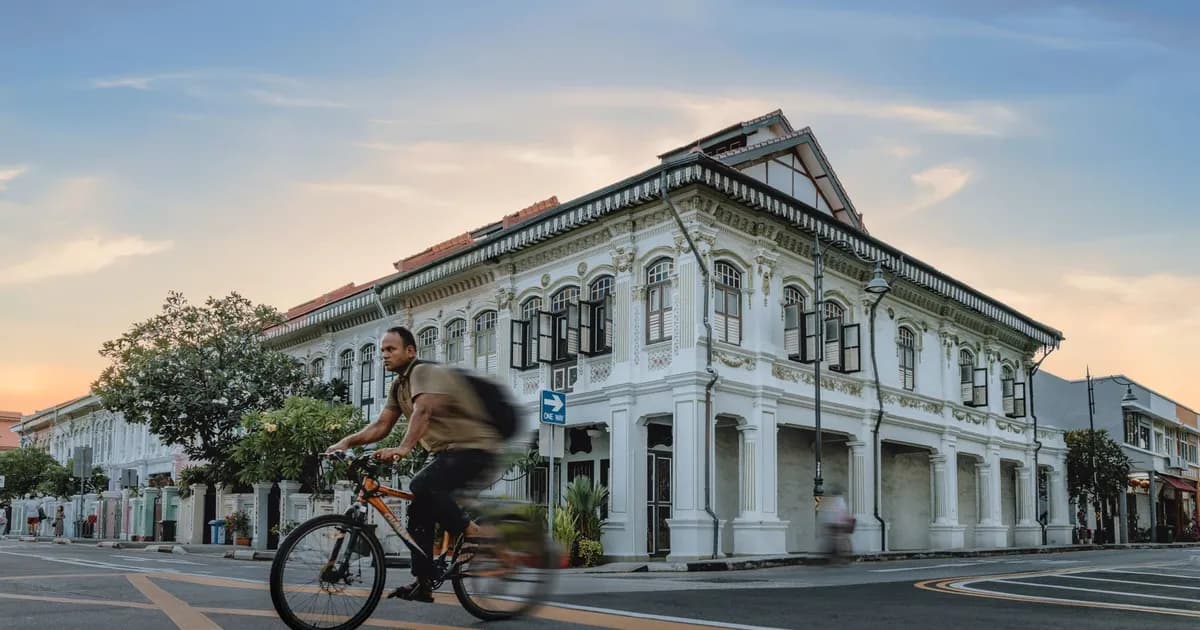
Some neighbourhoods announce themselves. Katong and Joo Chiat murmur instead. Walk east from Singapore's centre, past the expressways and the office glass, and the city quietly lowers its voice: two-storey shophouses painted in mint and rose, the smell of coconut and dried shrimp drifting from a corner kitchen, an older woman threading tiny glass beads onto a slipper the way her grandmother did. This is the Peranakan heartland, and it rewards a slow traveller more than almost anywhere else on the island. You do not really tour Katong. You walk it, eat in it, and let it tell its story one shophouse at a time. Give it a half-day at minimum, a full day if you can, and resist the urge to rush.
Who the Peranakans really are
Before you look at a single facade, it helps to know whose neighbourhood this is. The Peranakans, also called the Straits Chinese, descend from Chinese traders who settled in the old port cities of Malacca, Penang and Singapore from the fifteenth century onward and married local women of the Malay world. Over generations they built a culture that belongs fully to neither side: Chinese in religion and much of its family structure, Malay in language, dress and cooking, and later touched by Portuguese, Dutch and British influence through the Straits Settlements.
The men are called Baba and the women Nyonya, and that second word does a lot of quiet work here. Nyonya kitchens, Nyonya beadwork, Nyonya porcelain, the Nyonya kebaya: so much of what survives in Katong is domestic, made and kept by women. Peranakan culture is not a single museum object but a way of eating, dressing and keeping house that fused two worlds so thoroughly that the seam is invisible. The community is broader than the Chinese Peranakans, too. There are Jawi Peranakans of Indian-Muslim and Malay descent, and Chitty families of Tamil-Malay heritage. Katong and Joo Chiat became one of their great gathering grounds because this was once a breezy seaside suburb where wealthier Straits Chinese and Eurasian families built weekend and family homes near the water, long before land reclamation pushed the coastline away.
One request. Up to five tailored proposals.
Skip contacting agencies one by one — share your trip once and let up to five trusted Singapore agencies come to you. Free, with no obligation.
Get my free quotesThe pastel shophouses of Koon Seng Road and Joo Chiat
The single most photographed spot in the district is Koon Seng Road, and for once the reputation is earned. Two facing rows of two-storey terrace houses from the 1920s stand shoulder to shoulder in mint green, peach, sky blue and butter yellow. Look closely and the detail is astonishing: plaster phoenixes and peonies moulded above the windows, brilliantly glazed ceramic tiles set into the walls, French louvered shutters, fussy little cornices, and the pintu pagar, the low swinging saloon-style doors that let a breeze through while keeping the street at a polite distance. The road is named after Cheong Koon Seng, an early twentieth-century auctioneer and property man, and the whole row is gazetted for conservation by the Urban Redevelopment Authority.
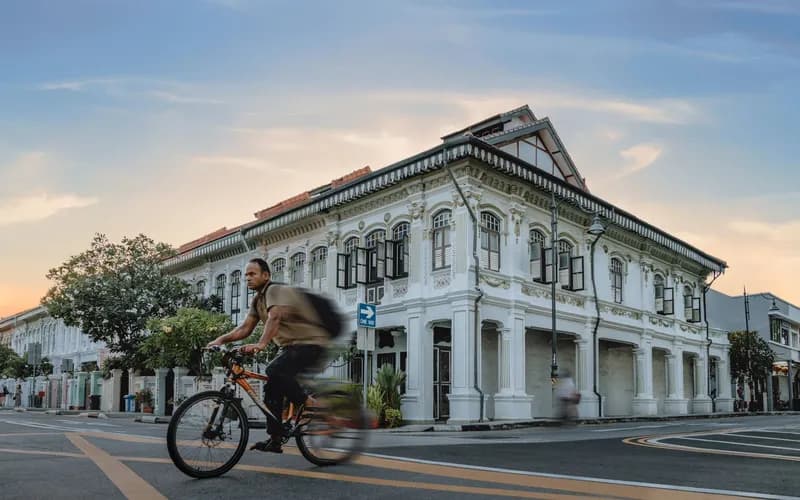
One thing to hold in mind: these are real homes, with real people living behind the pretty shutters. Photograph from the pavement, keep your voice down, and do not lean on the gates or step into doorways for a better shot. A minute of restraint keeps the street welcoming for the next visitor.
From Koon Seng Road, walk down Joo Chiat Road itself, the spine of the district. It is named after Chew Joo Chiat, a wealthy landowner nicknamed the King of Katong, and in 2011 the area was designated Singapore's first Heritage Town. The shophouses here are working ones: kaya toast cafes, spice shops, textile stores, tailors, and the occasional gleaming new bar tucked between them. The mix is the point. Joo Chiat is not preserved in amber; it is lived in, and the friction between old trades and new ones is exactly what keeps it honest.
Katong laksa and the flavours of the neighbourhood
If the shophouses are the district's face, its kitchen is Katong laksa. This is a local variant of laksa lemak, a spicy coconut-milk noodle soup the Peranakans made their own: an orange-gold broth rich with coconut and dried shrimp, laced with the fragrant laksa leaf known as daun kesum, and topped with cockles, prawns and slices of fish cake. The signature quirk is that the thick rice noodles are cut into short lengths, so the whole bowl can be eaten with a spoon alone, no chopsticks required. The most famous name is 328 Katong Laksa on East Coast Road, but locals will happily argue for their own favourite stall, and the argument is half the fun.
Katong laksa is only the beginning. This corner of Singapore is one of the best places in the country to eat slowly and curiously, from an old-school Hainanese coffee shop serving kaya toast and soft-boiled eggs with a cup of kopi, to a heritage Peranakan restaurant plating ayam buah keluak, the dark, earthy chicken stew built around the buah keluak nut that defines Nyonya cooking. If you want to understand how these dishes fit into the wider national table, our slow traveller's guide to Singapore food is a good companion to carry with you. Eat one thing at a time, sit down between stops, and let the neighbourhood pace your appetite.
Get matched with up to 5 trusted Singapore agencies
- Free
- No obligation
- Up to 5 agencies
Kueh, beadwork and the craft of the Nyonya home
Peranakan culture lives at least as much in its handwork as in its architecture, and Katong is where you can still see it up close. Start with kueh, the jewel-bright bite-sized cakes that a Nyonya household would once have made for festivals and visitors. There is ondeh ondeh, pandan-scented rice balls filled with molten palm sugar and rolled in coconut; kueh lapis, the patient nine-layer steamed cake; kueh salat, coconut custard over blue-tinted glutinous rice; and pulut inti, sweet coconut on a bed of rice. Kim Choo Kueh Chang on East Coast Road has been making rice dumplings and kueh since 1945 and doubles as a small museum of Peranakan domestic objects.
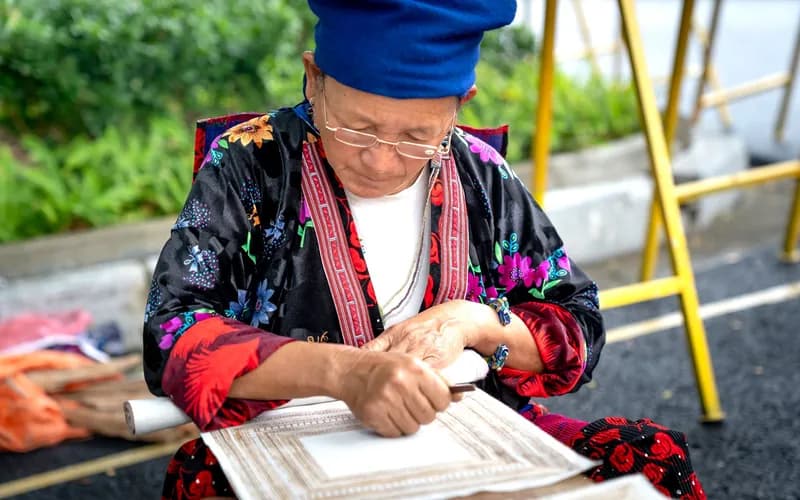
Then there is the beadwork. Kasut manek, the beaded slippers a Nyonya wore with her sarong kebaya, are made from thousands of tiny faceted glass beads stitched into flowers, birds and geometric patterns, a single pair taking weeks of eyesight-straining work. Shops and studios such as Rumah Bebe keep the craft alive, running beadwork and kebaya workshops and selling the embroidered blouses, tiffin carriers and porcelain that furnished a Peranakan home. For a fuller picture, the Intan is unmissable: a private home museum on Joo Chiat Terrace, built by collector Alvin Yapp over more than thirty years, holding thousands of artefacts in a lived-in terrace house. It opens by appointment, and Yapp himself walks you through the furniture, porcelain and beadwork, telling the stories behind them. It is one of the most quietly moving hours you can spend in Singapore.
The Eurasian and Malay layers
Katong is Peranakan, but it is not only Peranakan, and the slow traveller who scratches the surface finds several communities layered on the same streets. The Eurasians, descendants of unions between European settlers and local families, especially the Portuguese-Eurasian Kristang community, have deep roots here. Their kitchen gave Singapore devil's curry, or curry debal, a fiery vinegared stew traditionally eaten after Christmas, and the beloved sugee cake, a dense, buttery semolina and almond cake baked for weddings and celebrations. The Eurasian Community House on Ceylon Road anchors this heritage today.
Walk a little further and the Malay layer comes forward. Just inland lies Geylang Serai, long a heart of Malay life in Singapore, where Wisma Geylang Serai and the surrounding market spill over with textiles, songkok caps, spices and, during the fasting month, one of the city's great Ramadan bazaars. The Joo Chiat area also holds the striking Sri Senpaga Vinayagar Temple on Ceylon Road, a Hindu temple serving the Tamil community, its gopuram tower carved with astonishing detail. None of these communities lived in neat isolation. They traded, cooked, worshipped and intermarried along these roads, and the flavour of Katong is the flavour of that overlap.
How to walk it slowly
The best way to experience Katong and Joo Chiat is on foot, unhurried, without a fixed checklist. A gentle route: begin mid-morning at Koon Seng Road for the shophouses in soft light, drift down Joo Chiat Road stopping wherever a shopfront pulls you in, break for kaya toast and kopi, then wander toward East Coast Road for laksa and kueh in the early afternoon. Book the Intan ahead of time and let it be the still centre of your day. Leave the evening loose for a drink or a plate of Nyonya food.
Wear light clothing and good shoes, carry water, and treat the midday heat as a reason to sit rather than a problem to solve. Because so much of this district is residential and small-scale, quiet, respectful curiosity goes a long way. If you would rather link these streets into a wider east-side ramble, our off the beaten path guide to Singapore points to more corners the tour buses skip, and our guide to where to go and when helps you time your visit around the weather and the festivals. Katong is not a place to conquer. It is a place to return to.
What to Do Next
- Block out a slow half-day or full day and map a loose walking loop from Koon Seng Road down Joo Chiat Road to East Coast Road, with no more than a few fixed stops.
- Book the Intan home museum by appointment well ahead, since visits are personal and small-group, and it is the cultural anchor of the whole walk.
- Plan your meals deliberately: one bowl of Katong laksa, one box of kueh to carry, and a sit-down Peranakan or Eurasian dish so you taste all three layers.
- Read up before you go with our slow traveller's guide to Singapore food so you know what you are ordering and why it matters.
- Fold Katong into a wider, gentler itinerary using our plan your journey resources, and if you want an expert to shape the days around your pace, browse our vetted Singapore travel agencies or read the Unrush slow travel charter to see how we think about travelling well.
Frequently Asked Questions
Where exactly are Katong and Joo Chiat in Singapore?
They sit side by side in the east of the island, a short ride from the city centre and inland from the East Coast. Joo Chiat Road runs roughly north to south and forms the spine, while Katong spreads around East Coast Road to the south. Koon Seng Road, with its famous shophouses, connects into Joo Chiat Road near the middle of the district.
How much time should I set aside for a visit?
A relaxed half-day is enough to see the shophouses, eat well and browse a few shops. A full day lets you add the Intan home museum, a longer lunch and a proper wander down the side streets. Because much of the pleasure here is slow and sensory, resist trying to tick everything off in a rushed morning.
Do I need to book anything in advance?
Most of Katong can be explored freely on foot with nothing booked. The main exception is the Intan private home museum, which runs by appointment only, so arrange your visit ahead of time. Beadwork or kebaya workshops at craft studios also usually require advance booking.
Is Katong laksa very spicy?
It has a gentle to moderate heat rather than a fierce one, with the coconut milk rounding out the chilli and dried shrimp. Most visitors find it comfortable, and you can usually ask for the sambal chilli on the side if you prefer to control the heat yourself.
Is it respectful to photograph the shophouses on Koon Seng Road?
Yes, as long as you are considerate. These are private homes with residents living inside, so shoot from the public pavement, keep noise down, and never lean on gates, enter porches or block doorways. A little courtesy keeps the street open and friendly for everyone who comes after you.
What should I buy to take home from Katong?
Boxes of freshly made Nyonya kueh are the classic edible souvenir, though they are best eaten within a day. For something lasting, look at beaded slippers, a sarong kebaya, Peranakan porcelain or a tiffin carrier from the heritage craft shops, each a small piece of the culture you have just walked through.