Pulau Ubin: A Slow Day on Singapore's Last Kampong Island
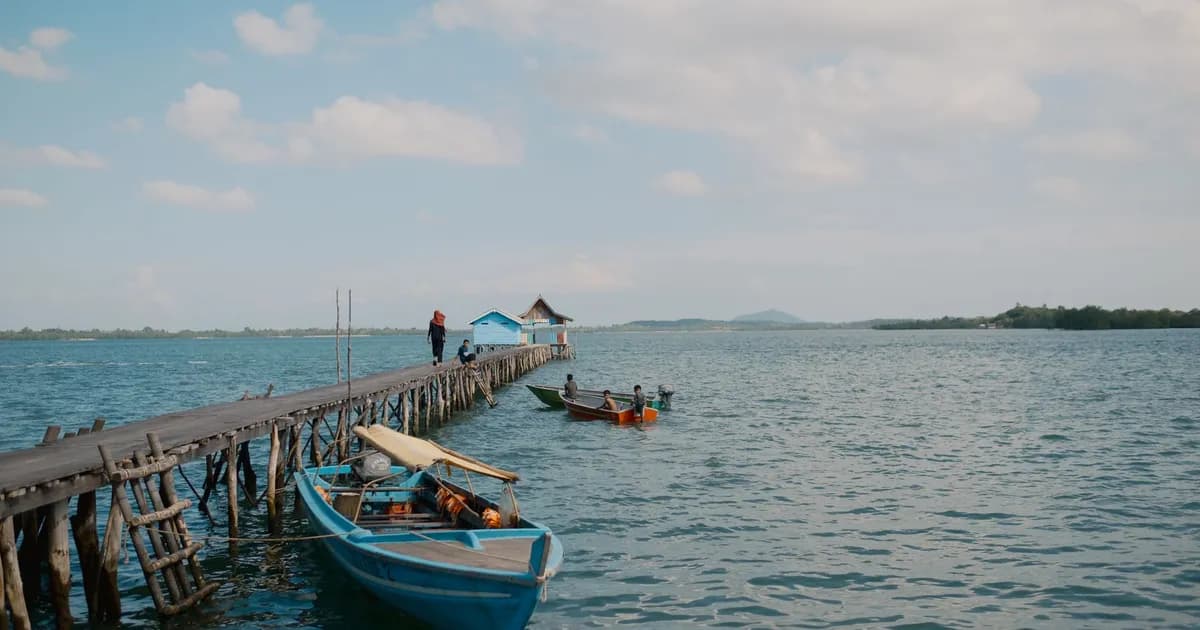
Pulau Ubin sits ten minutes off Changi Point, and the crossing is the whole trick. You step off a diesel bumboat onto a wooden jetty, the loudest sound is a rooster somewhere behind the drink stalls, and the Singapore of air-conditioned malls and eight-lane expressways simply stops. The island is roughly ten square kilometres of secondary forest, flooded granite quarries, mangrove and a scatter of kampong houses, with only a few dozen residents left. It is the closest thing the country has to a time machine, and it rewards exactly one approach: arrive early, move slowly, and give it a full day rather than a box-ticking detour between airport and hotel.
Getting There: The Bumboat from Changi Point
There is no bridge and no printed ferry timetable. Bumboats leave from Changi Point Ferry Terminal, beside Changi Village, when twelve passengers have gathered. The fare has sat at around S$4 per person each way for years, with roughly S$2 more if you carry a bicycle across. Boats generally run from early morning until around 7pm, but the last boat back is not a promise — it is simply the last boat that fills. If you are alone on the jetty at 6.45pm you will either wait or negotiate a private crossing at a higher price.
Two practical consequences follow. Carry cash in small notes: the boatmen deal in cash and the island has no bank machines. And go early. An 8am crossing on a weekday often means a twenty-minute wait for the boat to fill; a 9.30am crossing on a Saturday usually means walking straight on. Reaching Changi Point takes time in itself — allow an hour door to door from the city centre, riding the MRT towards Tanah Merah or Tampines and then a bus to Changi Village. If you are still working out fare cards and transfers, our notes on entering and getting around Singapore cover the mainland half of the trip.
One request. Up to five tailored proposals.
Skip contacting agencies one by one — share your trip once and let up to five trusted Singapore agencies come to you. Free, with no obligation.
Get my free quotesWhat Pulau Ubin Actually Is
Ubin was a quarry island. Granite cut here went into causeways, seawalls and buildings across Singapore, and at its peak in the mid-twentieth century the island supported a population in the thousands, spread across Malay, Chinese and Indian kampongs with their own shops, schools and shrines. Quarrying wound down through the 1990s, the villages emptied as residents moved to mainland housing, and the pits filled with rainwater to become the green-blue lakes you see today.
What remains is deliberately unpolished. The island is managed by the National Parks Board with a light hand, under a stated intention to keep its rustic character rather than landscape it into another manicured park. Zinc-roofed houses stand among rambutan and durian trees planted by families who left decades ago. There is no mains sewerage in most of the island, limited electricity, and the shop fronts near the jetty still look like 1980s provincial Malaysia. For travellers who have read our roundup of Singapore's quieter corners, Ubin is the most complete version of that idea — not a hidden pocket inside the city, but a genuinely different place.
Renting a Bicycle, or Deciding You Do Not Need One
Bicycle rental shops cluster in the few hundred metres behind the jetty, in what everyone calls Ubin Town or Ubin Village. Day rates typically run from around S$8 for a basic single-speed up to S$20 or more for a mountain bike with functioning gears. Quality varies enormously and prices soften on quiet weekdays, so it is entirely normal to look at three shops before choosing. Squeeze the brakes, spin both wheels and check the tyre pressure before you hand over money; a bike that dies at the far end of the island is a long walk back in the heat.
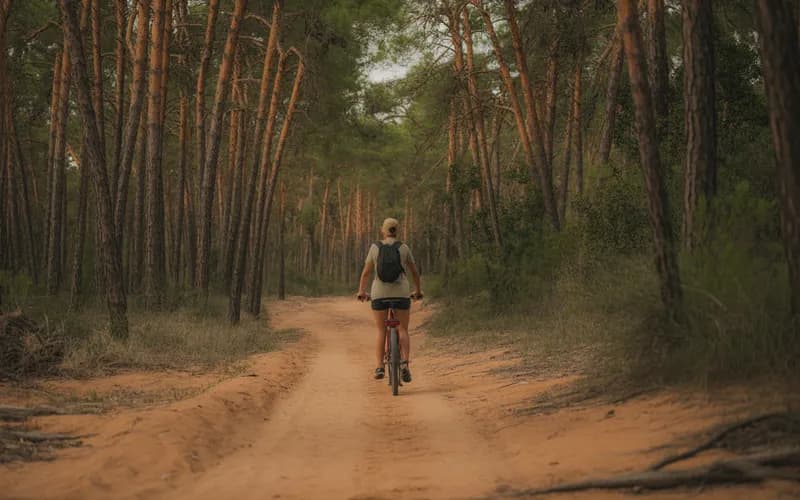
A bicycle is the obvious choice for covering ground, and the main roads are paved and gently rolling. But it is worth saying plainly that you do not need one. Walking from the jetty to Chek Jawa takes roughly an hour at a steady pace on a flat road with tree cover for much of it, and walkers notice things cyclists blow past: monitor lizards sliding into drains, the smell of a durian orchard, the sudden quiet where the road passes an old shrine. If your legs are willing, a walking day on Ubin is one of the best slow-travel decisions available anywhere in Singapore.
Get matched with up to 5 trusted Singapore agencies
- Free
- No obligation
- Up to 5 agencies
Chek Jawa Wetlands: The Island's Quiet Masterpiece
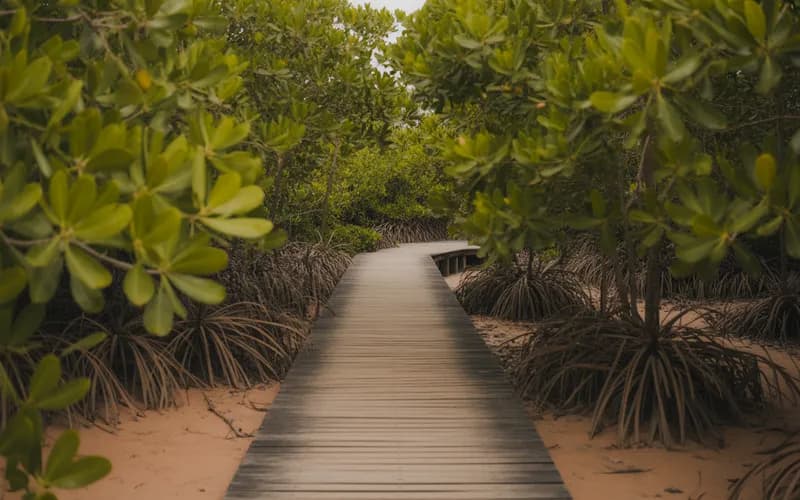
Chek Jawa, on the island's eastern tip, is the reason many people come. Six habitats meet on a single stretch of shore — sandbar, seagrass lagoon, coral rubble, mangrove, coastal forest and rocky beach — and the area survived only because a planned land reclamation was deferred in 2001 after naturalists documented what was there. Today a coastal boardwalk runs out over the water and loops back through mangrove, and a viewing tower gives you the canopy from above. The boardwalks, tower and visitor centre are generally open from early morning until early evening, but closures for maintenance and safety happen with little notice.
Two things shape a visit. First, tides: the intertidal life that makes Chek Jawa famous is only visible at low tide, so check a Singapore tide table before you commit to a time. Second, current conditions. As of 2026 the guided Chek Jawa tour has been suspended while the floating pontoon undergoes maintenance, while the boardwalks themselves remain open. Check the NParks Pulau Ubin notices page the evening before you go rather than discovering a closure after a bumboat and an hour of cycling.
The Quarries, Puaka Hill and the Island's Interior
Ubin Quarry, near the middle of the island, is the photograph everyone has seen: pale rock faces dropping into still, jade-coloured water. The best view is from the top of Puaka Hill, a short, steep and often muddy climb from the road that takes perhaps fifteen minutes. It is the highest point on the island and the only place where you get the full shape of the quarry. Wear something with grip; the path is bare earth and roots, and it turns slick within minutes of rain.
Elsewhere the interior offers a string of small, unhurried stops rather than headline attractions: Butterfly Hill, planted with nectar species and busiest in mid-morning sun; the Sensory Trail, laid out through herb and fruit plantings near the village; Jejawi Tower, which rises above the canopy on the way to Chek Jawa; and the German Girl Shrine, a small yellow hut with a story that is part history and part folklore. The Ketam Mountain Bike Park in the west offers graded trails for experienced riders, and is emphatically not the place to take a rental single-speed.
Eating and Drinking on Ubin
Food on Ubin is limited, and that is part of the arrangement. A handful of seafood restaurants and drink stalls operate near the jetty, serving the kind of unpretentious Chinese seafood — chilli crab, fried noodles, vegetables with sambal — that suits a day of sweating in the sun. Prices are moderate by Singapore standards but not bargain-basement, and opening is inconsistent on quiet weekdays. Once you leave the village there is essentially nothing, so buy water before you set off, and buy more than you think you need.
The contrast with the mainland is instructive. Singapore's food culture is dense, cheap and endlessly available; our guide to eating your way through Singapore exists because you can eat well on a modest budget almost anywhere in the city. Ubin is the one place where you plan around meals rather than stumbling into them. Many regulars simply eat a big breakfast at Changi Village hawker centre before crossing, carry fruit and water, and save a proper meal for the return.
Wildlife, Weather and Real Caveats
Ubin is genuinely wild by Singaporean standards. Wild boar are common and are sometimes bold around people who have fed them, which is why feeding is prohibited; give them distance, particularly a sow with piglets. Long-tailed macaques operate the usual routine around bags and plastic. Monitor lizards, up to two metres, are harmless and unnerving in equal measure. Estuarine crocodiles genuinely inhabit the waters around the island — a sighting was reported near the Ubin Living Lab in July 2026 — so stay on boardwalks and paths, do not swim, and report sightings to the NParks animal response line rather than approaching for a photograph.
The other constraint is climate. There is no air conditioning anywhere you will be, shade is patchy on the main roads, and afternoon thunderstorms arrive fast. Mosquitoes are persistent near the mangrove, so repellent is not optional. Our practical notes on handling Singapore's heat and humidity apply doubly here, because on Ubin you cannot duck into a mall to cool down. Start at first light, do the hard riding before 11am, and accept a slow, shaded middle of the day.
Staying Longer: Camping, Ubin Day and the Overnight Question
Most visitors treat Ubin as a day trip, and for most people that is right. There is no hotel, and the few basic overnight options — designated camping areas and occasional organised stays — require planning, equipment and tolerance for heat, insects and no plumbing. If you do camp, register through the official channels, bring everything including water, and understand that the last bumboat pins you to the island until morning.
A gentler way to deepen the visit is to time it with Ubin Day, an annual community event usually held in the second half of the year, when guided walks, heritage talks and kampong activities run across the island and residents and volunteers open up parts of Ubin that are otherwise quiet. Dates are announced by NParks a few weeks out. If you are building a longer Singapore itinerary around this kind of thing, our journey planning page is the place to start shaping the week rather than the day.
What to Do Next
- Check the NParks Pulau Ubin notices page the night before for boardwalk, trail and tour closures, and look up the tide table if Chek Jawa matters to you.
- Withdraw cash on the mainland — small notes for the bumboat, bicycle hire and food. There are no bank machines on the island.
- Get to Changi Point Ferry Terminal before 9am. Eat breakfast at Changi Village hawker centre while you are there.
- Decide bike or feet at the jetty, not before. If you rent, test the brakes and tyres before paying.
- Pack two litres of water per person, repellent, sun protection, a light rain layer and shoes with grip for Puaka Hill.
- Agree a return time with yourself — aim to be back at the jetty by 6pm to avoid the last-boat lottery.
- Leave nothing behind. There is minimal waste collection, and the island's condition depends on visitors carrying out what they carry in.
Frequently Asked Questions
How long should I spend on Pulau Ubin?
Plan on five to seven hours on the island, plus roughly two hours of mainland travel. That is enough to reach Chek Jawa, climb Puaka Hill, wander the village and still eat without rushing. Anything under three hours turns the trip into a jetty-to-quarry-and-back errand, which misses the point entirely.
Do I need to book anything in advance?
No. Bumboats and bicycle hire are both walk-up, and the boardwalks are free and unticketed. The exceptions are camping, which requires registration through official channels, and any guided programme run by NParks or community groups, which fills quickly when announced.
Is Pulau Ubin suitable for children or people who do not cycle?
Yes, with adjustments. The road from the jetty towards Chek Jawa is flat and walkable, and families often hire bicycles with child seats or trailers near the village. Puaka Hill and the mountain bike trails are the parts to skip. The real limits are heat and the absence of facilities, not terrain.
What should I bring?
Cash in small notes, at least two litres of water per person, insect repellent, sunscreen, a hat, a light waterproof and shoes you do not mind getting muddy. A basic first-aid item or two is sensible given how far you can be from the village. Leave anything you would hate to have soaked in a sudden downpour.
Are there really crocodiles and wild boar?
Yes to both, and both are manageable. Estuarine crocodiles live in the waters around Ubin, which is why swimming is not a good idea and boardwalks exist. Wild boar are frequently seen on roadsides. Do not feed anything, keep a respectful distance, and report crocodile sightings to the NParks animal response line rather than investigating.
Can I stay overnight on the island?
There is no hotel. Designated camping areas and occasional organised stays exist, but they demand self-sufficiency — your own shelter, water and food, and acceptance that basic sanitation is genuinely basic. Most travellers are better served by an early start and a full day.
Is Ubin worth it if I only have 48 hours in Singapore?
Honestly, it depends on what you want. On a very short stopover, a full Ubin day costs you most of one of your two days, and the city's neighbourhoods and hawker centres may serve you better. If you have four days or more, Ubin is one of the strongest arguments for staying longer in a country most people rush through.