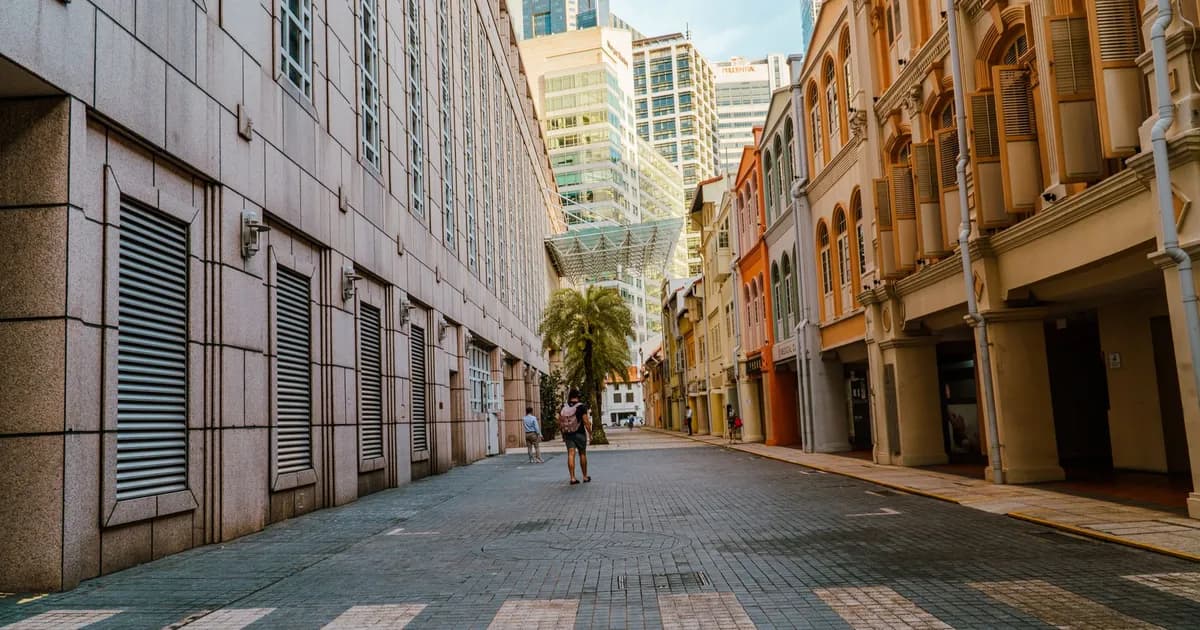

Most advice about where to stay in Singapore is really advice about which hotel to book, which gets the problem backwards. In a city this small and this well connected, the building matters far less than the five minutes around it — whether you step out into a morning hawker queue or into an empty office plaza, whether you can walk to dinner or have to plan it. Choose the neighbourhood first, then find the room. Here is how the realistic options actually differ, with the trade-offs stated plainly.
Start With the Question Nobody Asks: How Long Are You Staying?
Length of stay changes the right answer completely. For two nights, proximity to a single anchor — the airport line, a conference venue, a particular attraction — is worth paying for, because you will spend a large share of your waking hours in transit. For five nights or more, the calculation flips: you want a base with a working neighbourhood around it, because you will eat breakfast there every morning and come home to it tired every night.
The 2026 pattern is that most visitors stay under three and a half nights, which is why so much accommodation advice is optimised for the short stopover. We looked at what that means in our analysis of Singapore's shifting visitor numbers. If you are staying a week, you are in a minority — and that minority should ignore most of the standard recommendations, which push people towards Marina Bay and Orchard Road for reasons that only make sense over 48 hours.
One request. Up to five tailored proposals.
Skip contacting agencies one by one — share your trip once and let up to five trusted Singapore agencies come to you. Free, with no obligation.
Get my free quotesThe MRT Rule That Beats Everything Else
Before comparing districts, apply one filter: stay within a five to seven minute walk of an MRT station, ideally one on two lines. Singapore's rail network is fast, air-conditioned, cheap and reliable, and it is the single thing that makes a non-central base viable. A hotel twenty minutes from a station in this climate is effectively a hotel you will take taxis from, and the taxi cost over a week erases whatever you saved on the room.
That filter alone eliminates a surprising number of bargain listings. It also opens up options far from the tourist core: an apartment near an interchange in the east or north is often better connected to the places you actually want than a central hotel on a single line. If you are still working out how fares, transfers and stored-value cards operate, our notes on getting around Singapore cover the mechanics.
Chinatown and Tanjong Pagar: The Default Good Answer
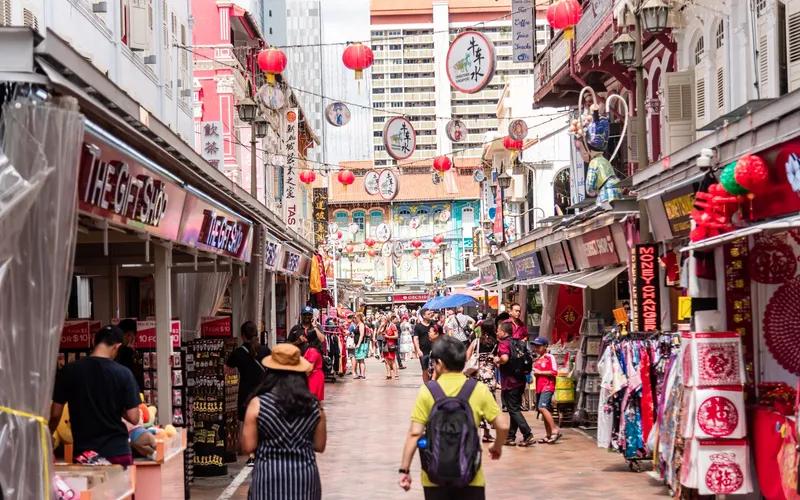
If you make one decision and want it to be right, this is it. Chinatown gives you central location, deep hawker options including Maxwell and the Chinatown Complex, restored shophouses converted into small hotels, and direct MRT links on multiple lines. Tanjong Pagar immediately south adds Korean restaurants, cocktail bars and a more residential evening feel. Prices sit meaningfully below Marina Bay for equivalent quality.
The honest caveats: the streets immediately around Pagoda Street and Smith Street are heavily touristed and can be loud until late, some heritage conversions have very small rooms with poor sound insulation, and the area empties of office workers at weekends, which some people find flat. Book one or two streets back from the main pedestrian drags and most of this disappears.
Get matched with up to 5 trusted Singapore agencies
- Free
- No obligation
- Up to 5 agencies
Kampong Glam and Bugis: Heritage With a Pulse
Kampong Glam is the historic Malay-Muslim quarter, anchored by the Sultan Mosque, with Arab Street's textile shops, Haji Lane's narrow row of independent boutiques and a strong concentration of Malay, Indonesian and Middle Eastern food. Bugis next door supplies the MRT interchange, a large shopping complex and a constant flow of people. Together they are probably the most balanced central choice: genuinely characterful, well connected, and mid-priced.
The trade-off is noise. Haji Lane and the surrounding bars run late, and the call to prayer from the mosque starts early — neither is a problem unless you booked a room facing them without knowing. Ask specifically about the room's orientation. The area also has fewer big-brand hotels and more boutique conversions, which means more character and more variance in quality.
Little India and Jalan Besar: The Value Play
Little India offers the best price-to-interest ratio in central Singapore, by a wide margin. You get Tekka Centre's wet market and food court, 24-hour eateries, the Mustafa Centre, temples that are working places of worship rather than photo stops, and room rates well below comparable central areas. Jalan Besar immediately north has become a quieter enclave of coffee shops and small design studios along low shophouse rows.
Be clear-eyed about it. Little India is crowded, especially on Sunday evenings when it functions as a gathering place for migrant workers, and it is grittier than the polished Singapore in the brochures. Budget accommodation here includes some genuinely poor rooms alongside good ones, so read recent reviews carefully rather than sorting by price. For travellers who want texture and are unbothered by density, it is excellent value.
Tiong Bahru: Living Among Residents
Tiong Bahru is the option for people who want to feel like they live somewhere. Low-rise pre-war walk-ups curve around quiet streets, the market and hawker centre is one of the best in the city, and the cafés and independent bookshops arrived without erasing the old provision shops. It is one MRT stop from Outram Park and a genuine twenty-minute walk from Chinatown.
The catch is supply. There are very few hotels here, so the practical options are small guesthouses or longer-stay apartments, and availability is thin. That makes it a poor fit for a short trip booked late and a very good fit for a stay of a week or more. Our walk through Tiong Bahru covers what the neighbourhood is actually like day to day.
Katong and the East Coast: Trading Centrality for Texture
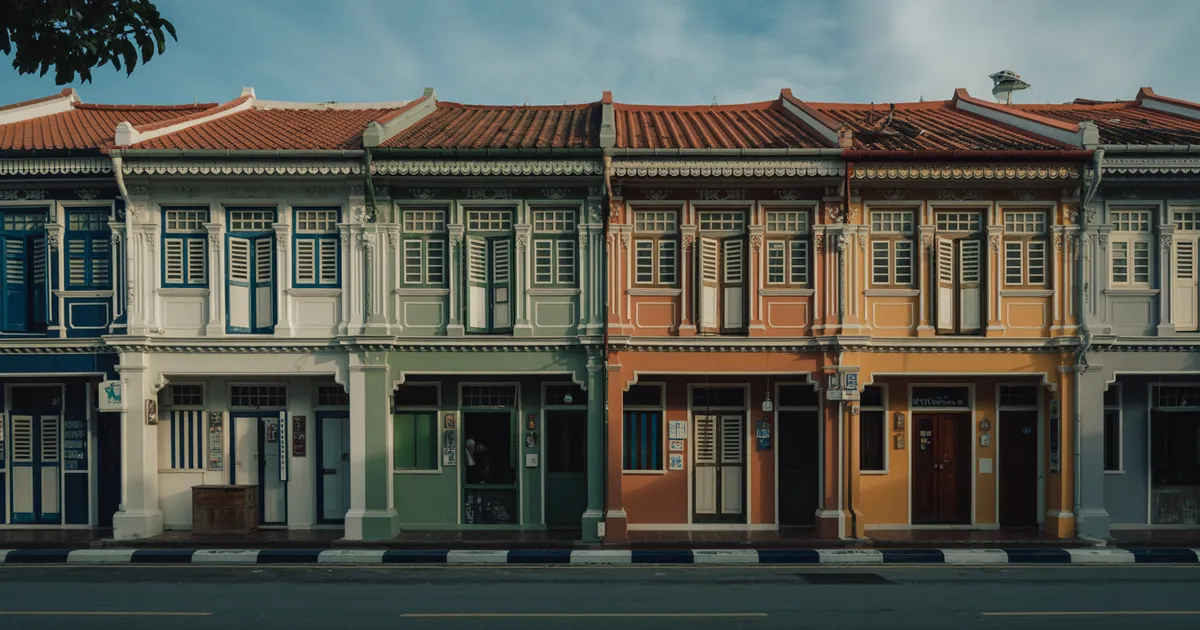
East of the centre, Katong and Joo Chiat give you pastel Peranakan shophouses, laksa shops with decades of argument behind them, and a coastline ten minutes away by foot or bike. The Thomson-East Coast Line has made the area far more practical than it once was, and room rates are notably lower than in the central districts.
You are trading immediacy for atmosphere. Reaching Marina Bay or Chinatown takes twenty-five to thirty-five minutes rather than ten, and there is less to do within walking distance after 10pm. In exchange you get residential calm, easy access to East Coast Park, and one of the strongest food neighbourhoods anywhere in the country. Our piece on Katong and Joo Chiat sets out what a day there looks like.
Marina Bay, Orchard and Where to Think Twice
Marina Bay is spectacular and, for most slow travellers, the wrong base. It is the most expensive district, it is built at a scale that makes short walks long, and it empties at night into a landscape of hotel lobbies and malls. It rewards a visit; it rarely rewards a week. Orchard Road has the same problem in a different register — superb transport, endless shopping, and very little neighbourhood life once the shops close.
Neither is a mistake for everyone. If you are travelling with limited mobility, in extreme heat sensitivity, or with a family that wants a pool and a mall in the same building, the case is real. But you will pay a substantial premium for it — average market room rates ran around S$275 a night in early 2026, and these districts sit well above that. Our Singapore budget guide puts those figures in the context of a full trip.
Room Types, and the Short-Let Rule That Catches People Out
Singapore regulates short-term rentals strictly, and this surprises visitors every year. Private residential properties cannot legally be rented for stays shorter than three consecutive months, and public housing flats require a minimum of six months. That makes entire-home holiday lets illegal in practice, regardless of what a listing claims. Bookings do get cancelled, and the penalties fall on the host. Stay in licensed hotels, hostels, guesthouses or serviced apartments. It is one of many small rules worth knowing before you arrive; our guide to Singapore's rules and fines walks through the rest, from littering to vaping.
Within that, the sensible options are: hostels with dorm beds from roughly S$25 to S$40 a night, often in heritage shophouses; small boutique hotels in the S$120 to S$220 range; mainstream mid-market hotels around the S$200 to S$300 mark; and serviced apartments, which become competitive past about five nights because they include a kitchen and laundry. Note that quoted rates usually exclude nine percent GST and a ten percent service charge, so the headline number is not the final number.
Booking Mechanics Worth Knowing
Rooms in Singapore are small. Twenty square metres is normal at mid-range and fifteen is not unusual in a converted shophouse, so check the stated floor area rather than the photographs. Windowless interior rooms are legal and common in older conversions; they are cheaper for a reason. If you are sensitive to noise, ask for a high floor away from the street, and remember that construction is constant in this city and almost never disclosed.
Timing matters more than it used to. Occupancy stays high, so rates do not collapse close to the date, and major concerts, Formula One weekends and large conferences can double prices across entire districts. Check the event calendar for your dates before you fix them. If you would rather have someone handle a longer, multi-stop itinerary, the operators listed on our Singapore travel agencies page work with this kind of trip.
What to Do Next
- Fix your length of stay first. Under three nights, prioritise transport links; over five, prioritise the neighbourhood itself.
- Draw a mental line: nothing more than a seven-minute walk from an MRT station.
- Shortlist two districts, not one — typically Chinatown or Kampong Glam for a first trip, Little India or Katong for value and texture.
- Check your dates against Singapore's event calendar before booking anything.
- Verify the property is a licensed hotel, hostel or serviced apartment, and treat any entire-home listing under three months as a risk.
- Compare the all-in total, including GST and service charge, rather than the advertised nightly rate.
- For stays over a week, price serviced apartments against hotels. The kitchen and laundry usually tip the balance.
Frequently Asked Questions
What is the best area to stay in Singapore for a first visit?
Chinatown or Kampong Glam. Both are central, well served by the MRT, full of food within walking distance and priced below the waterfront districts. Chinatown has more hotel supply and slightly better transport; Kampong Glam has more character and a livelier evening. Either works for a first trip of three to seven nights.
Is it worth staying near Changi Airport?
Only for a genuine overnight connection. Changi is efficient and the area around Changi Village is pleasant, but it is roughly forty minutes from the centre, and you would spend a meaningful share of a short trip commuting. For a long layover, the airport's own transit hotels are the better answer.
Can I book an apartment on a home-sharing platform in Singapore?
Not legally for short stays. Private residential units require a minimum tenancy of three consecutive months, and public housing flats six months. Listings offering shorter entire-home stays are operating outside the rules, and bookings are sometimes cancelled at short notice. Licensed serviced apartments are the legitimate equivalent.
How much should I budget per night?
As a working range: S$25 to S$40 for a hostel dorm, S$120 to S$220 for a decent boutique or mid-range room, and S$300 and up in the premium waterfront districts. Market-wide average rates sat around S$275 a night in early 2026. Add roughly nineteen percent for GST and service charge on top of quoted rates.
Is Little India safe and pleasant to stay in?
Yes on both counts, with the caveat that it is dense, busy and less polished than central Singapore. Crime rates across the city are very low. What you should weigh is crowding rather than safety, particularly on Sunday evenings, and the wide quality spread in budget accommodation there.
Should I split my stay between two neighbourhoods?
For a week or more, it can work well — for example four nights central and three in Katong or the east. The cost is a wasted half-day moving and two check-ins. For anything under six nights, a single well-chosen base and good use of the MRT is almost always better.
Does staying outside the centre really save money?
Yes, though less than you might hope. Expect roughly twenty to thirty-five percent lower rates in eastern or northern residential areas compared with equivalent central rooms. The saving is real, but the reason to do it is usually the neighbourhood rather than the discount, and you should offset a little of it against longer journeys.