

Bangkok's southern railway carries a great many people who never get off it. They pass through Phetchaburi on the way to Hua Hin, Chumphon or the sleeper to Surat Thani, and the town slides past the window as a limestone hill with a white palace on top. That hill is Khao Wang. Underneath it sits a province holding a nineteenth-century royal retreat, a German art nouveau palace built for a Thai king, a cave temple lit through a hole in its own roof, a sweet-making tradition strong enough to win the town UNESCO recognition, and the largest national park in Thailand. Phetchaburi is roughly 150 kilometres from Bangkok. Almost nobody stops.
Why almost everyone skips it
Phetchaburi has the awkward misfortune of being both too close to Bangkok and not quite a beach. It is near enough that Thai visitors treat it as a day trip, which means the town has never needed to build the guesthouse-and-banana-pancake infrastructure that turns a place into a stop on the backpacker circuit. It is also twenty minutes up the line from Cha-am and forty from Hua Hin, and those two have sand. Faced with a choice between a provincial town of temples and a resort strip with a sea view, most itineraries choose the sea.
The result is a place that has stayed itself. Phetchaburi's old quarter is a working Thai town first and a heritage site second. Monks collect alms at dawn along streets where the shophouses still sell hardware and dried fish rather than smoothies. Restaurant menus are in Thai. Nobody will approach you on the street with a tuk-tuk offer. If you have been grinding through the busier parts of the country and want a few days where you are simply not being sold anything, this is a good corner of Thailand to disappear into. It rewards the traveller who stays two or three nights rather than the one who arrives at ten and leaves at four.
One request. Up to five tailored proposals.
Skip contacting agencies one by one — share your trip once and let up to five trusted Thailand agencies come to you. Free, with no obligation.
Get my free quotesGetting there: the slow train from Bangkok
Phetchaburi is one of the easiest towns in Thailand to reach without touching a minivan. It sits on the Southern Line, and something like nine or more services a day call there in each direction. Journey times run from about two and a quarter hours to four, depending on what you board. The quickest and most comfortable daytime option is the air-conditioned diesel railcar Special Express service out of Krung Thep Aphiwat, which does the run in roughly two hours fifteen. The slowest and cheapest are the ordinary trains out of Thon Buri, which have wooden-slat seats, open windows, fan-cooled carriages and fares low enough to be almost symbolic. Both are honest ways to arrive.
If you want the full picture of how Thai rail works, including how to reserve seats and what the class codes mean, our slow rail guide to travelling Thailand by train covers the mechanics. For Phetchaburi specifically, the practical advice is simple: book the express if you want to be there by mid-morning, take the ordinary if the journey is the point. Buses from Bangkok's Southern Terminal also run, but they land you on a highway outside town rather than a ten-minute walk from the old quarter, which is a real difference when the temperature is thirty-four degrees.
The old town on foot
Phetchaburi's centre is small enough to walk and interesting enough to walk slowly. The Phetchaburi River runs through it, and the riverside community has been quietly painted with murals that give the lanes a reason to be wandered rather than crossed. Three temples anchor the historic core, and they are genuinely different from one another rather than variations on a theme.
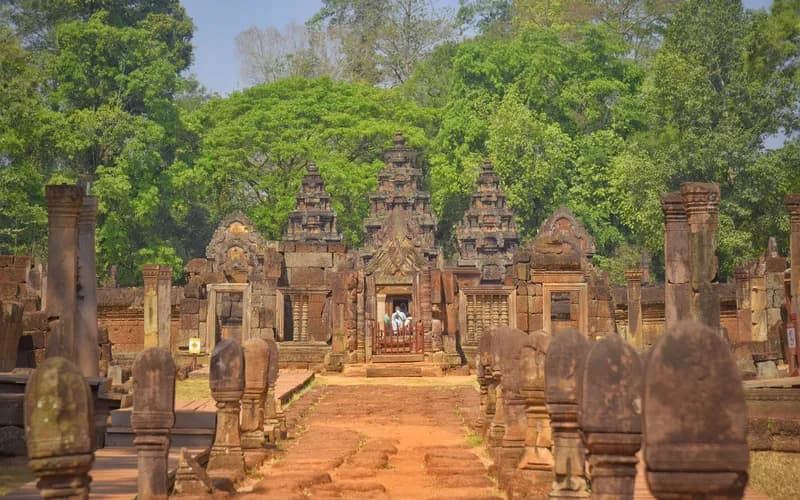
Wat Kamphaeng Laeng is the oldest and the strangest: a Khmer laterite complex from the era when this was the western edge of the Angkorian world, its towers half-swallowed by roots and repaired brick. Wat Yai Suwannaram has an ordination hall with mural paintings from the Ayutthaya period and a scripture library sitting on stilts over a pond. Wat Mahathat, the busiest of the three, is built around a white prang around forty-two metres tall with clear Khmer influence in its silhouette, and it is the temple most locals will name first if you ask where to go.
Give the old town half a day on foot and another hour by bicycle if your guesthouse has one. Temple etiquette here is the same as everywhere in the country and worth getting right, particularly at Wat Mahathat where the atmosphere is devotional rather than touristic.
Get matched with up to 5 trusted Thailand agencies
- Free
- No obligation
- Up to 5 agencies
Khao Wang: the hill palace and its macaques
Phra Nakhon Khiri Historical Park, known to everyone as Khao Wang, is the reason the hill above town is topped with white. King Mongkut, Rama IV, had a summer palace, an observatory, a royal chapel and a chedi built across three peaks in the 1850s, and the architecture is a deliberate hybrid: European neoclassical porticoes and Chinese roof forms sitting alongside Thai chedis, on a hill covered in frangipani.
There is a funicular up the eastern side, which is the sensible choice in the heat, and stone paths down if you would rather walk one direction. Allow two hours. The views from the observatory terrace take in the whole flat coastal plain, the salt pans towards the Gulf, and the town's temple roofs directly below.
One honest warning: the hill has a substantial population of long-tailed macaques, and they are habituated, confident and quick. Carry nothing loose in your hands, do not carry food or drink in an open bag, and do not attempt to feed them. Bites and scratches are not rare, and any break in the skin from a monkey in Thailand means a same-day trip to a hospital for post-exposure rabies treatment. Treat them as wildlife rather than a photo opportunity and the visit is entirely pleasant.
Ban Puen Palace: German art nouveau in the tropics
A few kilometres south of the centre stands one of the least likely buildings in Thailand. Phra Ram Ratchaniwet, usually called Ban Puen Palace, was commissioned in 1910 by King Chulalongkorn as a rainy-season country residence and completed in 1916 under his successor, King Vajiravudh. It was designed by the German architect Karl Doehring, and it is a two-storey Jugendstil building: art nouveau tilework, a glazed conservatory stairwell, curved balconies and a cool green-and-blue ceramic interior that looks as though it has been lifted out of Darmstadt and set down among palm trees.
The palace is now held by the Royal Thai Army and open as a museum. It is rarely busy. Because it sits inside a military compound, opening arrangements can change at short notice and you may be asked to sign in at the gate; going on a weekday morning is the reliable approach. For anyone interested in how Siam borrowed and adapted European forms on its own terms rather than under colonial rule, this building and Khao Wang make an unusually good pair, built sixty years apart by a father and a great-grandfather of the same house.
A UNESCO city of gastronomy
Phetchaburi was designated a UNESCO Creative City of Gastronomy, and unlike a lot of food branding, this one is grounded in something specific: sugar palm. The province is covered in toddy palms, and the sap tapped from them becomes the palm sugar that gives Phetchaburi sweets their particular caramel depth. The signature is khanom mo kaeng, a dense baked custard of mung bean, coconut milk, duck egg and palm sugar, scorched on top with fried shallots. It travels badly and is best eaten within a day, which is exactly why it is worth eating here rather than buying at an airport.
The savoury side is just as strong. Phetchaburi-style khao chae, rice in chilled jasmine-scented water with a plate of elaborate side dishes, is a hot-season speciality served in a handful of old-town shops from roughly March to May. Local curries lean sweeter and saltier than Bangkok versions because of the palm sugar and the coastal fish sauce. If you want the wider context for how Thai regional cuisines diverge, our guide to Thai food and regional cuisine sets it out. Here, just walk the market at Talat Sot in the morning and buy whatever has a queue.
Kaeng Krachan: the largest national park in Thailand
Forty-five minutes west of town the land rises into Kaeng Krachan, Thailand's biggest national park, part of the Kaeng Krachan Forest Complex inscribed as a UNESCO World Heritage Site in 2021. It stretches across Phetchaburi and Prachuap Khiri Khan along the Tenasserim range on the Myanmar border, and it holds wild elephants, gaur, leopard, tapir and an extraordinary bird list. Hornbills are the draw for most visitors: four species are regularly seen, and dawn on the Ban Krang forest road is one of the better hornbill experiences in mainland Southeast Asia.
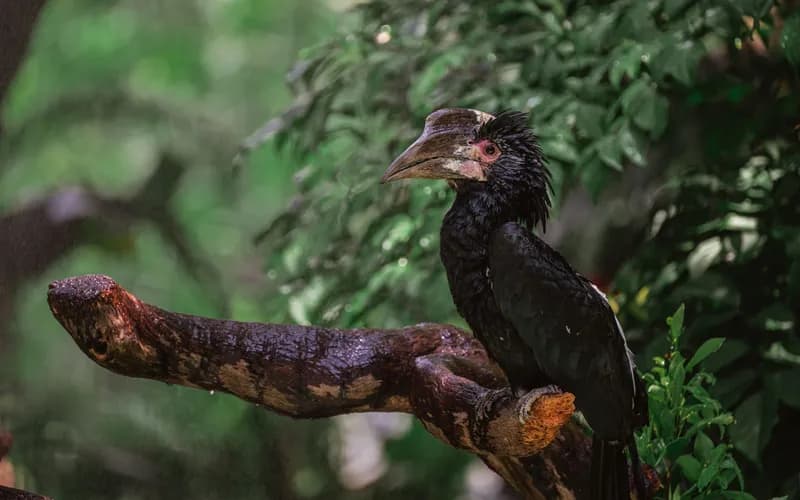
Foreign adults pay 300 baht to enter, foreign children 200, with a small extra charge for a vehicle. Gates operate roughly 06:00 to 18:00. Advance booking for many Thai parks now runs through the QueQ app, and it is worth checking availability before you drive out. Access to the deep interior is also seasonal: the road to the inner campsites normally closes for a rainy-season rest period in the late wet months, and individual trails and waterfalls open and shut without much notice. Thor Thip waterfall, for instance, has been closed to visitors. This kind of rolling closure is now standard practice nationwide, as our piece on how conservation is reshaping Thailand's national parks explains. Check the park's own channels the week you travel rather than trusting a blog post from two seasons ago.
Getting up to Phanoen Thung
The park's signature experience is the sea of cloud at Khao Phanoen Thung, a campsite and viewpoint high on the ridge where, on a good cool-season morning, you look down onto a white floor of mist with forested peaks poking through. Getting there is deliberately controlled. The mountain road is single-track and runs on timed one-way windows: uphill traffic is allowed in two morning and early-afternoon slots, downhill in two others, and if you miss your slot you wait several hours. Four-wheel drive is required, and most visitors hire a pickup with a driver at the park headquarters or Ban Krang campsite rather than bringing their own vehicle. Expect somewhere around 1,600 baht for a morning run and closer to 1,800 for a full day, split between however many of you are riding.
The practical consequence is that this is not a lie-in. To be at the viewpoint for the 07:00 to 08:00 window when the mist is still holding, you meet your driver at around five in the morning. Park rangers can also be engaged as guides for a few hundred baht for a short walk or five hundred and up for a full day, and they are worth every satang if you want to identify anything. Staying overnight at Ban Krang, in a tent or a basic bungalow, removes the pre-dawn drive from town entirely and is the choice most birders make.
The coast: Cha-am, Ban Laem and the salt flats
Phetchaburi province reaches the Gulf, and the coastal strip is a different kind of quiet. Cha-am is about thirty-five minutes further down the railway line and is Thailand's least pretentious beach town: a long grey-gold strand, deckchairs under casuarina trees, families eating seafood on mats, and almost no international presence. It is not a postcard beach and does not pretend to be, which is exactly its appeal on a Tuesday.
Between the town and the sea lie the Ban Laem salt pans, a geometry of shallow evaporation ponds worked by hand, with conical white piles and wooden rakes and wind pumps. Late afternoon light on the flats is remarkable, and the mudflats and ponds along this stretch of coast are important for migratory shorebirds between roughly September and April. Nearby Laem Phak Bia has become a serious birding site for that reason. None of this is packaged. You drive or cycle out, you stop where it looks right, and you watch people work.
When to go and how long to stay
November to February is the clear window. It is dry, the humidity drops, Kaeng Krachan's interior is open and the cloud inversions at Phanoen Thung are at their best. March to May is very hot on the coastal plain but is when khao chae appears. The wet season from roughly May to October brings the heaviest rain in September and October; the town's palaces, temples and cave are unaffected and pleasantly empty, but the park's inner roads may be closed or impassable.
Three nights is the honest minimum for the province: one for the old town and Khao Wang, one for Ban Puen and the coast, and one built around a dawn in Kaeng Krachan. Four lets you sleep at Ban Krang. Phetchaburi also slots neatly into a longer southbound rail itinerary, and it is one of the strongest candidates in the country for travellers looking for the kind of place described in our guide to Thailand off the beaten path. Accommodation is modest: a handful of small hotels and riverside guesthouses in town, resorts along the Cha-am strip, and park lodging that must be booked separately.
What to Do Next
- Pick your season first. If Kaeng Krachan's interior matters to you, aim for November to February and confirm the park's opening status directly before you commit to dates.
- Book the train, not a van. Reserve the daytime Special Express from Krung Thep Aphiwat for speed, or take an ordinary service from Thon Buri if you want the slow version.
- Base yourself in the old town for the first two nights so you can walk to Wat Kamphaeng Laeng, Wat Yai Suwannaram and the funicular at Khao Wang without arranging transport.
- Arrange the Phanoen Thung pickup in advance through your guesthouse or the park headquarters, and be clear about which one-way road window you are aiming for.
- Set aside one afternoon for Ban Puen Palace and one for the Ban Laem salt pans, ideally the latter within two hours of sunset.
- Eat khanom mo kaeng the day it is made, from a shop that bakes on site rather than a roadside stall selling boxed stacks.
- If you would rather have the Kaeng Krachan logistics handled, compare specialists through our directory of vetted Thailand travel agencies and ask specifically about ranger-guided access.
Frequently Asked Questions
Is Phetchaburi worth a stop if I only have two weeks in Thailand?
If your two weeks are focused on islands and Bangkok, probably not. If you are travelling south by rail and would like one town where nothing is arranged for foreigners, it is an excellent use of two or three nights, and it costs you almost nothing in transit time because you are already passing through.
Do I need my own vehicle for Kaeng Krachan?
You need a vehicle to reach the park gate, which is about forty-five minutes from town, and you need four-wheel drive to go beyond Ban Krang. Most visitors solve both by hiring a pickup with a driver at the headquarters or through their accommodation. Cars can be rented in town, but a standard rental will not be allowed up the mountain road.
How likely am I to see wild elephants?
Sightings on the Ban Krang road happen regularly but are not guaranteed on a single visit. Dawn and dusk are the windows. If you do meet elephants on the road, stay in the vehicle, keep the engine running, give them a very wide margin and reverse rather than pass. Rangers enforce this and they are right to.
Are the macaques at Khao Wang actually dangerous?
They are opportunistic rather than aggressive, but they will take bags, bottles and phones, and a grab can break skin. Any bite or scratch should be washed immediately and assessed at a hospital the same day because of rabies risk. Leave food in your accommodation and keep your hands empty on the hill.
What is the best month for the sea of cloud at Phanoen Thung?
December and January are the most reliable. You need cool air, low overnight temperature and no rain, which is a combination the cool season delivers most consistently. Even then it is weather, not a scheduled event, so give yourself two mornings if it matters to you.
Can I combine Phetchaburi with Hua Hin?
Easily. Hua Hin is under an hour south by train and has the accommodation range and airport connections that Phetchaburi lacks. A common pattern is two nights in Phetchaburi for the heritage and the park, then a few nights in Hua Hin or Cha-am for the coast, with the whole thing done on the Southern Line without ever booking a private transfer.